
A boutique hotel in the 8th arrondissement's Golden Triangle, La Maison Champs Élysées occupies a quietly positioned address on Rue Jean Goujon, a short walk from the Seine and the city's most visited landmarks. The property's identity is built around dramatic visual illusions and self-aware, ironic interiors, a deliberate contrast to the traditional palace-hotel conventions that dominate this neighbourhood.
Pearl is the En Primeur Club membership app — saves, bookings, and concierge access live there. Same editors, same standards.
- Address
- Rue Jean Goujon, 8, Paris 75008, France
- Website
- marriott.com
- Directions
- Get directions
 Saves & bookings on Pearl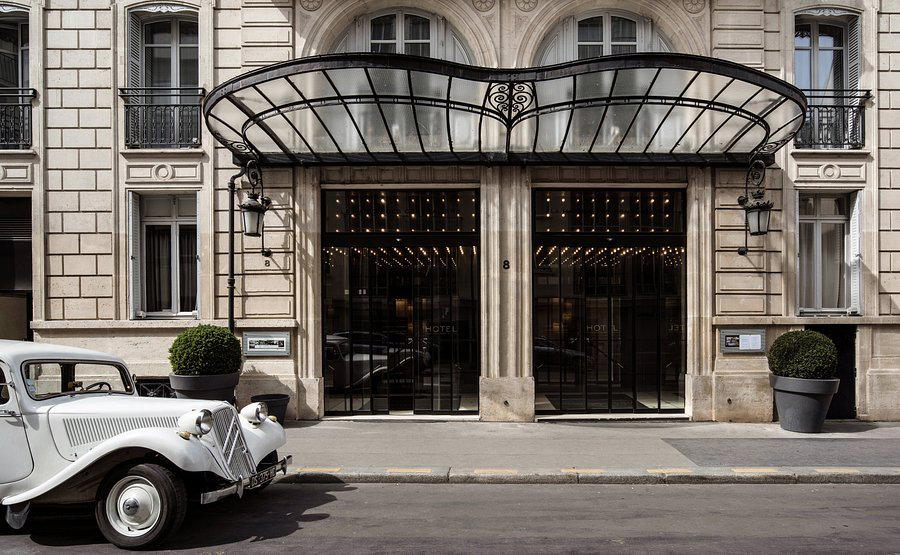
The Golden Triangle, and What Happens When a Hotel Refuses to Behave Like One
The 8th arrondissement has long been the address of choice for Paris's most institutionally serious hotels. The Hotel Plaza Athénée faces the Avenue Montaigne directly. The Four Seasons George V anchors stronger examples from the avenue bearing its name. Cheval Blanc Paris operates at the more architecturally theatrical end of the spectrum, though still within a broadly reverent tradition. Against this backdrop, La Maison Champs Élysées, positioned on Rue Jean Goujon, within walking distance of both the Grand Palais and the Seine, adopts a different posture: irony, illusion, and a studied refusal to take the conventions of Parisian luxury hotel design at face value.
That positioning is not accidental. Boutique hotels in the Golden Triangle operate inside among the more competitive and image-conscious hospitality zones in Europe. To differentiate without the room count, the restaurant constellation, or the multi-generational brand recognition of properties like Le Bristol Paris or Hôtel de Crillon, smaller properties must work conceptually. La Maison Champs Élysées has chosen to work through visual provocation and spatial wit, a strategy with genuine precedent in French design culture, even if it sits at an angle to the quarter's dominant aesthetic.
An Arrondissement Built on Historical Weight
Rue Jean Goujon sits in a part of Paris where the built environment carries a density of historical association that few European neighbourhoods can match. The 8th arrondissement was shaped substantially by Haussmann's mid-19th-century transformation of Paris, and the streets between the Champs-Élysées and the Seine retain that era's characteristic scale: wide footpaths, dressed stone facades, the particular quality of light that bounces between buildings of uniform cornice height. The Grand Palais, a short walk north, was built for the 1900 Exposition Universelle and remains among the more structurally ambitious glass-and-iron public buildings in France. The Petit Palais stands directly across from it.
For a hotel to operate in this context and choose irony as its primary register is a considered design decision. The neighbourhood's weight is exactly what makes the contrast legible. Properties that commit entirely to reverence, the Le Meurice model, or the restored palace ambition of Hôtel de Crillon, are themselves making an argument about what this address means. La Maison Champs Élysées makes a different argument, and the tension between the two is where the property's identity lives.
Dramatic Illusions and the Interior as Provocation
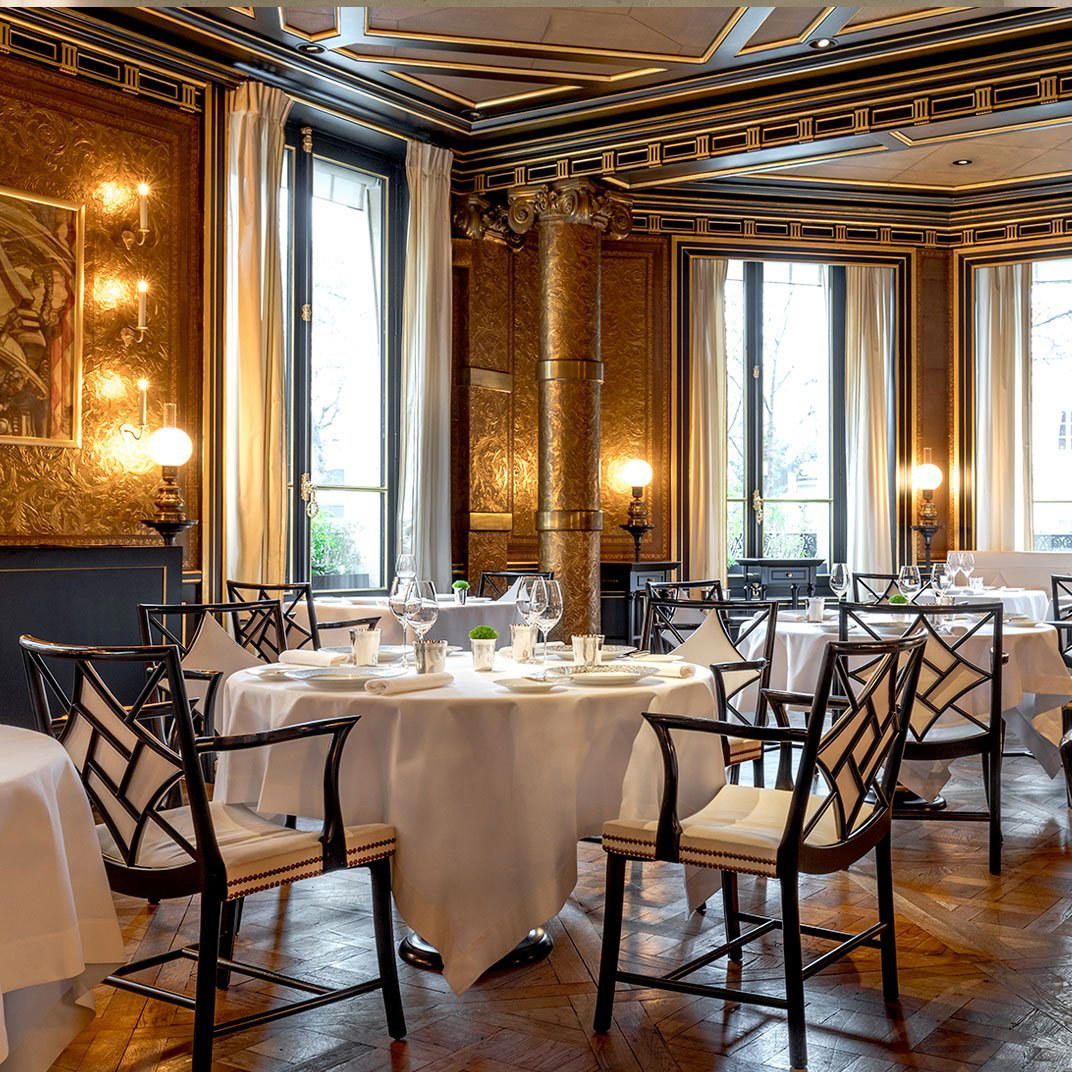
The property's interiors have been described in terms of dramatic illusions and ironic gestures, design language that places it closer to the tradition of theatrical French interiors (associated historically with figures like Jacques Garcia or, more recently, India Mahdavi) than to the neutral luxury minimalism that has spread through the upper tiers of European hospitality since roughly 2010. In that broader context, the choice to pursue visual surprise and conceptual layering over restraint is a minority position in the current market, though one with a receptive audience among guests who treat hotel design as a primary factor in their decision-making.
Spatially, the boutique scale matters here. Larger palace hotels, La Réserve Paris operates at the design-led end of the larger-property tier, can absorb singular design gestures across multiple public rooms without those gestures defining the entire guest experience. In a smaller property, the aesthetic proposition is more total: every corridor and common area either sustains or undermines the central concept. The reported commitment to dramatic illusion suggests a property where the interior language is meant to be cumulative rather than incidental.
The Boutique Hotel's Position in the 8th Arrondissement comparable set
Within the immediate neighbourhood, La Maison Champs Élysées occupies a different competitive tier from the multi-hundred-room palaces that define the avenue's international reputation. The relevant comparable set is smaller in scale and more internationally distributed in its clientele: design-led boutiques that attract guests specifically because they are not the George V or the Plaza Athénée, rather than guests for whom those properties represent the aspirational ceiling.
This is a growing segment across European luxury hospitality. In Paris specifically, the tension between the historic palace model and the design-forward boutique has sharpened over the past decade as more internationally mobile guests arrive with strong preferences for properties that carry a point of view. The palace hotels have responded with design investment of their own, Hôtel de Crillon's 2017 reopening after a four-year renovation brought in Karl Lagerfeld-designed suites, but boutique properties like La Maison Champs Élysées are operating on different terms: fewer keys, a tighter aesthetic proposition, and a guest relationship built more on discovery than on brand recognition.
Guests considering the wider French luxury hotel offer, from Airelles Château de Versailles outside the city to destination properties like Domaine Les Crayères in Reims or Baumanière Les Baux-de-Provence in Provence, will find the hotel representing a specifically Parisian urban proposition: dense with cultural access, centrally located within the city's most visited quarter, and built around an interior identity rather than landscape or culinary prestige.
Access and Context
Rue Jean Goujon places the property inside the triangle formed by the Champs-Élysées to the north, the Avenue Montaigne to the east, and the Seine to the south, the Golden Triangle proper. The Palais de Tokyo and the Musée d'Art Moderne de la Ville de Paris are within walking distance. The Avenue Montaigne's concentration of French fashion houses is similarly close. For guests whose Paris itinerary is built around the city's cultural and commercial core, the address removes the need for transit for most daytime activity.
Internationally, guests who respond to the design-forward boutique proposition at the hotel may find comparable positioning at properties like The Fifth Avenue Hotel in New York City or Aman Venice, where a strong spatial identity shapes the guest experience as much as service or amenity count.
Know Before You Go
- Address: Rue Jean Goujon, 8, Paris 75008, France
- Neighbourhood: Golden Triangle, 8th arrondissement
- Nearby landmarks: Grand Palais, Petit Palais, Seine riverfront, Avenue Montaigne
- Property type: Boutique hotel
- Design identity: Dramatic visual illusions, ironic interior gestures
- Booking: Contact the property directly; no booking link available at time of publication
Comparable Venues
Comparable venues nearby, for context on price, style, and recognition.
| Venue | Cuisine | Price | Notes |
|---|---|---|---|
| La Maison Champs ÉlyséesThis venue — the venue you are viewing | Luxury boutique design hotel with theatrical Martin Margiela interiors blending historical Haussmann architecture with contemporary artistic vision. | $$$$ | Not listed |
| Le Cinq Codet | Contemporary boutique hotel emphasizing well-being and design | $$$$ | 7th arr. |
| Le Damantin | Historic Haussmannian/Napoleon III/Louis XIII mansion renovated into understated luxury 5-star hotel | $$$$ | 8th arrondissement |
| George V | Historic Art Deco palace renovated as luxurious Parisian residences | $$$$ | Golden Triangle |
| Hôtel Parister | Boutique wellness hotel blending classic Parisian and modern industrial design | $$$$ | Faubourg Montmartre |
| Kimpton St. Honoré, Paris | Contemporary luxury boutique hotel blending Parisian chic with California-inspired casual elegance. | $$$$ | Paris City Center |
Recognition history
Dated appearances from independent guides and award organizations, with the underlying list record or original source where available.
Design Hotels Member
Design Hotels
Continue exploring
More in Paris
Hotels in Paris
Browse all →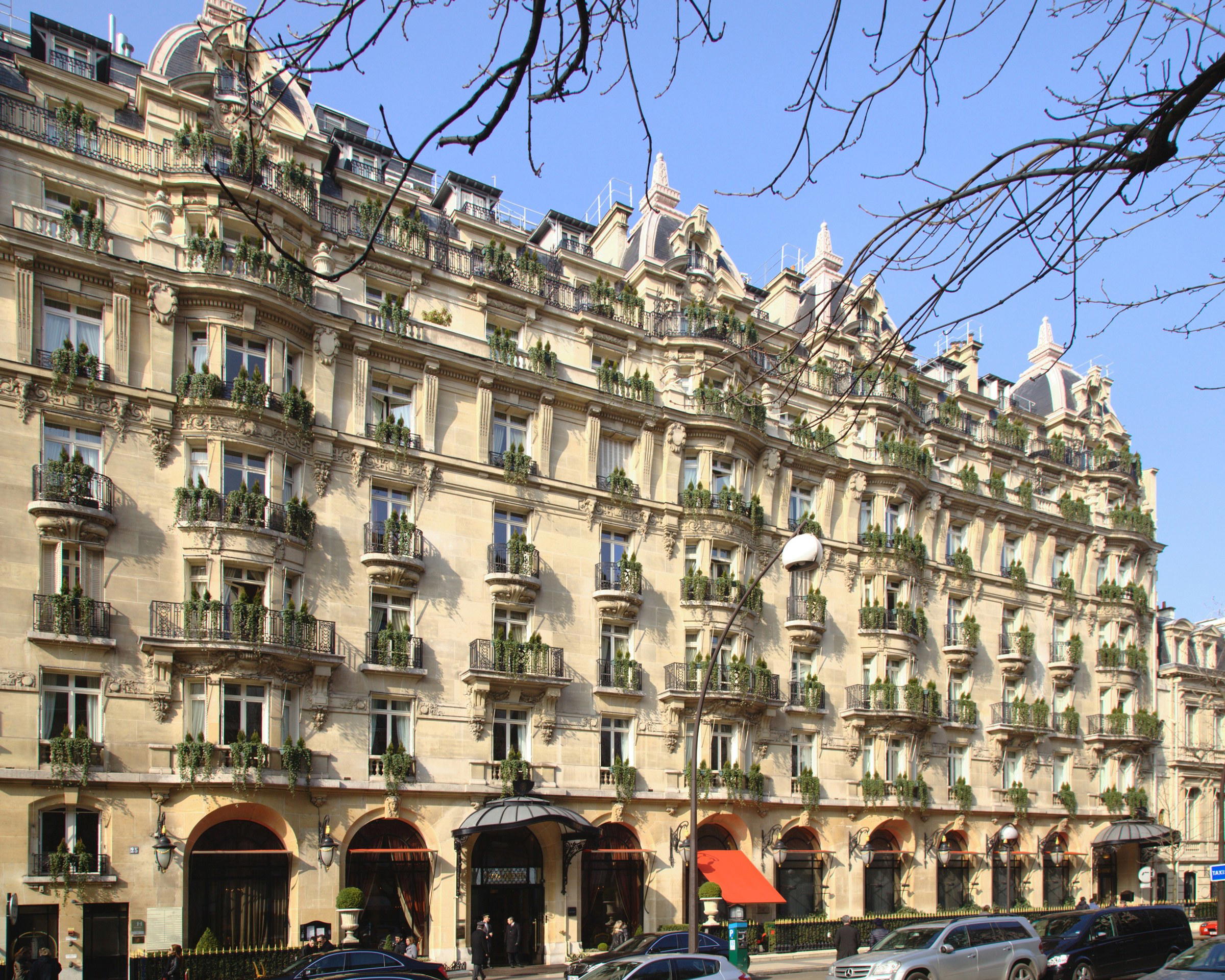
Bars in Paris
Browse all →
Restaurants in Paris
Browse all →
Wineries in Paris
Browse all →
At a Glance
- Elegant
- Romantic
- Sophisticated
- Quiet
- Romantic Getaway
- Anniversary
- Weekend Escape
- Honeymoon
- Garden
- Terrace
- Historic Building
- Design Destination
- Private Dining
- Wi Fi
- Spa
- Fitness Center
- Room Service
- Concierge
- Restaurant
- Bar
- Valet Parking
- Business Center
- Pool
- Garden
- Wi Fi
- Spa
- Fitness Center
- Room Service
- Concierge
- Restaurant
- Bar
- Valet Parking
- Business Center
- Pool
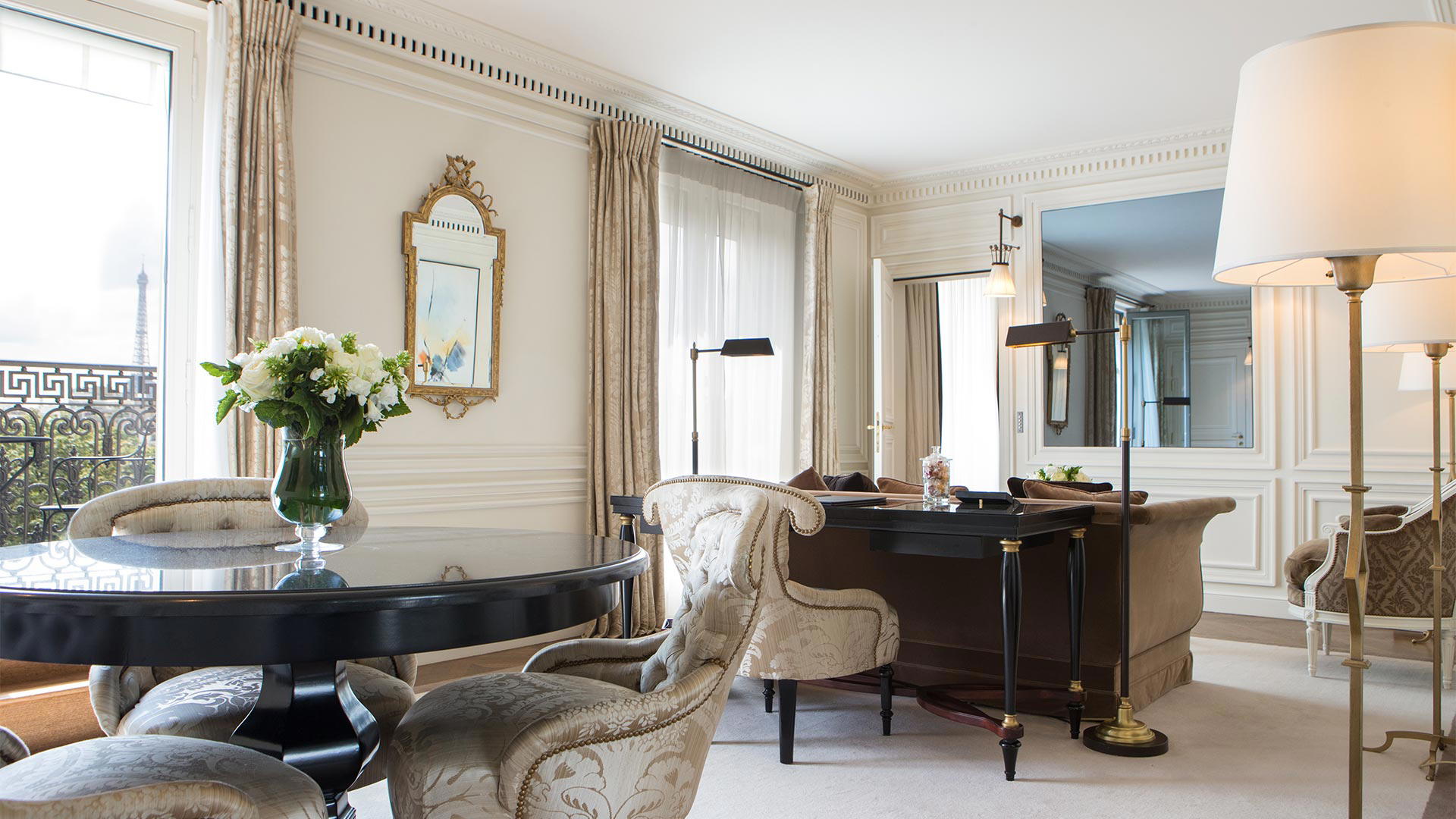
Sophisticated and intimate with theatrical decor blending different eras; warm and refined by day, elegant and refined throughout with carefully curated lighting and stage-set-like lobby spaces.