

Michelin Selected · Gault & Millau Exceptional Hotel
A 17th-century hôtel particulier turned small luxury hotel in the heart of Nîmes, Jardins Secrets earned a Gault & Millau Exceptional Hotel designation (5 points, 2025) for its approach to historic preservation and intimate scale. Stone courtyards, planted gardens, and individually designed rooms place it firmly in the design-led end of French regional hospitality, far removed from the branded international tier.

Pearl is the En Primeur Club membership app — saves, bookings, and concierge access live there. Same editors, same standards.
- Address
- 3 Rue Gaston Maruéjols, 30000 Nîmes
- Phone
- +33 4 66 84 82 64
- Website
- jardinssecrets.net
- Directions
- Get directions
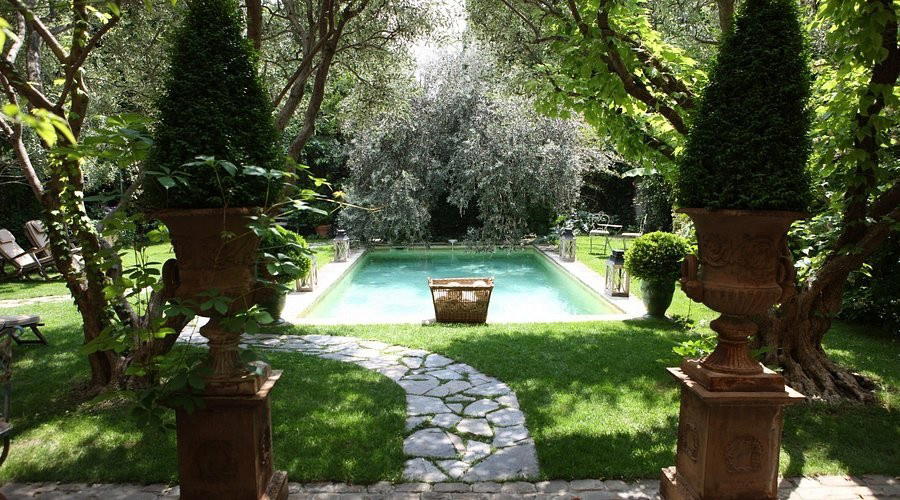
A Walled Garden in Roman Nîmes
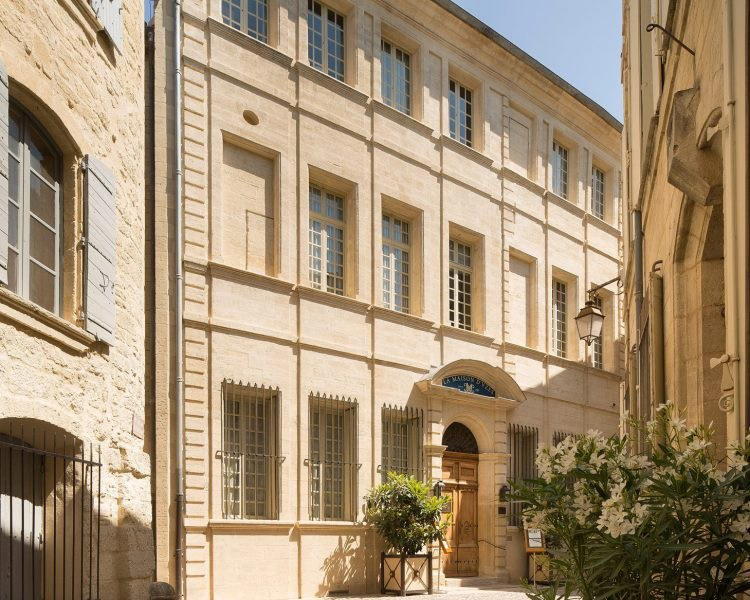
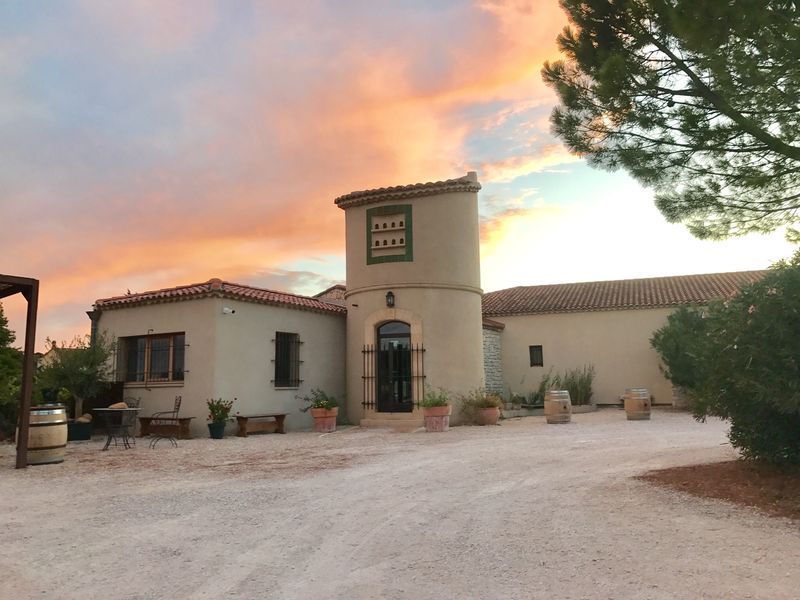
Arriving at 3 Rue Gaston Maruéjols, the transition from street to property is abrupt in the leading sense. The Nîmes old town is dense, its lanes narrow, and the façade of Jardins Secrets offers little indication of what sits behind it. That withholding is architectural intention, not accident. The hôtel particulier typology that defines this building, a private mansion arranged around inner courtyards rather than projecting outward, was a response to the Mediterranean climate and to the social logic of 17th-century French provincial life. Privacy faced inward. Life happened in the garden, not on the street.
That logic remains intact here. Where many historic properties in southern France have been opened up and modernised to the point of losing their original spatial grammar, this property preserves the sequence of threshold, courtyard, and planted enclosure that gives the building type its character. The effect, for a guest arriving from the arena quarter or from the Maison Carrée, is a genuine shift of register: from exposed Roman stone and tourist circulation to something quieter and more private.
Where Jardins Secrets Sits in French Regional Luxury
The French luxury hotel market has fractured along predictable lines. On one side sit the large palatial addresses: properties like Maison Albar Hôtels L'Imperator in Nîmes itself, which operates at grand-hotel scale with a celebrated literary history, or Cheval Blanc Paris, where Arnault-era investment has produced some of the most technically accomplished hotel spaces in Europe. On the other side sits a smaller, more disciplined cohort: properties of limited keys, historic fabric, and design choices that prioritise specificity over amenity breadth.
Jardins Secrets belongs clearly to the second group. Its competitive reference points are not the grand hotels of the Côte d'Azur or the Loire but rather comparably scaled maisons d'hôtes with genuine architectural substance: properties like Château de Montcaud in the Gard, or Château de la Gaude near Aix, where the building itself carries most of the editorial weight. For reference further afield, Baumanière Les Baux-de-Provence and La Bastide de Gordes in the Luberon operate in an adjacent register, though at considerably larger scale and with different culinary ambitions attached.
The Gault & Millau Exceptional Hotel designation, awarded in 2025 with a five-point score, is a trust signal that carries specific weight in French hospitality. Gault & Millau's hotel assessments tend to reward experiential coherence and distinctiveness over checklist amenities, which makes the designation a reasonably precise indicator of what this property is doing well.
The Design Logic of the Hôtel Particulier
The architecture of southern French town mansions from the 17th and 18th centuries followed a formula that suited both the climate and the social structure of the period: high exterior walls, limited street-level openings, and interior organisation around one or more planted courtyards. The garden was not ornamental in the English sense but functional, a temperature regulator and a private social space. Stone dominated construction because timber was scarce and fire risk was constant in dense medieval street plans.
At Jardins Secrets, that spatial structure is the primary design asset. The rooms are not identical, which is inherent to the building type: an irregular floor plan produced by centuries of adaptation means that individual spaces differ in ceiling height, window orientation, and relationship to the gardens below. This variability is a feature in design-led properties at this scale; it is why guests research rooms rather than simply booking a category. Properties operating in this mode, like Castelbrac in Dinard or Casadelmar in Porto-Vecchio, succeed or fail on the quality of individual room environments rather than on brand consistency.
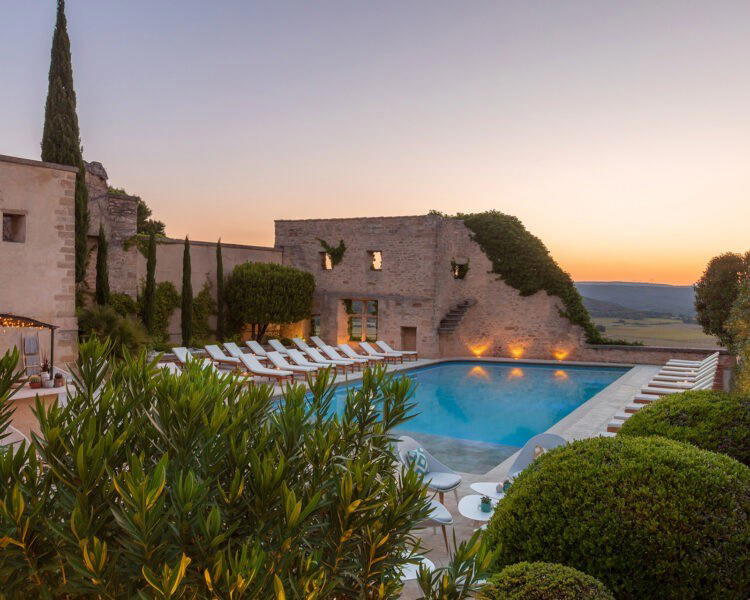
The planted garden itself is the spatial anchor. In a city where summer temperatures regularly exceed 35°C, a walled garden with mature planting is a genuine amenity, not a decorative one. The thermal mass of old stone and the shade canopy of established trees produce a microclimate that air conditioning approximates but does not replicate. For guests interested in the architectural and climatic logic of Mediterranean building, this is the detail that makes the property coherent rather than simply pretty.
Nîmes as a Hotel Destination
Nîmes is underestimated as a base for southern France travel. Its Roman monuments, the arena and the Maison Carrée, are among the best-preserved in the world outside Italy, and the Pont du Gard is a 23-kilometre drive east. The city sits between two distinct landscapes: the Camargue to the south, with its flat, saline terrain, and the garrigue-covered hills of the Gard to the north, leading toward the wine villages around Uzès and the Costières de Nîmes appellation.
For a fuller picture of where to eat and drink during a stay, see our full Nîmes restaurants guide. The city has a compact old town that is walkable from the property, and the TGV connection to Paris Gare de Lyon takes under three hours, making Nîmes a plausible short-break destination from the capital without requiring a flight.
Guests using Nîmes as a base for wider regional exploration have a strong range of reference properties within reach. Hôtel & Spa du Castellet in Le Castellet and La Réserve Ramatuelle anchor the eastern coast, while Villa La Coste in the Luberon and Les Sources de Caudalie in Bordeaux represent different registers of Provençal and Aquitaine luxury for those extending their itinerary.
Planning a Stay
The address at 3 Rue Gaston Maruéjols places the property inside Nîmes old town, within comfortable walking distance of the principal Roman sites. Specific room configurations, pricing, and availability are not published centrally, and the booking process is leading handled through direct contact with the property. Given the building's irregular floor plan, room selection matters: guests should enquire about garden orientation and ceiling height when booking, as the variation between spaces in this typology can be meaningful.
For travellers building a broader France itinerary that combines design-led regional properties with larger palatial addresses, reference points worth considering alongside Jardins Secrets include Domaine Les Crayères in Reims, Royal Champagne Hotel & Spa in Champillon, and Château du Grand-Lucé in the Loire. For those whose itineraries extend beyond France, Aman Venice operates a comparable logic of historic palazzo and walled garden in a different Mediterranean city, and The Maybourne Riviera and Château de la Chèvre d'Or in Èze represent the clifftop end of Riviera design-led hospitality.
Comparable Venues
Comparable venues nearby, for context on price, style, and recognition.
| Venue | Cuisine | Price | Awards | Notes |
|---|---|---|---|---|
| Jardins SecretsThis venue — the venue you are viewing | 18th-century coaching inn converted into luxury boutique hotel | $300–500 | Michelin Selected · Gault & Millau Exceptional Hotel | Not listed |
| Margaret Hotel Chouleur | Historic private mansion renovated with noble 17th-18th century style. | $300–500 | Michelin Selected | historic center |
| Bien Loin d'Ici | eco-sensitive luxury B&B with personalized 5-star service | $300–500 | Michelin Selected | garrigues |
| Maison Albar Hôtels L’Imperator | Beautifully renovated historic palace hotel blending 19th-century charm with contemporary luxury and modern amenities. | $300–500 | 1 Michelin Key · Leading Hotels of World Member | Central Nîmes |
| L'Hôtel Particulier | Elegant townhouse in a restored 18th-century private mansion blending contemporary and traditional wings. | $300–500 | Michelin Selected · Gault & Millau Exceptional Hotel | historic center |
| La Co(o)rniche | Contemporary luxury boutique hotel housed in a restored 1930s neo-Basque hunting lodge, reimagined by designer Philippe Starck with minimalist white interiors and authentic period details. | $500–750 | 1 Michelin Key | Pyla-sur-Mer |
Recognition history
Dated appearances from independent guides and award organizations, with the underlying list record or original source where available.
Michelin Selected
Michelin
Gault & Millau Exceptional Hotel
Gault & Millau
Continue exploring
More in Nîmes
Hotels in Nîmes
Browse all →
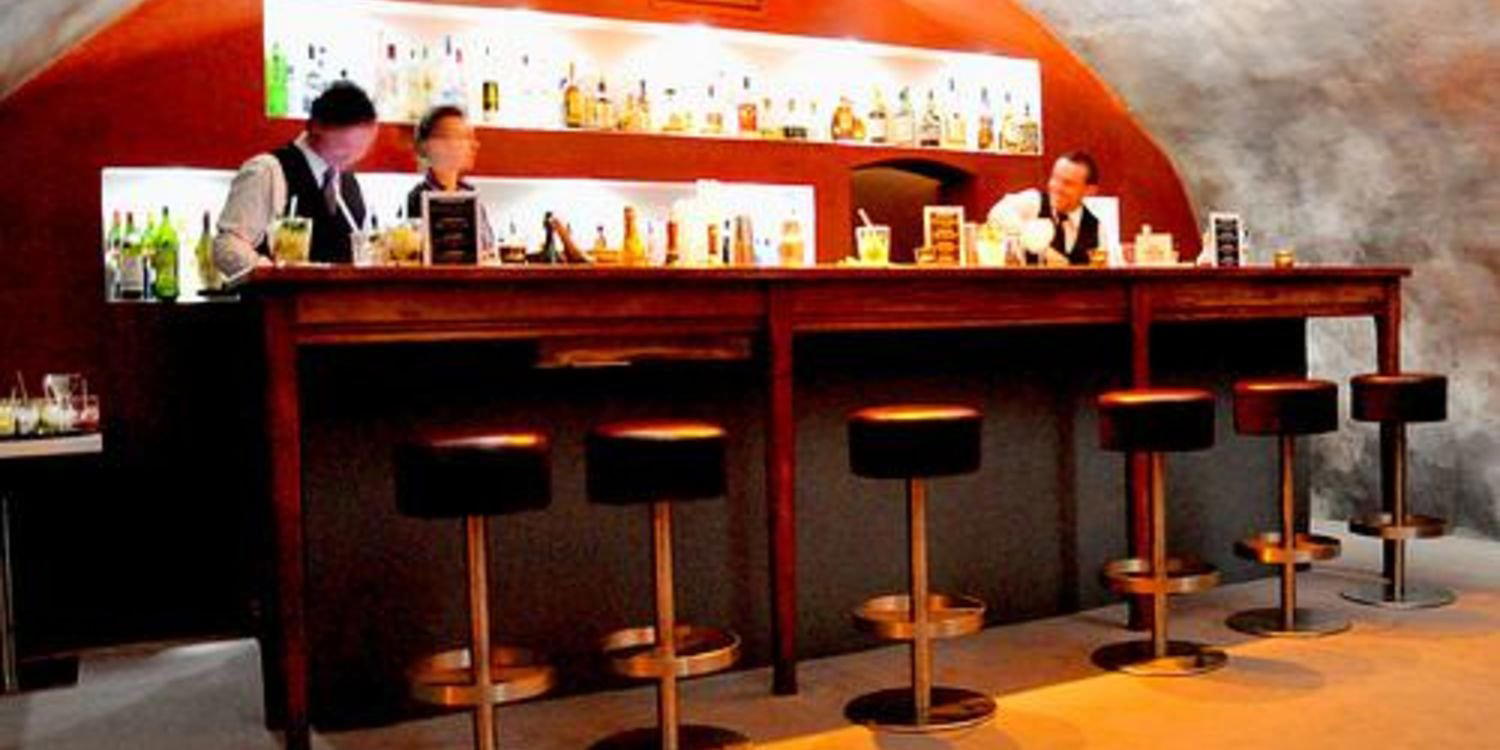
Bars in Nîmes
Browse all →
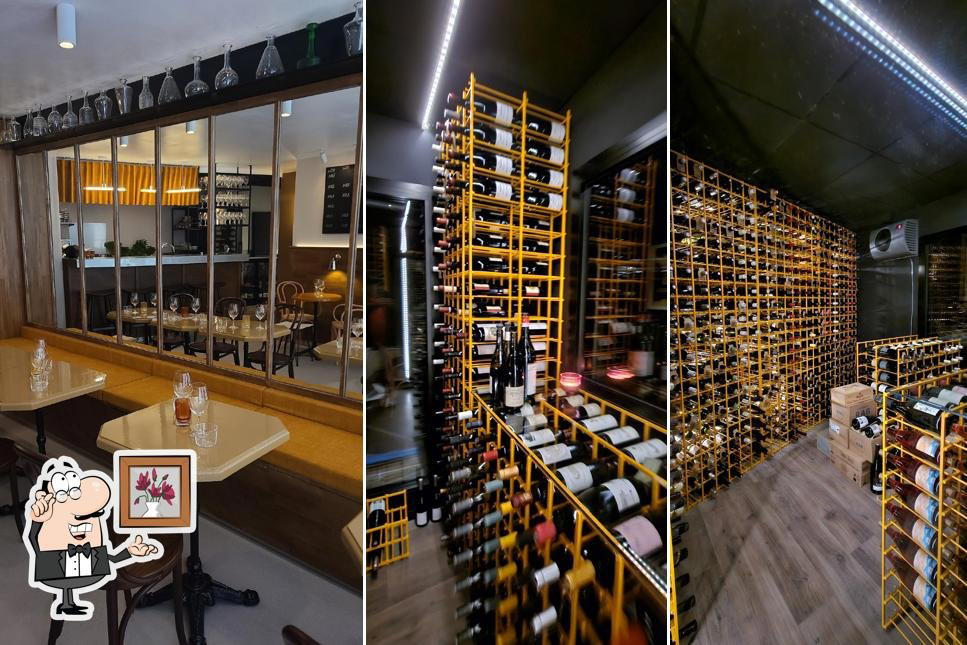
Restaurants in Nîmes
Browse all →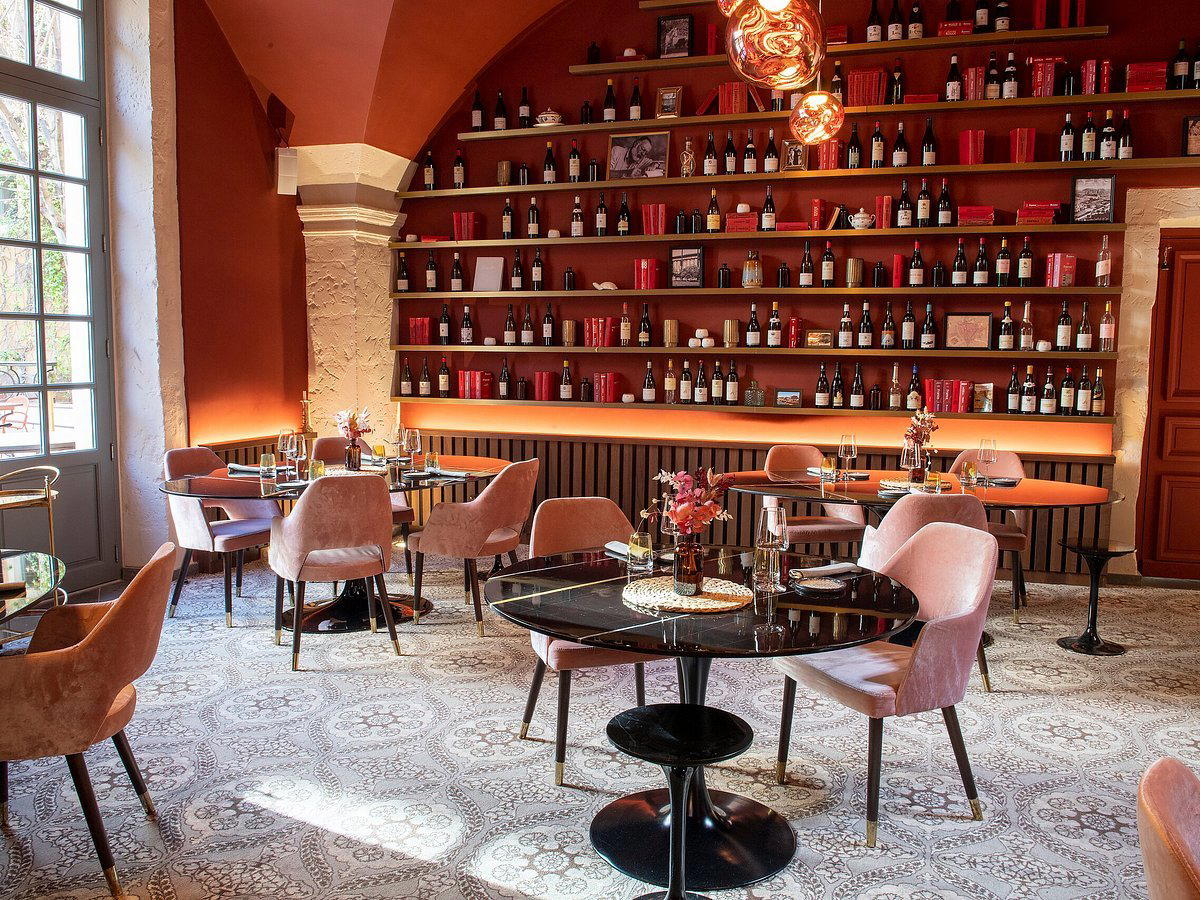
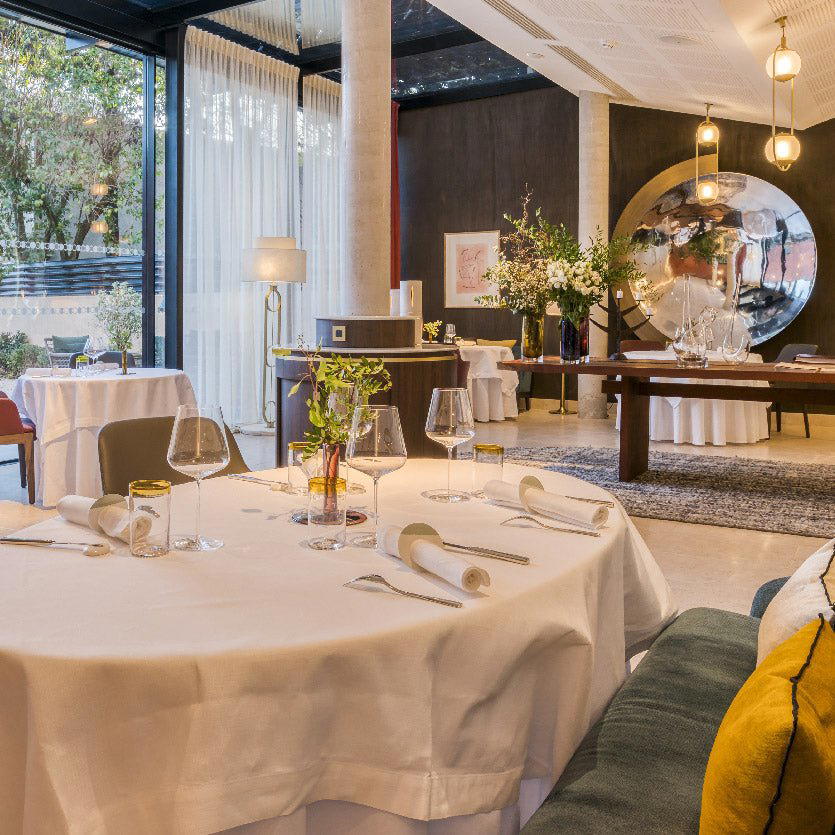
Details
- Romantic
- Elegant
- Intimate
- Cozy
- Sophisticated
- Ornate
- Romantic Getaway
- Anniversary
- Honeymoon
- Weekend Escape
- Garden
- Historic Building
- Pool
- Spa
- Sauna
- Massage
- Wi Fi
- Air Conditioning
- Room Service
- Bar
- Garden
- Garden
- Elevator
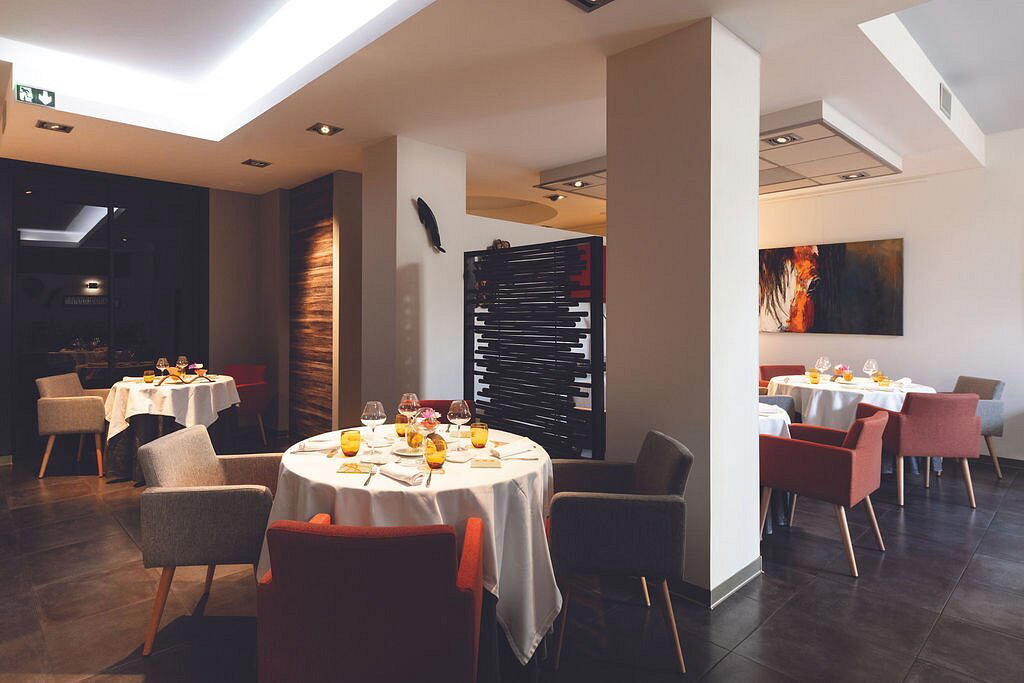
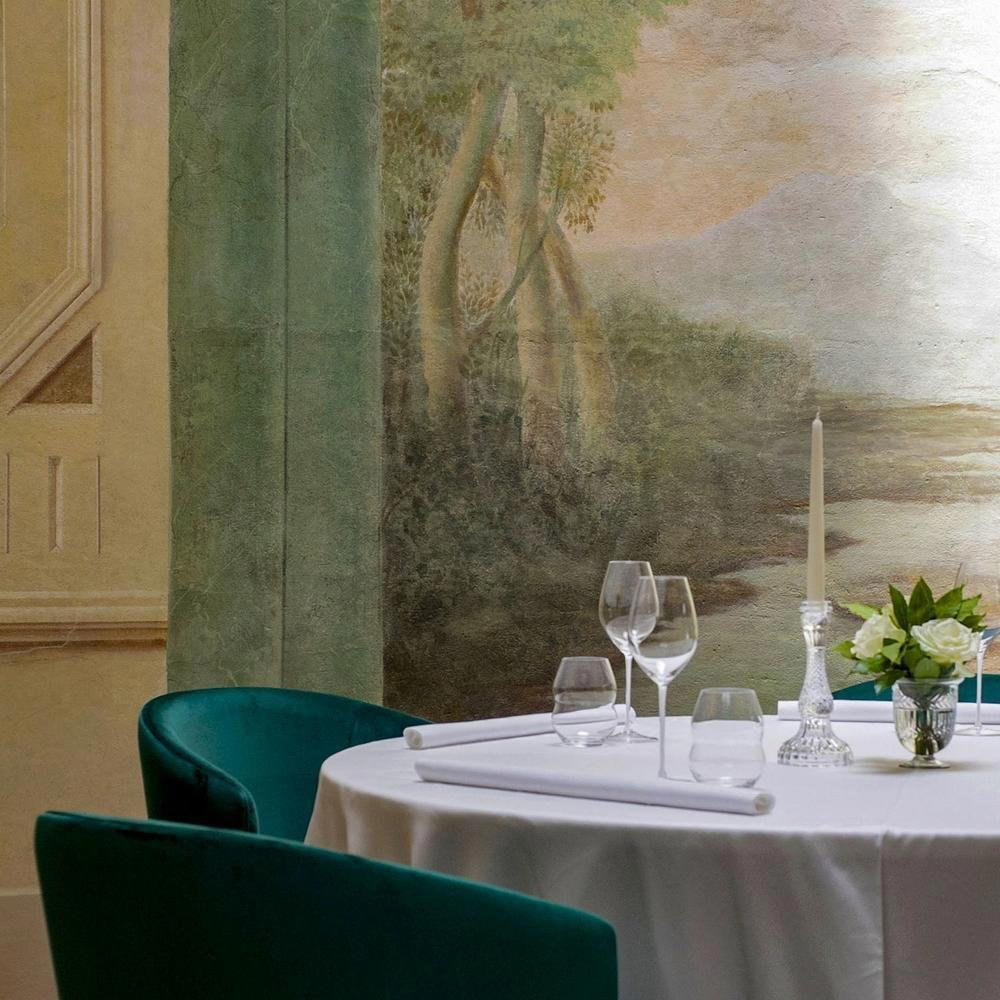
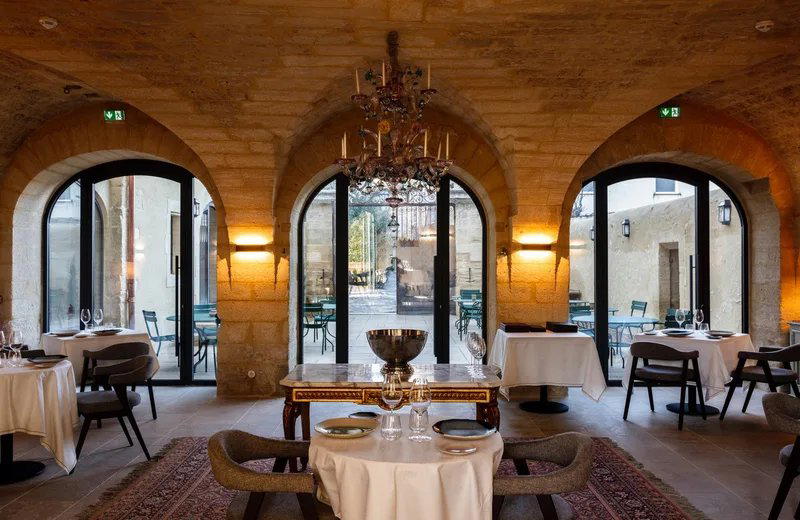
Refined and hushed elegance with candlelit gardens, ornate 18th-century salons, period antiques, and a peaceful, fairy-tale-like atmosphere.