
On the Grand Trunk Road approaching Amritsar's spiritual and commercial heart, Hyatt Regency Amritsar Hotel & Spa occupies a position that few international-chain properties in Punjab can match. Its 2026 La Liste recognition at 90.5 points places it in credentialed company across India's hotel circuit, making it a considered choice for pilgrims, business travellers, and cultural visitors requiring a full-service base near the Golden Temple.
Pearl is the En Primeur Club membership app — saves, bookings, and concierge access live there. Same editors, same standards.
- Address
- MBM Farms, Grand Trunk Rd, Rajinder Nagar, Maqbool Pura, Amritsar, Amritsar Cantt., Punjab 143006
- Phone
- +91 183 525 1234
- Website
- hyatt.com
- Directions
- Get directions
 Saves & bookings on Pearl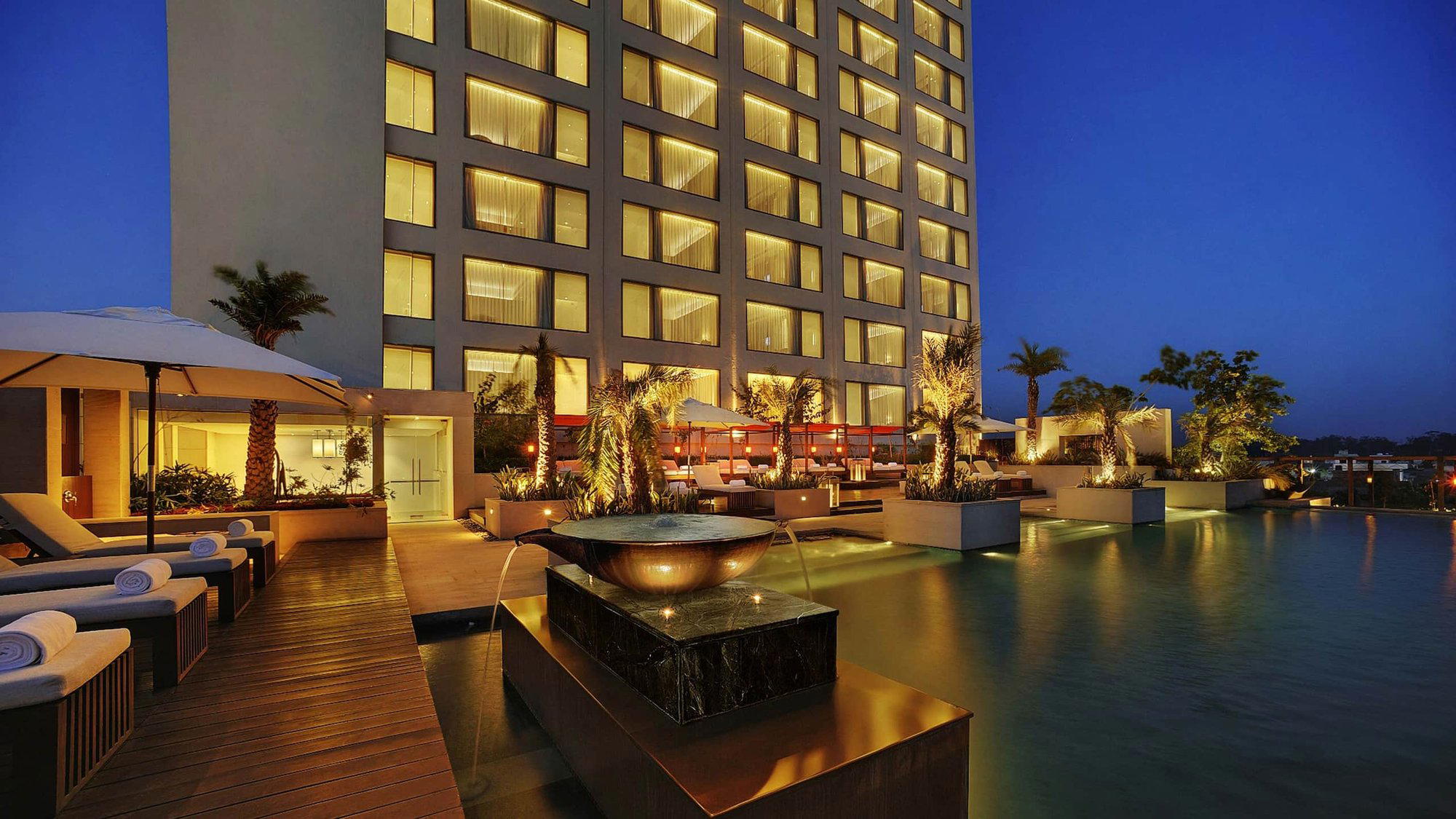
Grand Trunk Road as Address: What That Placement Signals
Amritsar's hospitality market divides cleanly between budget pilgrim lodges clustered in the old city, mid-scale business hotels near the railway station, and a smaller bracket of full-service international properties that use the Grand Trunk Road corridor as their geographic anchor. Hyatt Regency Amritsar Hotel & Spa sits on that corridor at MBM Farms, Rajinder Nagar, far enough from the congestion of the inner lanes to offer functional arrival and departure, close enough that the Golden Temple is a short drive rather than a transfer. That address is not incidental: the GT Road spine has historically connected Amritsar to Lahore, and the area carries a particular weight in the city's identity, placing the property between the civic and the sacred without belonging entirely to either.
For international brands operating in tier-two pilgrimage cities across India, this positioning is a calibrated decision. Properties like Vivanta Vrindavan in Vrindavan face the same tension: how to offer contemporary infrastructure while remaining genuinely proximate to a site that draws millions. The Hyatt Regency here resolves it by operating as a full-service urban hotel rather than a heritage retreat, which means the design brief runs toward contemporary hospitality vocabulary rather than courtyard vernacular.
The Physical Register: Architecture as Editorial Statement
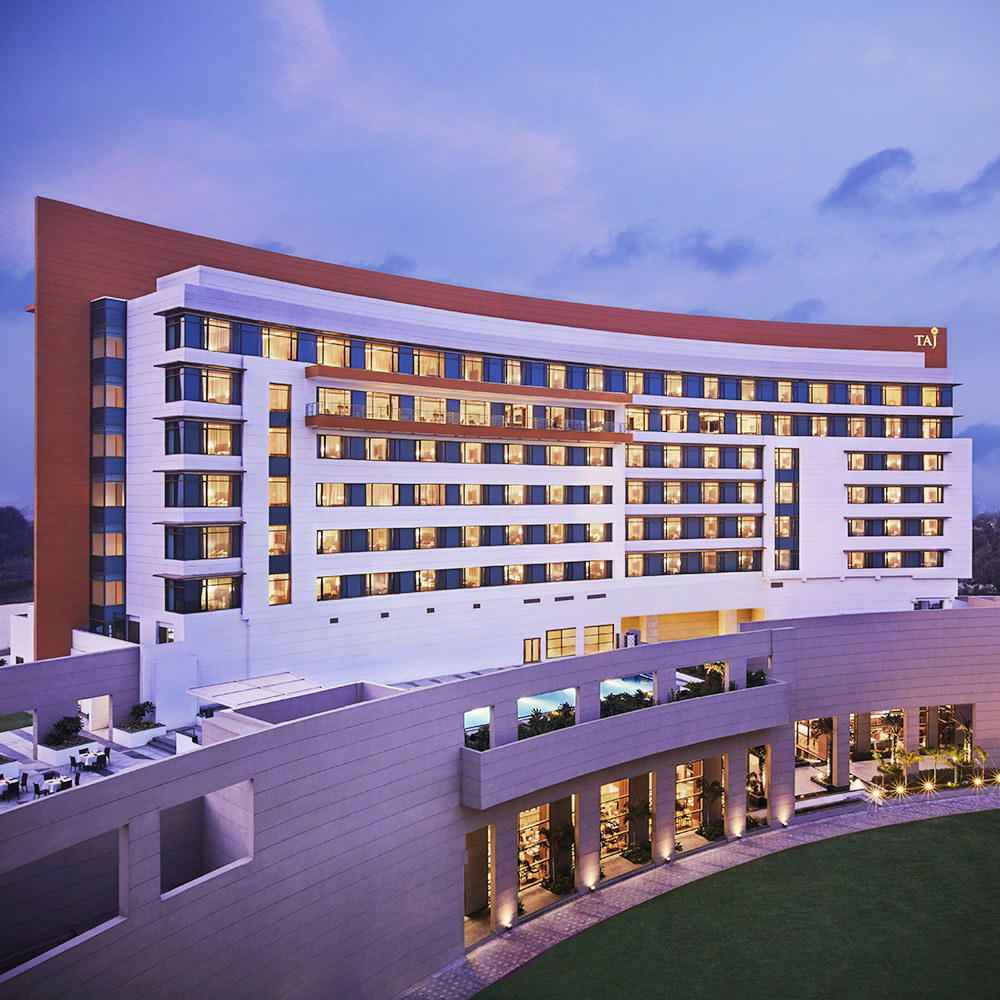
International-chain hotels in Indian pilgrimage cities have historically defaulted to one of two design modes: the replica-haveli approach, which grafts regional motifs onto a contemporary shell, or the clean modernist approach, which prioritises function and leaves cultural reference to the art programme and soft furnishings. Hyatt Regency Amritsar leans toward the latter, a legible contemporary structure whose lobby sequence is designed around volume, light, and arrival logic rather than intricate surface detail.
This is a meaningful editorial choice in a city where the Golden Temple sets an almost impossible benchmark for spatial drama. Amritsar's architecture of faith, the marble causeway, the sarovar, the harmandir illuminated at dusk, operates on principles of reflection, repetition, and approach. A hotel that attempted to compete aesthetically with that would fail; one that positions itself as a calm, well-executed counterpoint to the sensory density of the old city serves its guests more honestly. The property's position at the edge of Maqbool Pura, rather than embedded in the old city grid, supports that logic.
Across India's hotel circuit, the properties that handle this tension most fluently tend to be those with a clear sense of competitive set. The Oberoi Amarvilas in Agra made view-integration its entire architectural premise, with every room oriented toward the Taj Mahal. Alila Fort Bishangarh converted a 17th-century fort into a functioning luxury property. Hyatt Regency Amritsar's approach is less dramatic but more pragmatic: deliver international-standard comfort in a city where that standard was, until recently, genuinely undersupplied.
La Liste Recognition and What It Means for the Property's Tier
La Liste's 2026 ranking of Hyatt Regency Amritsar at 90.5 points is the property's most legible trust signal. La Liste aggregates critical assessments across sources, and a score in the 90-point band places a hotel in credentialed but not rarefied territory, above the mid-market threshold, below the 95-plus bracket occupied by India's most decorated addresses.
That positioning is appropriate to Amritsar's market. The city receives an enormous volume of religious visitors whose priority is proximity and reliability, plus a smaller but growing number of cultural and culinary travellers drawn by the Punjabi table's global reputation. A 90.5-point La Liste hotel serves both cohorts more effectively than either a budget lodge or a boutique property with limited infrastructure.
For comparison within the broader India hotel landscape: properties like The Taj Mahal Palace, Mumbai and The Leela Palace New Delhi operate in a different competitive set, metro, internationally transited, with F&B; programmes that draw non-residents. Ananda in the Himalayas occupies a destination-wellness niche. Hyatt Regency Amritsar's niche is narrower and more city-specific: reliable, internationally branded infrastructure in a pilgrimage destination where that was historically absent.
Amritsar's Table and What a Hotel Kitchen Can Offer
Any serious account of Amritsar's food culture has to reckon with the fact that the city's most celebrated eating experiences happen at dal makhani stalls open since the pre-Partition era, at the Golden Temple's langar, and at roadside dhabas that predate any branded hotel by generations. Punjabi cooking in Amritsar is not a cuisine that needs hotel kitchens to make its case.
Where a hotel kitchen becomes relevant in this context is in the logistics of arrival and departure. Amritsar sees significant international traffic via Sri Guru Ram Dass Jee International Airport, and guests arriving late or leaving early need a reliable dining room. A full-service property on the GT Road corridor solves that problem in a way that old-city guesthouses cannot. The spa component similarly addresses a gap: pilgrimage itineraries are physically demanding, and recovery infrastructure at hotel scale is not widely available in Amritsar's accommodation market.
Planning and Practical Context
Amritsar's peak travel seasons follow two logics: the Sikh festival calendar, which drives the city's largest visitor volumes, and the general North India travel window running from October through March, when temperatures are moderate and Golden Temple visits are most comfortable. The Baisakhi festival in April and Diwali/Gurpurab observances bring the highest single-week concentrations of visitors. Booking ahead of those windows is prudent at any full-service property in the city. The Grand Trunk Road address makes road transfers to and from the airport and the railway station direct compared to old-city hotels, where final-kilometre congestion can extend journey times significantly.
Travellers building a North India circuit around pilgrimage or cultural itineraries will find natural companions in properties like Haveli Dharampura in Delhi for heritage texture, or Amanbagh in Ajabgarh and The Leela Palace Jaipur if the circuit extends into Rajasthan.
How It Stacks Up
Comparable venues nearby, for context on price, style, and recognition.
| Venue | Cuisine | Price | Awards | Notes |
|---|---|---|---|---|
| Hyatt Regency Amritsar Hotel & SpaThis venue — the venue you are viewing | Contemporary luxury urban retreat | $$$$ | 5-Star | Not listed |
| Taj Swarna | Contemporary Punjabi heritage luxury | $$$$ | 5-Star | Basant Avenue |
| Taj City Centre Gurugram | Contemporary luxury hotel with Indian accents | $$$$ | 5-Star | Sector 44 |
| The Oberoi Rajgarh Palace, Khajuraho | Restored 350-year-old royal Bundelkhand palace with British colonial influences and contemporary elegance. | $$$$ | 5-Star | Chandranagar |
| Taj Green Cove Resort & Spa, Kovalam | Luxury tropical resort combining contemporary Balinese design with traditional Kerala architecture on a hillside setting. | $$$$ | 5-Star | Kovalam |
| Taj Theog Resort & Spa, Shimla | Lodge-style luxury resort blending contemporary architecture with mountain tranquility. | $$$$ | 5-Star | Theog |
Recognition history
Dated appearances from independent guides and award organizations, with the underlying list record or original source where available.
La Liste Top Hotels
La Liste

At a Glance
- Elegant
- Sophisticated
- Modern
- Family Vacation
- Business Trip
- Wellness Retreat
- Rooftop Pool
- Destination Spa
- Pool
- Spa
- Fitness Center
- Room Service
- Concierge
- Wi Fi
- Skyline
- Pool
- Spa
- Fitness Center
- Room Service
- Concierge
- Wi Fi
Inviting atmosphere with soundproofed rooms, serene poolside relaxation, and elegant contemporary design praised for comfort and cleanliness.