Hotel Revival Baltimore

Hotel Revival Baltimore occupies a carefully restored Beaux-Arts landmark on Monument Street, positioning itself within the city's growing cohort of design-led independents. The property's architecture sets the tone before guests reach the lobby, blending early-twentieth-century bones with a contemporary interior sensibility. For visitors who want to understand Baltimore beyond the Inner Harbor, the Mount Vernon address puts them squarely in the right neighbourhood.
Pearl is the En Primeur Club membership app — saves, bookings, and concierge access live there. Same editors, same standards.
- Address
- 101 W Monument St, Baltimore, MD 21201
- Phone
- +1 410 727 7101
- Website
- hotelrevivalbaltimore.com
- Directions
- Get directions
 Saves & bookings on Pearl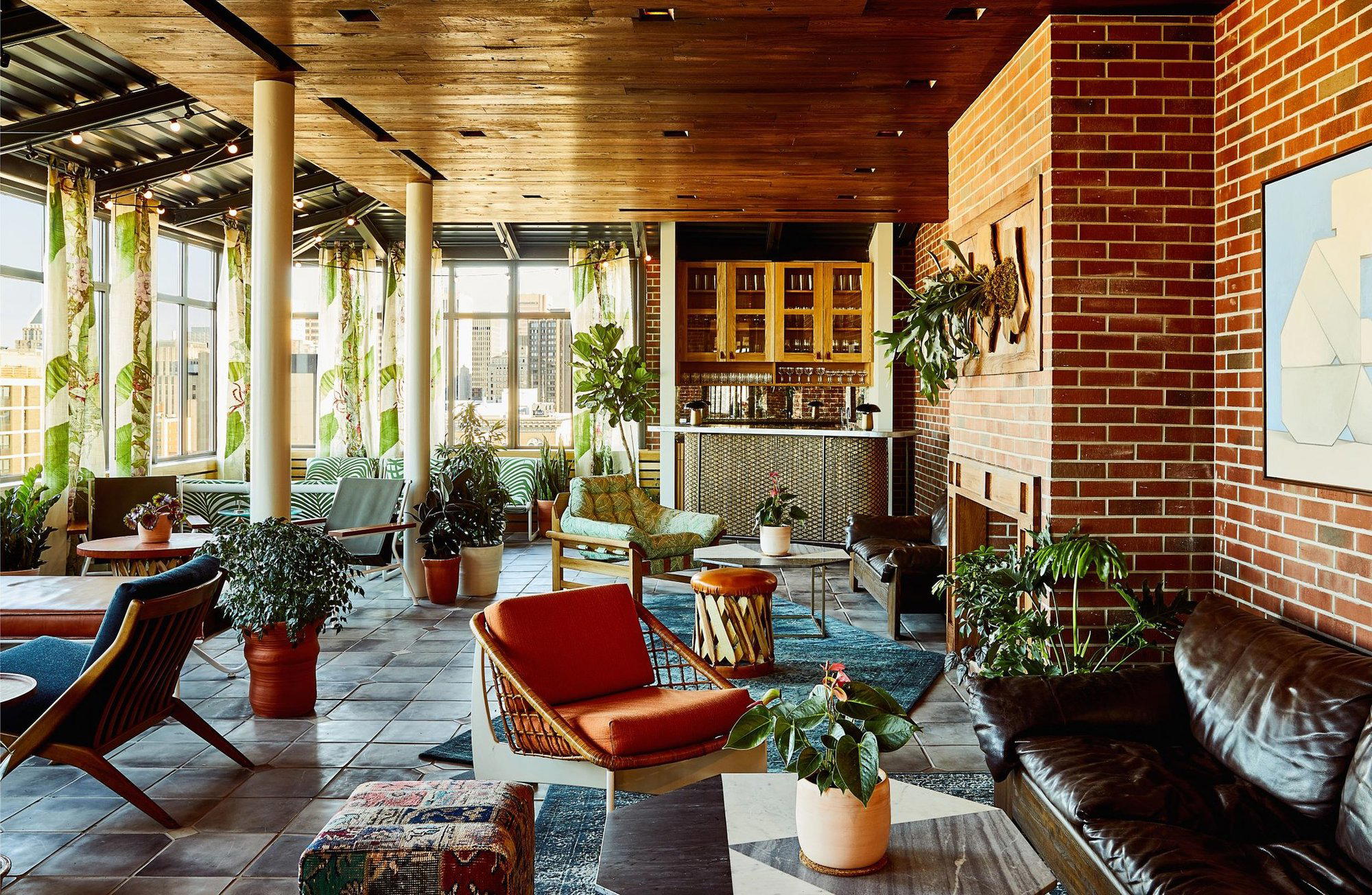
Monument Street and the Architecture That Sets the Tone
Baltimore's hotel market has long been dominated by either convention-adjacent towers or Inner Harbor properties that trade primarily on waterfront access. A smaller cohort of design-conscious independents has emerged in recent years, concentrated in the city's historic districts, where the existing building stock makes a stronger architectural argument than any new-build could. Hotel Revival Baltimore, at 101 West Monument Street, belongs to that cohort. The address alone signals a different kind of stay: Monument Street runs through Mount Vernon, the neighbourhood that holds the original Washington Monument (completed in 1829, predating the more famous version in Washington D.C.), the Walters Art Museum, and a concentration of nineteenth-century rowhouses and institutional buildings that give the area a density of historic fabric unusual for an American city of Baltimore's size.
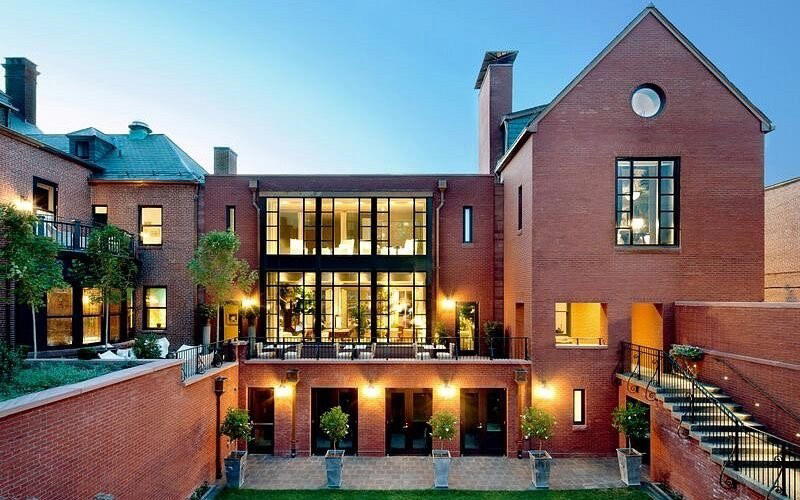
The building itself is Beaux-Arts in origin, a style that arrived in American civic and commercial architecture in the late nineteenth century and brought with it a seriousness about proportion, ornamental stonework, and the relationship between a building's façade and its street. Beaux-Arts structures were designed to be read from the outside in, with the exterior announcing the status and intention of whatever happened inside. Approaching Hotel Revival from Monument Street, that logic still operates. The limestone and brick façade, the carved detailing, the rhythm of the windows — these are not decorative choices applied after the fact but structural arguments built into the original design. Properties that attempt this kind of gravitas in new construction, even well-funded ones, rarely achieve the same result. The bones here were already there.
Interior Sensibility and the Question of Adaptive Reuse
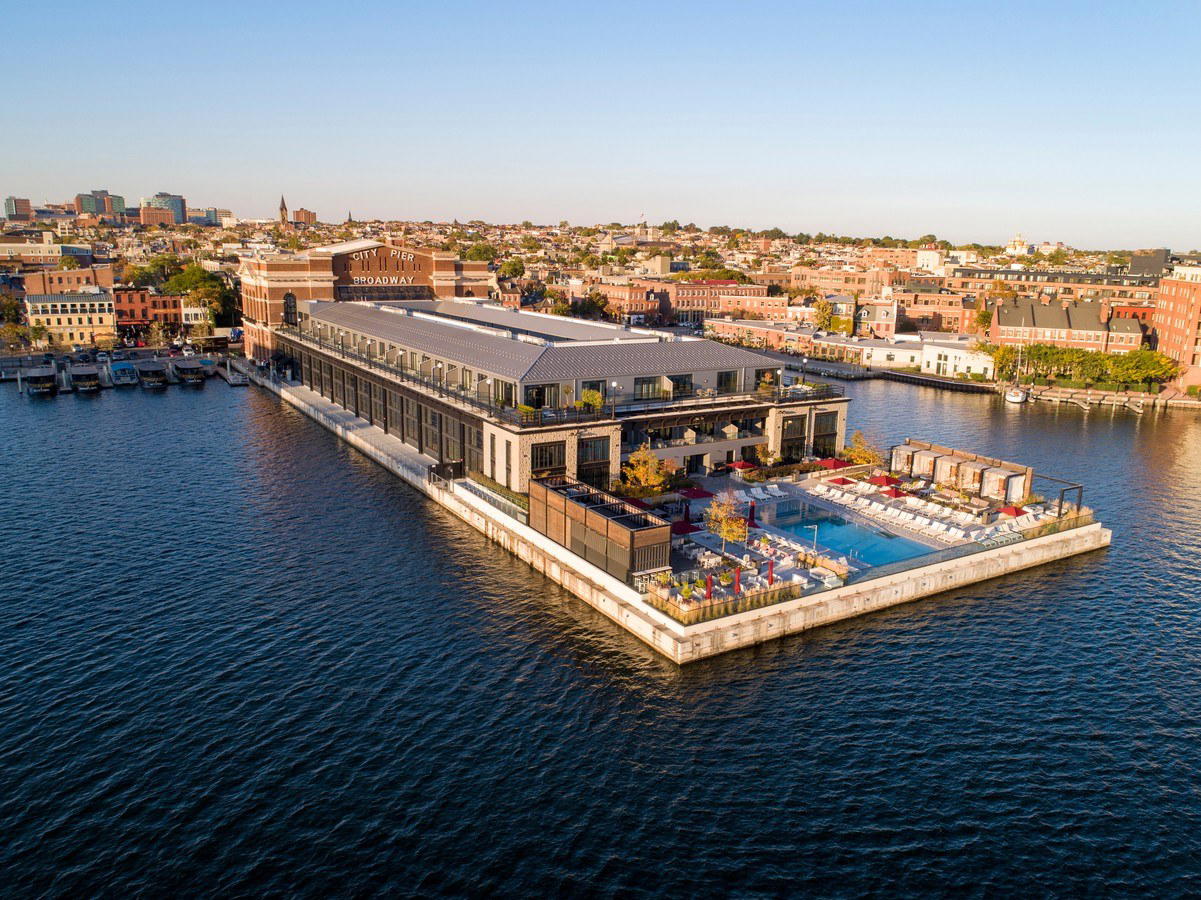
The more contested design challenge in hotels of this type is always the interior: how much of the original fabric to preserve, how to layer contemporary comfort on top of a historic shell without the result feeling either museological or jarring. Baltimore has examples of both approaches done well and done poorly. The city's premium independent sector — which includes The Ivy Hotel in Mount Vernon's immediate neighbour streets and Sagamore Pendry Baltimore in the renovated recreation pier at Fells Point, has established a local benchmark for adaptive reuse that takes the original architecture seriously rather than using it as a backdrop for a trend-forward fit-out.
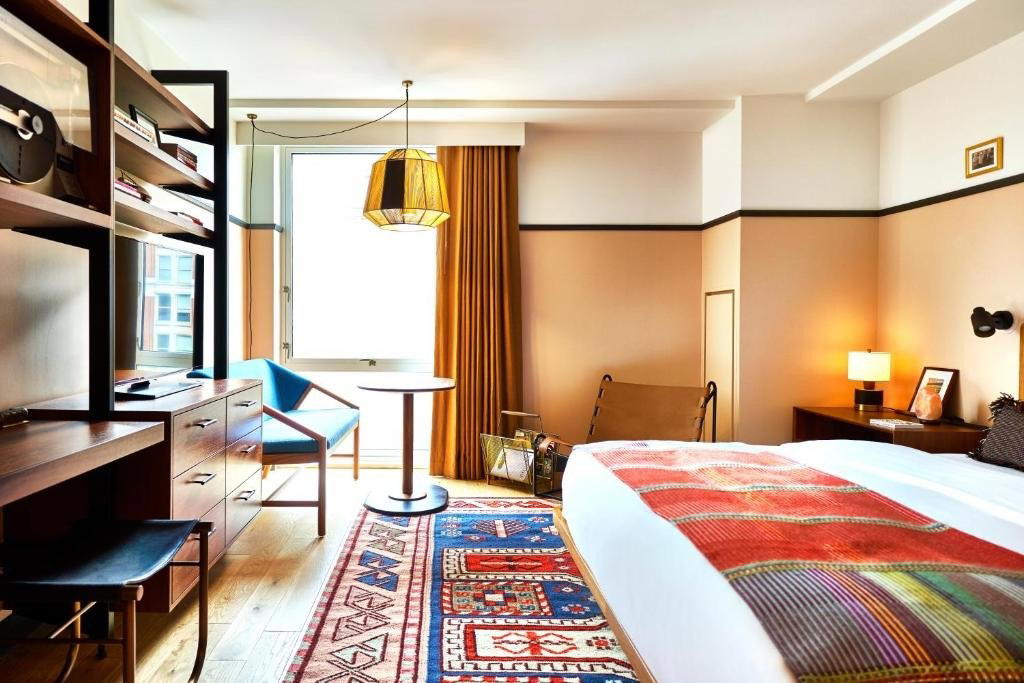
Hotel Revival's interior approach leans into the building's period character while introducing colour and material choices that read as deliberate rather than reverential. This is a design strategy that positions the property in a distinct tier from the more minimal, Scandinavian-influenced aesthetic that has become the default for lifestyle hotels elsewhere. In American cities where that default has saturated the market, think of the pressure on properties like guesthouse by good neighbor to carve out a distinct visual identity, differentiation through period-appropriate ornament and a warmer, more layered palette carries real commercial logic.
Mount Vernon as a Hotel Context
Where a hotel sits in a city shapes what kind of stay it enables, sometimes more than the property's own programming. Mount Vernon is Baltimore's cultural district in the most literal sense: the Walters Art Museum is within walking distance, the Peabody Institute (part of Johns Hopkins University) occupies a prominent building a few blocks away, and the neighbourhood's restaurant and bar density has increased notably over the past decade. For guests whose interest in Baltimore extends beyond the Inner Harbor's tourist infrastructure, this is a more functional base than a waterfront address. The Four Seasons Hotel Baltimore and Pendry Baltimore operate closer to the water, serving a different set of priorities. Mount Vernon properties trade on neighbourhood access and historic character rather than views or proximity to the convention centre.
The neighbourhood also benefits from its position within the wider city: Penn Station, Baltimore's Amtrak hub, sits roughly a mile north, making Hotel Revival a practical choice for visitors arriving by rail from Washington D.C. (approximately 40 minutes), Philadelphia, or New York. For a certain kind of traveller, one who prefers to arrive by train, walk to dinner, and spend the morning in a museum, the logistics align more neatly here than at many competing addresses. Readers interested in comparable rail-accessible urban properties in the Northeast corridor might also consider Raffles Boston in Boston, which occupies a similarly prominent historic building in a walkable urban district.
Placing Hotel Revival in the Baltimore Competitive Set
Baltimore's premium hotel tier is not large, and the independents within it tend to occupy distinct niches. The Ivy Hotel is the city's most intimate option, with a house-party format and a price point that reflects its exclusivity. Sagamore Pendry brings a sports-ownership narrative and a Fells Point waterfront location. Hotel Ulysses represents a newer, more compact entry in the design-led independent segment. Hotel Revival sits somewhere in the middle of this range: larger than The Ivy, more historically grounded than a pure lifestyle play, and anchored to a neighbourhood whose cultural credentials give it a specific kind of appeal to travellers who research their destinations rather than defaulting to chain loyalty points.
Internationally, the design-led historic conversion model that Hotel Revival represents has strong comparators in properties like Chicago Athletic Association in Chicago, which similarly converted a landmark building with strong original architecture into a hotel with a distinct aesthetic identity. The parallels are instructive: both properties rely on their building's existing gravitas rather than imported brand cachet, and both are located in neighbourhoods with strong cultural programming rather than purely commercial or tourist infrastructure. For readers whose frame of reference extends further, Aman New York in New York City and The Fifth Avenue Hotel in New York City represent the upper ceiling of the same archetype, landmark buildings, strong period architecture, interiors that argue with rather than erase the original fabric, at a substantially higher price point.
For those whose travel extends beyond the Mid-Atlantic, properties like Troutbeck in Amenia, Post Ranch Inn in Big Sur, and SingleThread Farm Inn in Healdsburg represent design-conscious independents in very different geographic registers, each making a strong argument for place over brand. Hotel Revival belongs to the same broader movement, applied to an urban mid-Atlantic context.
Planning a Stay
The Monument Street address means arrivals by car will find parking in the surrounding Mount Vernon streets and nearby structures; the neighbourhood is navigable on foot for most cultural and dining purposes. For Baltimore dining beyond the hotel, our full Baltimore restaurants guide covers the city's current restaurant scene across neighbourhoods. Guests considering how Hotel Revival fits within a wider East Coast itinerary should note the Amtrak connections at Penn Station as the most efficient link to Washington D.C. and New York.
In Context: Similar Options
| Venue | Cuisine |
|---|---|
| Hotel Revival BaltimoreThis venue — the venue you are viewing | This venue |
| Sagamore Pendry Baltimore | Michelin 1 Key |
| The Ivy Hotel | Michelin 2 Key |
Recognition history
Dated appearances from independent guides and award organizations, with the underlying list record or original source where available.
Mr & Mrs Smith Smith Seal of Approval
Mr & Mrs Smith
Michelin Selected
Michelin
At a Glance
- Modern
- Trendy
- Elegant
- Sophisticated
- Weekend Escape
- Business Trip
- Rooftop Pool
- Historic Building
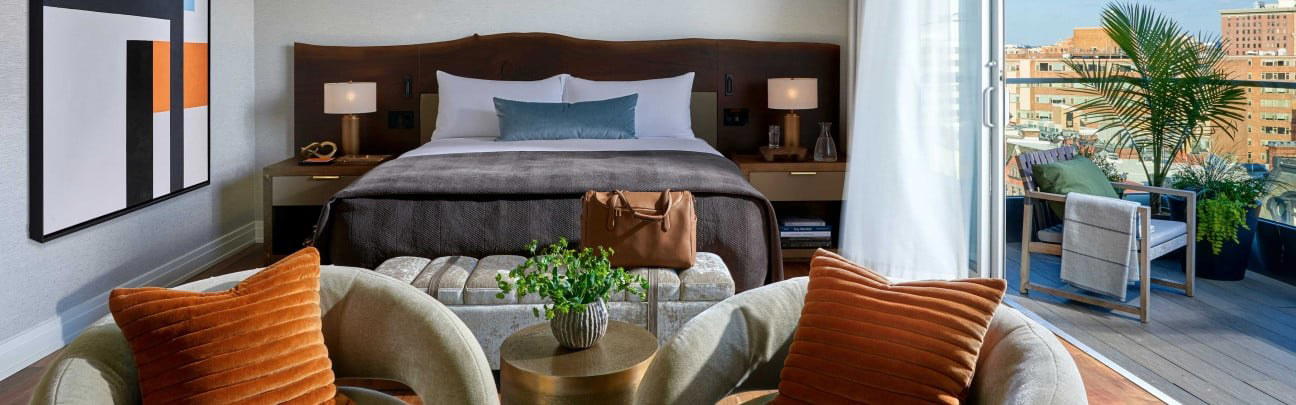
- Panoramic View
- Wi Fi
- Fitness Center
- Room Service
- Concierge
- Skyline
- Wi Fi
- Fitness Center
- Room Service
- Concierge
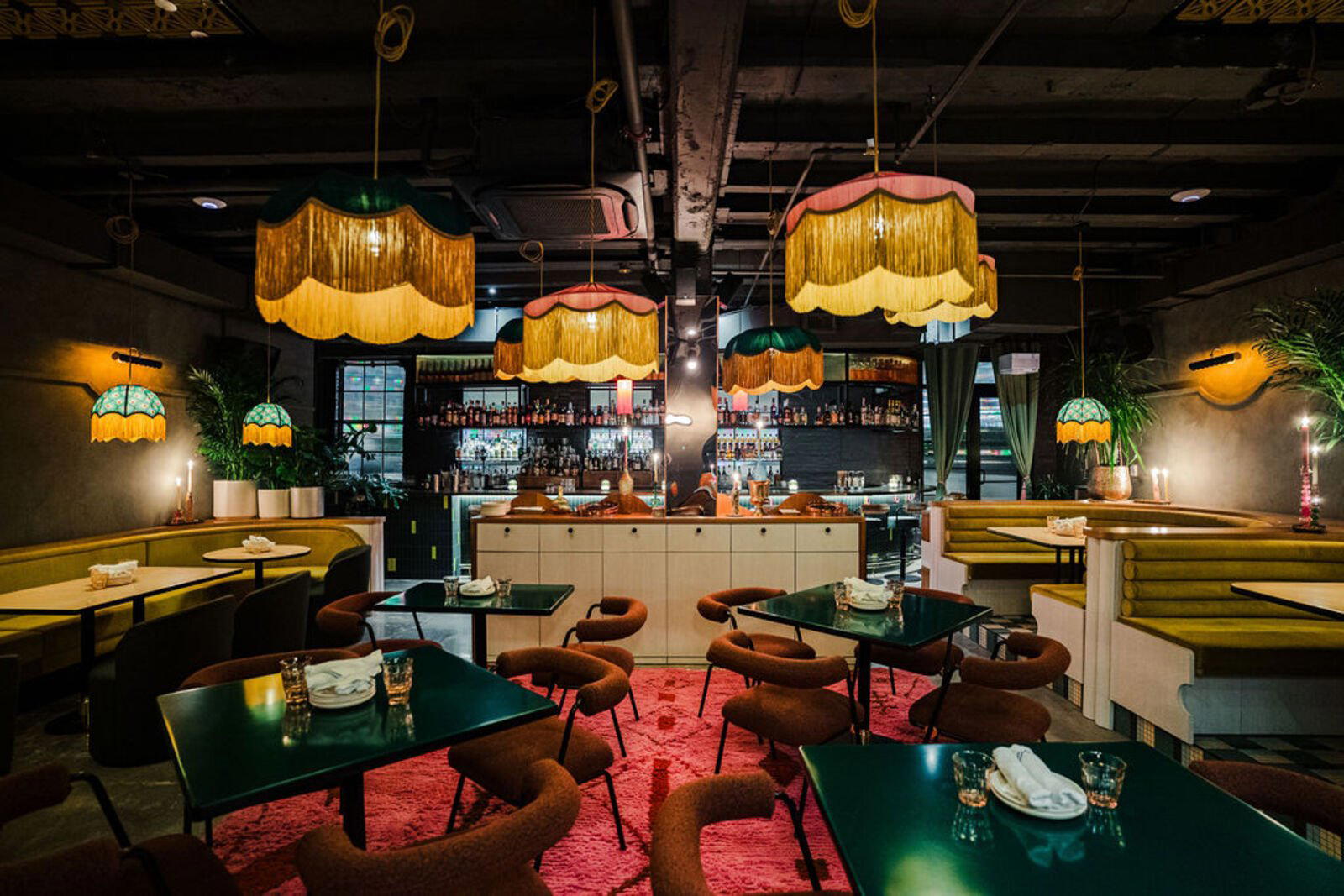
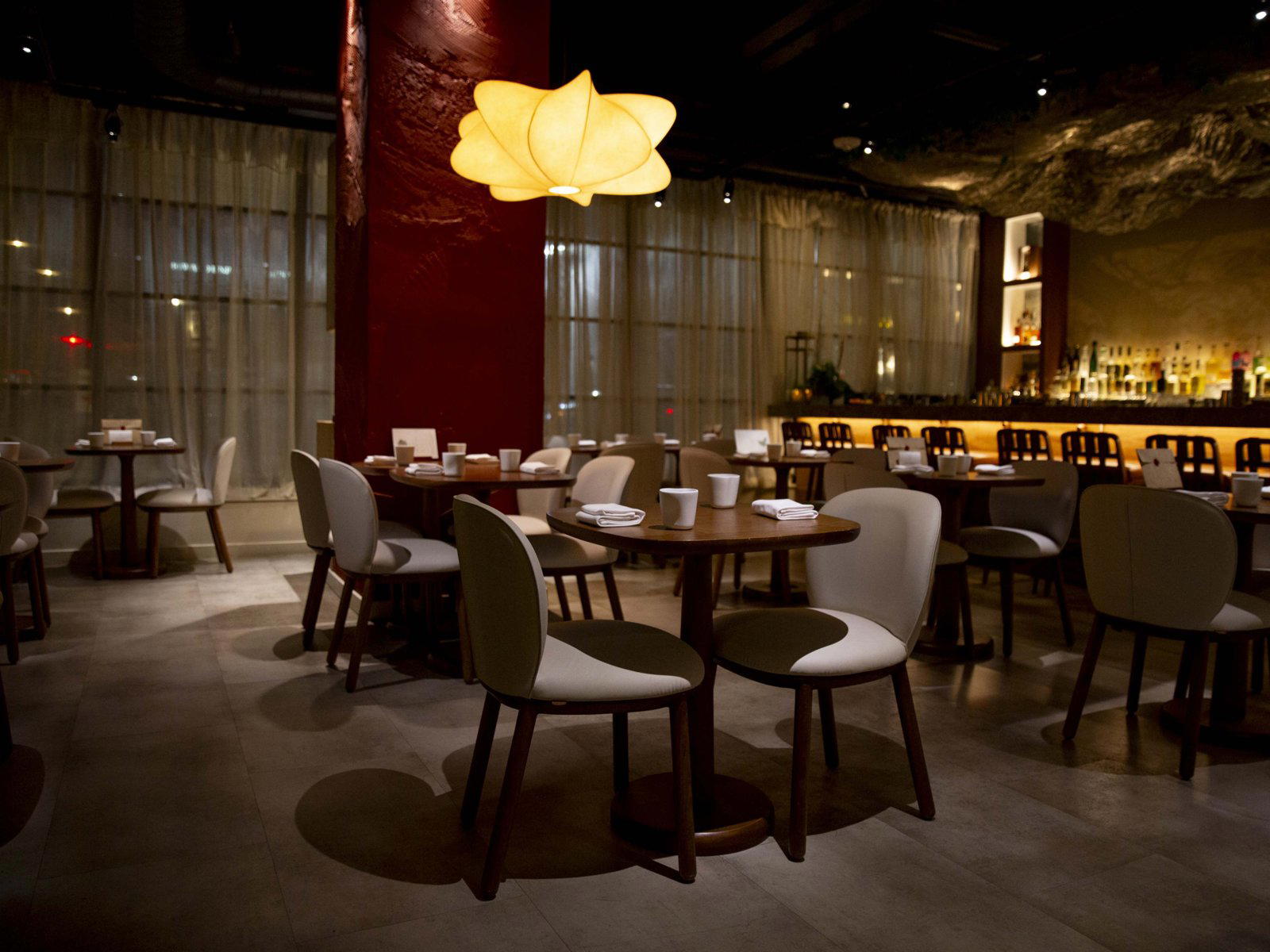
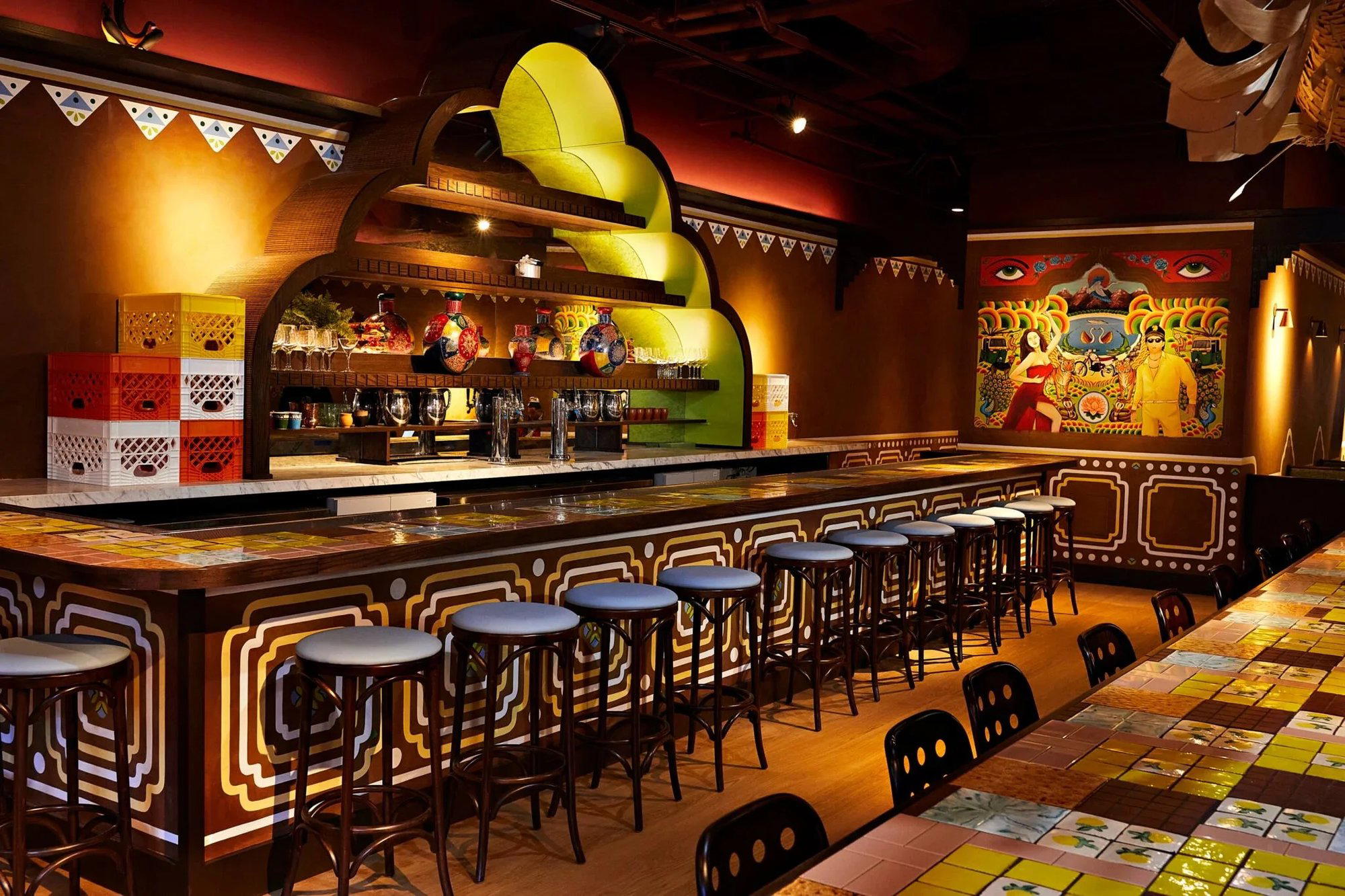
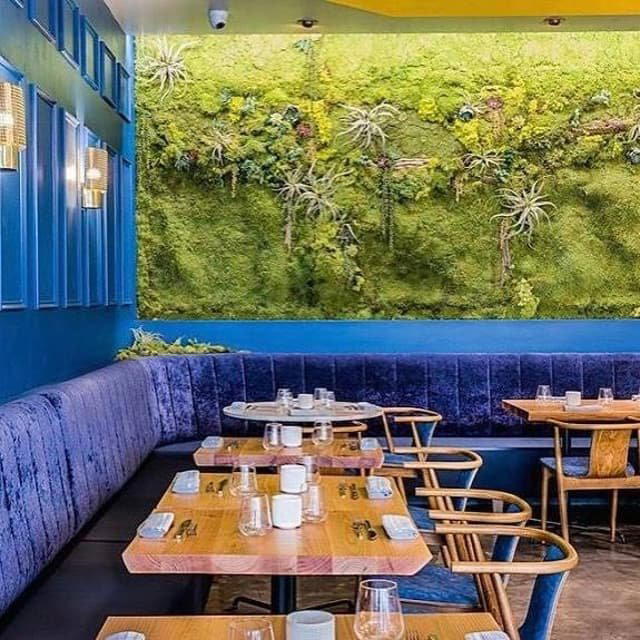
Eclectic mix of American styles with 1970s-inspired lounge elements, modernist designs, dark leather furnishings, and lively, bold atmosphere.
Know Before You Go
- Getting there
- 101 W Monument St, Baltimore, MD 21201