Hotel Madera
Hotel Madera occupies a landmark address on New Hampshire Avenue NW, placing guests within walking distance of Dupont Circle's gallery row and K Street's corridors of power. The property sits in a tier of Washington boutique hotels that prioritize architectural character over chain-standard uniformity, making it a considered choice for travelers who want the capital's political geography without its institutional interiors.

Pearl is the En Primeur Club membership app — saves, bookings, and concierge access live there. Same editors, same standards.
- Address
- 1310 New Hampshire Ave NW, Washington, DC 20036
- Phone
- (202) 296-7600
- Website
- hotelmadera.com
- Directions
- Get directions
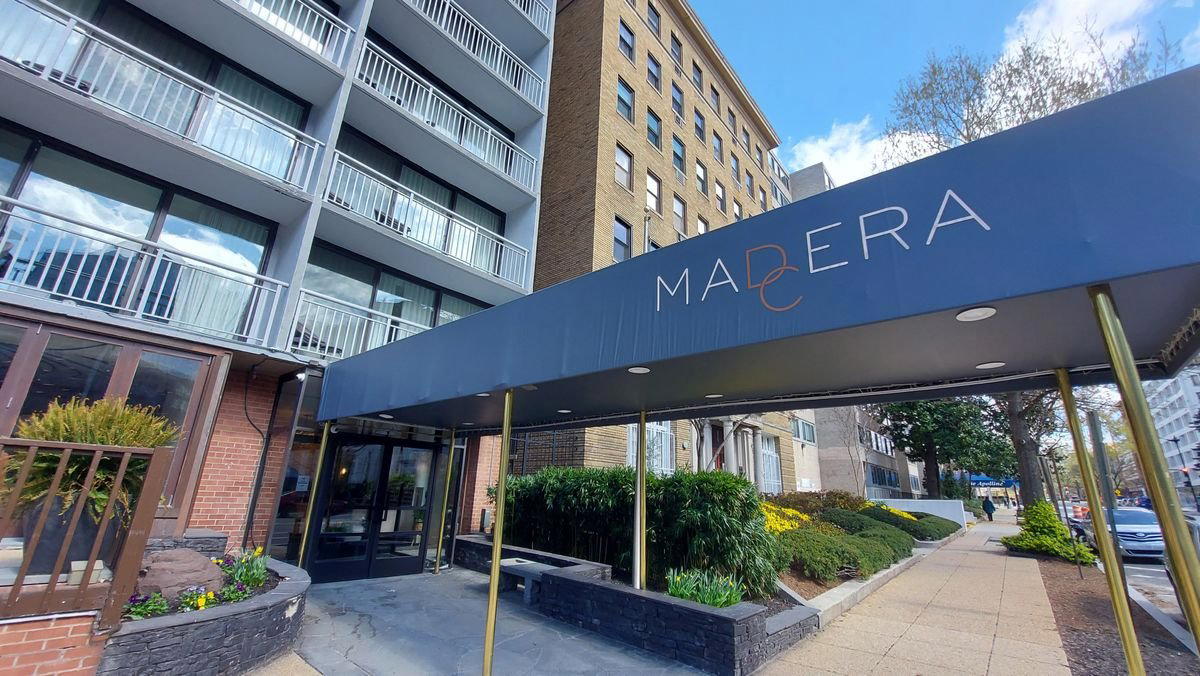
A Dupont Circle Address with a Distinct Residential Character
The stretch of New Hampshire Avenue NW that runs through Dupont Circle has long attracted a particular kind of visitor to Washington, D.C.: one who prefers the neighborhood's brownstone scale and walkable density over the grand-boulevard formality of properties closer to the Mall. Hotel Madera at 1310 New Hampshire Ave NW sits in that tradition, occupying a position in one of the capital's most historically textured residential corridors. The area surrounds guests with embassies, independent restaurants, and the kind of street-level rhythm that larger convention-oriented hotels in Penn Quarter or Downtown rarely replicate. That geographical context shapes the experience before a guest even crosses the threshold.
Dupont Circle's hotel tier has diversified significantly over the past decade. Properties like The Dupont Circle Hotel anchor the upper-midscale segment on the Circle itself, while Hotel Madera operates one block off the main plaza on a quieter side street, which gives it a lower-profile, more residential character by default. Guests who know the neighborhood understand that proximity to the Circle without the traffic noise of Connecticut Avenue is something worth seeking out.
Design Language: Boutique Scale in a City of Institutional Grandeur
Washington, D.C. has a pronounced architectural identity problem for smaller hotels: the city's dominant visual grammar is federal neoclassicism, and properties that don't occupy historic landmark buildings have to work harder to establish aesthetic authority. Hotel Madera's building stock belongs to the urban residential idiom of late-19th and early-20th century Washington, the same architectural moment that defined much of Dupont Circle's character. That heritage places it in a different conversation from the formal grandeur of The Hay-Adams Hotel or the Beaux-Arts civic weight of Mayflower Inn.
The broader category of design-led boutique hotels in American cities has split between two approaches over the past fifteen years. One school leans into industrial minimalism, exposed concrete, and statement lighting as signals of contemporary taste. The other works with existing architecture, letting period detail anchor a warmer, more layered interior. Hotel Madera occupies a quieter position in that spectrum, prioritizing approachability over programmatic intensity.
For travelers comparing Washington properties at a design level, the contrast with larger-footprint luxury is instructive. Rosewood Washington, D.C. and Pendry Washington DC at The Wharf both deliver high design ambition at considerably larger scale and price points. Hotel Madera operates in a more intimate register, which suits a different travel profile: the guest who wants a quiet base in a walkable neighborhood rather than a hotel that functions as a destination in itself. Across the American market, properties like Troutbeck in Amenia and SingleThread Farm Inn in Healdsburg demonstrate how smaller, location-specific properties build identity through context rather than scale. Hotel Madera draws on a similar logic within the urban framework of D.C.
The Neighborhood as Amenity
Dupont Circle functions as one of the capital's most self-contained neighborhoods, with a concentration of independent restaurants, wine bars, bookshops, and gallery spaces within a compact walkable radius. For guests staying at Hotel Madera, the immediate surroundings serve as an extension of what any hotel amenity program might offer. This matters particularly in Washington, where many properties position themselves as sealed environments with in-house dining as the primary food-and-beverage offering. A Dupont Circle address allows guests to step directly into a neighborhood that has its own culinary and cultural character without requiring a cab or Metro ride.
The walkability calculus also extends to civic attractions. Dupont Circle sits roughly equidistant between Georgetown and Logan Circle, with Rock Creek Park accessible on foot to the northwest. The Smithsonian campus and the National Mall require a short Metro ride from the Dupont Circle station, which is less than ten minutes from the hotel on foot. That logistical efficiency matters for visitors whose primary reason for being in D.C. is institutional, whether for government meetings, think-tank conferences, or museum programming concentrated on the Mall.
Positioning Within the Washington Boutique Market
The Washington hotel market has consolidated around two poles over the past decade: trophy luxury properties with heavy F&B investment and nationally recognized restaurant concepts, and mid-tier chain product oriented toward business and group travelers. The boutique middle has remained thinner than in comparable cities like New York or Chicago, where independent properties have more established infrastructure for visibility and distribution.
Hotel Madera competes in that boutique middle ground, where its Dupont Circle location is its most differentiating asset. Properties elsewhere in the city that aim for a similar positioning include The Jefferson, which has built a stronger luxury identity through its restaurant program and suite product, sitting at a higher price tier. Understanding where Hotel Madera falls in that sequence helps travelers calibrate expectations: it offers neighborhood positioning and boutique scale without the full-service amenity depth of the city's leading luxury tier.
For travelers mapping U.S. boutique hotel options more broadly, the comparison set extends beyond Washington. Raffles Boston demonstrates how a larger institutional property can anchor itself in a historic urban context; The Fifth Avenue Hotel in New York City shows what design investment at a smaller footprint can achieve. Aman New York sits at the upper extreme of that spectrum, illustrating how significant the range within the boutique category has become. Hotel Madera occupies a more accessible position on that curve.
Planning Your Stay
Hotel Madera's address at 1310 New Hampshire Ave NW places it a short walk from the Dupont Circle Metro station on the Red Line, which connects directly to Union Station, Farragut North, and Woodley Park. Guests arriving by Amtrak or regional rail can reach the hotel in under 20 minutes from Union Station without a car. Reagan National Airport (DCA) is the most practical air gateway, with a direct Metro connection on the Blue and Yellow lines requiring one transfer at Metro Center to reach the Red Line. Dulles International is considerably further and typically requires either a rideshare or the Silver Line Express bus.
Washington's climate runs warm and humid from June through August, with spring (late March through May) and fall (September through November) generally offering the most comfortable conditions for a stay that relies on neighborhood walkability. The city's conference and lobbying calendar means midweek rates at many properties run higher than weekend rates, which is the inverse of leisure-oriented markets. Booking Hotel Madera for a Thursday-to-Sunday stay, when business travel demand drops, often produces more favorable pricing relative to the midweek peak.
For travelers considering a broader American itinerary that pairs urban hotel stays with resort experiences, properties like Amangiri in Canyon Point, Post Ranch Inn in Big Sur, and Little Palm Island Resort & Spa in Little Torch Key represent the opposite end of the seclusion spectrum. Hotel Madera fits the urban anchor role in that kind of multi-stop itinerary. For a full overview of where it sits in the Washington market, see our full Washington, D.C. restaurants and hotels guide.
Quick Comparison
| Venue | Price | Awards |
|---|---|---|
| Hotel MaderaThis venue — the venue you are viewing | $100–200 | Not listed |
| Rosewood Washington, D.C. | $500–750 | 2 Michelin Keys · La Liste Top Hotels |
| Pendry Washington DC, The Wharf | $300–500 | 1 Michelin Key · Star Wine List |
| Four Seasons Hotel Washington, D.C. | Not listed | Michelin Selected · La Liste Top Hotels |
| Waldorf Astoria Washington DC | Not listed | Star Wine List · Forbes 4-Star |
| The Ritz-Carlton Georgetown, Washington, D.C. | Not listed | Michelin Selected · Star Wine List |
Continue exploring
More in Washington DC
Hotels in Washington DC
Browse all →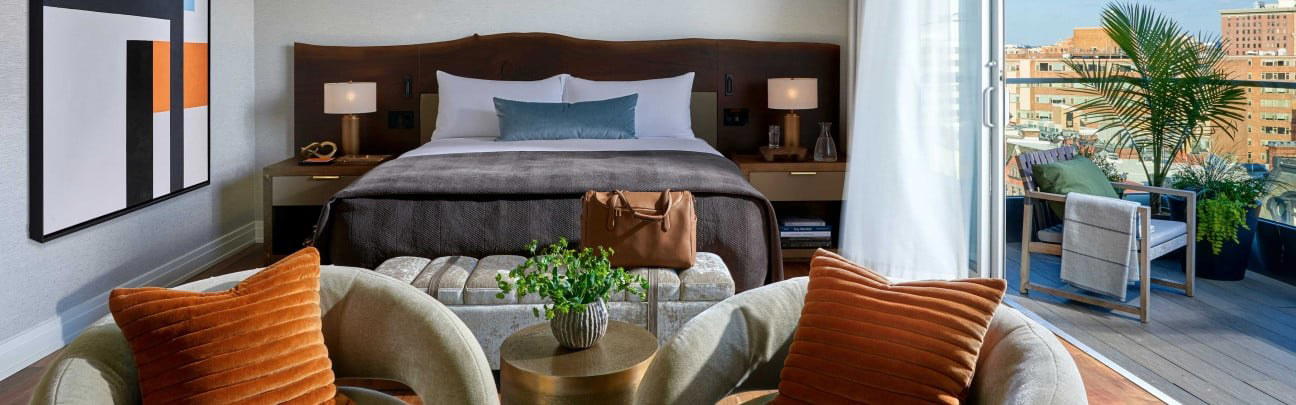
Bars in Washington DC
Browse all →
Restaurants in Washington DC
Browse all →
Details
- Sophisticated
- Elegant
- Modern
- Quiet
- Intimate
- Business Trip
- Weekend Escape
- Romantic Getaway
- Terrace
- Garden
- Historic Building
- Design Destination
- Wi Fi
- Fitness Center
- Restaurant
- Bar
- Room Service
- Concierge
- Valet Parking
- Street Scene
- Wheelchair Accessible
- Elevator
- Accessible Restroom
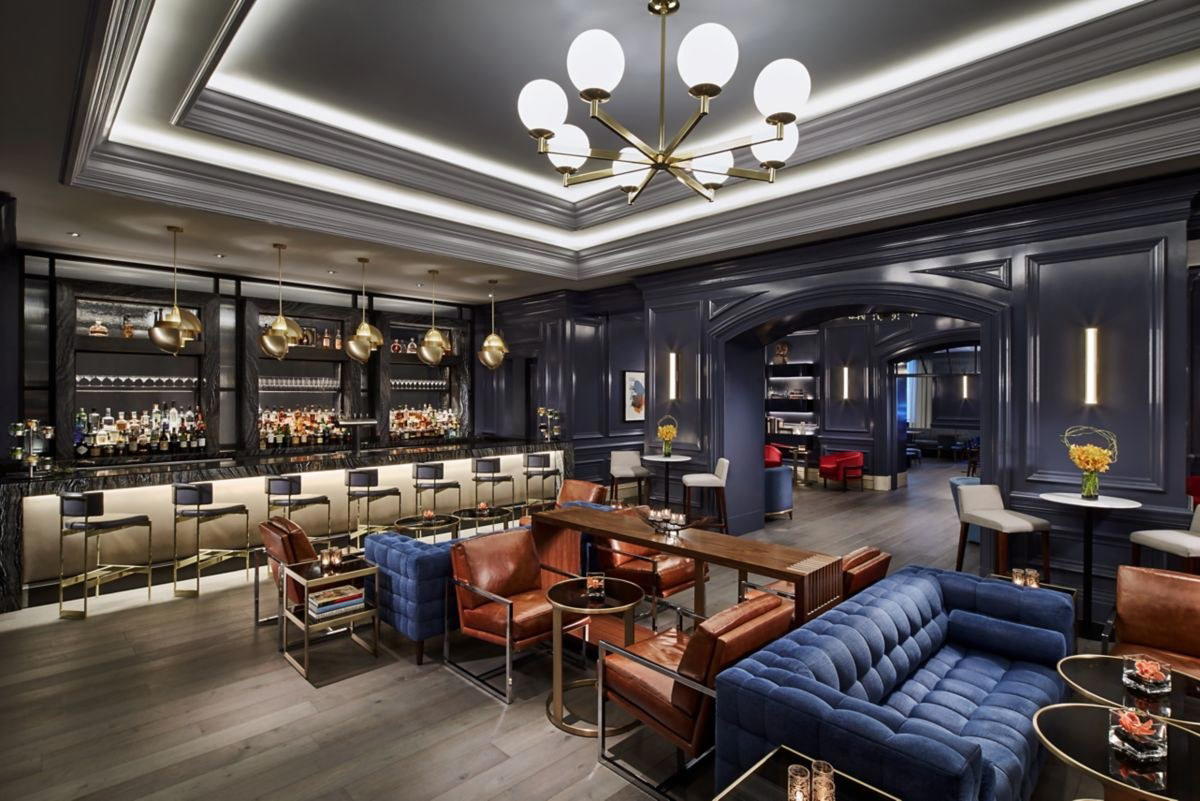
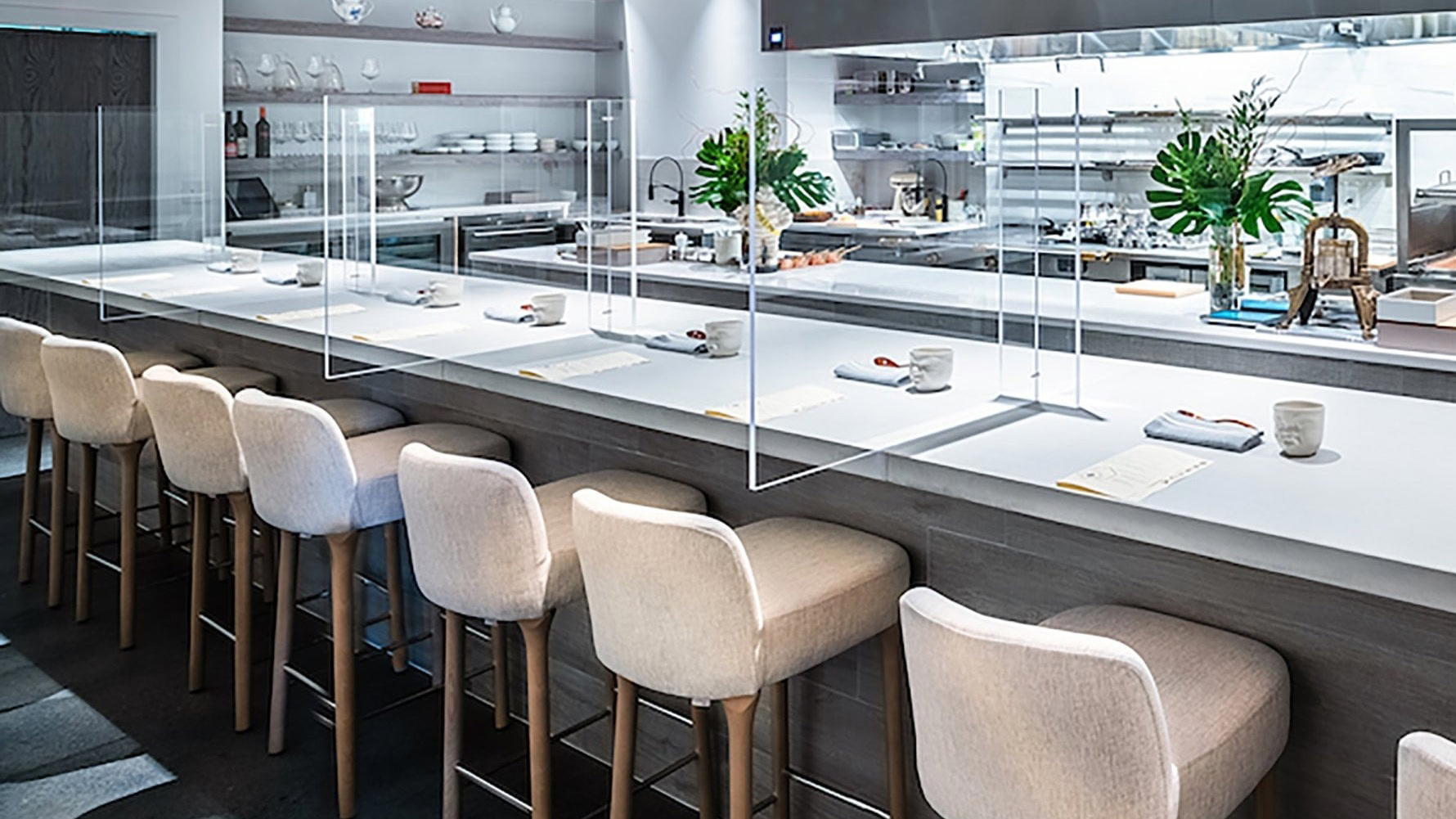
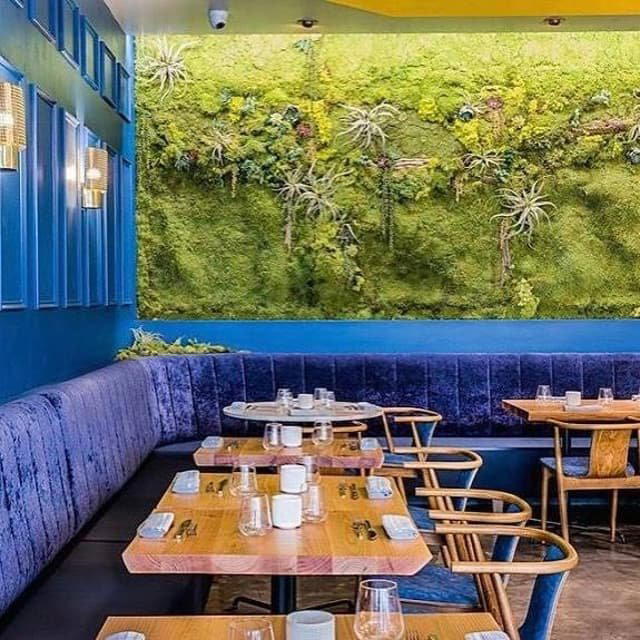
Warm, sophisticated atmosphere with natural fabrics, clean lines, and rich textures creating a cozy yet refined environment; contemporary design with bold colors and modern art; on-site restaurant features enchanting sylvan decor with birch trees and a massive tree trunk centerpiece.