Hotel Genevieve

1 Michelin Key
A Michelin Key-awarded newcomer on Louisville's East Market Street, Hotel Genevieve brings Bunkhouse Group's Texas-honed boutique formula to Kentucky's most architecturally French downtown. With 122 rooms styled in rich, Art Deco-inflected colour, and a drinking and dining programme that includes Bar Genevieve, the Lucky Penny cocktail bar, and a curated Mini Marché, it earns its place among the city's more considered hotel options at around $152 per night.

Pearl is the En Primeur Club membership app — saves, bookings, and concierge access live there. Same editors, same standards.
- Address
- 730 E Market St, Louisville, KY 40202
- Phone
- (502) 676-7199
- Website
- hyatt.com
- Directions
- Get directions
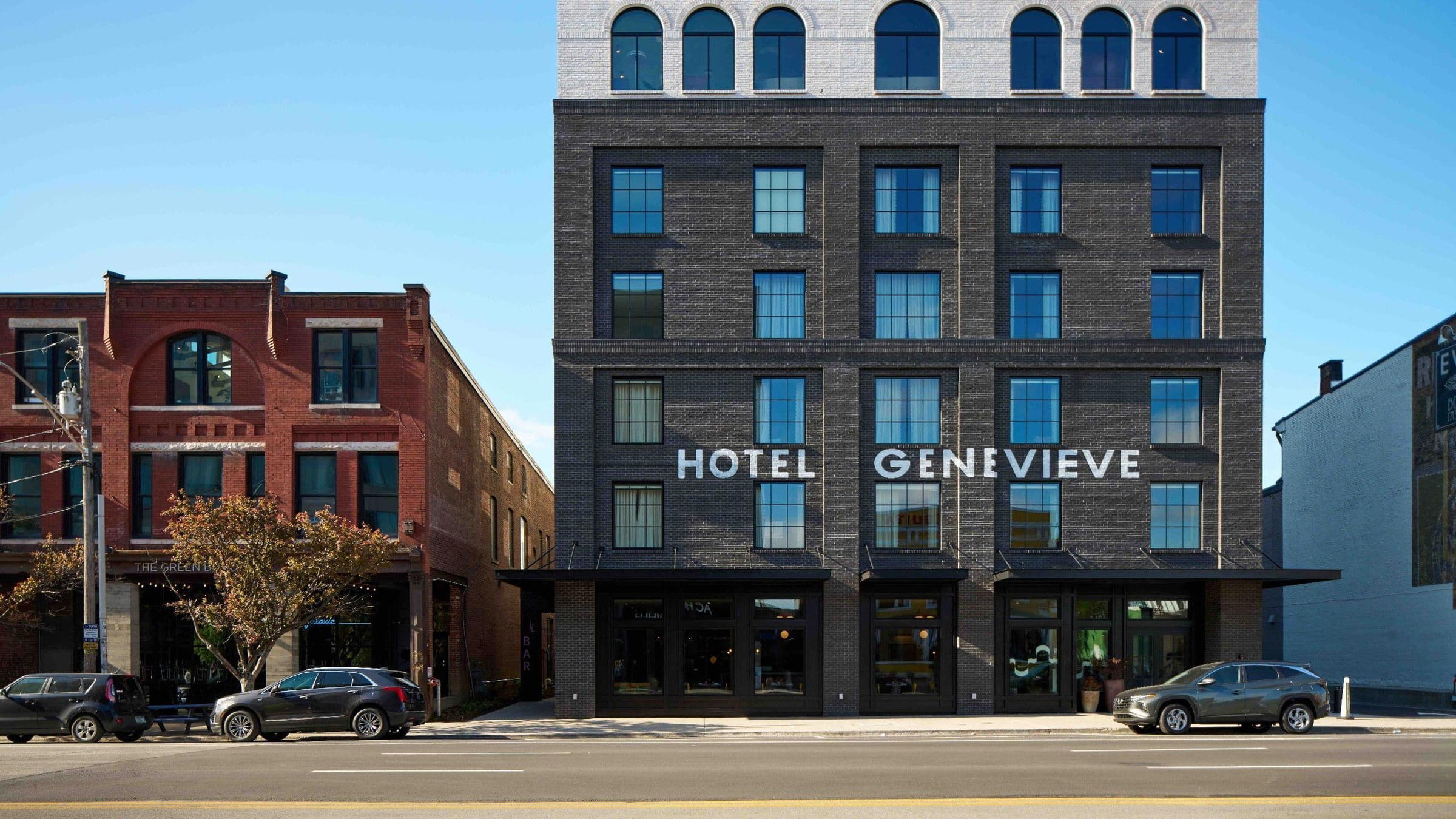
East Market and the New Boutique Standard
Louisville's East Market district has spent the past decade assembling one of the more coherent boutique hospitality corridors in the American mid-south. The neighbourhood's French-influenced architecture, a legacy of nineteenth-century settlement patterns along the Ohio River, provides an unusually sympathetic backdrop for hotels that want to feel rooted rather than imported. Into this context, Bunkhouse Group has placed Hotel Genevieve, a new build designed to sit convincingly alongside the district's existing fabric rather than interrupt it. At around $152 per night for 122 rooms, it occupies a mid-to-upper-tier price position for Louisville, competing more directly with design-led independents like Proof On Main and The Brown Hotel than with the city's lower-end options.
Bunkhouse's track record matters here. The group built its reputation across Texas, producing properties that trade on character rather than scale, and Hotel Genevieve follows the same logic: Sferra linens, Kassatex towels, and Ortigia bath products in every room. These are not incidental choices. They signal a consistent brand commitment to hardware quality that distinguishes Bunkhouse from boutique operators who invest in lobby aesthetics and economise on what guests actually touch.
The Rooms: Colour, Curve, and Parisian Reference
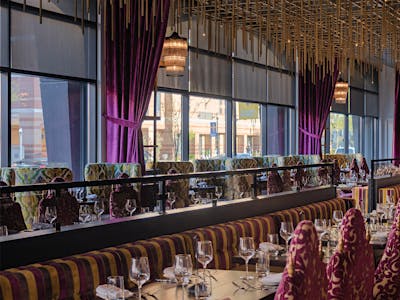
The interior design language at Hotel Genevieve draws from Art Deco and, more specifically, from a Parisian reading of it. The colour palette runs saturated rather than muted, a deliberate choice in a market where many boutique hotels default to the safe neutrals of Scandinavian minimalism. Curved furnishings repeat across room categories, reinforcing a visual grammar that feels considered rather than assembled from a catalogue. This is, in design terms, a harder thing to execute in a new build than in a converted historic structure. Buildings like The Mason Boutique Hotel or Gralehaus carry inherited character; Hotel Genevieve has had to manufacture its own from scratch, and the degree to which it succeeds is a function of the specificity of its design references.
Across 122 rooms and suites, the tier structure follows the pattern common to Bunkhouse properties: a clear material consistency across all categories, with suites differentiated by space and outlook rather than by quality of finish. Guests seeking the most atmospheric room type should look at suites positioned toward the street-facing side of the building, where the relationship between the hotel's French-inflected design and the surrounding architecture becomes most legible. That is a qualitative judgement, not a booking guarantee, and availability in that range will vary with demand.
The Drinking and Dining Programme
Bunkhouse has generally operated in the second category, and Hotel Genevieve makes that case across several distinct formats rather than a single venue.
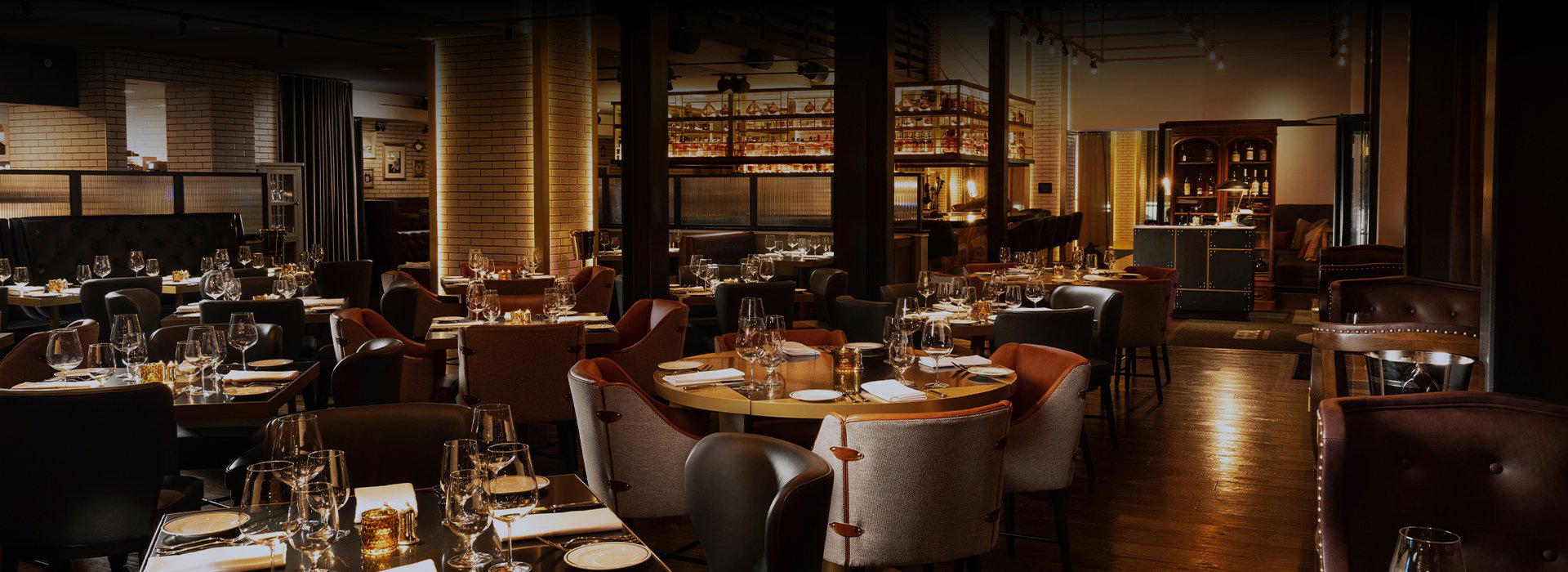
Bar Genevieve functions as the primary all-day space, positioned to serve both hotel guests and neighbourhood traffic. In East Market, where the dining and drinking scene has matured considerably in recent years, a hotel bar that cannot hold its own against independent competition becomes a liability. Bar Genevieve's brief appears to be versatility, covering the ground from morning through late evening, which is a structurally different challenge from running a single-service restaurant.
Lucky Penny is the more interesting proposition. Described in the hotel's own framing as a semi-secret cocktail bar, it occupies a position in Louisville's drinking landscape that connects to a broader national pattern: the premium hotel bar that operates as a destination in its own right rather than an amenity for guests. Louisville's cocktail culture has grown substantially alongside the bourbon tourism economy, and a well-programmed hidden bar within a Michelin Key hotel carries credibility in that context. The city's drinking scene has attracted national attention for its bourbon programming, and Lucky Penny's format, small and atmospherically distinct from the main bar, positions it within the specialist tier rather than the volume end of hotel drinking. For comparison, hotels like The Fifth Avenue Hotel in New York City and Raffles Boston have similarly invested in bar programmes that extend well beyond the functional.
The Mini Marché adds a format less common in American boutique hotels: a curated convenience store operating as an extension of the hotel's editorial point of view. Done well, these spaces function as condensed expressions of local provenance, stocking producers and products that a knowledgeable local would actually choose. Done poorly, they become overpriced snack shelves with better packaging. Bunkhouse's attention to product detail elsewhere in the building suggests the former is the likelier outcome.
A fourth food and beverage outlet, a full restaurant, was in development at time of publishing, with an opening expected in the autumn season. Its addition would bring the hotel's F&B; programme to a breadth that places it among the more comprehensively programmed boutique properties in the region. Readers planning a visit should verify current status directly with the hotel, as opening timelines for new restaurant concepts can shift.
Louisville Context and the Case for East Market
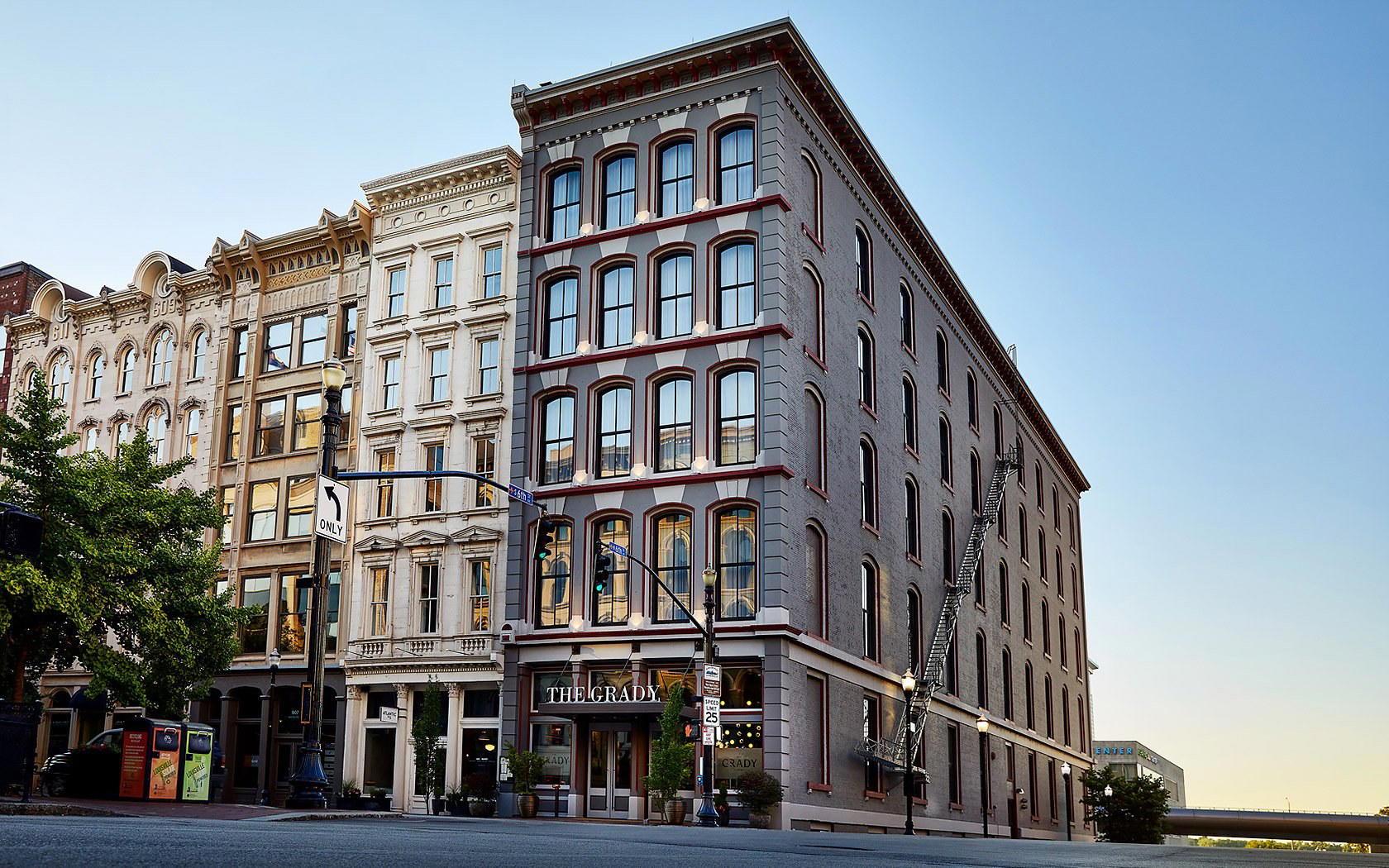
East Market's position within Louisville's hospitality geography is worth understanding before booking. The neighbourhood sits east of downtown's core, close enough to the Bourbon Trail's urban anchor points to be convenient for whiskey-focused itineraries, but with a character shaped more by creative industry and food-led neighbourhood development than by heritage tourism. Hotels in the Central Business District, including The Grady, offer a different urban experience, with more immediate access to the convention and corporate infrastructure. East Market guests trade some of that centrality for a neighbourhood with more local texture.
The French architectural inheritance of Louisville's older districts, reflected in the building styles along East Market, is a feature of the city that most visitors from outside the Ohio Valley do not anticipate. For hotels like Genevieve, which have chosen to anchor their design identity to that inheritance, it provides a degree of site-specific logic that properties in more generic urban corridors cannot replicate. Comparisons extend outward: Bunkhouse operates in a category that, nationally, includes properties like 1 Hotel San Francisco and Post Ranch Inn in Big Sur in terms of design seriousness, though the price position and urban context are quite different.
For a broader sense of the city's hospitality and dining options, our full Louisville restaurants guide maps the neighbourhood-by-neighbourhood picture in more detail.
Planning a Stay
Hotel Genevieve is located at 730 East Market Street, placing it within walking distance of the neighbourhood's independent restaurant and bar cluster. At approximately $152 per night, it positions itself above the standard chain tier and below the top end of Louisville's luxury market, making it a practical choice for travellers who want design quality and a genuine F&B; programme without the rate premium of a full-service luxury property. The Michelin 1 Key award provides independent verification of that positioning. Booking directly with the hotel is the standard approach for boutique Bunkhouse properties; specific availability, room category pricing, and confirmation of the new restaurant's opening status should all be confirmed at time of reservation.
Booking and Cost Snapshot
Comparable venues nearby, for context on price, style, and recognition.
| Venue | Cuisine | Price | Awards | Notes |
|---|---|---|---|---|
| Hotel GenevieveThis venue — the venue you are viewing | Not listed | $100–200 | 1 Michelin Key | Not listed |
| The Grady | Not listed | $100–200 | Michelin Guide New Hotels New Hotel · Michelin Selected | West Main, Historic boutique hotel blending traditional architectural elements with contemporary luxury amenities in a downtown cultural setting. |
| The Mason Boutique Hotel | Not listed | $100–200 | World Travel Awards | downtown, Historic boutique in restored downtown building |
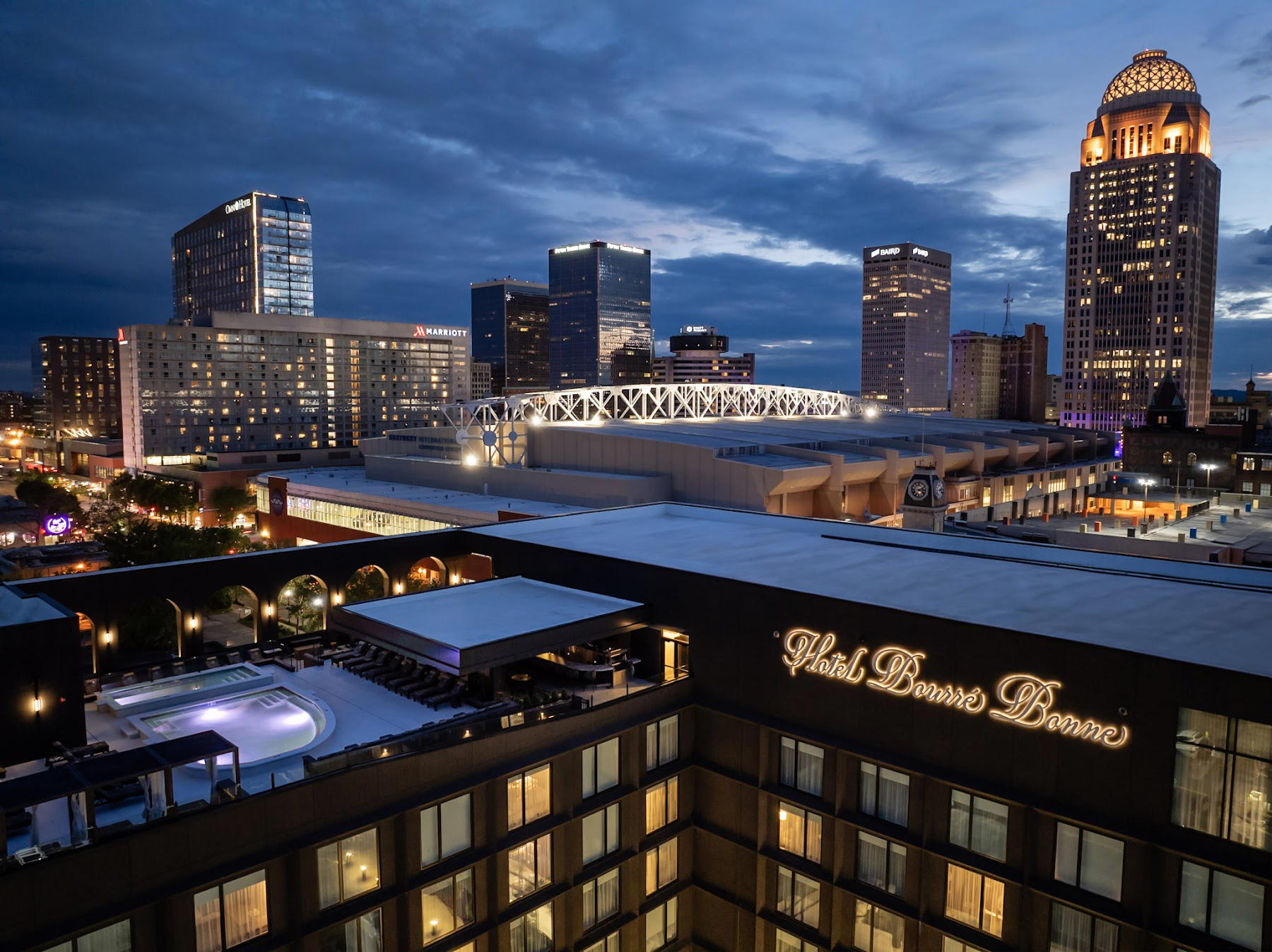
| Hotel Bourré Bonne | Downtown Louisville, lifestyle hotel | $300–500 | Not listed | Not listed |
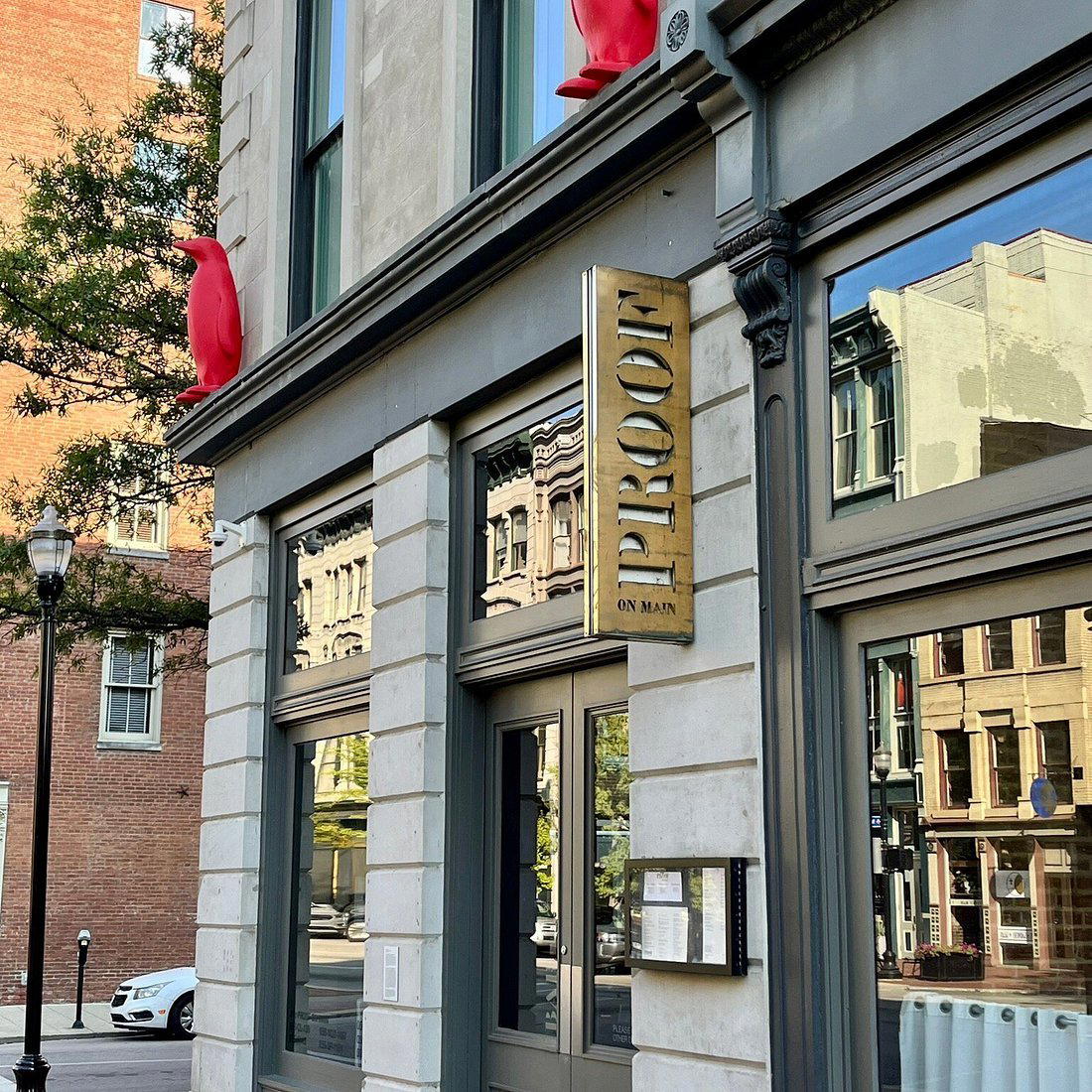
| Proof On Main | Not listed | Not listed | Not listed | West Main, contemporary art museum integrated with boutique lodging in historic warehouses |
Recognition history
Dated appearances from independent guides and award organizations, with the underlying list record or original source where available.
Michelin 1 Key
Michelin
Full recognition history (2 entries)
Michelin 1 Key
Michelin
Continue exploring
More in Louisville
Hotels in Louisville
Browse all →
Bars in Louisville
Browse all →
Restaurants in Louisville
Browse all →
Details
- Trendy
- Elegant
- Sophisticated
- Modern
- Lively
- Romantic Getaway
- Weekend Escape
- Celebration
- Rooftop Pool
- Historic Building
- Design Destination
- Terrace
- Wi Fi
- Room Service
- Concierge
- Valet Parking
- Restaurant
- Skyline
- Street Scene
- Wheelchair Accessible
- Elevator
- Step Free Entrance
Lively and stylish with rich saturated colors, curvaceous Parisian Art Deco furnishings, and lively rooftop atmosphere praised for distinctive decor and attention to detail.