
Michelin Selected
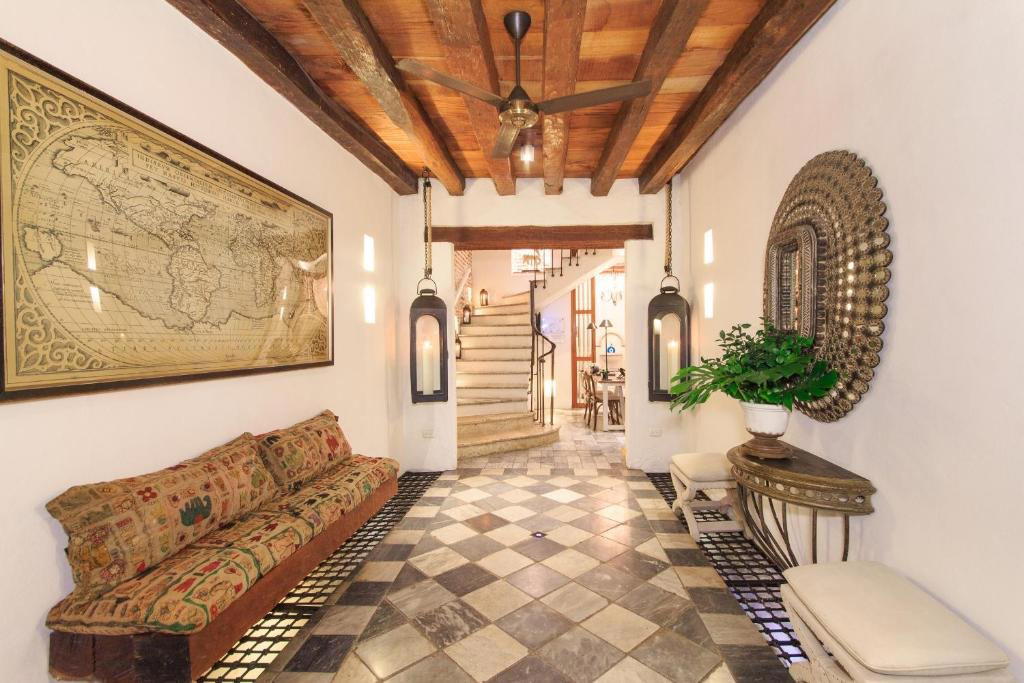
Hotel Casa del Coliseo occupies a colonial address on Calle del Coliseo in Cartagena's El Centro, placing guests within the dense architectural core of the walled city. The property belongs to a tier of boutique conversions that trade scale for intimacy, positioning it among Cartagena's smaller, character-led options rather than the larger international-flag hotels. For travellers whose priority is neighbourhood immersion over resort amenities, the location alone makes the case.

Pearl is the En Primeur Club membership app, where members save venues, book tables and use the concierge.
El Centro's Boutique Tier: Where the Hotel Sits
Cartagena's walled city has split into two distinct hospitality registers over the past decade. On one side sit the large-footprint hotels with pools, restaurants, and conference infrastructure, properties like the Hotel InterContinental Cartagena de Indias and the Four Seasons Hotel and Residences Cartagena. On the other sit the colonial-conversion boutiques, usually housed in restored Republican or Baroque structures, with key counts that run to the dozens rather than the hundreds. Hotel Casa del Coliseo belongs firmly in that second category. Its address on Calle del Coliseo in El Centro places it inside the oldest residential fabric of the intramuros, where the streets narrow, the balconies crowd overhead, and the ambient temperature of any given block is shaped as much by shade and stone as by sea breeze.
That positioning matters beyond aesthetics. Boutique conversions in El Centro compete not on amenity lists but on the quality of the experience they create within a constrained footprint.
The Physical Environment: Colonial Architecture as Context
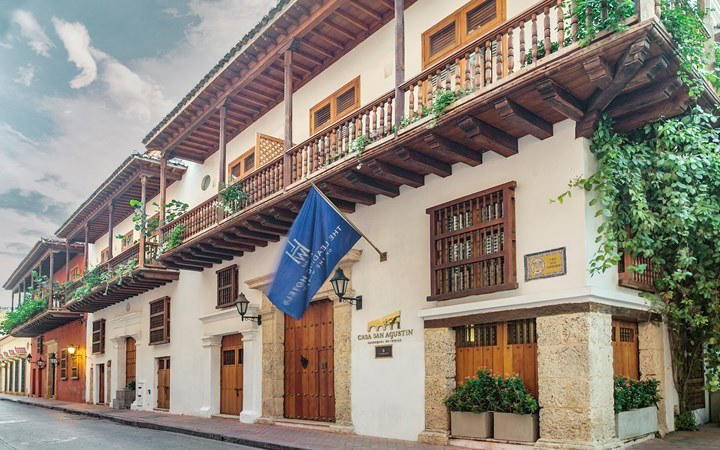
The intramuros in Cartagena is one of the most intact colonial urban environments in South America, a designation that carries real weight for anyone arriving from a European or North American city where such fabric has long since been replaced. Calle del Coliseo sits within that fabric, and approaching Hotel Casa del Coliseo on foot, as most guests will, given the restricted vehicle access in the old city centre, means arriving through a sequence of plazas, pastel-painted facades, and street-level detail that functions as its own kind of orientation. The hotel doesn't need to manufacture atmosphere because the city provides it at the threshold.
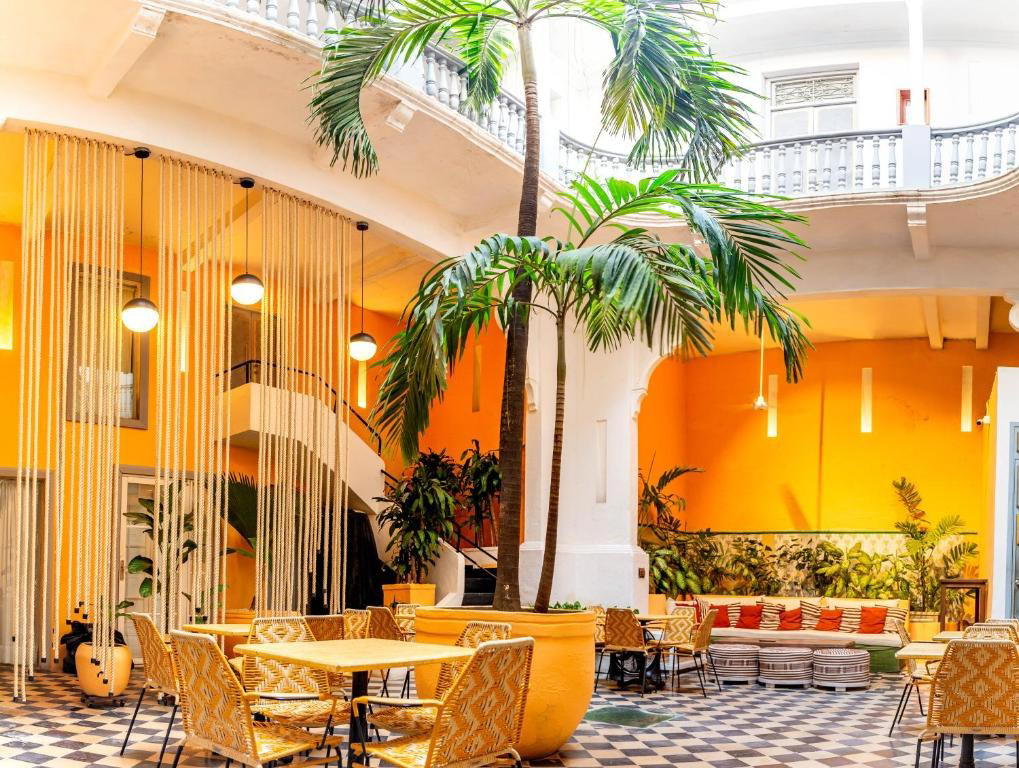
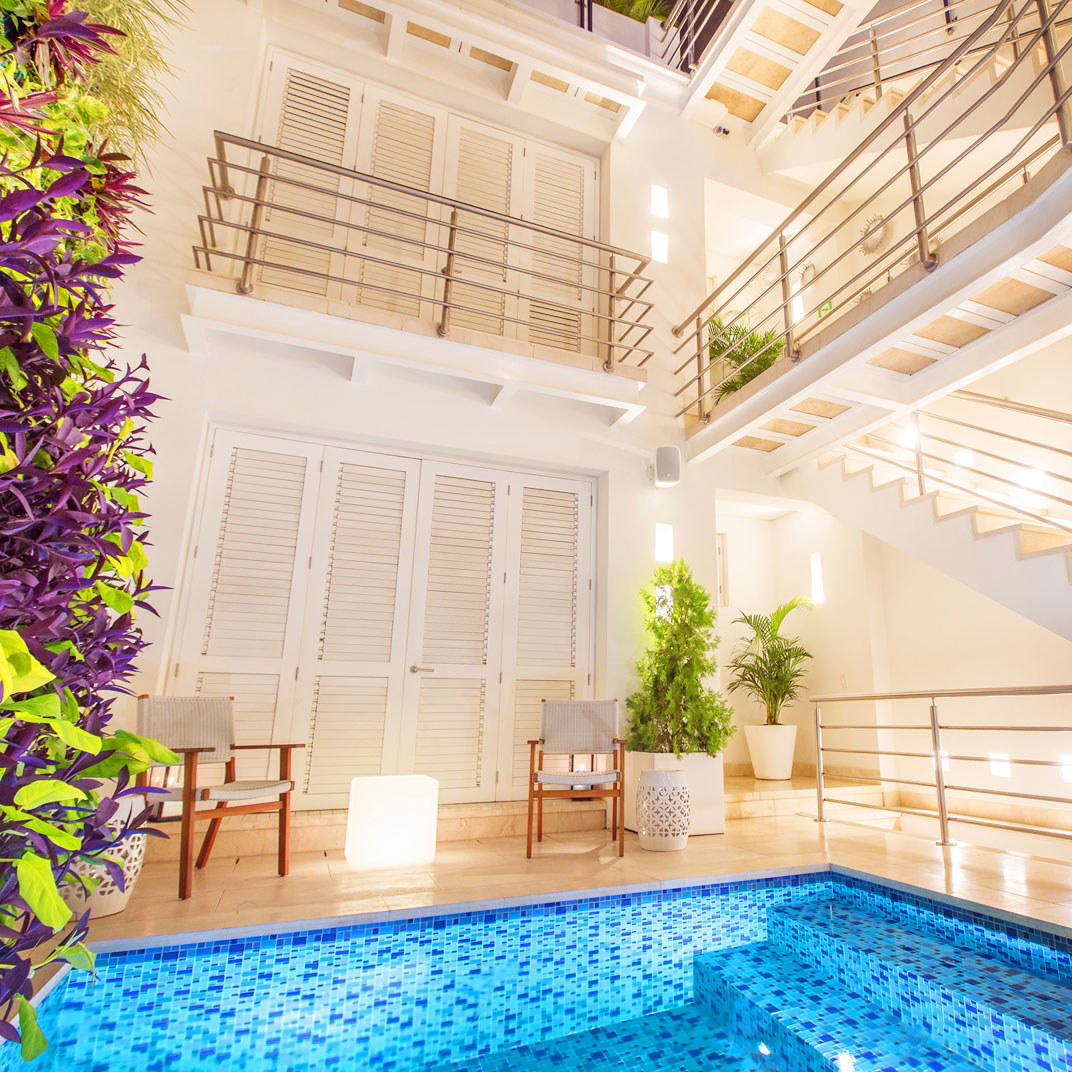
Interior courtyards are the organisational heart of colonial residential architecture throughout the Caribbean coast, and properties in this tier of the Cartagena market typically use that structure as the guest's primary social and transitional space. The courtyard mediates between the heat of the street and the cooled rooms, and in the better conversions it becomes the location where the quality of the restoration, original stone, tiled floors, restored ironwork, is most legible. For guests deciding between this property and alternatives like the Hotel Boutique Casona del Colegio or Hotel Quadrifolio, the quality of that courtyard restoration is one of the more useful comparison points.
Service at This Scale: What Boutique Means in Practice
The case for small-key hotels in Cartagena's walled city is, at its core, a case about service density. When a property runs fewer rooms, the ratio of staff attention to guest shifts, not because the team is necessarily larger, but because the number of competing demands is smaller. In a property of this type, the front desk operation is also the concierge function, and the person who checks you in is often the same person who can tell you which restaurant in the Getsemaní neighbourhood has shortened its reservation window this month or which local market is worth the early start. That kind of contextual intelligence is not scalable. It comes from a staff that treats the hotel as an extension of the city rather than as a self-contained product.
For comparison, properties operating at a larger footprint, including the Charleston Santa Teresa Cartagena Hotel, offer their own version of guest services, but the experience is mediated through more formal structures: dedicated concierge desks, tiered service layers, and standardised pre-arrival communications. Neither model is superior across all use cases. For a group or a business traveller who values predictability and structured amenity access, the larger format may serve better. For a guest whose itinerary is built around the city rather than around the hotel, the boutique model tends to return more.
Colombia's boutique hotel sector has developed notable depth in recent years. Properties like Hotel Boutique y Restaurante Vegetal Casa Lėlytė in Bogota and Elcielo Hotel & Restaurant in Medellín illustrate how the format has moved beyond simple historic-building conversion toward properties with distinct food and wellness programs embedded in the guest experience.
Planning Your Stay: Timing, Booking, and Context
Cartagena operates on a two-season tourism calendar. The dry season, running roughly from December through April, is when the city is at peak occupancy. Boutique properties in El Centro, which have limited inventory by definition, fill earlier than the larger hotels during this window. For a stay between Christmas and Carnival (typically February), lead times of two to three months are not excessive for properties in this tier. The shoulder months, May, June, and November, offer better availability and reduced rates without significant sacrifice in experience, since the rain in Cartagena tends to arrive in short afternoon bursts rather than as sustained weather. See our full Cartagena restaurants guide for what the city's dining and entertainment calendar looks like across the year.
Travellers arriving into Rafael Núñez International Airport, located northeast of the city, can reach the walled city in under twenty minutes by taxi under normal traffic conditions. The address on Calle del Coliseo places the hotel in the lower-centre section of El Centro, within walking distance of the Plaza de los Coches, the Portal de los Dulces, and the main commercial artery of Cartagena's historic district. For guests comparing properties with a Caribbean beach component, alternatives like Hotel Casa Don Sancho By Mustique or, further afield, the Hilton Santa Marta represent a different geographic trade-off, ocean access in exchange for the immersive intramuros experience that a Calle del Coliseo address provides.
Style and Standing
| Venue | Cuisine | Price | Awards |
|---|---|---|---|
| Hotel Casa del ColiseoThis venue (the venue you are viewing) | This venue | $200–300 | Michelin Selected |
| Sofitel Barú Calablanca Beach Resort | Not listed | Not listed | Michelin Selected · Star Wine List |
| Sofitel Legend Santa Clara Cartagena | Not listed | Not listed | 1 Michelin Key · La Liste Top Hotels |
| Casa Pestagua | Not listed | $500–750 | 2 Michelin Keys · Virtuoso Luxury Hotel Partner |
| Casa San Agustin | Not listed | $300–500 | 2 Michelin Keys · La Liste Top Hotels |
| Charleston Santa Teresa Cartagena Hotel | Not listed | $200–300 | Michelin Selected · World Luxury Hotel Awards WLHA Continent Winner |
Recognition history
Dated appearances from independent guides and award organizations, with the underlying list record or original source where available.
Michelin Selected
Michelin
Continue exploring
More in Cartagena
Hotels in Cartagena
All hotels in Cartagena →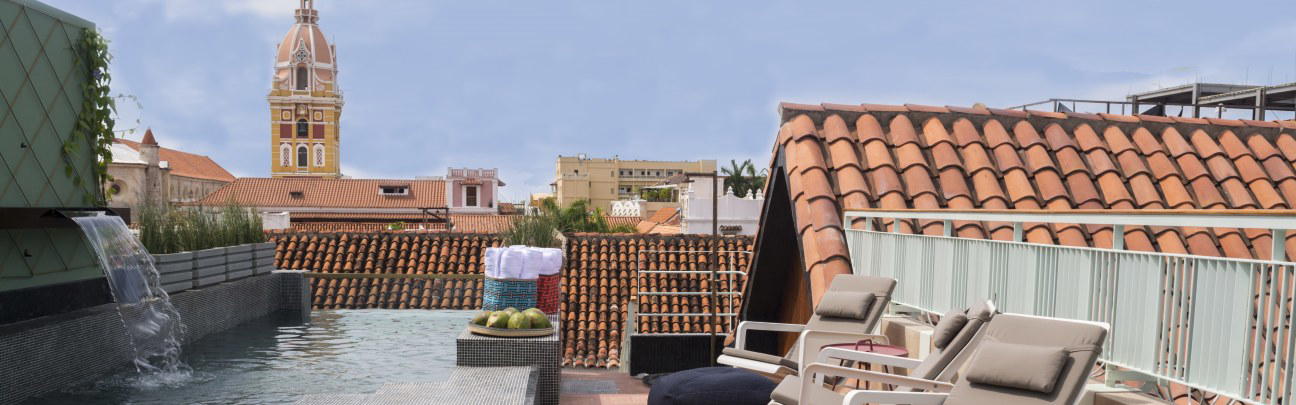
Bars in Cartagena
All bars in Cartagena →

Details
- Elegant
- Romantic
- Classic
- Sophisticated
- Romantic Getaway
- Honeymoon
- Anniversary
- Weekend Escape
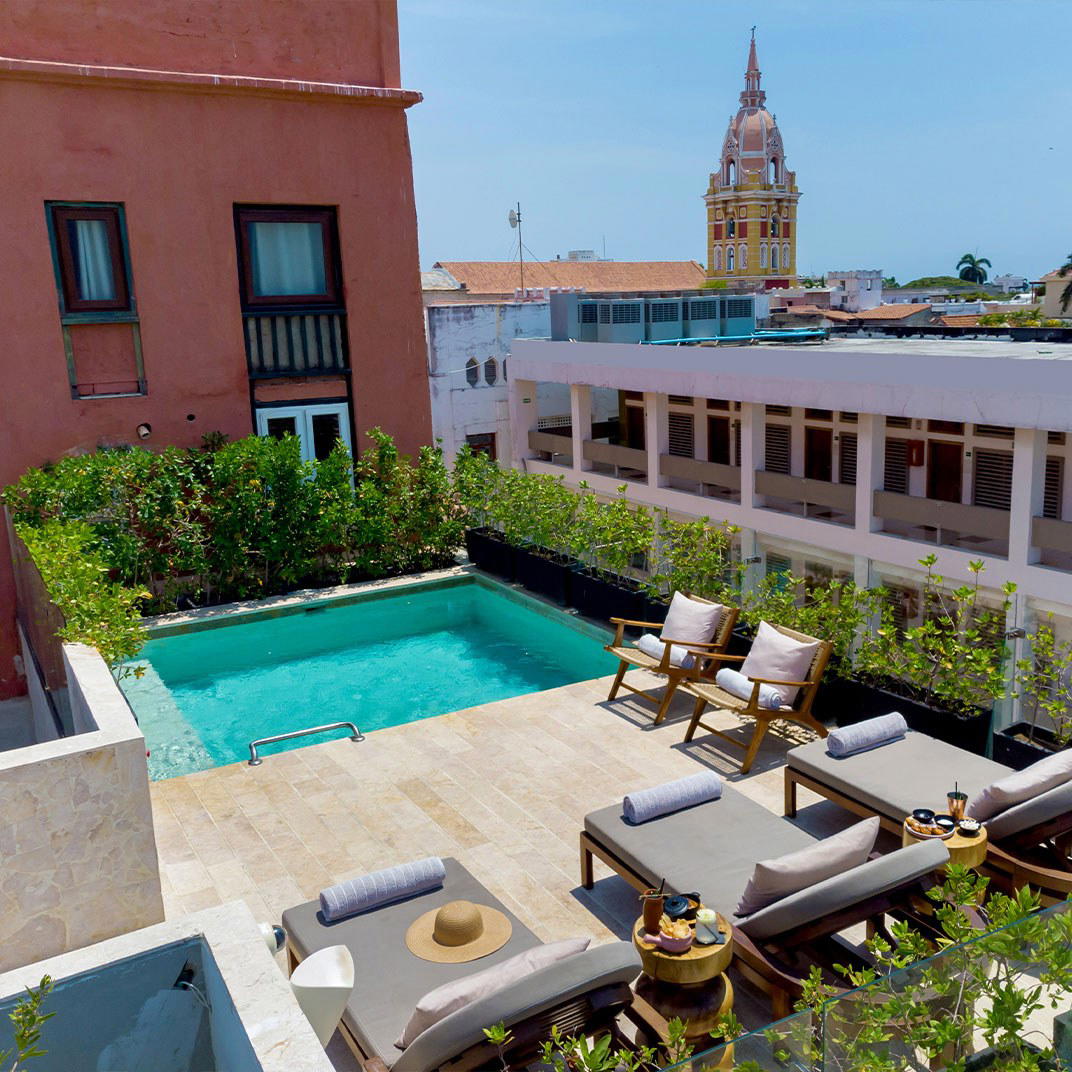
- Rooftop Pool
- Historic Building
- Panoramic View
- Terrace
- Garden
- Wi Fi
- Pool
- Spa
- Concierge
- Room Service
- Street Scene
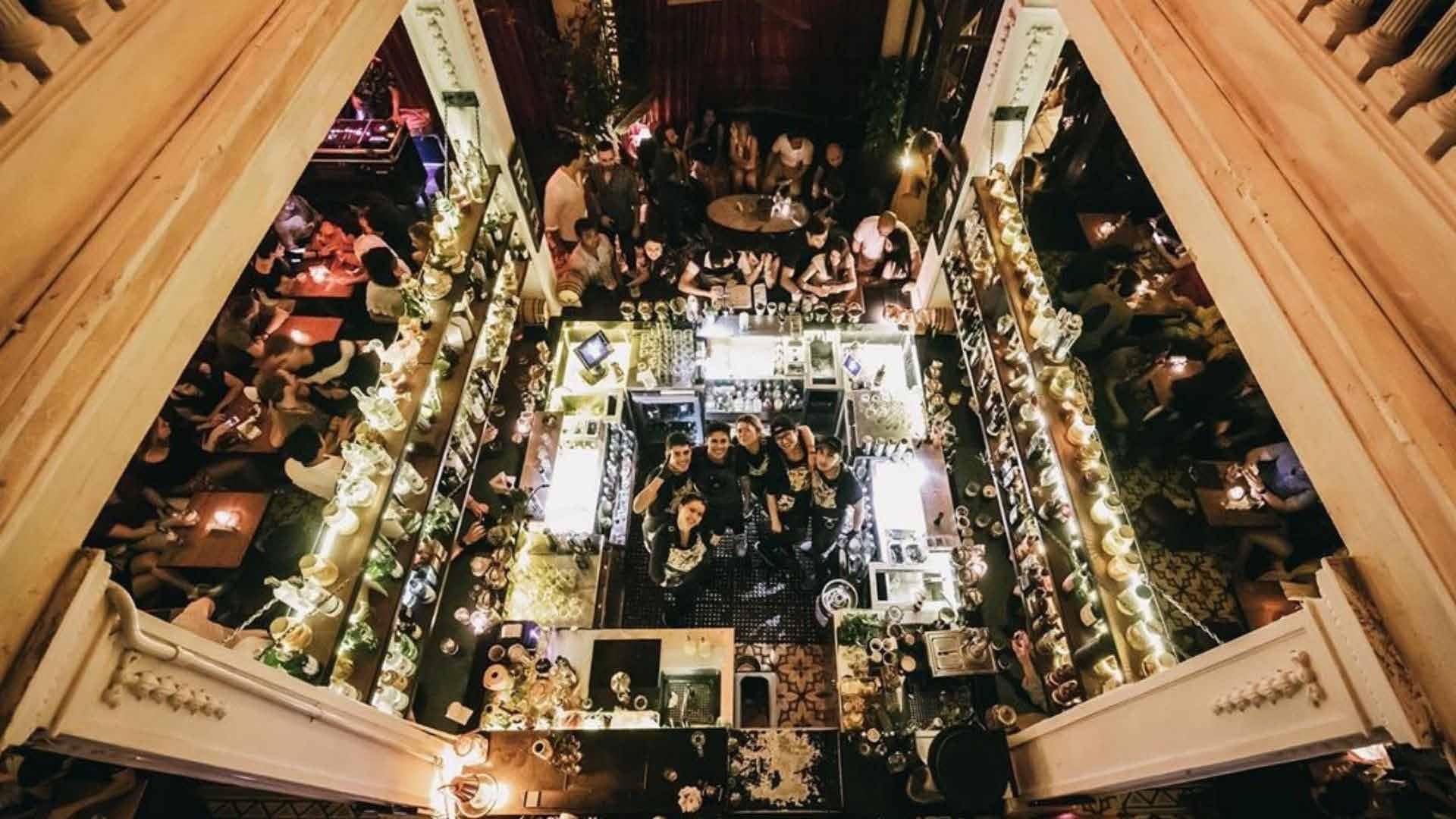
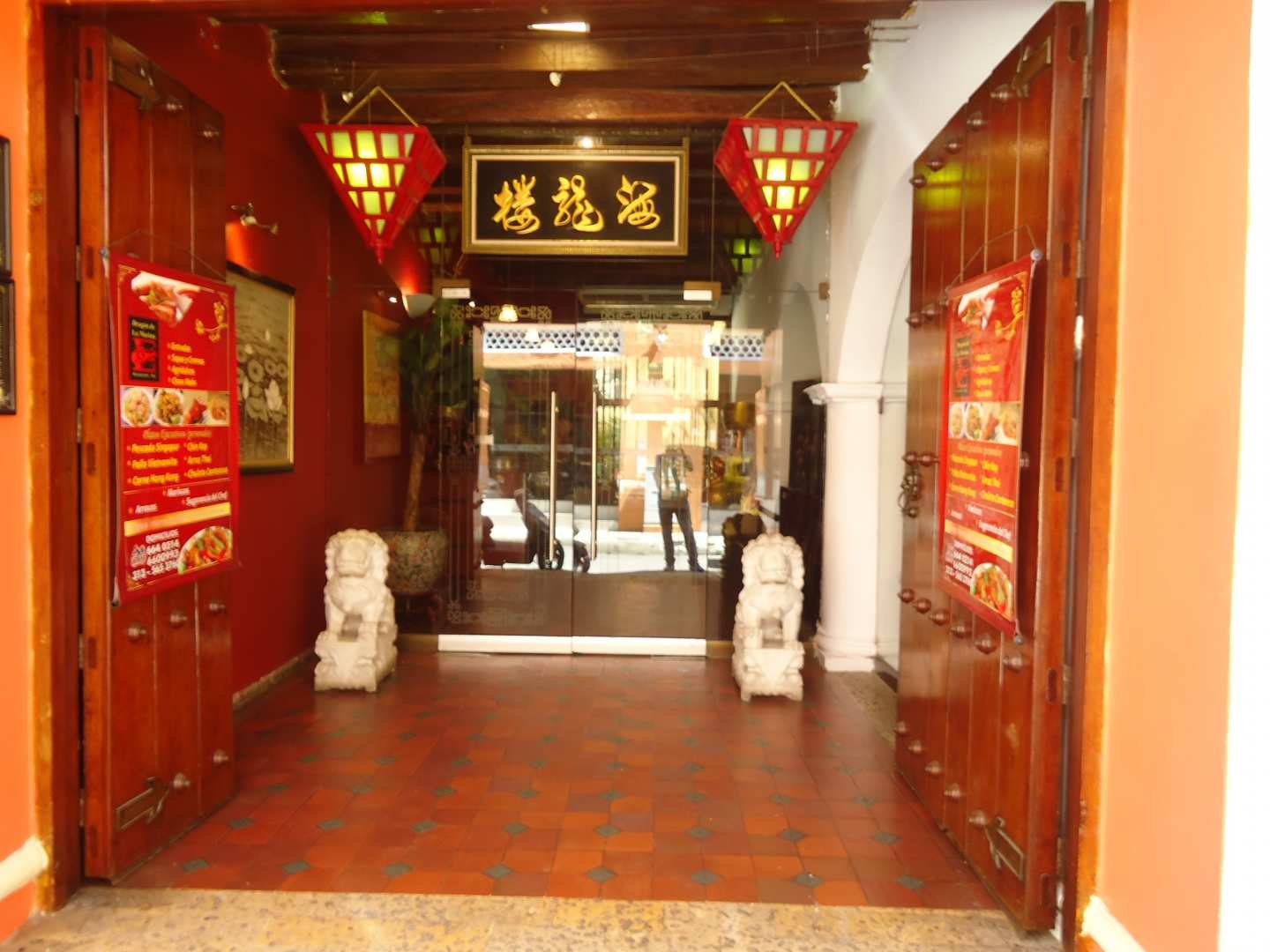
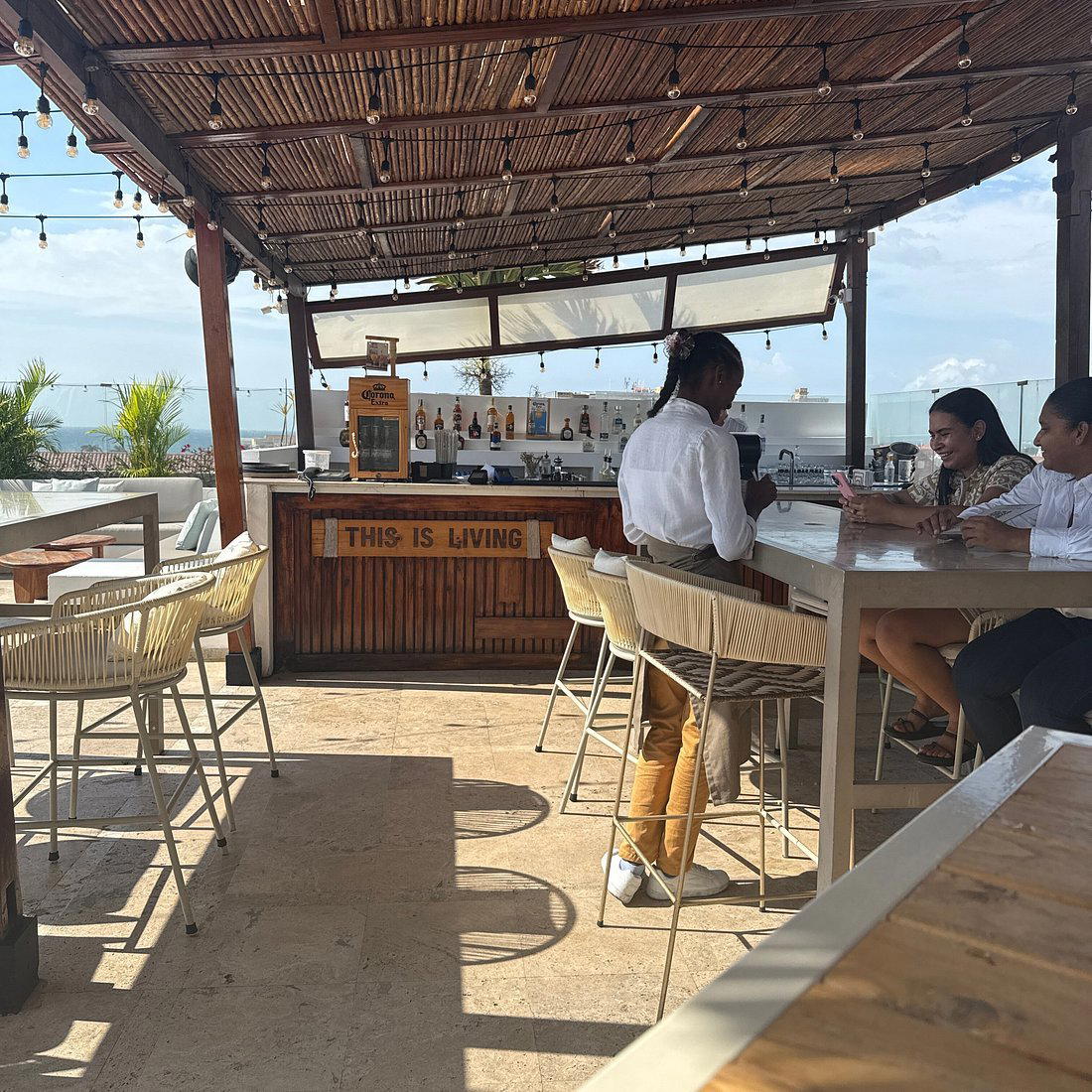
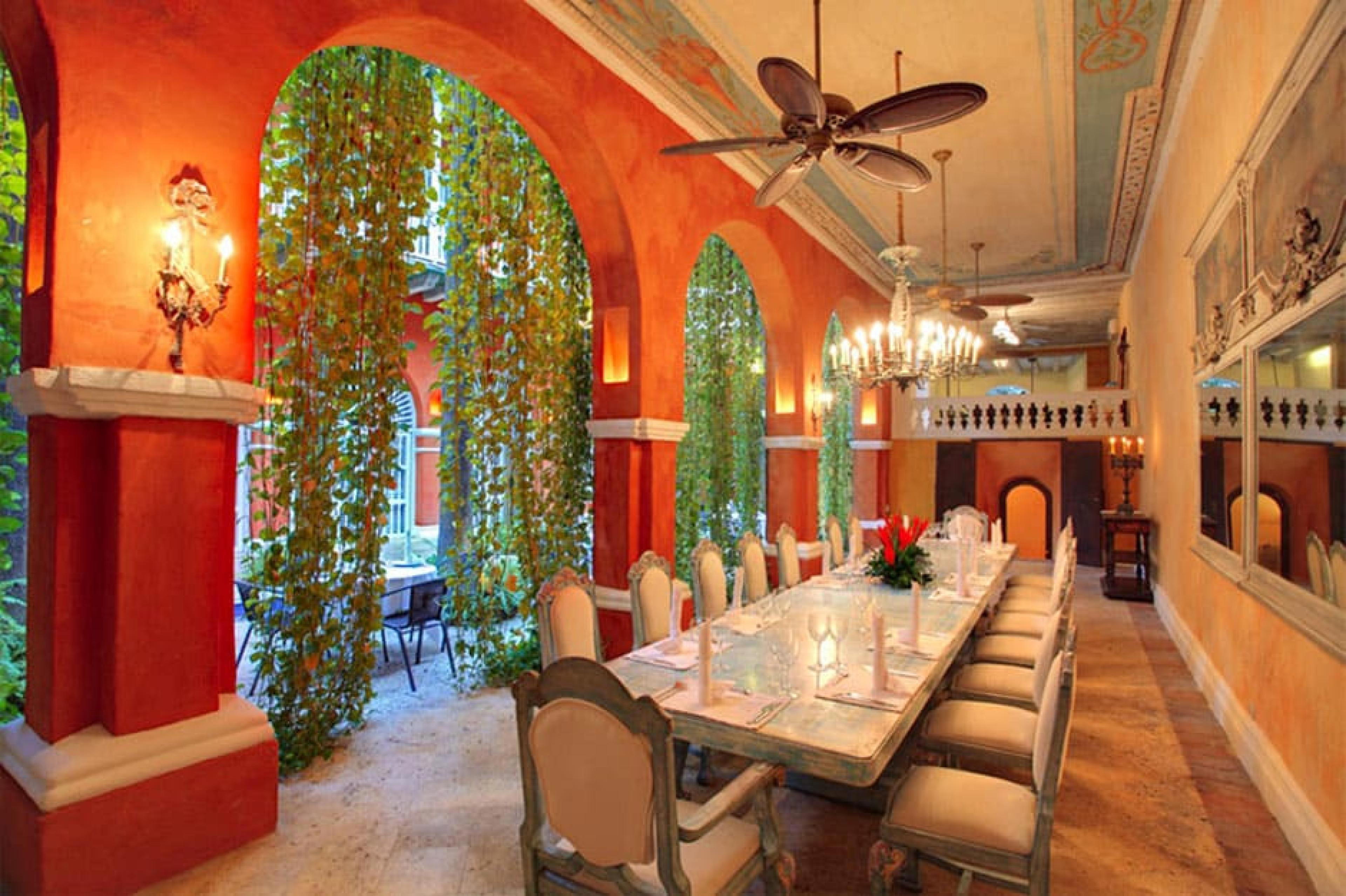
Warm, sophisticated, and welcoming with contemporary style blended into historic colonial architecture; intimate spaces with timbered ceilings and modern amenities create an upscale yet cozy atmosphere.