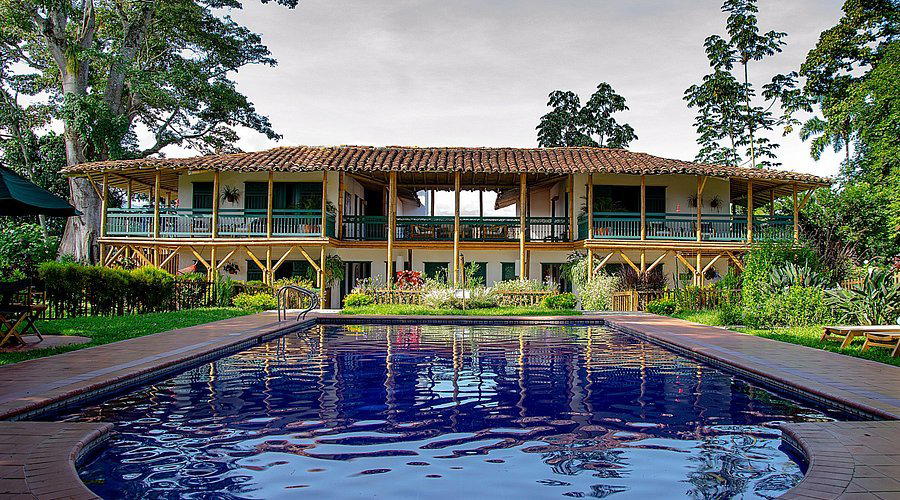
Bio Habitat Hotel, AKEN Soul occupies a category that Colombia's coffee-growing heartland is only beginning to attract attention for: design-conscious, ecologically embedded stays that treat the Eje Cafetero landscape as architecture in its own right. The property sits within the Quindío department, where bamboo guadua, volcanic soil, and plantation-era hacienda forms define the built vocabulary of serious hospitality.
Pearl is the En Primeur Club membership app — saves, bookings, and concierge access live there. Same editors, same standards.
- Address
- Quindio, Colombia
- Directions
- Get directions
 Saves & bookings on Pearl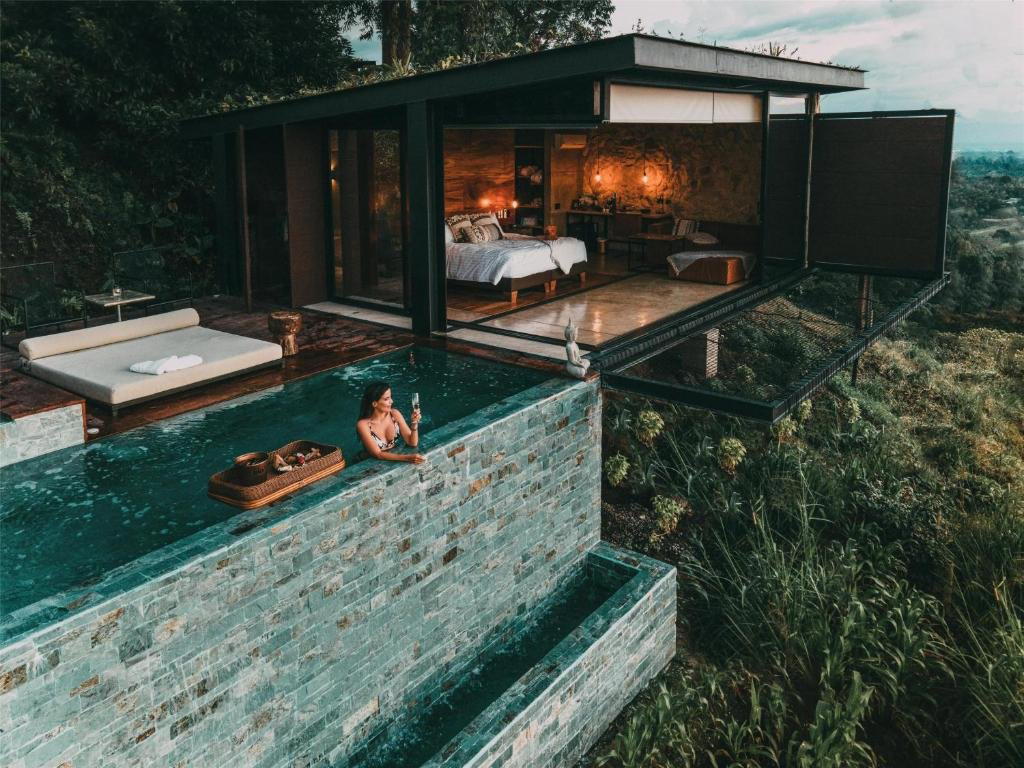
Where the Coffee Region Builds Its Case for Serious Design
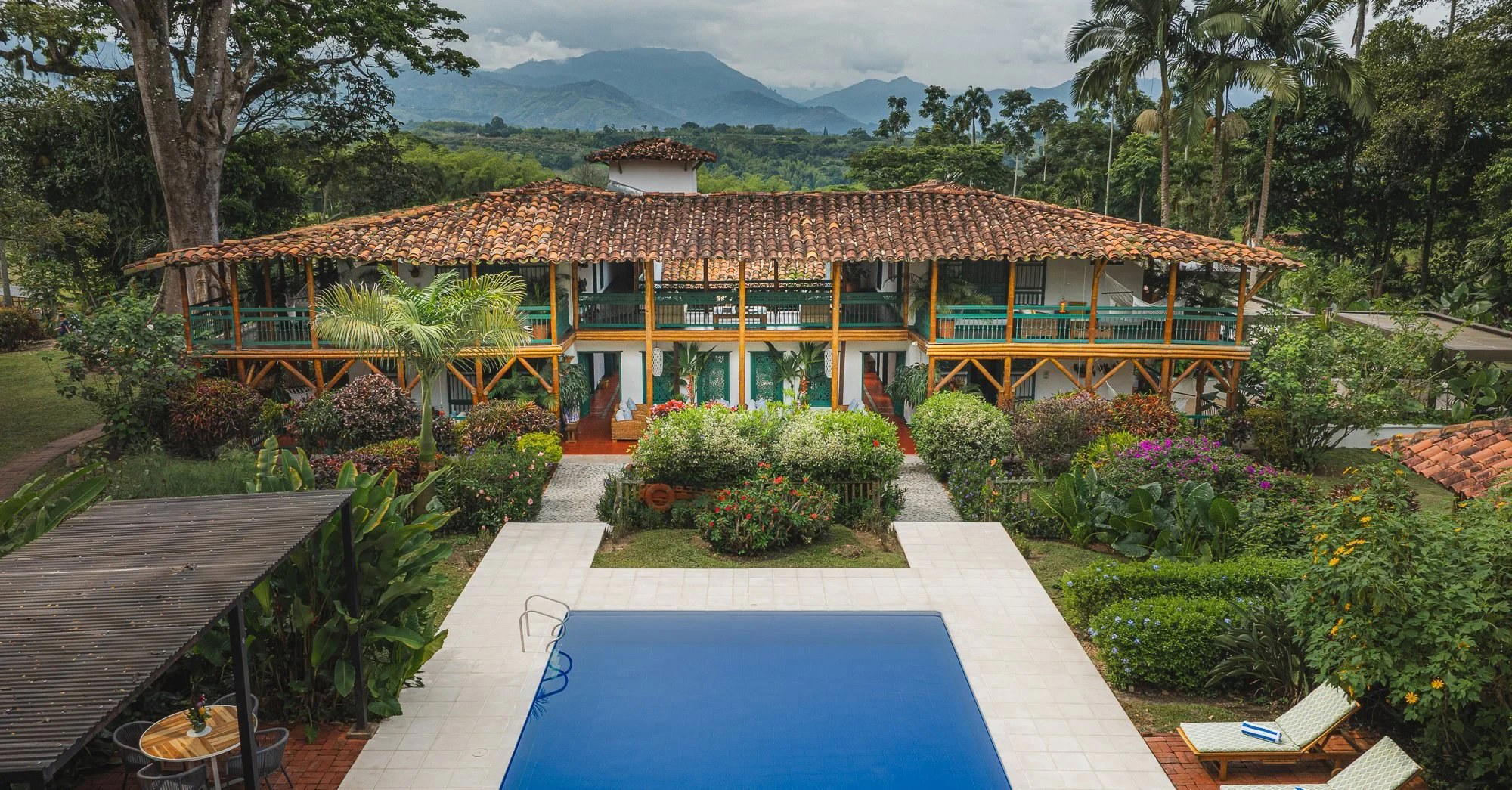
The Eje Cafetero, the collective name for Colombia's coffee-producing departments of Quindío, Risaralda, and Caldas, has spent decades as a destination defined almost entirely by agricultural heritage and ecotourism infrastructure aimed at volume. The UNESCO World Heritage designation of the Coffee Cultural Landscape in 2011 brought international visibility, but the hospitality category it generated skewed heavily toward themed fincas and mid-market lodge formats. What has followed more recently is a narrower, more considered tier of property: smaller in scale, more deliberate in materials, and designed to read as architecture rather than backdrop.
Bio Habitat Hotel, AKEN Soul operates within that emerging tier. In a region where guadua bamboo, volcanic basalt, and colonial-era hacienda geometry remain the dominant building vocabularies, properties that engage those materials seriously, rather than as surface decoration, occupy a distinct position in the competitive set. The name itself signals a dual register: "Bio Habitat" speaks to ecological embeddedness, while "AKEN Soul" suggests a branded identity concerned with atmosphere and sensory coherence. That kind of naming architecture is characteristic of the design-led boutique category that has reshaped how Colombia's secondary cities and rural departments attract international travellers.
For context on how this category is developing across Colombia, the contrast with Bogotá's design-aware boutique tier is instructive. Properties like Hotel boutique y restaurante vegetal Casa Lėlytė in Bogota and B.O.G. Hotel in Bogotá represent the urban end of a shift toward architecture-first hospitality across the country. Bio Habitat Hotel, AKEN Soul makes a parallel argument in a rural register, where the challenge is integration rather than insertion.
Reading the Physical Environment
The Quindío department sits at roughly 1,500 metres above sea level across much of its territory, with the landscape alternating between steep coffee-covered hillsides, banana groves used as shade canopy, and valleys that drop toward the Cauca River watershed. The light in this part of Colombia carries a particular quality, softened by altitude and frequently filtered through morning mist off the cordillera. For a property oriented around design, this is both a constraint and a resource: interior spaces need to work in diffuse natural light as much as in open sun, and the visual relationship between built structure and planted hillside determines whether a property feels embedded or merely placed.
The "Bio Habitat" framework, as a design philosophy category, tends to prioritise passive climate strategies, cross-ventilation, thermal mass, orientation toward prevailing breezes, over mechanical systems. In the Eje Cafetero climate, which runs mild year-round with distinct wet and dry seasons, this approach is both environmentally coherent and architecturally expressive. The result, in properties that execute it well, is space that reads as genuinely responsive to place rather than transplanted from a generic luxury template.
This is precisely what separates the stronger properties in Colombia's design-led rural category from the weaker ones. The latter apply local materials as finish, a guadua ceiling here, a terracotta tile floor there, while maintaining a fundamentally imported spatial logic. The former restructure the building itself around its site: its slope, its watershed, its relationship to the canopy line. Cannúa Lodge in Marinilla and BOSKO HOTEL in Guatapé represent comparable approaches in adjacent Antioquia, where landscape-integrated design has matured into a recognisable regional hospitality language. Bio Habitat Hotel, AKEN Soul positions itself within that same conversation, applied to Quindío's specific topography and agricultural character.
The AKEN Soul Layer: Atmosphere as Architecture
In hospitality design, the gap between a well-built property and one that achieves atmosphere is often a question of what happens between the structural elements: the acoustic quality of a corridor, the way light moves across a wall at different hours, the degree to which furniture placement acknowledges the view rather than merely facing it. The "AKEN Soul" component of this property's identity suggests an investment in exactly those transitional qualities. Soul-branded hospitality concepts in Latin America have increasingly moved toward sensory programming, scent, sound, texture, as complements to the visual design narrative.
For the Quindío traveller arriving from Bogotá or Medellín, the atmospheric shift begins before any interior is encountered. The approach to properties in this department typically runs through Armenia, the departmental capital, or along the roads connecting the coffee towns of Salento, Filandia, and Montenegro. Each of those routes carries its own visual grammar: the wax palms of the Valle de Cocora, the painted facades of the Pueblos Patrimonio, the geometric regularity of coffee rows on steep ground. A property that engages this sequence as part of its arrival experience, rather than walling itself off from it, makes a fundamentally different architectural claim than one that simply places itself in a cleared site.
The relationship between interior atmosphere and exterior landscape is also where Colombia's premium rural properties increasingly differentiate from their mid-market peers. At properties like Elcielo Hotel and Restaurant in Medellín, the design argument is made in an urban register, where atmosphere is constructed rather than inherited. In Quindío, the inherited elements are richer, and the design task correspondingly more demanding.
Planning a Stay: What the Region Requires
Quindío is accessible via El Edén International Airport in Armenia, which receives domestic connections from Bogotá and Medellín. Journey times from either city by road run three to four hours depending on the specific route and traffic through mountain passes. The dry seasons, December through February and June through August, offer predictable weather, though the Eje Cafetero's cloud patterns mean that morning mist can appear year-round regardless of season. Travellers interested in the surrounding Coffee Cultural Landscape should plan for at least two full days beyond the property itself to cover the Valle de Cocora, a working coffee farm visit, and one of the Pueblos Patrimonio towns.
The broader Colombia luxury circuit, for those combining Quindío with coastal or urban properties, pairs well with Four Seasons Hotel and Residences Cartagena on the Caribbean coast, or with Hotel el Prado in Barranquilla for a historically significant coastal contrast. Those approaching from the international end of the spectrum may find useful reference in how design-led rural properties position globally, Amangiri in Canyon Point and Castello di Reschio in Lisciano Niccone represent the landscape-integrated design ethos at its most developed, and serve as useful benchmarks for what architectural ambition in a rural setting can mean. For the full picture of what Quindío's hospitality category currently offers, our full Quindio restaurants guide maps the wider scene.
How It Stacks Up
Comparable venues nearby, for context on price, style, and recognition.
| Venue | Cuisine | Price | Awards | Notes |
|---|---|---|---|---|
| Bio Habitat Hotel, AKEN SoulThis venue — the venue you are viewing | Eco-conscious luxury wellness retreat integrated with nature | $$$$ | 3-Star | Not listed |
| La Passion by Masaya | Colonial boutique hotel blending 17th-century architecture with modern sophistication. | $$$$ | 4-Star | Centro Historico |
| Blue Apple Beach | Mediterranean-inspired beach club and boutique hotel | $$$$ | 3-Star | Tierra Bomba |
| Hilton Santa Marta | Contemporary luxury beachfront resort with modern amenities and locally-inspired design elements. | $$$$ | 4-Star | Bello Horizonte |
| Porto Marina Hotel | Modern cabins with rustic Colombian charm | $$$ | 4-Star | Vereda La Cristalina |
| Wake BioHotel | Terraced wellness sanctuary blending science, nature, and regenerative hospitality. | $$$$ | 5-Star | El Poblado |
Continue exploring
More in Quindio
Hotels in Quindio
Browse all →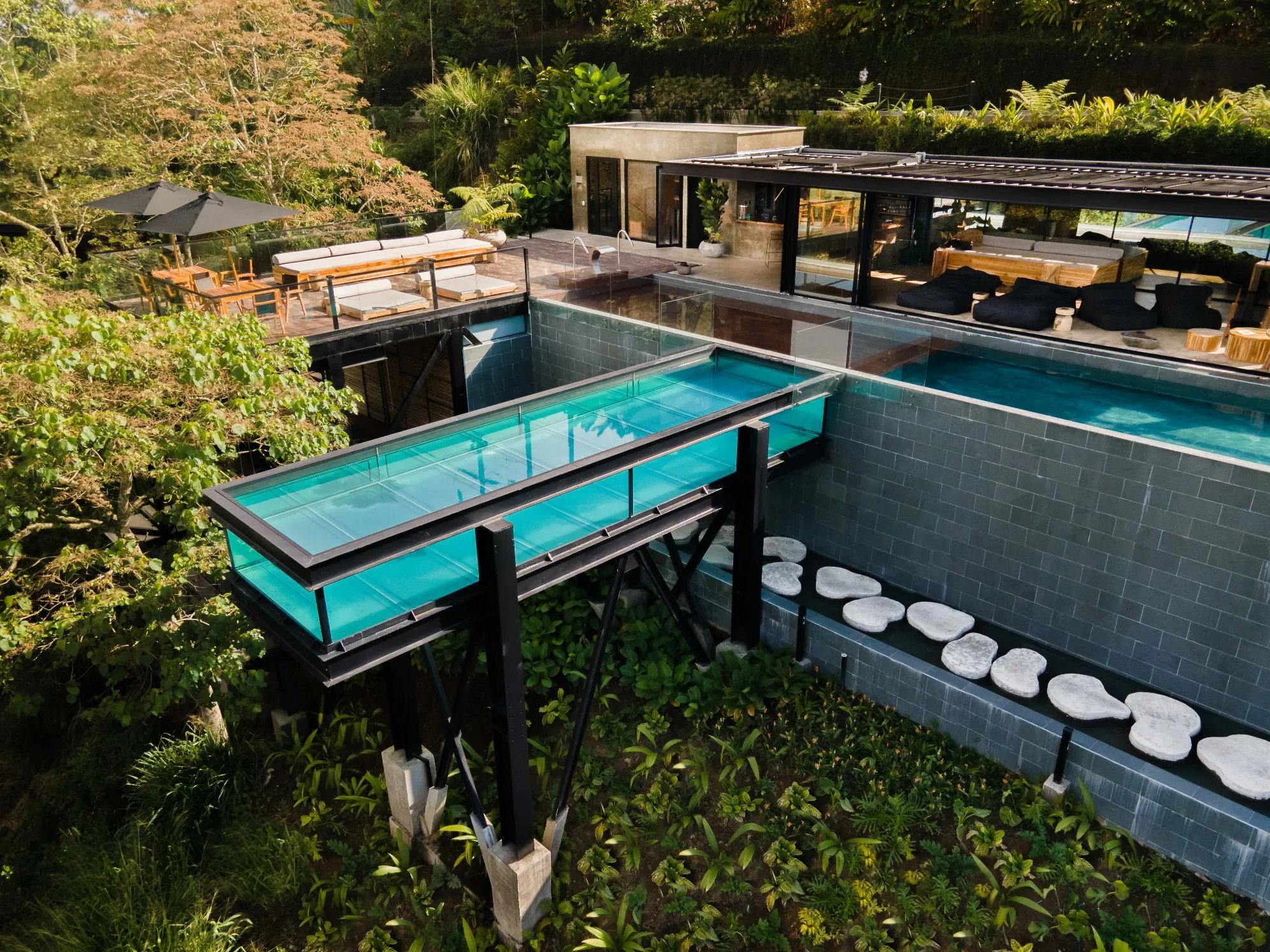
At a Glance
- Scenic
- Quiet
- Elegant
- Rustic
- Intimate
- Sophisticated
- Minimalist
- Romantic Getaway
- Wellness Retreat
- Anniversary
- Weekend Escape
- Panoramic View
- Garden
- Terrace
- Wi Fi
- Pool
- Spa
- Sauna
- Fitness Center
- Restaurant
- Mountain
- Garden
- Wi Fi
- Pool
- Spa
- Sauna
- Fitness Center
- Restaurant
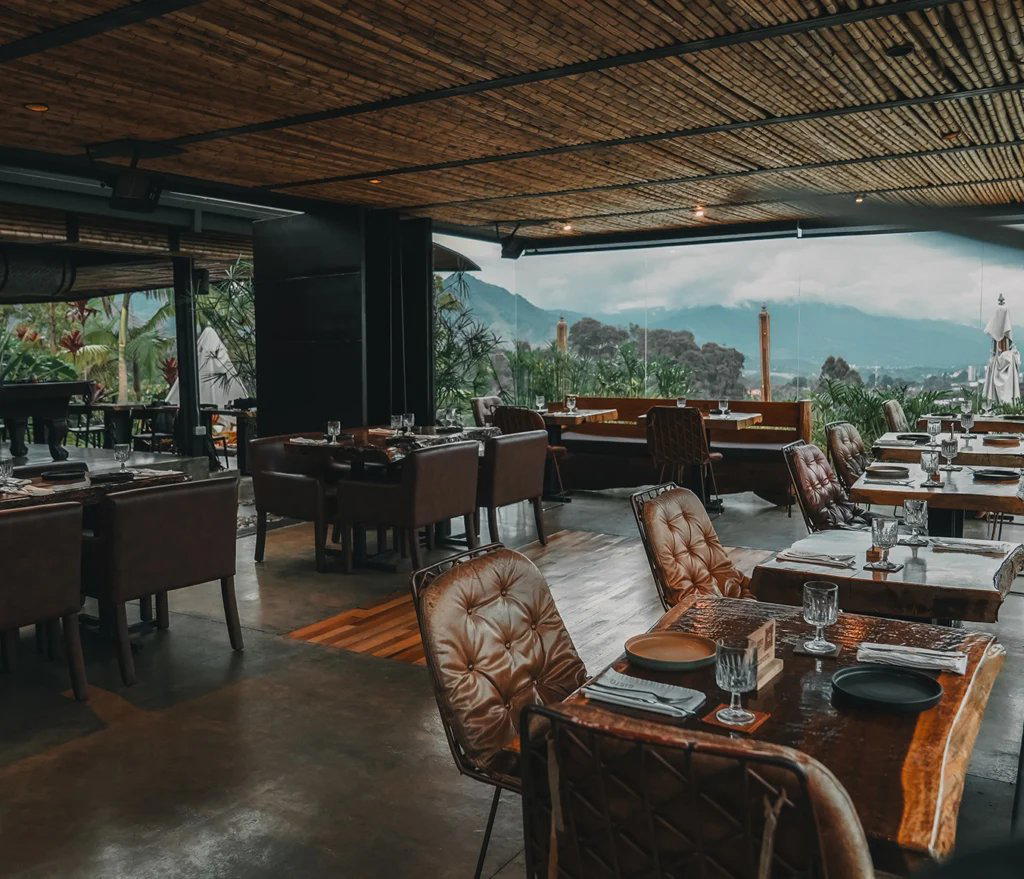
Serene and peaceful mountain retreat with lush gardens, forest surroundings, and spectacular sunset views over mountain ranges.