
Michelin Selected
A Michelin Selected property in the Sarentino valley of South Tyrol, Hotel Bad Schörgau draws on the region's deep tradition of alpine wellness architecture, stone, timber, and thermal water brought into measured dialogue with the surrounding landscape. It sits within a small tier of valley-floor properties that trade resort scale for genuine material rootedness and a thermal program built around the area's natural springs.

Pearl is the En Primeur Club membership app, where members save venues, book tables and use the concierge.
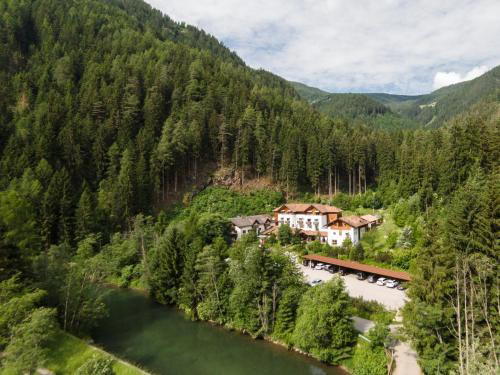
Stone, Water, and the South Tyrolean Alpine Interior
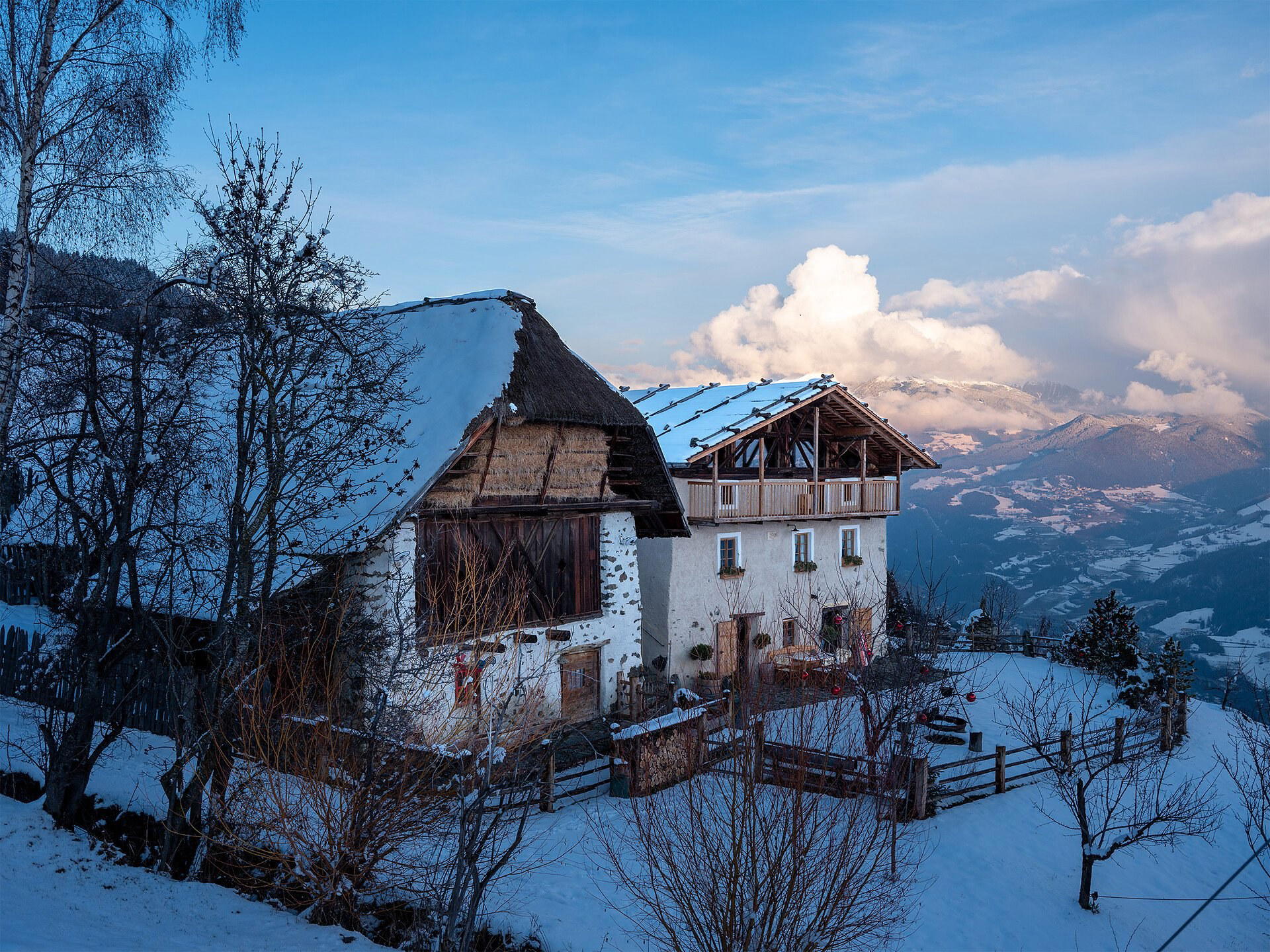
The Sarentino valley, or Sarntal in German, a reminder that this corner of Italy has been culturally Austrian for most of its history, represents one of the quieter propositions in alpine hotel travel. The valley runs north from Bolzano, narrowing as it climbs, and the villages along its floor have never attracted the international ski-circuit crowds that descend on the Dolomites further east. That comparative obscurity has preserved something: a hotel culture that still draws primarily on regional building materials and thermal water traditions rather than imported luxury formats.
Hotel Bad Schörgau, addressed at Putzen 24 in Sarentino, sits within this tradition. The "Bad" prefix, from the German word for bath, signals its place in a specific lineage of alpine thermal properties whose identity is structured around water rather than altitude or gastronomy. These are not hotels that happened to add a spa; they are properties where the thermal program is the architectural and commercial spine, around which rooms, dining, and outdoor access are arranged. The 2025 Michelin Selected designation confirms a standard of execution that places it within a curated tier of Italian hotels, though the context here is emphatically alpine and regional rather than cosmopolitan.
The Architecture of the Alpine Thermal Hotel
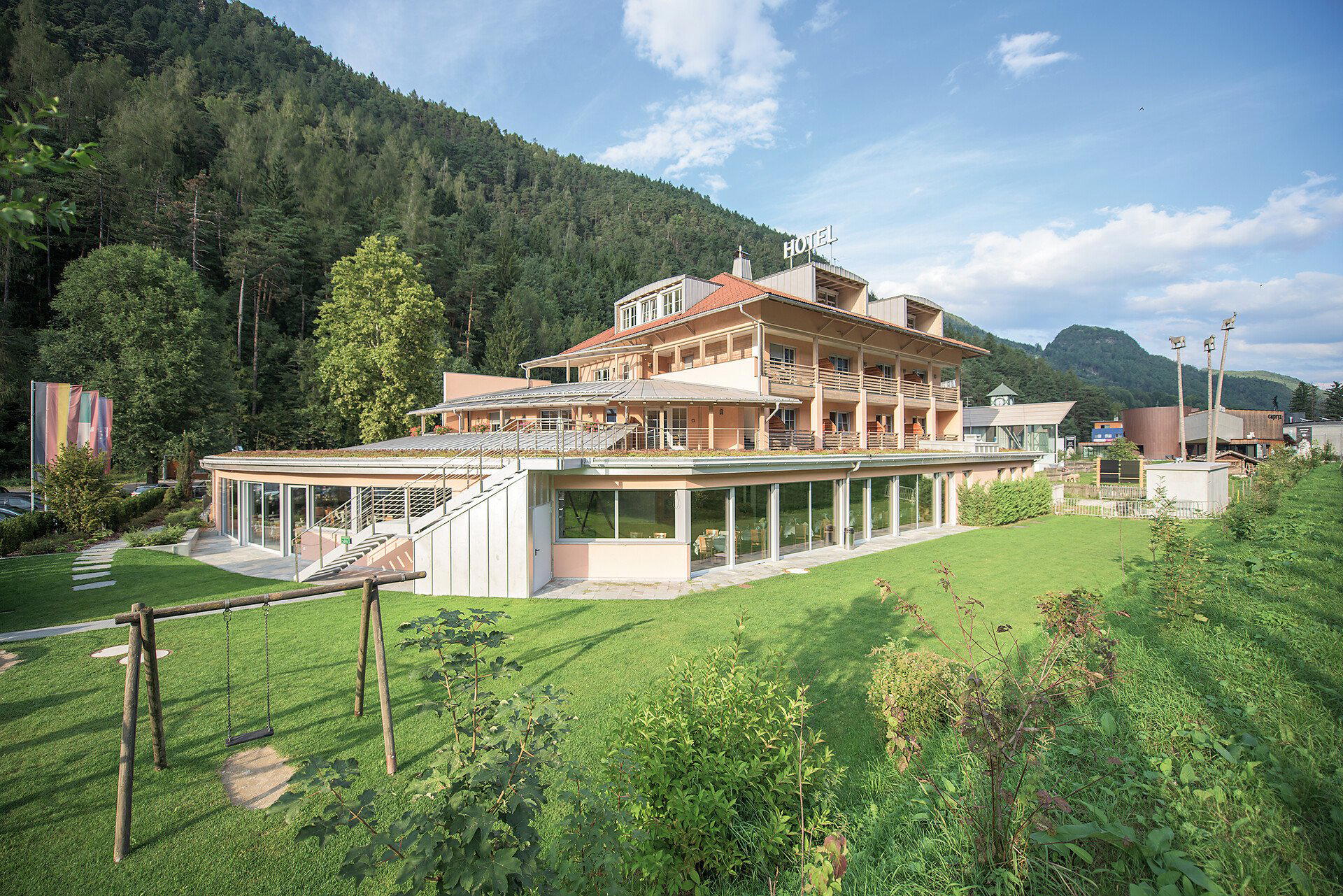
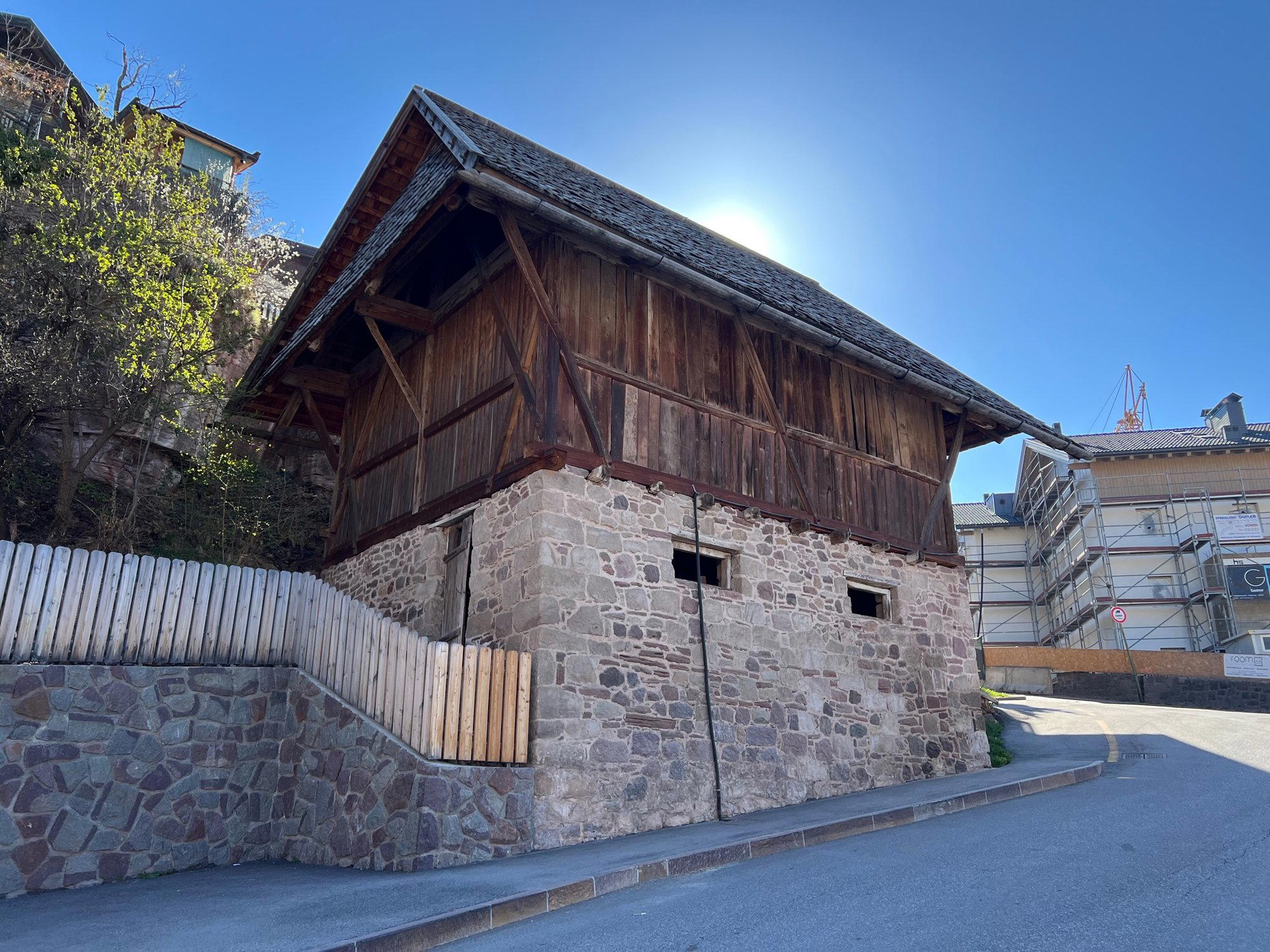
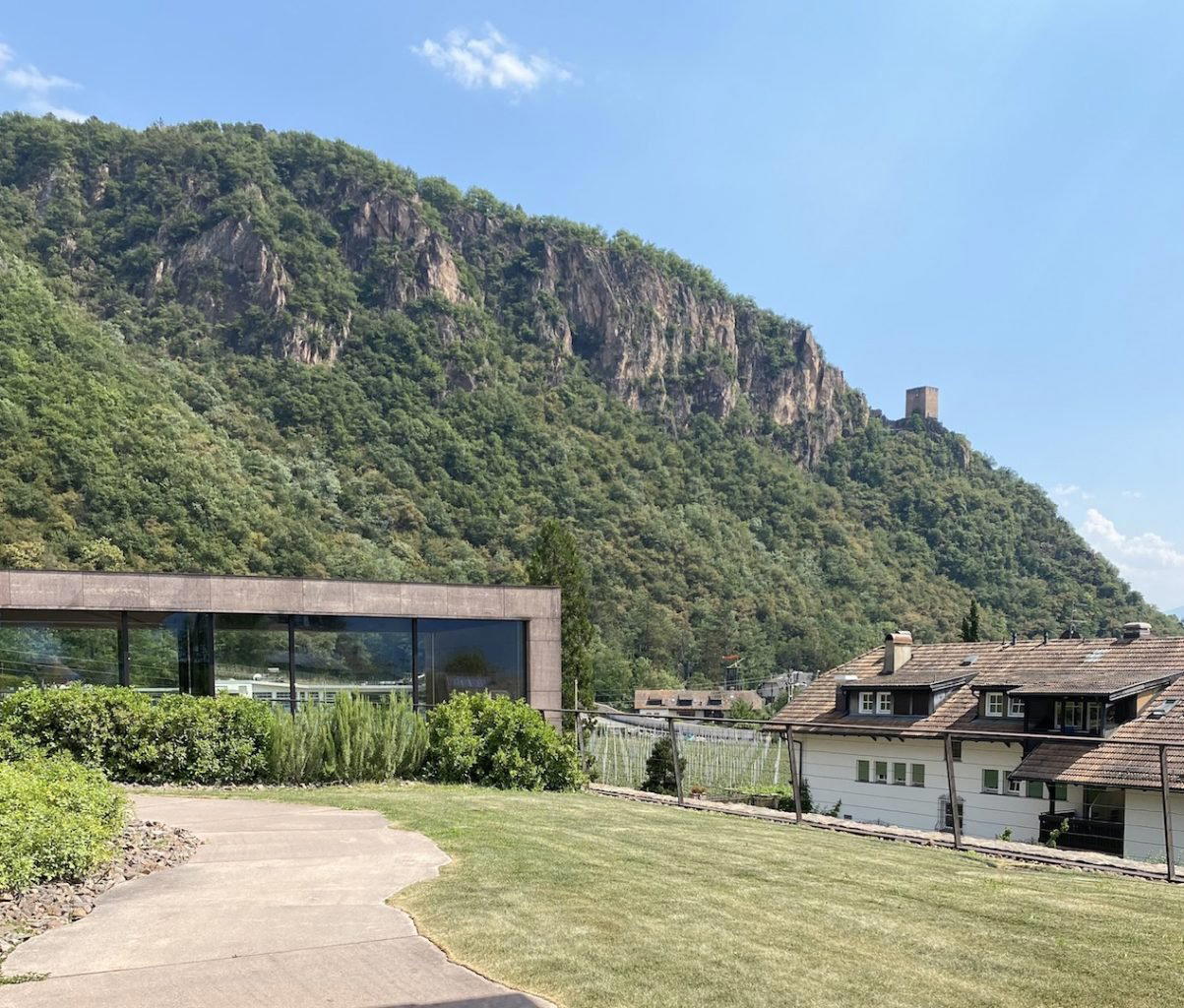
South Tyrolean hotel architecture occupies a specific position in European design conversation. The region's leading properties share a grammar: heavy timber framing, local stone used structurally rather than decoratively, south-facing glazing that pulls winter light deep into common areas, and the kind of material honesty that comes from centuries of building in places where winters are serious and materials have to work. This is not the stripped-down minimalism of a Milanese design hotel, it is something older and more climatically specific.
The "Bad" hotel typology adds another layer. Properties built around thermal or mineral water sources tend to develop a particular relationship between interior and exterior: the water is both the draw and the spatial organizer, and buildings in this tradition often position their thermal facilities so that the transition between heated indoor pools or baths and outdoor terraces or pools is as compressed as possible. In winter, that contrast, warm water, cold air, snow-loaded spruce trees at the perimeter, becomes the defining sensory experience of the stay. It is an experience that alpine architects have been calibrating for well over a century.
Bad Schörgau's setting in the Sarentino valley places it in a peer group of properties that are relatively small in the context of Italian hotel travel, and notably less visible internationally than South Tyrol's more marketed wellness destinations. That positioning is worth understanding for the traveller considering it: this is not a property aimed at a global wellness tourism market, but at a regional and domestic Alpine audience that values the valley's specific character over branded amenities.
Sarentino in Context: A Valley That Has Kept Its Pace
South Tyrol's hotel offer is more varied than its reputation as a hiking-and-spa destination suggests. The region holds properties across multiple tiers and formats, from the castle hotels above Merano (see Castel Fragsburg in Merano, a property that occupies a different architectural register entirely, perched above the valley floor with views rather than immersion in the landscape) to valley-floor wellness operations like Bad Schörgau. The Michelin Selected designation, awarded in 2025, places Bad Schörgau in a curated group that also includes properties at very different price points and scales elsewhere in Italy, from Aman Venice to Borgo Santandrea on the Amalfi Coast, but the selection criterion is quality execution within the property's chosen format, not format equivalence across the list.
Sarentino itself is small and quiet by design. The valley's road infrastructure keeps transit times meaningful, Bolzano is the nearest city with rail connections, and the drive from there into the valley takes the better part of an hour depending on conditions. That relative inaccessibility is partly what has kept the valley's hotels honest: guests who make the effort are generally committed to the kind of stay the valley offers, which means walking, thermal bathing, and the particular rhythm of alpine mountain time. For guests arriving from elsewhere in Italy, this is worth weighing against alternatives like the more accessible alpine wellness properties around Lake Como or the Dolomites.
For broader orientation across the region's dining and hospitality offer, our full Sarentino restaurants guide maps the valley's food culture, which leans into South Tyrolean traditions, speck, grey cheese, rye bread, and game, rather than the Italianate cuisine that defines the country's better-known food destinations. A near neighbour worth noting in this category is Terra - The Magic Place, another Sarentino property that represents a distinct design and hospitality position within the same valley.
Where Bad Schörgau Sits in the Wider Italian Alpine Hotel Picture
For travellers calibrating Bad Schörgau against other Michelin Selected properties in Italy, the relevant comparison is not with the palazzo hotels of Venice or Rome, or the estate conversions of Tuscany, properties like Rosewood Castiglion Del Bosco in Montalcino or Castello di Reschio in Lisciano Niccone. Those operate in a completely different register: history-led, wine-country framed, with a guest profile that skews toward international luxury travellers on extended itineraries.
Bad Schörgau belongs instead to a smaller cohort of alpine thermal properties where the building is in genuine conversation with its immediate environment and the programme is structured around physical renewal rather than cultural consumption. The closest structural analogues are the better valley-floor wellness hotels of Austria and Switzerland, rather than anything in Italy's coastal or Tuscan luxury belt. Within that peer group, the Michelin Selected placement signals that the property meets a baseline of quality that separates it from the valley's more anonymous accommodation options.
For travellers building a wider Italian itinerary, the Michelin Selected list includes genuinely disparate properties: Passalacqua in Moltrasio and Il Sereno in Torno occupy the Lake Como design-hotel tier; Bellevue Hotel & Spa in Cogne offers a closer alpine parallel in the Aosta Valley. Each represents a different answer to what quality alpine hospitality looks like, Bad Schörgau's answer is thermal-anchored, valley-immersed, and relatively unmediated by international hotel branding.
Planning a Stay
Reaching Sarentino requires a car from Bolzano, which itself is leading accessed by train from Verona or Innsbruck. The valley is seasonal in character: summer brings hiking access and longer daylight, while winter frames the thermal program most naturally, with snow closing higher trails and the valley settling into a slower register. Booking directly through the property is the standard approach for independent travellers; the address at Putzen 24 places it on the valley floor rather than at altitude, making it accessible year-round without specialist transport. Travellers whose primary interest is luxury-scale alpine spa infrastructure should understand that Bad Schörgau operates within a regional rather than international hospitality format, the Michelin Selected designation is a quality signal, not a scale signal.
At-a-Glance Comparison
Comparable venues nearby, for context on price, style, and recognition.
| Venue | Cuisine | Price | Awards | Notes |
|---|---|---|---|---|
| Hotel Bad SchörgauThis venue (the venue you are viewing) | Historic bathhouse with modern alpine extensions | $300–500 | Michelin Selected | Not listed |
| Terra - The Magic Place | Modernist Tyrolean chalet in a magical Dolomites setting | $200–300 | 1 Michelin Key · Relais Chateaux Award | Sarentino |
| Masseria Fontana di Vite | Restored historic masseria blending heritage architecture with modern hospitality | $100–200 | Michelin Selected | Contrada Fontana Di Vite |
| Palazzo Scanderbeg | Luxury historic residence blending 15th-century Renaissance architecture with contemporary minimalist design and bespoke service. | $500–750 | Michelin Selected · Mr & Mrs Smith Seal of Approval | Centro Storico (near Trevi Fountain) |
| Ansitz Steinbock | Luxury boutique castle hotel with contemporary design philosophy emphasizing minimalism and craftsmanship within historic walls. | $300–500 | 1 Michelin Key | Villandro |
| Hotel Petrus | Family-run Alpine wellness retreat | $300–500 | Michelin Selected | Riscone |
Recognition history
Dated appearances from independent guides and award organizations, with the underlying list record or original source where available.
Michelin Selected
Michelin
Continue exploring
More in Sarentino
Hotels in Sarentino
All hotels in Sarentino →
Bars in Sarentino
Browse all →
Details
- Quiet
- Cozy
- Rustic
- Elegant
- Scenic
- Romantic Getaway
- Wellness Retreat
- Anniversary
- Panoramic View
- Historic Building
- Destination Spa
- Spa
- Pool
- Sauna
- Wi Fi
- Restaurant
- Room Service
- Mountain
- Garden
- Wheelchair Accessible
- Elevator
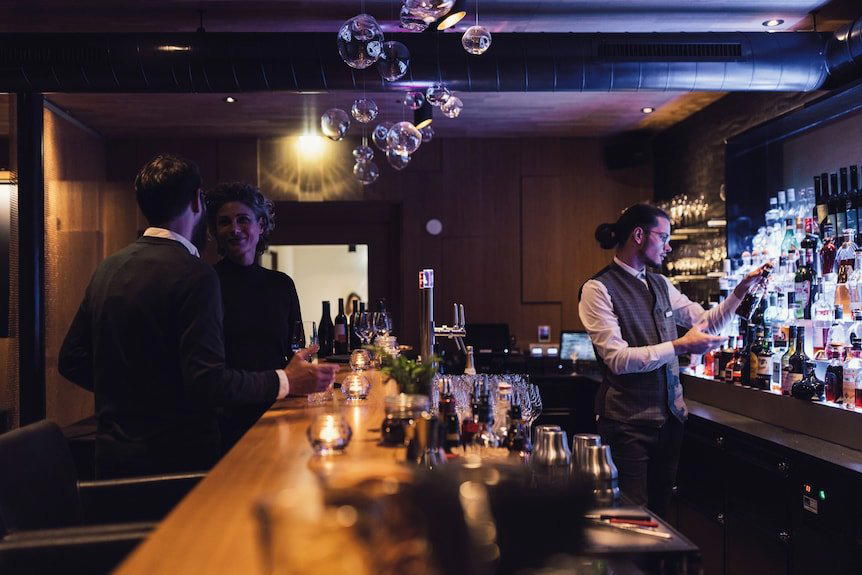
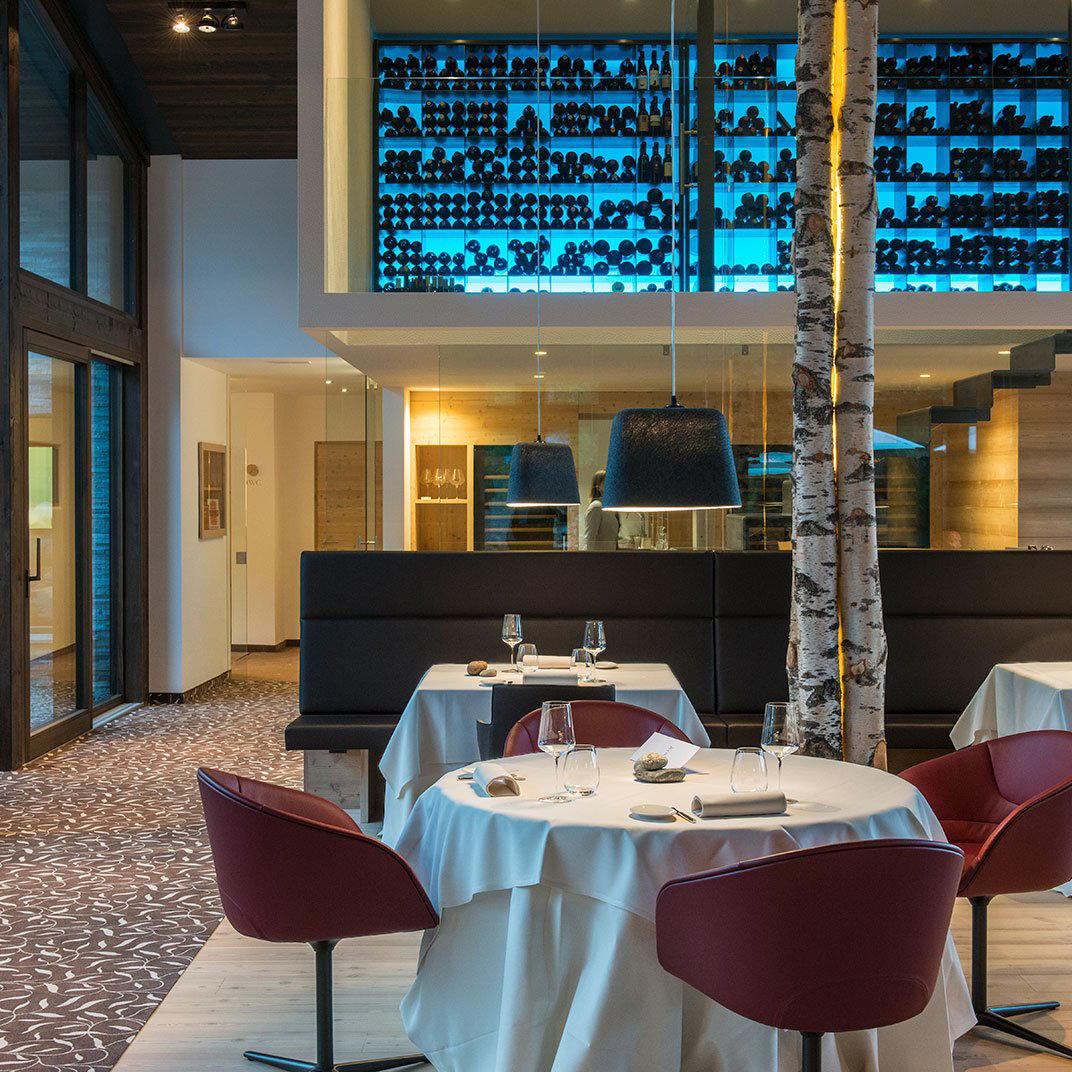
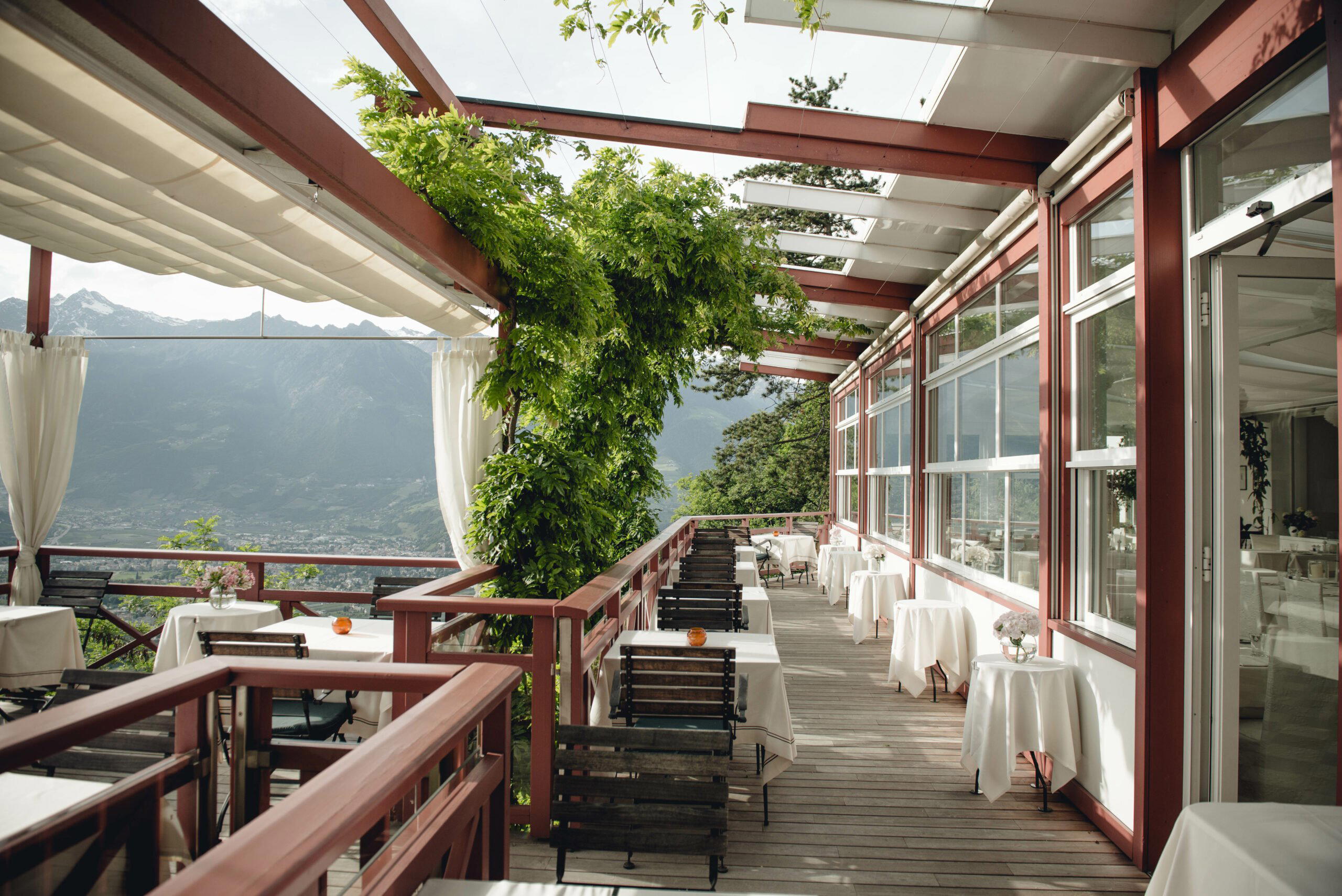
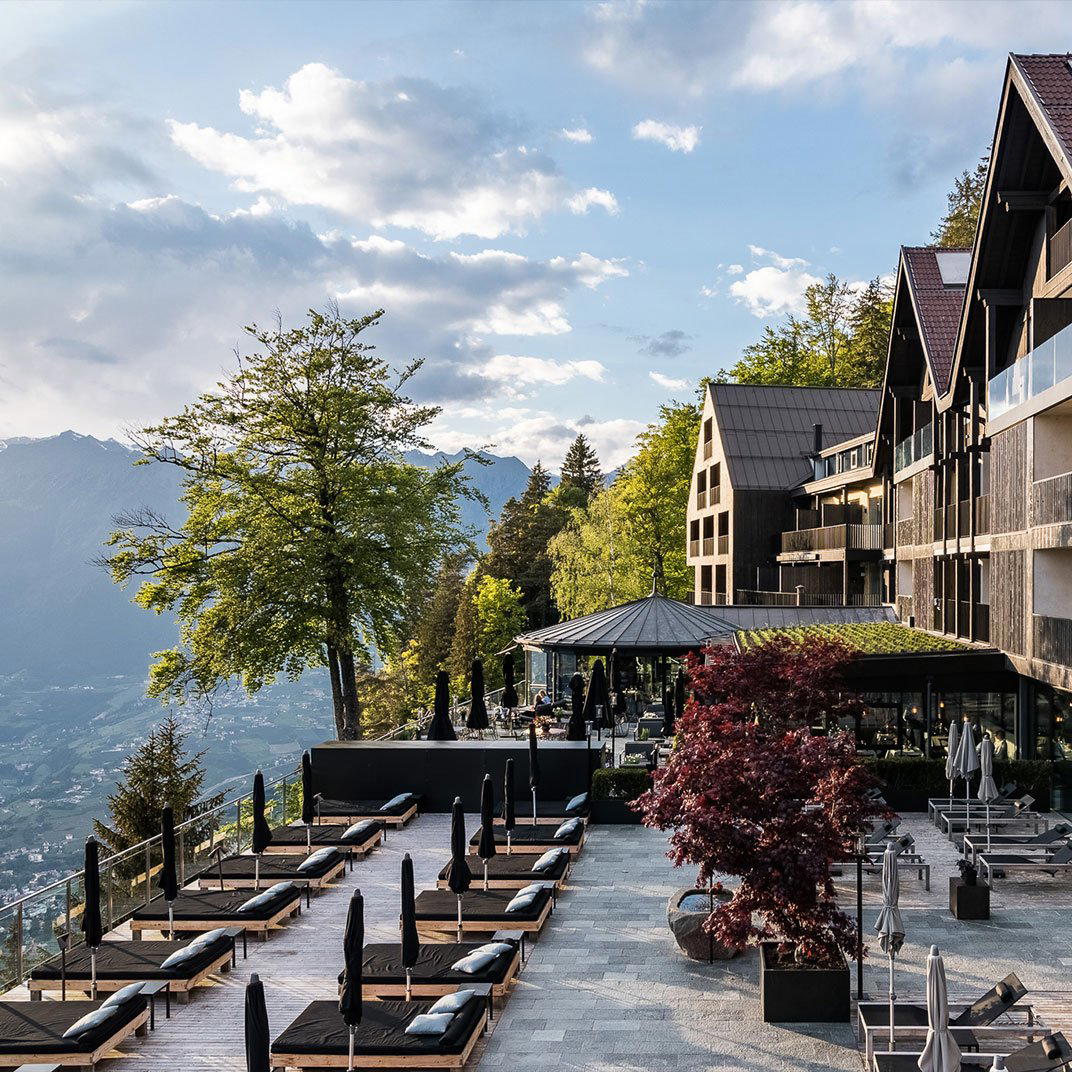
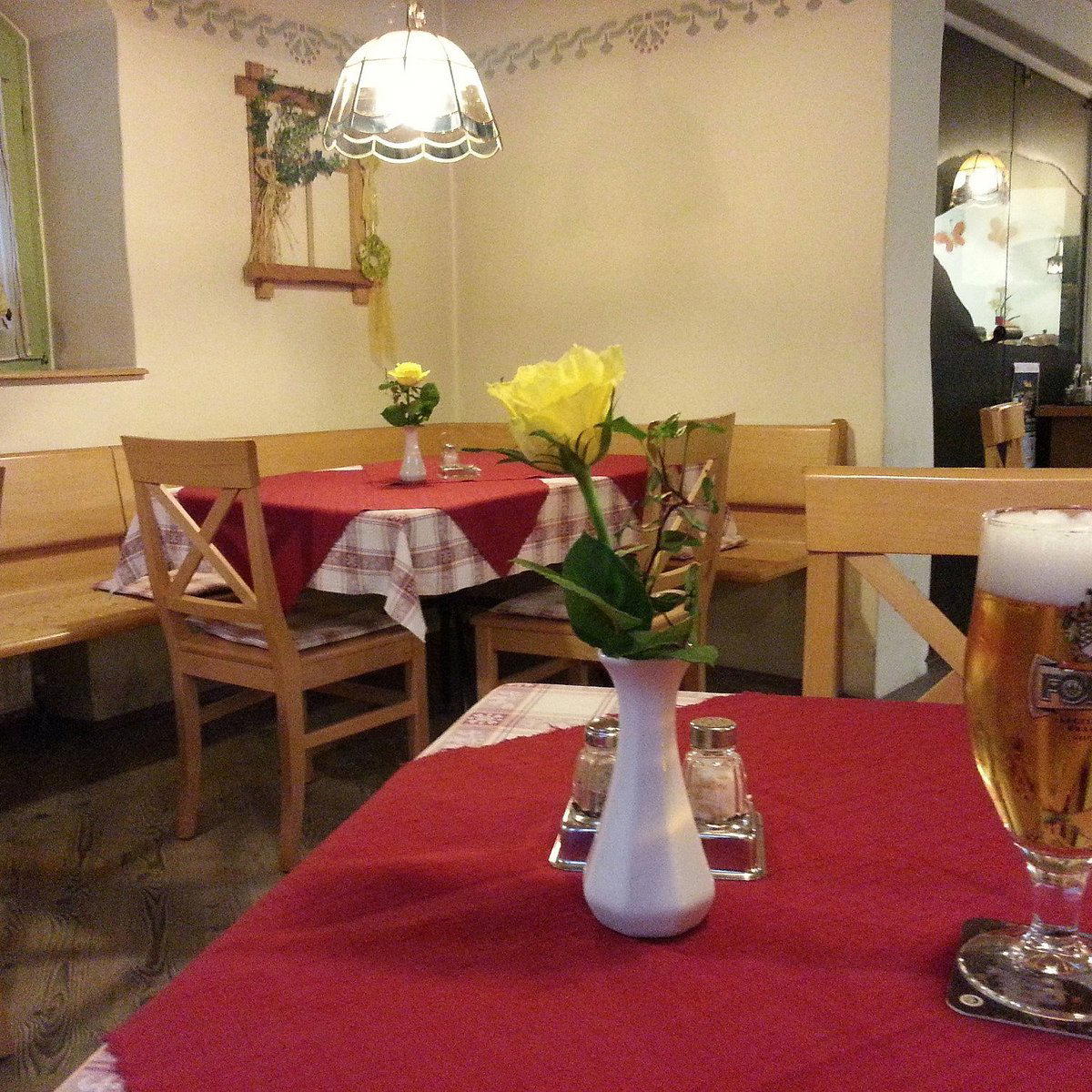
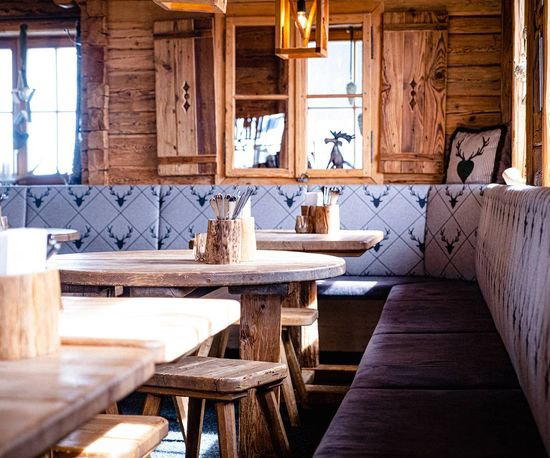
Serene alpine atmosphere with wood accents, minimalist clean interiors, and modern alpine design creating a restful, cozy retreat.