
Michelin Selected
A Michelin Selected guesthouse occupying a historic address in Brixen's old town, the Adler sits within one of South Tyrol's most architecturally layered Alpine towns. The property represents a quieter tier of Italian Alpine hospitality: intimate in scale, grounded in local building tradition, and positioned well away from the region's larger resort formats. For visitors prioritising architectural character over amenity volume, it warrants serious consideration.

Pearl is the En Primeur Club membership app, where members save venues, book tables and use the concierge.
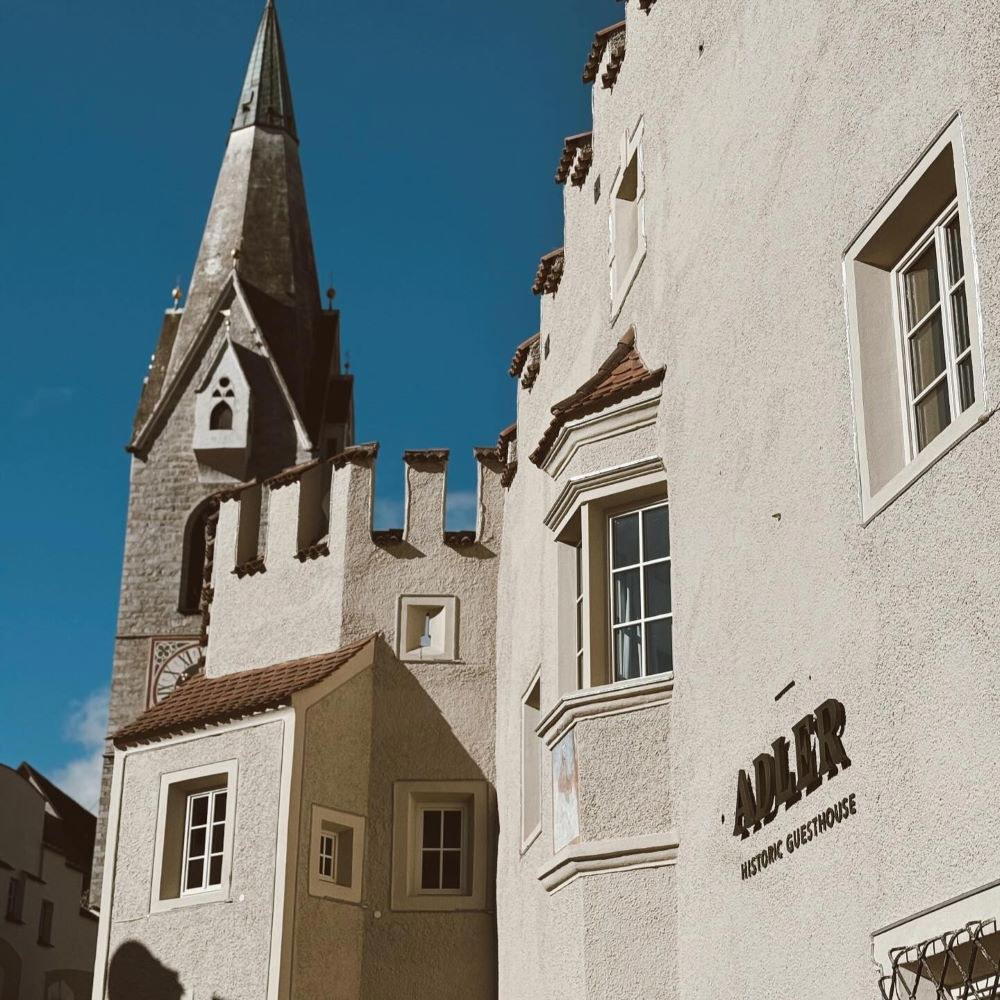
Brixen's Old Town and the Case for Historic Fabric
South Tyrol's hotel offer splits broadly into two camps: the purpose-built wellness resort, often outside town on a hillside with spa infrastructure as its primary selling point, and the historic property embedded in an existing urban fabric. The Adler Historic Guesthouse at Via Ponte Aquila 9 belongs firmly to the second category. Brixen itself is one of the region's oldest episcopal towns, with a medieval street plan, arcaded lanes, and a cathedral complex that dates its serious construction to the eleventh century. A property that carries the word "historic" in its name here is making a specific claim about its relationship to that built environment, not simply deploying the adjective as branding.
That distinction matters in context. For visitors choosing between South Tyrol's accommodation tiers, from the grand resort formats found around Merano, such as Castel Fragsburg, to the full-scale Alpine spa hotels further up the valleys, the Adler represents a third option: smaller, town-centred, and reliant on architectural presence rather than amenity scale. The Michelin Selected designation for 2025 places it within a curated tier of Italian properties that Michelin's hotel inspectors consider worth the detour, which for a guesthouse in a secondary Alpine town carries meaningful weight.
Architecture as the Primary Offer
The physical address, Via Ponte Aquila, the Street of the Eagle Bridge, sits within the historic core of Brixen, where buildings from multiple centuries exist in close proximity and the streetscape itself constitutes the attraction. In this kind of setting, a property's design approach is less about what was introduced and more about what was preserved or sympathetically integrated.
This positioning connects to a broader pattern visible across Italian historic towns, where the most considered small properties tend to sit inside pre-existing architectural shells rather than constructing new ones. Compare this approach to how Aman Venice occupies a sixteenth-century palazzo, or how Castello di Reschio in Umbria works within a medieval fortified structure. The logic is consistent: the building's age and material honesty become load-bearing elements of the stay, not decorative additions to it. At the Adler, the historic fabric of Brixen's old town provides that same structural context.
Where Brixen Sits in the South Tyrol Picture
Brixen (Bressanone in Italian) functions as the cultural and ecclesiastical capital of the upper Eisack valley. It is smaller and quieter than Bolzano, with a visitor profile that skews toward those interested in the town's layered history rather than outdoor sport as a primary motivation, though the Dolomite access it offers is extensive. The town's dual-language identity, German and Italian are both administrative languages in South Tyrol, gives it a character that differs from both mainstream Italian tourist towns and conventional Alpine resort destinations.
For accommodation, this means the relevant comparison set is less the large lake properties like Il Sereno on Lake Como or Grand Hotel Tremezzo, and more the smaller, town-embedded properties found throughout northern Italy's historic centres. The Adler occupies a niche that larger resort formats cannot credibly fill: the experience of staying within a functioning medieval town, where the walk to the cathedral cloister or the arcaded market takes minutes rather than a drive.
South Tyrol's broader hotel scene has developed a strong wellness-resort infrastructure over the past two decades, with properties across the region investing heavily in spa facilities and mountain-facing terraces. The Adler's positioning as a historic guesthouse reads as a deliberate counter to that model, prioritising a different kind of asset entirely. This is a sensibility shared by properties like Bellevue Hotel in Cogne in the Aosta Valley, where the Alpine setting and local character carry the experience rather than purpose-built amenity layers.
Planning a Stay: What to Expect and When to Go
Brixen rewards visits in shoulder season. Late spring and early autumn bring manageable crowds, good weather for the surrounding valley walks, and the leading conditions for exploring the town's outdoor spaces, the Hofburg gardens, the cathedral piazza, and the arcaded main street. High summer sees a significant increase in visitors passing through the Brenner corridor, while winter brings a more contained, local atmosphere and access to nearby ski areas, though the town itself is not a ski resort in the conventional sense.
As a guesthouse, the Adler will have a limited room count, which means availability runs tighter than at larger properties. Michelin Selected recognition for 2025 signals increased visibility at a national level, and bookings for peak periods in South Tyrol, the weeks around Easter, August, and the pre-Christmas market season, tend to fill early. Planning at least two to three months ahead for those windows is advisable; outside them, shorter lead times are generally workable.
Brixen is accessible by train from Bolzano in under thirty minutes and from Innsbruck in approximately an hour, making it a practical base for broader exploration of the region without requiring a car for every movement. For visitors who prefer to structure an Italian itinerary around smaller historic towns rather than resort infrastructure, a stay here pairs naturally with properties further south: Casa Maria Luigia in Modena or Borgo San Felice in Castelnuovo Berardenga offer comparable attention to place and architecture in different regional registers.
For broader context on eating and drinking in the area, our full Brixen restaurants guide covers where the town's culinary offer is strongest and which local specialities are worth seeking out across the valley.
Positioning the Adler against Italy's larger luxury properties is less useful than understanding its actual peer group: Michelin Selected guesthouses in historic Alpine or northern Italian towns, where the primary draw is architectural and cultural immersion at a contained scale. Properties like Corte della Maestà in Civita di Bagnoregio share a similar logic, a specific historic town, a small key count, and a building that predates the tourism infrastructure built around it.
This is a different proposition from the grand-scale Italian luxury represented by Four Seasons Hotel Firenze, Bulgari Hotel Roma, or Portrait Milano. Those properties operate at a different scale and with different amenity expectations. The Adler's value is more specific: it offers entry into a medieval town that most visitors pass through without stopping, framed by a building that has been part of that town for considerably longer than any contemporary hotel format.
Comparable Venues
Comparable venues nearby, for context on price, style, and recognition.
| Venue | Cuisine | Price | Awards | Notes |
|---|---|---|---|---|
| Adler Historic GuesthouseThis venue (the venue you are viewing) | Historic heritage building reimagined as a contemporary luxury boutique hotel with sustainable practices and minimalist design philosophy. | $300–500 | Michelin Selected | Not listed |
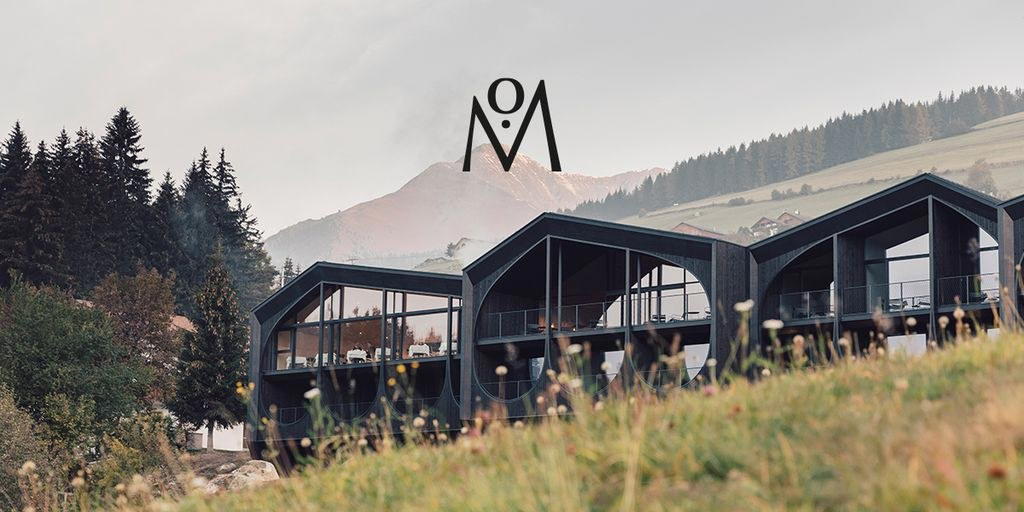
| My Arbor - Dolomites | Sustainable family-run treehouse hotel polished in the forest | $200–300 | Michelin Selected · Mr & Mrs Smith Seal of Approval | Plose |
| Hotel Viminale | Refined historic hotel blending timeless elegance with contemporary design. | $200–300 | Michelin Selected | Monti |
| Tenuta Duca Marigliano Boutique Hotel | Historic boutique estate blending aristocratic heritage with modern comforts | Not listed | Michelin Selected | Paestum |
| Dimora Cala del Pozzo | Contemporary classic Italian country retreat preserving authentic rural farmhouse identity with refined modern comfort. | $200–300 | Michelin Selected | Contrada Pozzo Vecchio |
| Portillo Dolomites 1966 | Modern alpine luxury with traditional mountain heritage; family-run establishment founded in 1966 and completely renewed in 2013, blending contemporary design with classic Dolomite character. | $300–500 | Michelin Selected | Selva di Val Gardena |
Recognition history
Dated appearances from independent guides and award organizations, with the underlying list record or original source where available.
Michelin Selected
Michelin
Continue exploring
More in Brixen
Hotels in Brixen
All hotels in Brixen →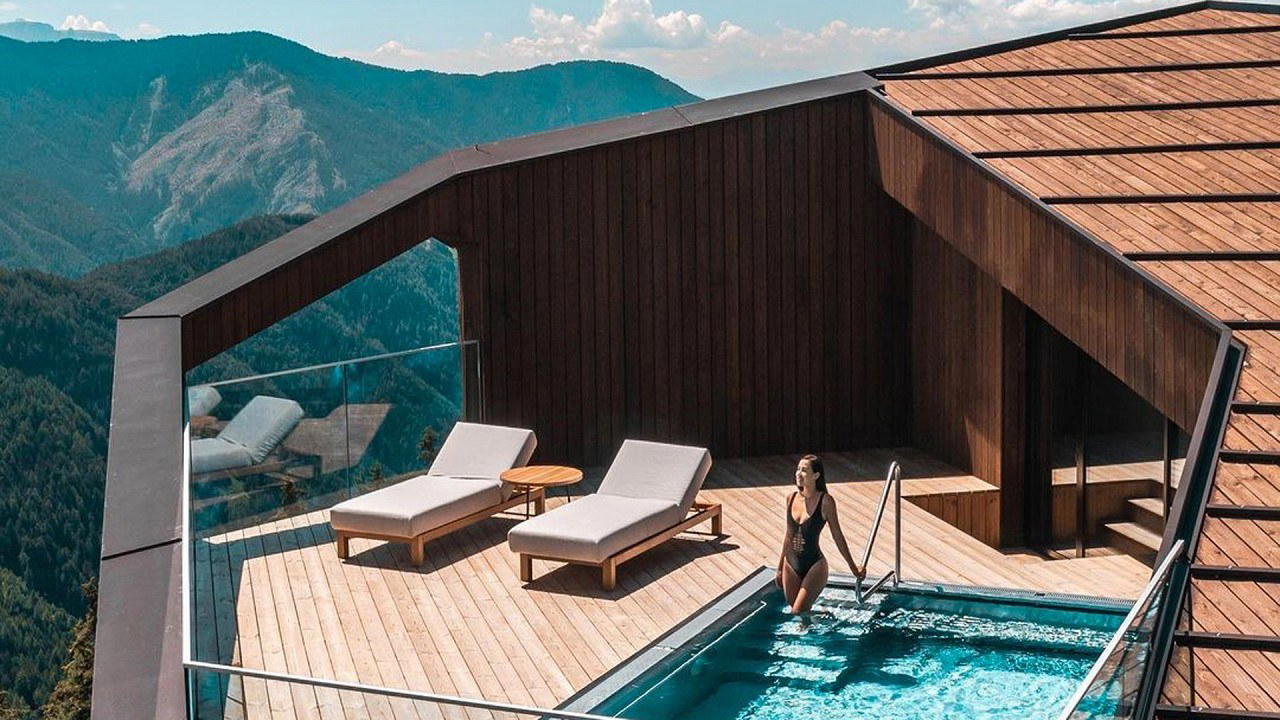
Bars in Brixen
Browse all →

Details
- Elegant
- Minimalist
- Quiet
- Romantic
- Historic
- Romantic Getaway
- Weekend Escape
- Anniversary
- Rooftop Pool
- Historic Building
- Waterfront
- Destination Spa
- Panoramic View
- Terrace
- Spa
- Pool
- Sauna
- Wi Fi
- Restaurant
- Bar
- Fitness Center
- Room Service
- Concierge
- Waterfront
- Mountain
- Wheelchair Accessible
- Elevator
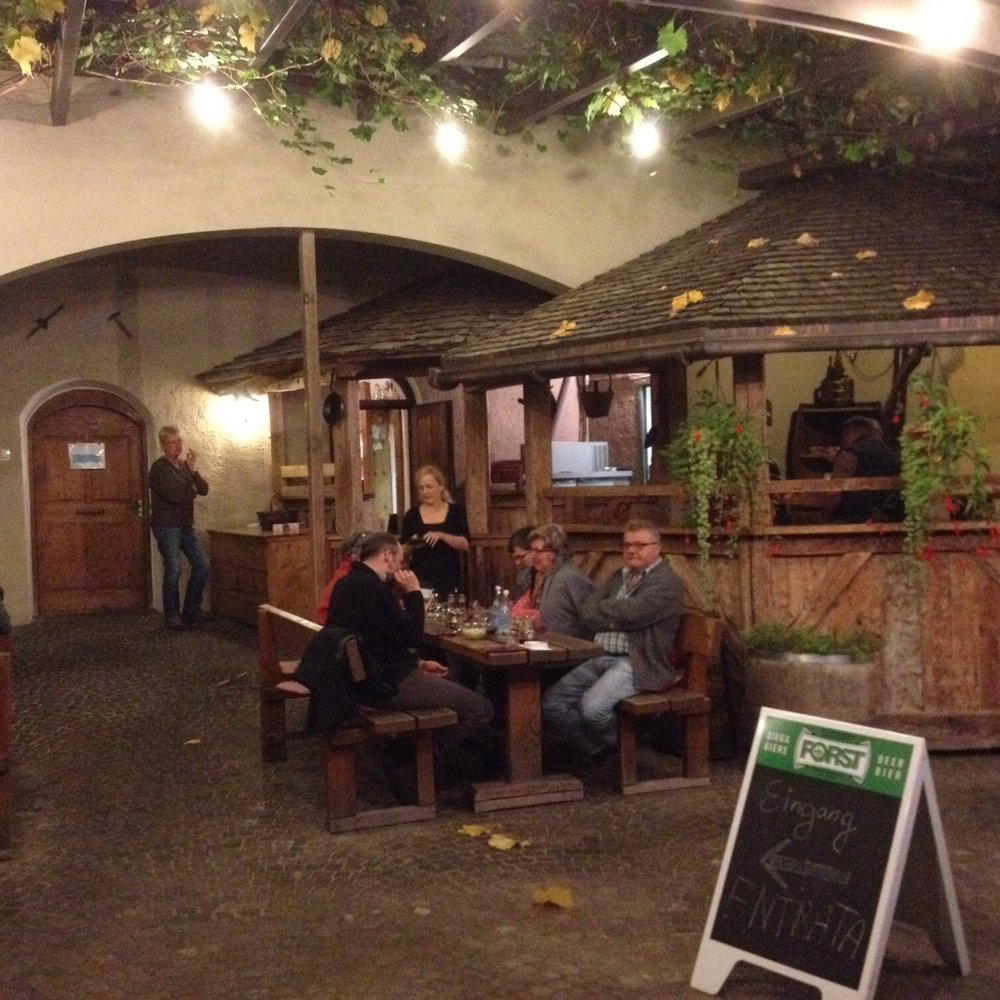
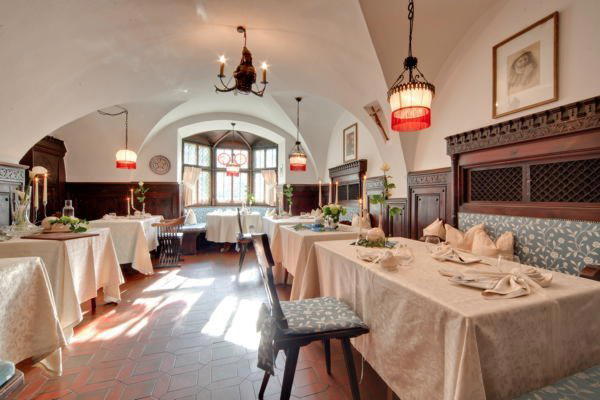
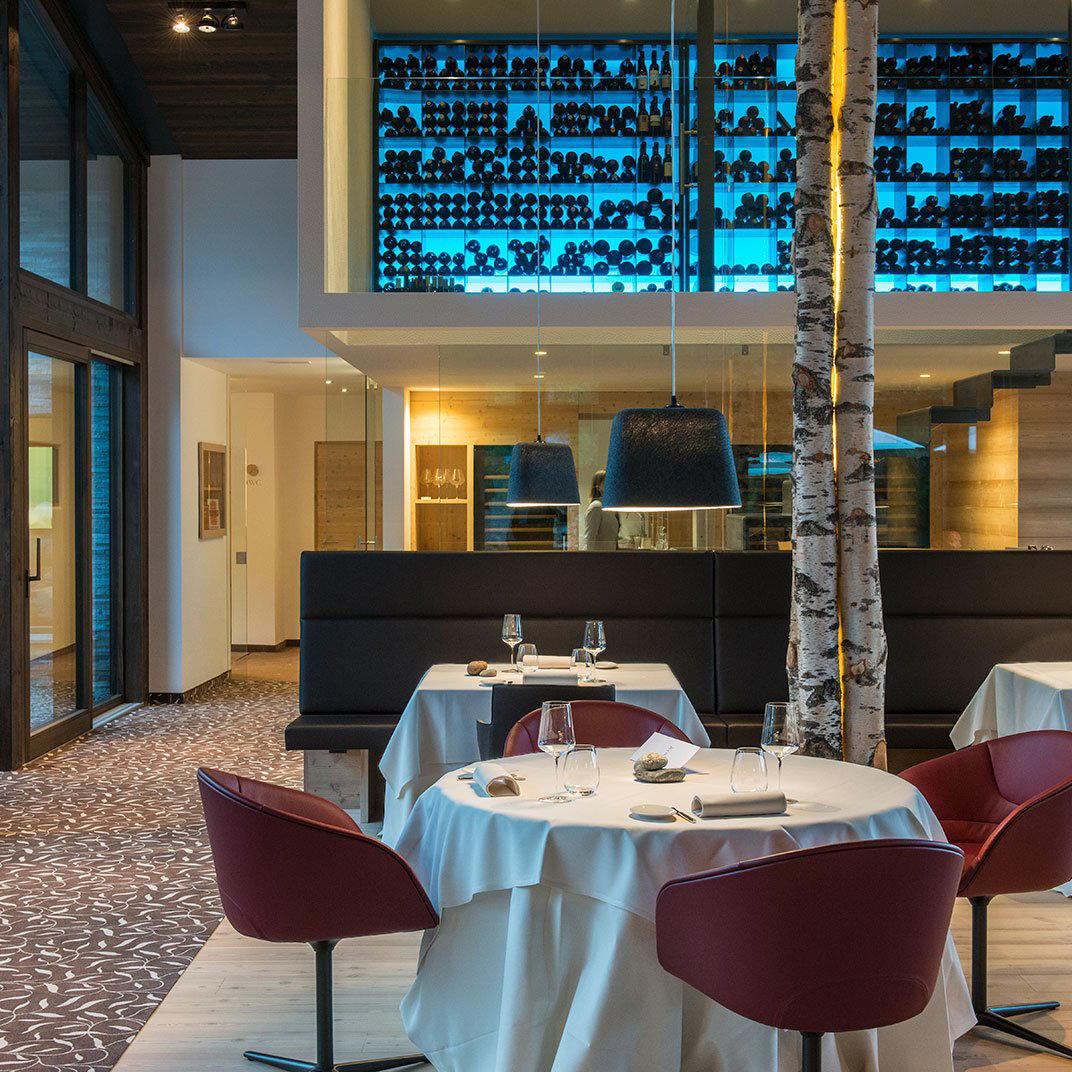
Contemporary elegance with historic character; vaulted ceilings and ancient stone walls frame clean, minimalist interiors with warm materials; sophisticated yet relaxed atmosphere blending tradition and modernity.