Hilton Miami Beach Convention Center Hotel
A Miami Beach convention-center hotel belongs to a practical strand of local hospitality: large-format, event-adjacent lodging built for schedules as much as leisure.

Pearl is the En Primeur Club membership app — saves, bookings, and concierge access live there. Same editors, same standards.
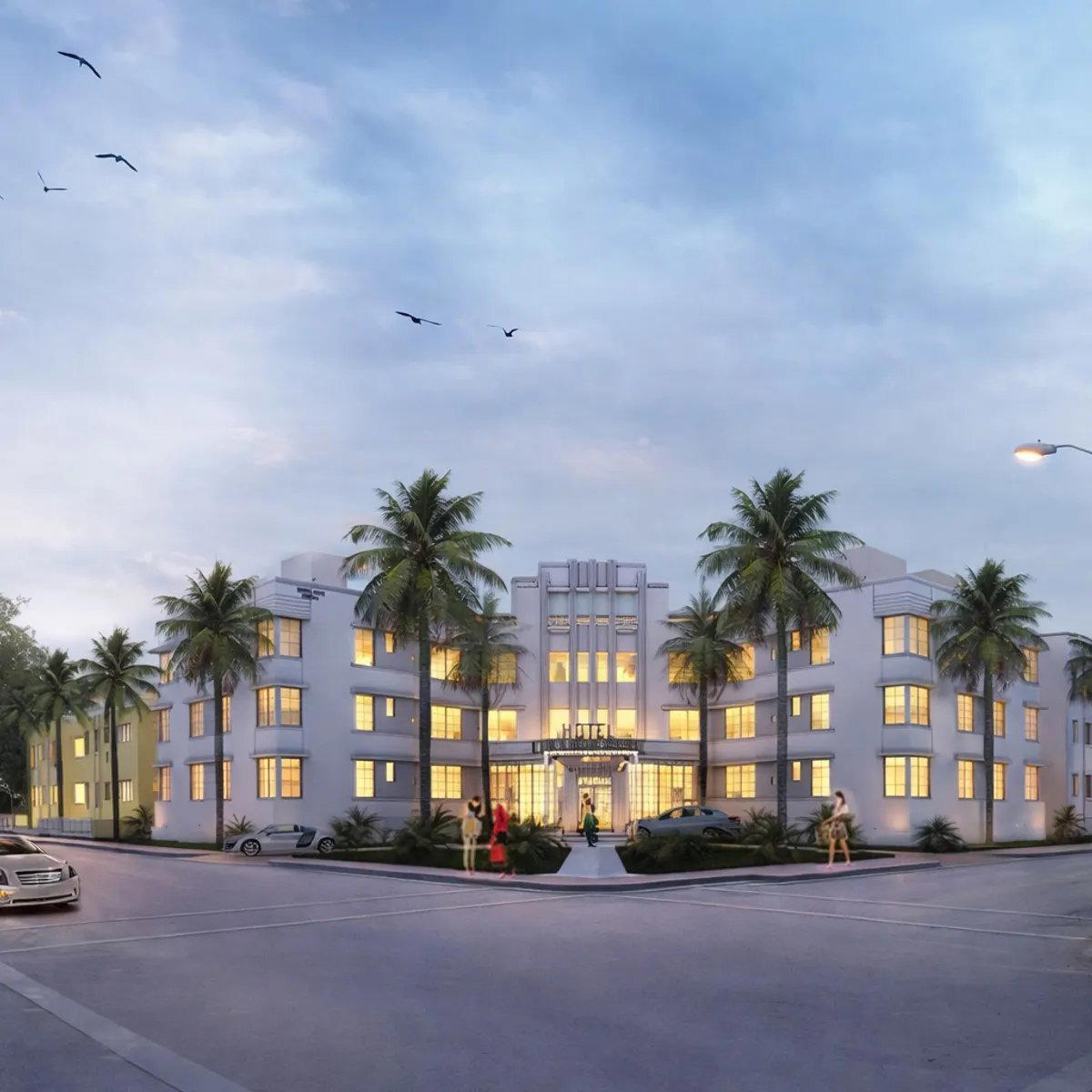
Miami Beach hospitality at convention scale
Approach a convention-center hotel in Miami Beach and the first impression is rarely about hush or residential intimacy. The rhythm is larger: rolling suitcases on polished floors, arrival lanes calibrated for groups, lobby seating that has to work for early check-ins, late departures, name badges, families, and travelers who need the beach and a meeting room within the same trip. In a city often sold through Art Deco facades, pool decks, and private-club mythology, this category has a different architectural brief. It is about volume, orientation, and the ability to absorb the practical pressure that a leisure hotel can sometimes avoid.
Hilton Miami Beach Convention Center Hotel sits in that functional strand of Miami Beach hospitality. The record confirms a 4-star, 289-room hotel in Miami Beach, with reservations recommended. The better question is what a convention-center hotel means in this city. Miami Beach compresses business travel, cultural events, beach tourism, nightlife, and design history into a narrow barrier-island geography. Hotels here often signal their priorities before a guest sees a room: resort compound, wellness retreat, heritage restoration, apartment-style beach base, or meeting-led urban property.
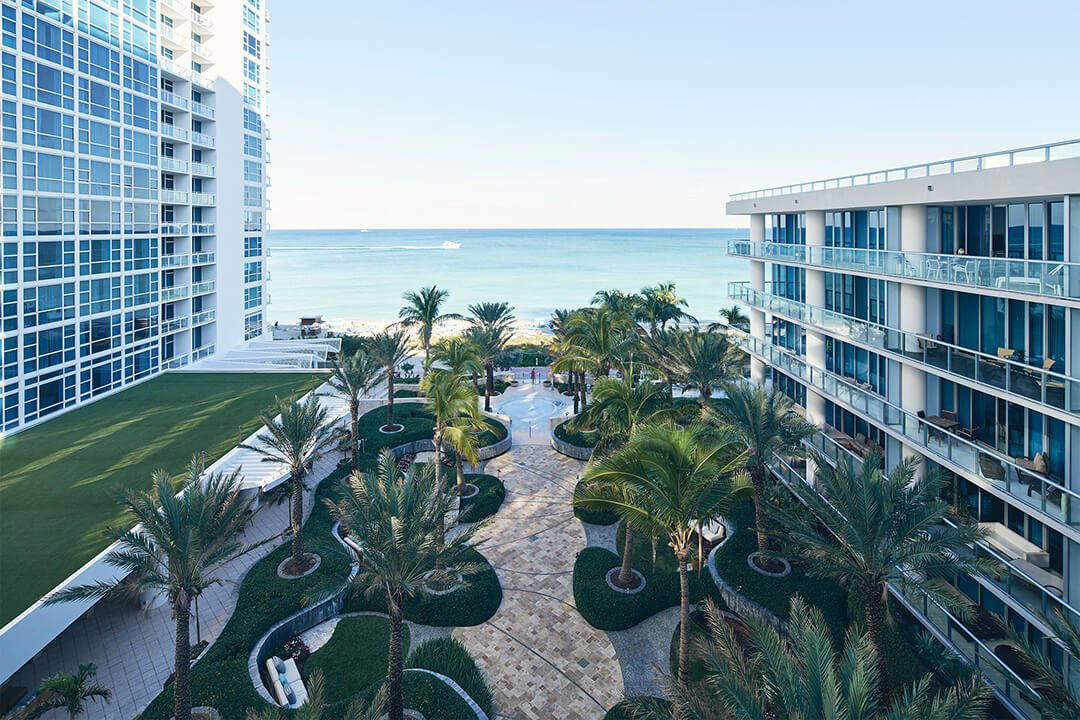
That makes the name itself a positioning cue. A convention-center hotel is not trying to compete with the private-estate logic of Fisher Island Club, the wellness programming associated with Carillon Miami Wellness Resort, or the revived glamour orbit around Delano. It belongs to a more logistical comparable set, where circulation, meeting proximity, lobby usability, and room availability matter as much as the romance of a lobby bar. That can be a virtue for travelers whose Miami Beach trip is structured around fixed appointments rather than idle afternoons.
Design in Miami Beach is not one conversation
Miami Beach hotel design is often reduced to a single visual shorthand: white curves, neon, terrazzo, palms, and pastel geometry. That shorthand matters, because the city’s Art Deco and Streamline Moderne inheritance shaped how travelers imagine South Beach. But current hospitality in Miami Beach is more fragmented. There are preservation-led properties, lifestyle conversions, wellness campuses, chain-operated beach hotels, residential-feeling serviced stays, and high-capacity convention hotels. The design question is not only what a hotel looks like. It is how the building manages movement, public space, privacy, heat, and the constant overlap between leisure and commerce.
Large hotels near convention demand tend to privilege legibility. Guests need to understand where to meet, where to wait, where to work, and how to get outside without decoding a theatrical floor plan. In Miami Beach, that is a meaningful design challenge because the city’s appeal is outdoors while many visitor schedules are indoors. A strong convention-oriented hotel in this market needs shaded transitions, efficient check-in sequences, clear elevator banks, and public areas that can handle surges without turning the ground floor into a holding pen. Still, category tells the reader something useful: this is the architecture of throughput rather than retreat.
That contrasts with the smaller design-led side of the city. COMO Metropolitan Miami Beach occupies a different mental category, where scale and wellness-inflected calm matter more than event traffic. Cadillac Hotel & Beach Club, Autograph Collection sits closer to the beach-club language of mid-beach hospitality. AC Hotel Miami Beach speaks to a leaner, brand-standardized strand of travel. Andaz Miami Beach fits the lifestyle-hotel conversation, where programming and public space carry more of the identity. Those comparisons matter because Miami Beach rewards choosing by format, not just by neighborhood.
The city context: beach resort, event town, design archive
Miami Beach is a resort city, but it is also an events city. Art Basel Miami Beach, major conventions, winter travel peaks, cruise extensions, and long-weekend leisure all compete for the same rooms. That demand pattern shapes the hotel market. During major events, the difference between a romantic property and a practical one can be measured in lobby congestion, transport delays, breakfast queues, and the ease of getting from room to appointment. For a traveler with fixed daytime obligations, a hotel designed around event flow can be more valuable than a smaller property with stronger editorial charm.
The convention-center segment also changes how price should be read. No nightly-rate claim should be made here. In Miami Beach generally, rates can swing sharply by season and event calendar: winter, spring cultural weeks, and large conferences often reset the market. A hotel without published EP Club price data should be treated as a date-sensitive option rather than a fixed-tier recommendation. Compare it for the exact travel window, then judge whether proximity and capacity justify the room category and total stay cost.
For travelers using the hotel as a base, the surrounding city offers several editorial routes. Dining planning belongs in Our full Miami Beach restaurants guide, because the city’s restaurant map is split between hotel dining rooms, Collins Avenue crowd-pleasers, South of Fifth expense-account rooms, and neighborhood spots that serve locals outside peak visitor hours. Drinking requires a separate read through Our full Miami Beach bars guide, since hotel bars, late-night lounges, and cocktail rooms operate on different rhythms. For a wider stay comparison, Our full Miami Beach hotels guide is the more relevant companion than a generic city list.
How to read the hotel against its peers
The useful comparison is not whether a convention-center hotel has the same atmosphere as a coastal resort. It should not. The sharper comparison is between travelers who need infrastructure and travelers who need immersion. A design devotee coming to study Miami Beach’s preservation culture may be happier in a smaller property with stronger architectural identity. A traveler anchored to meetings, panels, trade events, or a schedule split between beach time and professional commitments may get more value from a hotel built to process arrivals, departures, and overlapping agendas.
That distinction also explains why national and international hotel comparisons can mislead. The Fifth Avenue Hotel in New York City belongs to a design-rich urban-luxury conversation, where interiors and neighborhood texture are central to the stay. Raffles Boston in Boston reads through a high-service city-hotel lens. The Beverly Hills Hotel in Los Angeles is tied to a historic social mythology. Miami Beach convention hotels are judged by a different standard: how well they connect a demanding calendar with a leisure city that can easily complicate logistics.
Remote-resort comparisons are even less useful. Amangiri in Canyon Point, Sage Lodge in Pray, and Kona Village, A Rosewood Resort in Kailua Kona are built around landscape, separation, and destination immersion. A convention-center hotel in Miami Beach is built around access. The right traveler should not expect the same emotional register. The reward is not seclusion; it is the ability to keep a Miami Beach schedule from becoming more complicated than it needs to be.
Food, drink, and the limits of the record
That absence matters. In Miami Beach, hotels often function as dining ecosystems, with lobby lounges, poolside service, branded restaurants, and event catering all shaping the guest experience. The editorially honest position is to treat food and drink here as an unknown variable and plan serious meals elsewhere until current hotel information is verified through direct channels.
That does not make the hotel irrelevant to dining travelers. It changes the planning sequence. Use the property as a sleep-and-meet base, then build meals around the city’s stronger restaurant nodes. South Beach, Mid-Beach, and hotel corridors each have different dining patterns, and reservations become more important during event weeks. For wine-focused planning, Our full Miami Beach wineries guide is useful mainly for wine-bar and retail-adjacent context rather than vineyard travel, because Miami Beach is not a wine-production region. Cultural programming, tours, and non-restaurant planning belong in Our full Miami Beach experiences guide.
Travelers who care deeply about hotel dining should compare across properties with more explicit culinary identities. Casa Cañita, for example, signals a restaurant-led idea even through its naming, while larger beach hotels often fold dining into a broader resort schedule. The key is to avoid assuming that a recognized hotel brand automatically equals a dining destination. In Miami Beach, the restaurant worth crossing town for and the hotel that solves the logistics of a conference are often different addresses.
Planning the stay: what can be confirmed, and what cannot
For Hilton Miami Beach Convention Center Hotel, the confirmed record is limited to name, city, and country. Address, phone, website, price range, booking method, hours, room types, dress code, awards, and review counts are not listed. That means practical planning should be handled with verification rather than assumption. Check current availability through official or trusted booking channels, compare rates against the event calendar, and confirm any room type, breakfast inclusion, resort fee, parking arrangement, and cancellation policy before committing. In Miami Beach, those details can materially change the value of a stay.
Timing matters. Miami Beach has pronounced demand spikes tied to winter sun, cultural weeks, and conventions. If the trip is attached to a major event, the practical advantage of a convention-center hotel rises, because proximity can reduce daily friction. If the trip is purely leisure and schedule-light, the city’s broader hotel field becomes more competitive. Four Seasons at The Surf Club in Surfside belongs to a different, more resort-residential register north of Miami Beach, while smaller or heritage-minded properties may offer stronger design character closer to the historic districts.
International benchmarks clarify the point. Hôtel de Paris Monte-Carlo in Monte Carlo, Badrutt's Palace Hotel in St. Moritz, and Aman Venice in Venice are read through history, service theater, and destination mythology. A Miami Beach convention-center hotel should be read through utility, city access, and event alignment. That does not diminish the category. It simply asks the traveler to judge the hotel by the job it is designed to do.
For travelers considering a longer U.S. itinerary, format matching is useful. Troutbeck in Amenia and SingleThread Farm Inn in Healdsburg are better understood as destination stays with a slower sense of place. Miami Beach’s convention-center model is the opposite: high-function lodging in a dense leisure city. Choose it when the schedule is anchored; choose another format when the hotel itself is meant to carry the trip.
Comparable venues nearby, for context on price, style, and recognition.
| Venue | Cuisine | Price | Awards | Notes |
|---|---|---|---|---|
| Hilton Miami Beach Convention Center HotelThis venue — the venue you are viewing | Full-service convention hotel integrating restored historic Collins Park buildings with new construction next to the Miami Beach Convention Center. | $$$ | 4-Star | Not listed |
| Royal Palm South Beach | Large oceanfront South Beach resort blending classic Art Deco heritage with contemporary design and social, event-friendly spaces. | $$$ | 4-Star | South Beach |
| COMO Metropolitan Miami Beach | Art Deco boutique with modern renovations | $$$$ | 4-Star | Mid-Beach |
| Cadillac Hotel & Beach Club, Autograph Collection | Refined European-inspired Art Deco beachfront hotel. | $$$ | 4-Star | Mid Beach |
| Iberostar Waves Miami Beach | Four-star boutique beach hotel in the Art Deco district with Mediterranean-inspired architecture and a focus on eco-conscious comforts. | $$$ | 4-Star | South Beach / Art Deco Historic District |
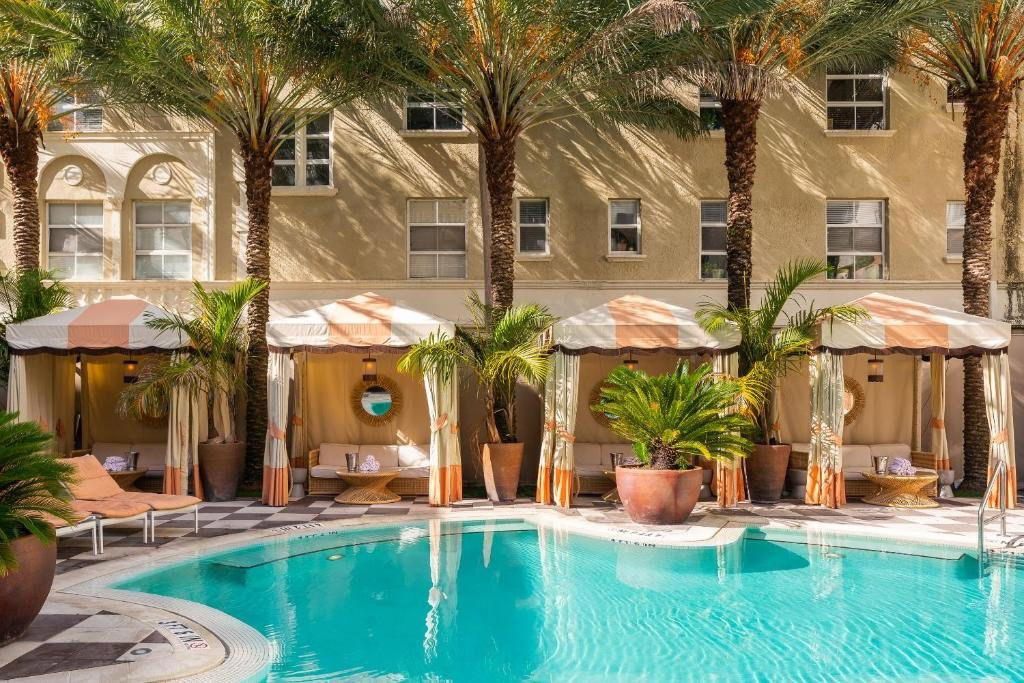
| The Plymouth South Beach | Art Deco with contemporary twist | $$$$ | 4-Star | South Beach |
Continue exploring
More in Miami Beach
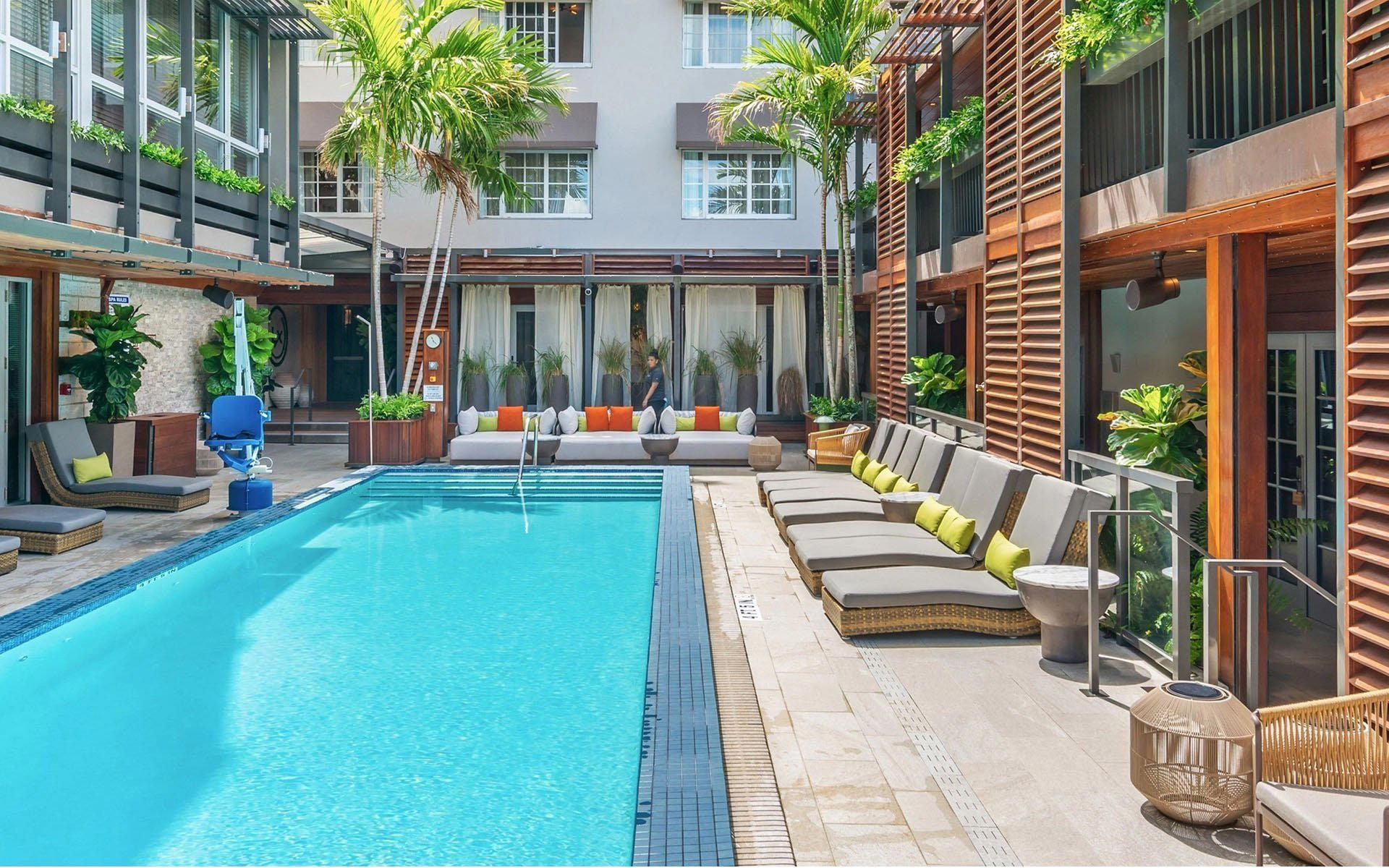
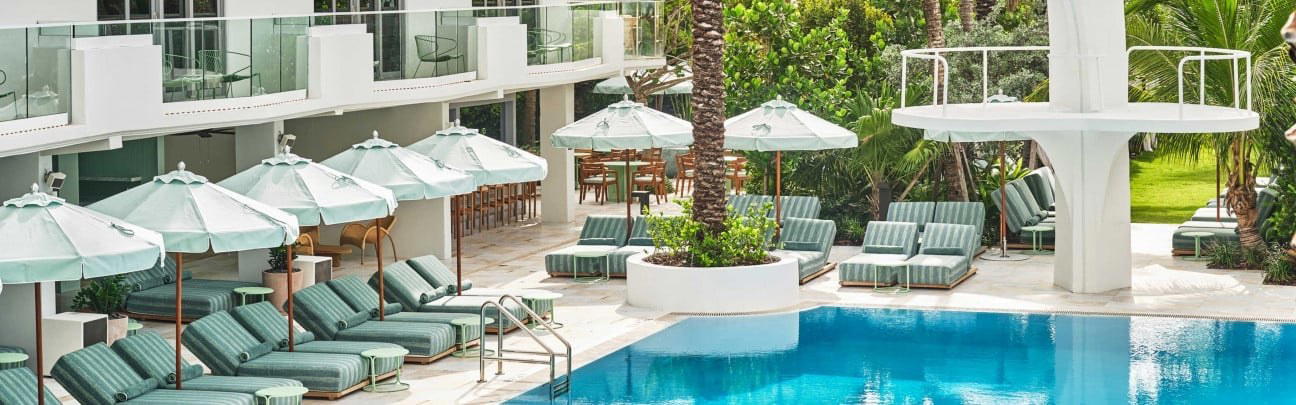
Hotels in Miami Beach
Browse all →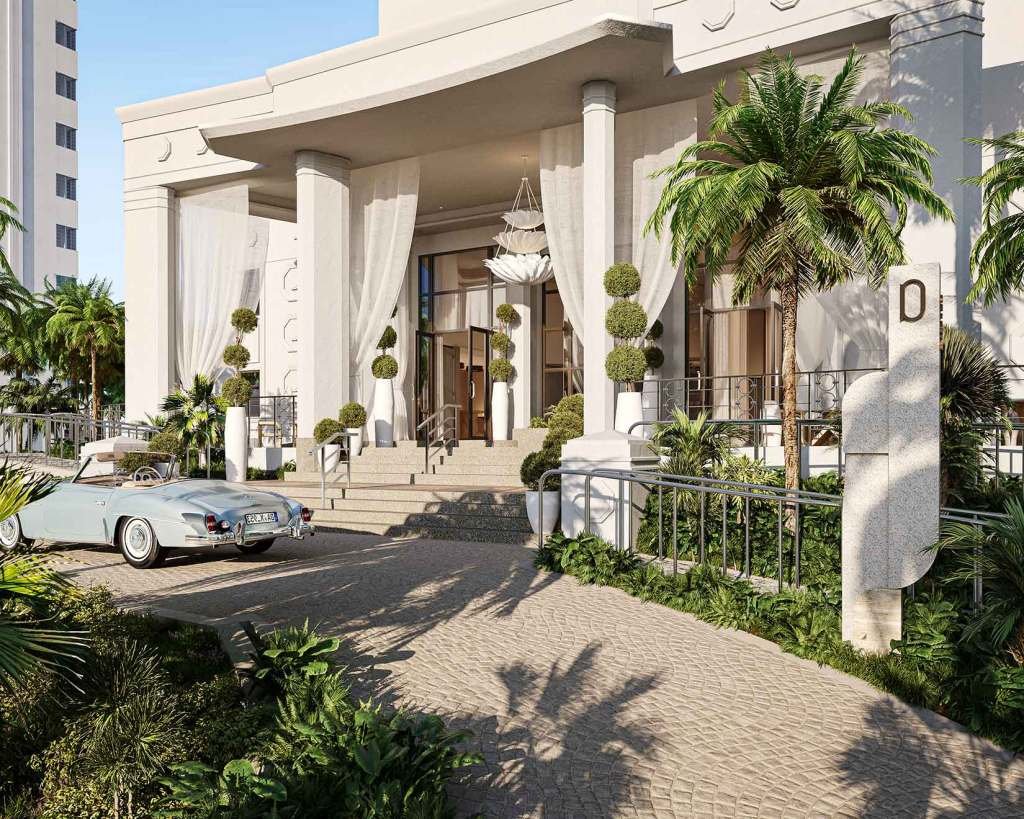
Bars in Miami Beach
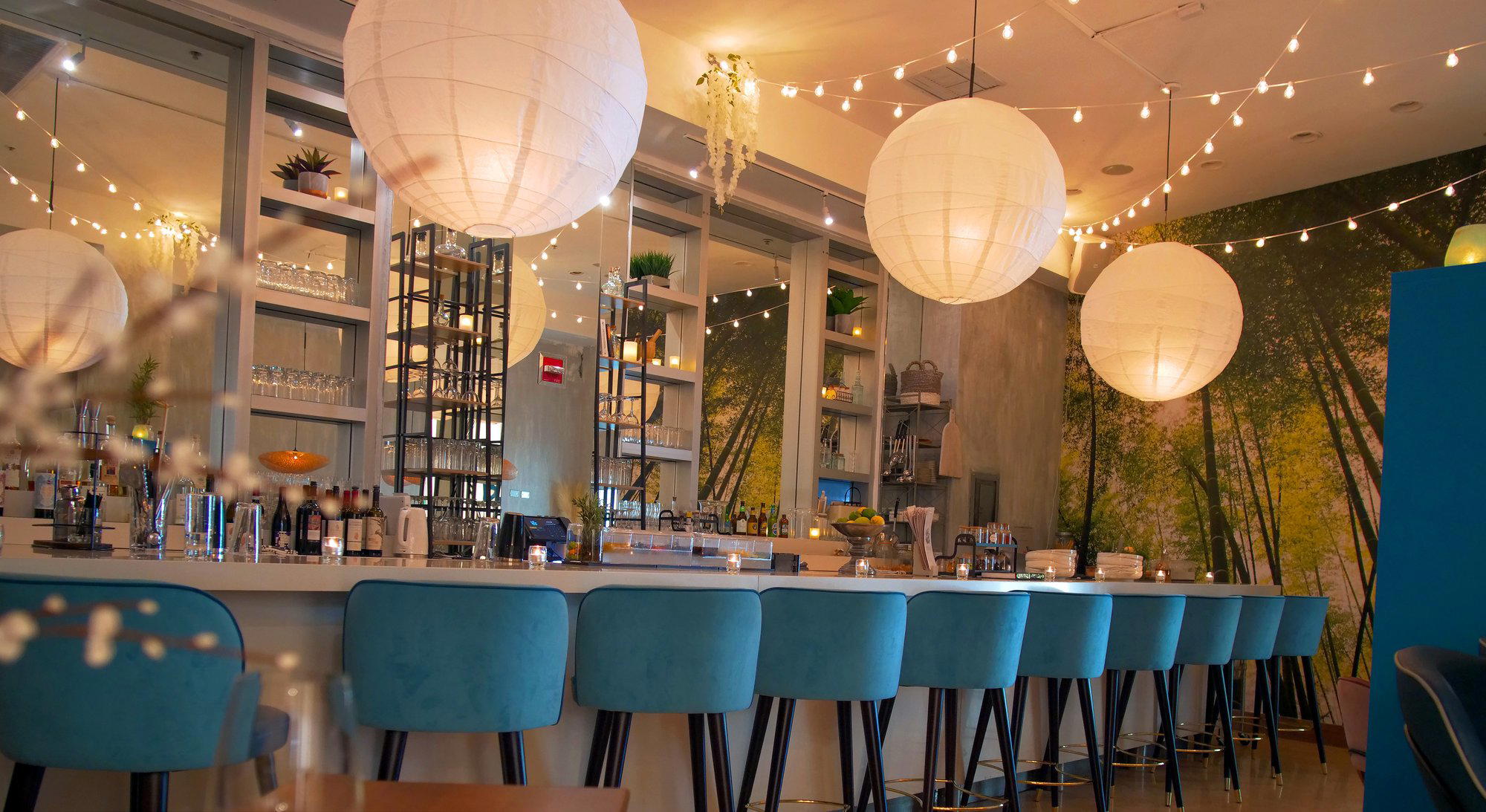
Browse all →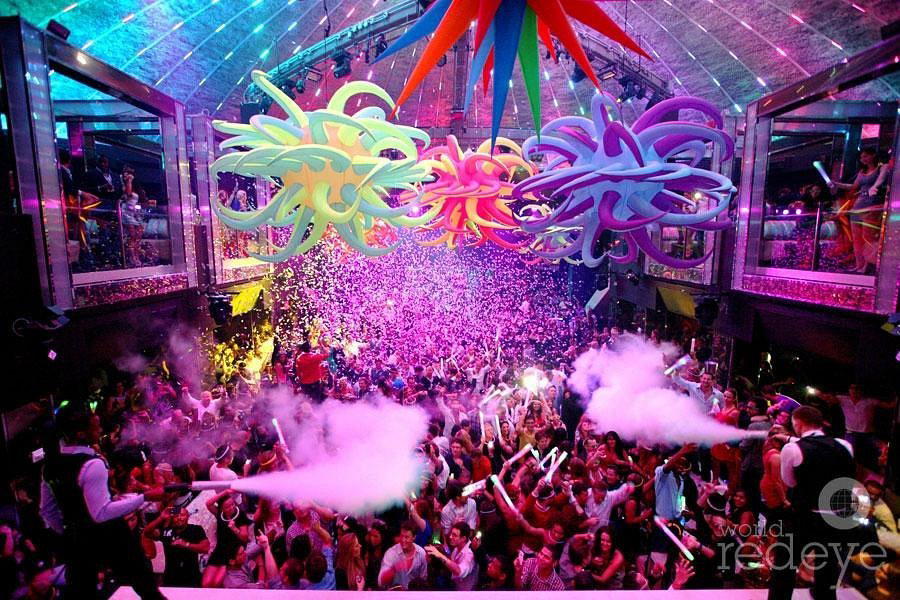
At a Glance
- Modern
- Trendy
- Energetic
- Historic
- Well Known
- Business Trip
- Group Retreat
- Weekend Escape
- Family Vacation
- Celebration
- Waterfront
- Historic Building
- Panoramic View
- Terrace
- Wi Fi
- Pool
- Fitness Center
- Room Service
- Concierge
- Business Center
- Valet Parking
- Skyline
- Street Scene
- Wi Fi
- Pool
- Fitness Center
- Room Service
- Concierge
- Business Center
- Valet Parking
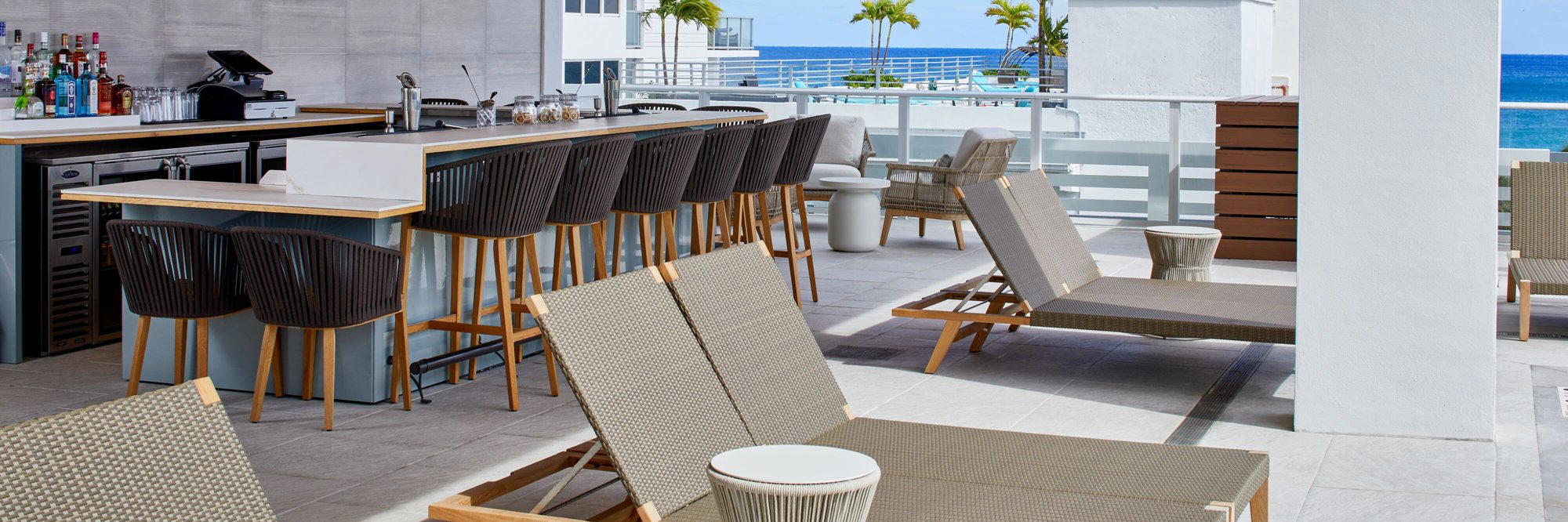
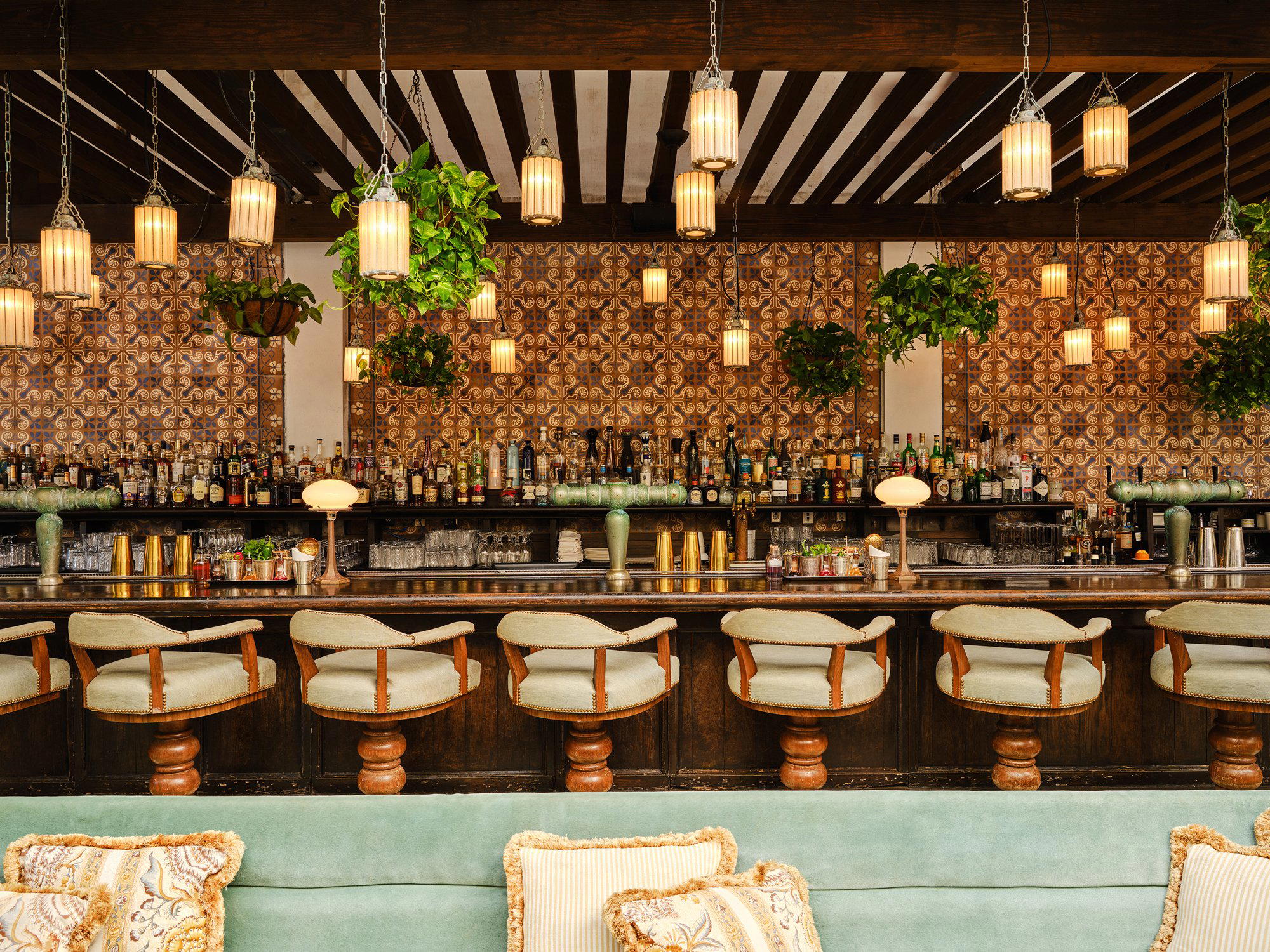
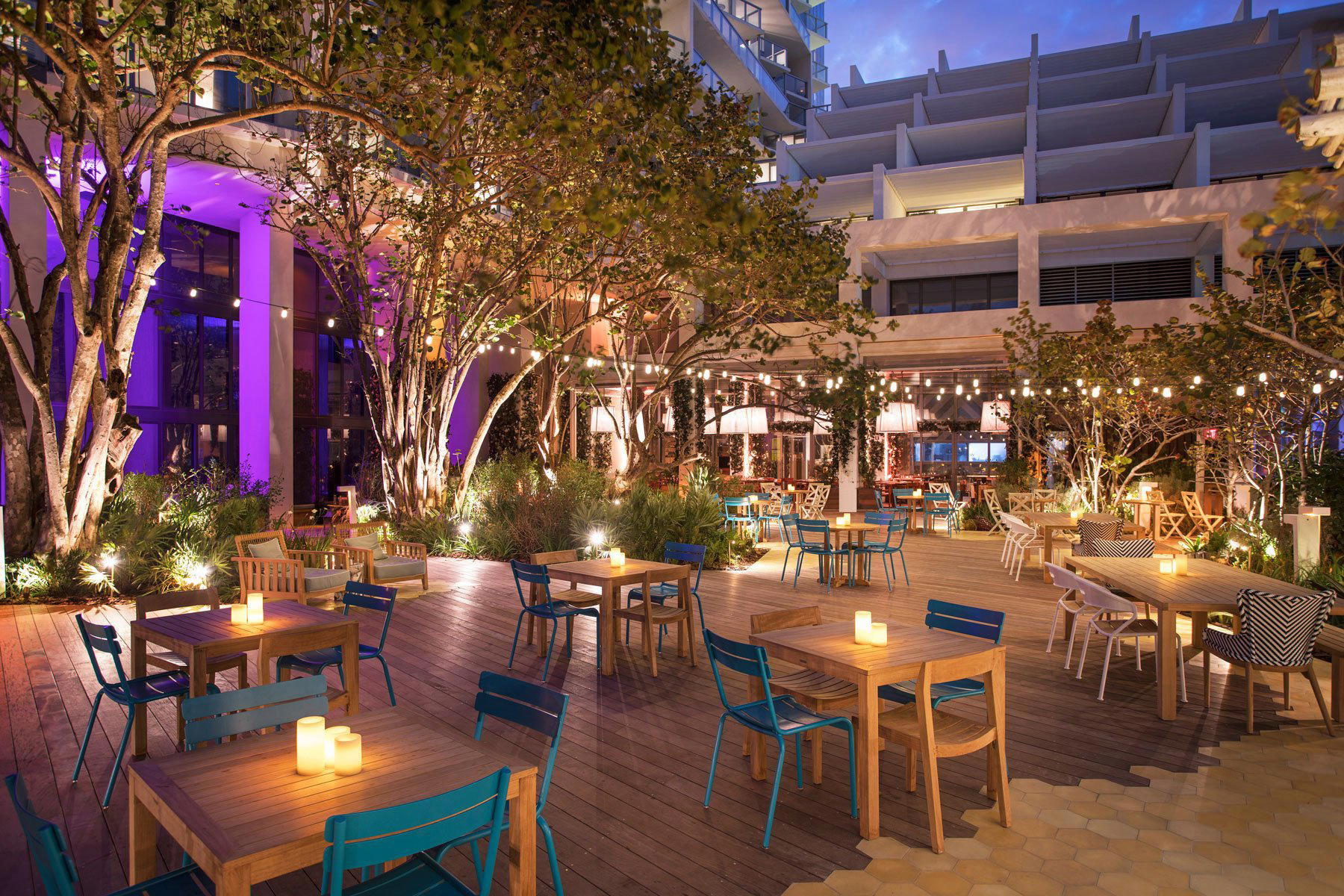
A redeveloped historic property blending preserved Art Deco-era architecture with a contemporary Hilton convention hotel feel, active public spaces, multiple pools, and a business-meets-leisure atmosphere catering to both convention attendees and beach visitors.