

A neoclassical address on Poznańska 15, H15 Boutique Hotel occupies a building with genuine historical weight in central Warsaw. The property sits within the city's established heritage hotel tier, where period architecture and a central location define the competitive set. For travellers who read Warsaw's built environment as part of the experience, this is where to base yourself.
Pearl is the En Primeur Club membership app — saves, bookings, and concierge access live there. Same editors, same standards.
- Address
- Poznanska 15, Warsaw 00-680, Poland
- Phone
- +48 22 55 38 700
- Website
- marriott.com
- Directions
- Get directions
 Saves & bookings on Pearl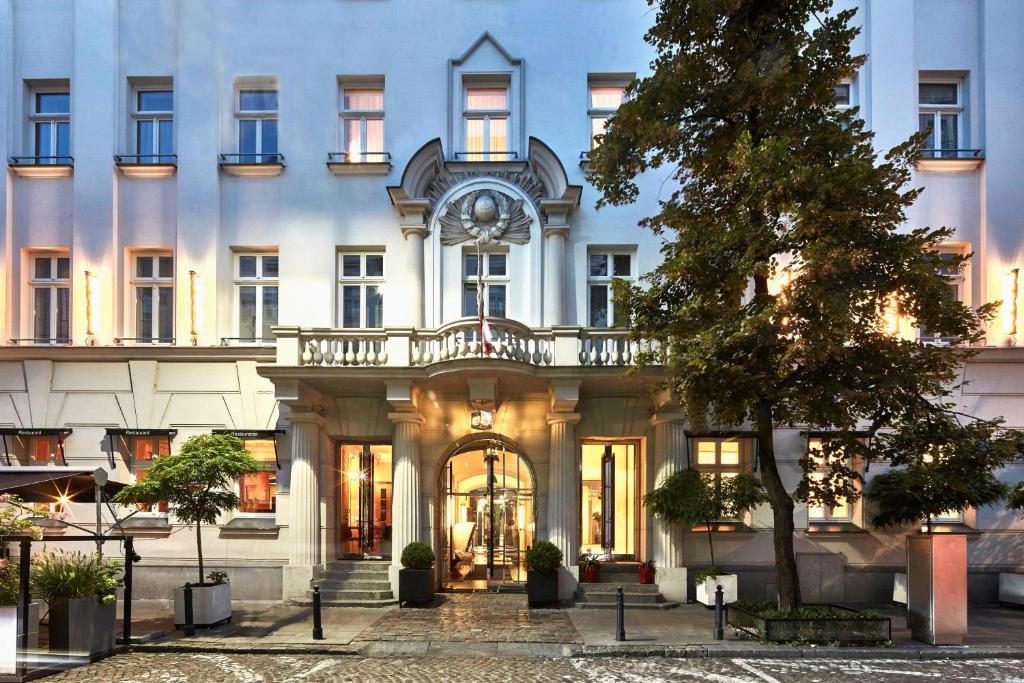
Stone, Symmetry, and the Weight of Warsaw's Centre
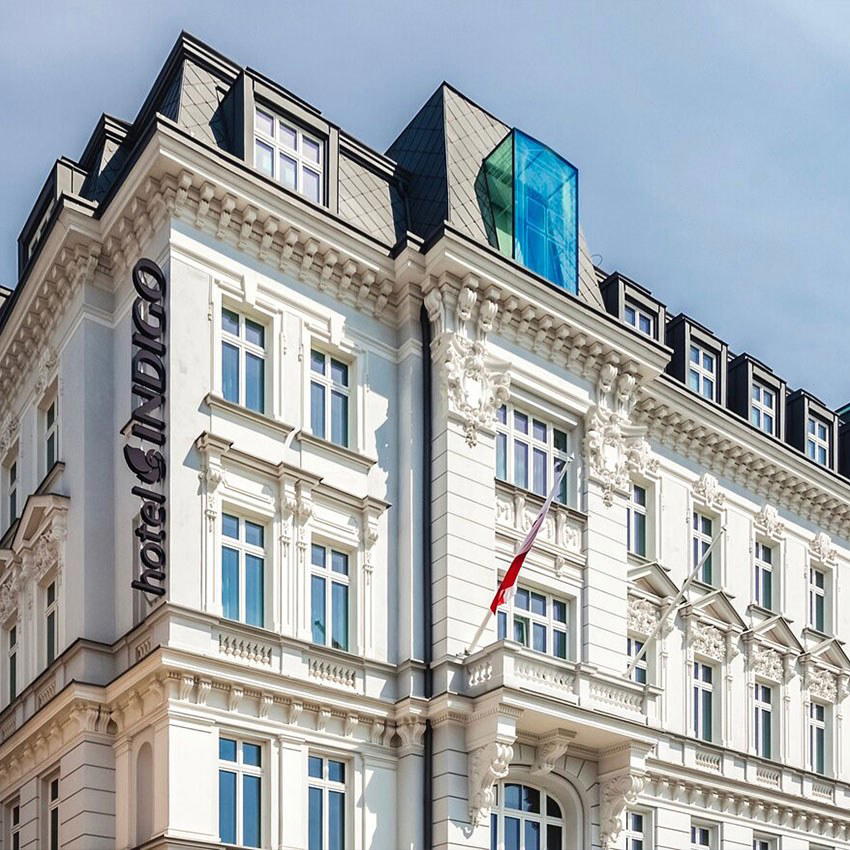
Poznańska Street sits just off the central artery of Marszałkowska, in a part of Warsaw where prewar architecture survived the Second World War's destruction in uneven patches. The buildings that remained intact carry a particular density of presence — not just as structures but as proof of continuity in a city that had to rebuild most of itself from rubble. H15 Boutique Hotel occupies one of those survivors: a neoclassical building whose symmetrical facades and ordered proportions speak the architectural language of early twentieth-century Warsaw, a grammar that was nearly erased entirely.
Warsaw's hotel market has stratified sharply over the past decade. At one end sit the grand-scale international flagships — properties like the Raffles Europejski Warsaw and the Hotel Bristol, A Luxury Collection Hotel, Warsaw, whose histories are bound up with the city's political and cultural life over more than a century. At the other end, design-forward new builds such as Nobu Hotel Warsaw and PURO Warszawa Centrum have brought a contemporary international sensibility to the centre. H15 occupies a distinct position in that spectrum: a boutique-scale property inside a heritage shell, where the architectural character of the building is itself the primary offering.
What Neoclassical Actually Means Here
The term neoclassical gets applied loosely to a wide range of European hotel buildings, often to mean little more than "old and formal." In Warsaw's case, it carries more specific weight. The city's prewar building stock drew on Viennese Secession influences filtered through Polish nationalist aesthetics, an interwar style that prized restrained ornamentation, load-bearing gravitas, and facades built to last. H15's building at Poznańska 15 belongs to that tradition. The address has been described, in the property's own historical framing, as a former seat of influence in the city's centre, language that gestures at the building's role before it became a hotel.
For travellers who approach a city through its architecture, this kind of provenance matters in a way that a purpose-built hotel cannot replicate. Warsaw's reconstruction after 1945 produced many fine buildings, but the ones that did not need reconstructing carry a different quality of presence. That quality is architectural rather than sentimental: proportions set by original builders, ceiling heights determined by structural logic rather than developer calculation, and materials that have accumulated the minor irregularities of real age.
The Boutique Tier in Warsaw: What It Implies
Boutique hotels in Warsaw's centre operate differently from their counterparts in cities with a denser independent hospitality scene. Warsaw's premium hotel market has historically leaned toward either grand institution or international chain, with the independent, design-led middle tier developing more recently. Properties like Hotel Warszawa, Likus Hotels and Mamaison Hotel Le Regina Warsaw represent different versions of that middle position, each placing heritage or location at the centre of their proposition.
H15 fits within this cohort by virtue of scale and building character. A boutique property in a neoclassical shell on a street this central implies a particular trade-off: the guest accepts smaller public spaces and less standardised amenity in exchange for architectural specificity and a lower guest count. For travellers accustomed to the international-flag hotel format, that trade-off is conscious. For those who find the grand-hotel scale impersonal, it is exactly the point.
Location as Architecture's Complement
Poznańska 15 places the hotel within easy reach of Warsaw's principal cultural institutions, the National Museum, the Palace of Culture and Science, and the commercial arteries of Nowy Świat and Aleje Jerozolimskie. The surrounding neighbourhood, which mixes prewar residential buildings with postwar infill, functions as a readable cross-section of Warsaw's complicated urban history. Staying on a street like Poznańska is itself an exercise in reading that history: the gaps in the building line, where wartime destruction left space that was filled differently, are as informative as the surviving structures.
For guests arriving by train, Warsaw Centralna is walkable. For those flying into Chopin Airport, the journey by taxi or rideshare runs roughly thirty minutes in ordinary traffic, with the airport train link also depositing passengers at Centralna within twenty minutes. Book H15 directly or through a preferred booking channel, the property's specific rates and availability are best confirmed via current sources, as price-range data was not available at time of writing.
Placing H15 in the Polish Hotel Scene
Warsaw's boutique heritage tier has a counterpart in Kraków, where the Hotel Stary and the H15 Palace, a Luxury Collection Hotel in Kraków occupy analogous positions, historic buildings repositioned as premium accommodation in densely historic city centres. The H15 brand's Kraków affiliate, operating under Marriott's Luxury Collection umbrella, represents one trajectory for Polish heritage hotels: absorption into a global loyalty ecosystem. The Warsaw H15 operates in a different register, retaining its independent boutique character.
Beyond the two major cities, Poland's hotel infrastructure has expanded across secondary markets. Hotel Altus Palace in Wrocław, the Copernicus Toruń Hotel, and the Hilton Gdansk each reflect how different Polish cities have approached the question of where to pitch premium accommodation. Warsaw, as the capital, carries the widest range of options. Travellers combining Warsaw with Poland's other cities might also consider the Bachleda Residence Zakopane for a mountain counterpoint, or the PURO Łódź Centrum and PURO Poznań for design-led city hotels in the country's other major urban centres.
For a broader map of Warsaw's dining and drinking alongside its hotels, the EP Club Warsaw guide covers the city's key neighbourhoods and what defines each.
Planning Your Stay
H15 Boutique Hotel is located at Poznańska 15, Warsaw 00-680, Poland. Given the limited data publicly available on specific rates, room configurations, and booking channels at time of writing, prospective guests should confirm current pricing and availability directly. The address places the hotel in one of Warsaw's more navigable central districts, within walking distance of major institutions and the principal shopping and dining corridor along Nowy Świat. Spring and early autumn are the most comfortable seasons for Warsaw, when the city's outdoor life is at its most active and the neoclassical facades are seen at their leading in clear northern light.
Recognition history
Dated appearances from independent guides and award organizations, with the underlying list record or original source where available.
Design Hotels Member
Design Hotels
Michelin Selected
Michelin


At a Glance
- Elegant
- Sophisticated
- Romantic
- Modern
- Historic
- Romantic Getaway
- Business Trip
- Weekend Escape
- Anniversary
- Historic Building
- Design Destination
- Garden
- Terrace
- Wi Fi
- Fitness Center
- Restaurant
- Bar
- Room Service
- Concierge
- Business Center
- Valet Parking
- Bicycle Rental
- Spa
- Street Scene
- Wi Fi
- Fitness Center
- Restaurant
- Bar
- Room Service
- Concierge
- Business Center
- Valet Parking
- Bicycle Rental
- Spa
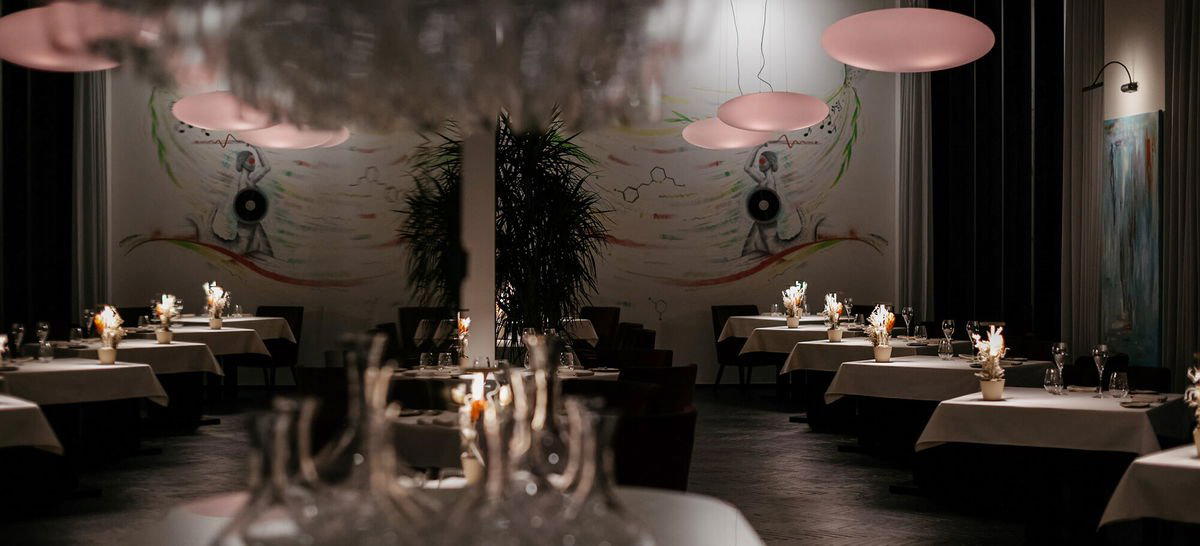
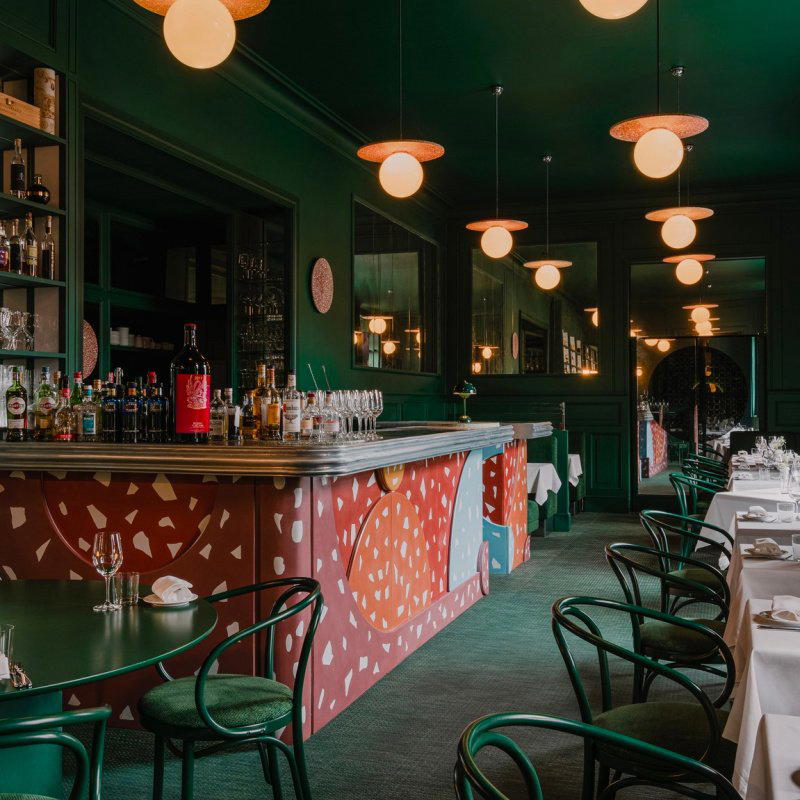
Light-filled atrium with glass ceiling, pianist playing grand piano, warm and inviting with modern mid-century design elements, intimate courtyard setting.
Know Before You Go
- Getting there
- Poznanska 15, Warsaw 00-680, Poland