Glenburn Tea Estate

Glenburn Tea Estate sits on a working Darjeeling hillside, where colonial-era bungalows overlooking the Rungeet River valley have earned the property recognition as West Bengal's Leading Heritage Hotel at the 2025 World Travel Awards. The estate operates as a whole-property experience, combining plantation architecture, high-altitude tea production, and a remote Himalayan setting that places it in a category distinct from conventional luxury hotels.
Pearl is the En Primeur Club membership app — saves, bookings, and concierge access live there. Same editors, same standards.
- Address
- near Singritan, Darjeeling, Kambal Tea Garden, West Bengal 734213, India
- Website
- glenburnteaestate.com
- Directions
- Get directions
 Saves & bookings on Pearl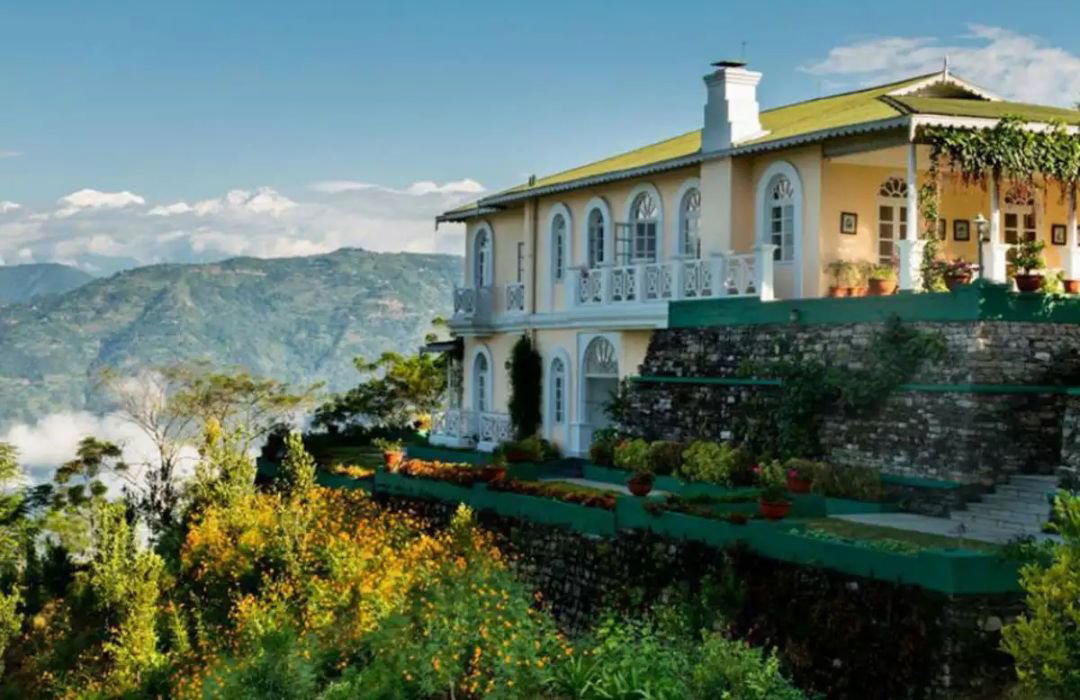
A Working Estate Above the Rungeet Valley
The approach to Glenburn is itself a statement about what kind of property this is. The road from Darjeeling winds through terraced tea fields before the colonial bungalows come into view, set against the Himalayan foothills at an altitude where the air carries the green, slightly astringent scent of tea in process. This is not a hotel built to evoke a plantation aesthetic: it is an active tea estate that happens to accommodate guests, and the distinction matters architecturally and experientially. The structures are original, not reconstructed, and the patina of the timber, the pitched roofs, and the wide verandahs read as evidence of continuous habitation rather than careful restoration.
Heritage hotel properties across India occupy a spectrum that runs from meticulously preserved urban palaces to rural estate houses with uneven maintenance. Glenburn falls firmly in the latter camp, in a favorable sense: the buildings exist in relationship to their agricultural context, which means the experience of being there is inseparable from watching the estate operate. Guests do not observe tea production from a distance; the fields begin where the gardens end. For comparison, properties like Amanbagh in Ajabgarh or Alila Fort Bishangarh in Manoharpur translate heritage into immaculate architectural set-pieces; Glenburn's claim is different, it is a place still doing what it was built to do.
Colonial Architecture on Darjeeling's Terms
The bungalow typology that defines Glenburn is characteristic of British-era hill stations throughout the sub-Himalayan region. Wide overhanging eaves, deep verandahs designed to capture valley views, and rooms arranged to catch cross-breezes rather than rely on mechanical cooling, these are design responses to a specific climate, not decorative choices imported from elsewhere. In Darjeeling's case, that climate shifts rapidly: mornings can be clear enough to reveal the Kangchenjunga massif, while afternoons frequently pull in cloud cover that changes the quality of light inside the rooms entirely.
What distinguishes the architectural character of an estate house from a standalone heritage hotel is the relationship between the main structure and its outbuildings. At properties of this type, the kitchen gardens, storage buildings, and staff quarters form a compound rather than a single edifice. The spatial logic is agricultural, not ceremonial, and that ordering of space communicates itself to guests in ways that more formally designed luxury properties do not. You understand, walking between buildings, that the estate has its own internal economy and calendar.
Glenburn Tea Estate is a 3-star hotel in Kambal Tea Garden, near Singritan, Darjeeling, with 8 rooms. It is a category in which sheer infrastructure and room count are less relevant than the coherence of the overall proposition. For further context on how Indian heritage hospitality performs at its most polished, The Leela Palace Jaipur and The Oberoi Amarvilas in Agra represent the formal palace end of that spectrum; Glenburn operates at the opposite end, where intimacy and agricultural authenticity carry the weight that monumentality carries elsewhere.
The Himalayan Estate Format
The Darjeeling hills have produced a distinct category of heritage accommodation that differs structurally from what you find in Rajasthan's fort-hotel circuit or Goa's colonial Portuguese houses. The plantation estate format requires the property to function as a complete self-contained world: because the location is remote and the surrounding terrain is active farmland, there is nowhere to go for dinner, no adjacent market street, no neighbouring bar. The estate provides everything, and the calibre of that provision defines the quality of the stay.
This totality of provision also shapes the architectural approach. Buildings that were originally designed for long-term colonial habitation needed libraries, sitting rooms, and dining spaces that could sustain occupation through weeks of monsoon cloud. The rooms at an estate property like this are consequently more domestic in scale and character than those at purpose-built luxury hotels. Ceiling heights, window proportions, and furniture placement reflect a residential logic. When that logic is well preserved, it creates a quality of spatial comfort that deliberately engineered hotel interiors rarely replicate.
Properties following a similar format elsewhere in India's hill and tea regions include places in Assam's Brahmaputra valley and in the Nilgiris, though Darjeeling's combination of altitude, Himalayan backdrop, and the specific microclimate that produces its high-value first-flush teas gives the region a character those alternatives cannot reproduce. The estate sits near Singritan in the Kambal Tea Garden area of West Bengal, and for travellers mapping India's heritage accommodation,
Situating Glenburn Among India's Heritage Accommodation
India's heritage hotel category has fragmented over the past decade into distinct tiers. At one end sit the large-format palace conversions with full spa infrastructure, multiple restaurants, and international loyalty program affiliations, properties like The Taj Mahal Palace in Mumbai or The Leela Palace New Delhi. At the other end sit small-capacity estate and haveli properties where the heritage experience is inseparable from the intimate scale. Haveli Dharampura in Delhi and Chapslee in Shimla both operate in this smaller format, and Glenburn belongs to the same general cohort, distinguished by its tea estate context and high-altitude setting.
For travellers building a longer India itinerary that combines landscape and heritage, properties like Ananda in the Himalayas in Narendra Nagar or Aman-i-Khas in Ranthambore represent how the luxury market handles remote natural settings with design ambition. Glenburn's proposition is less curated in the conventional luxury sense and more dependent on the estate's own rhythms and landscape for its appeal. That is a strength for a specific kind of traveller, and a genuine constraint for another. Knowing which you are determines whether Glenburn fits your itinerary or sits beside it.
Planning a Stay
Glenburn is located near Singritan in the Kambal Tea Garden area of West Bengal.
In Context: Similar Options
Comparable venues nearby, for context on price, style, and recognition.
| Venue | Cuisine | Price | Awards | Notes |
|---|---|---|---|---|
| Glenburn Tea EstateThis venue — the venue you are viewing | Colonial tea plantation bungalow restored with modern comforts. | $$$$ | 3-Star | Not listed |
| Rawla Bisalpur | Heritage Indo-European villa guest house beside 18th-century palace ruins | $$$$ | 3-Star | Jawai Bandh |
| Shakti Prana | remote eco-luxury mountain retreat | $$$$ | 5-Star | Kasar Devi |
| Taj Santacruz Mumbai | Art Deco-inspired luxury with spacious rooms | $$$$ | 5-Star | Santacruz East |
| Sheraton Grand Palace Indore | Polished modern luxury hotel with grand palace-inspired grandeur. | $$$$ | 5-Star | Omex City |
| Pratap Mahal, Ajmer | Modern luxury resort designed as a contemporary recreation of a traditional Rajasthani palace with haveli-inspired architecture. | $$$$ | 5-Star | Pushkar |
Recognition history
Dated appearances from independent guides and award organizations, with the underlying list record or original source where available.
World Travel Awards
World Travel Awards
Continue exploring
More in Kambal Tea Garden
Restaurants in Kambal Tea Garden
Browse all →
At a Glance
- Romantic
- Quiet
- Scenic
- Elegant
- Rustic
- Intimate
- Sophisticated
- Honeymoon
- Romantic Getaway
- Anniversary
- Weekend Escape
- Panoramic View
- Garden
- Historic Building
- Private Dining
- Terrace
- Wi Fi
- Room Service
- Concierge
- Laundry Service
- Massage
- Airport Transfer
- Mountain
- Garden
- Wi Fi
- Room Service
- Concierge
- Laundry Service
- Massage
- Airport Transfer
Colonial-era elegance with vintage decor, candle-lit communal dinners, and serene plantation surroundings.