


Frasers House sits in Singapore’s lodging conversation with almost no public-facing data attached to the record, which makes it a different kind of editorial case: useful less as a trophy hotel profile than as a prompt to read the city’s design-led hospitality tiers carefully. Treat it as a research-first stay, comparing location, service model, room type, and verified rates against better-documented Singapore peers before committing.
Pearl is the En Primeur Club membership app — saves, bookings, and concierge access live there. Same editors, same standards.
- Address
- 80 Middle Rd, Singapore 188966
- Phone
- +65 6338 7600
- Website
- marriott.com
- Directions
- Get directions
 Saves & bookings on Pearl
Singapore hotel design begins before the lobby
Approaching a hotel in Singapore, the first impression is often urban rather than theatrical: shaded walkways, glass towers, clipped landscaping, taxi bays engineered for humidity and speed, and interiors built to move guests quickly from tropical heat into controlled quiet. That design grammar matters because the city’s premium hotel market is not a single category. It ranges from colonial restoration to resort compound, serviced-apartment efficiency, lifestyle tower, and compact heritage conversion. Frasers House is a five-star hotel in Singapore at 80 Middle Rd, Singapore 188966, with 406 rooms and a nightly rate from about US$260. For a design-led assessment, that absence is not a footnote. It changes how a serious traveller should read the property.
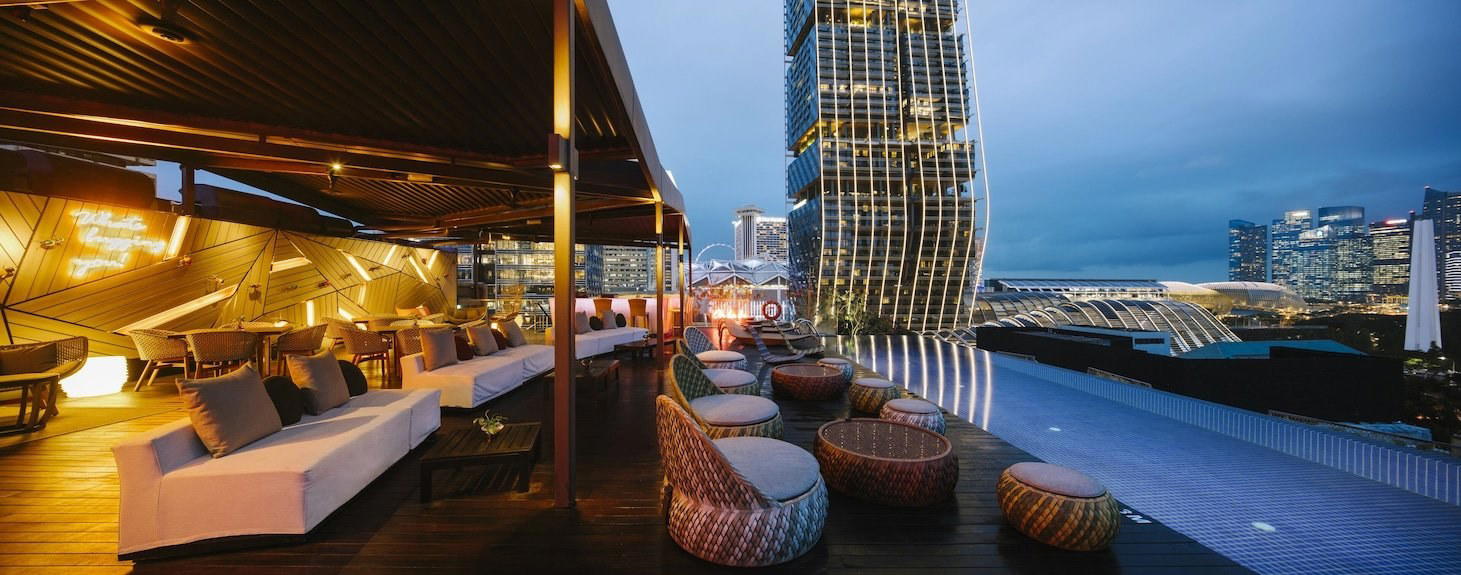
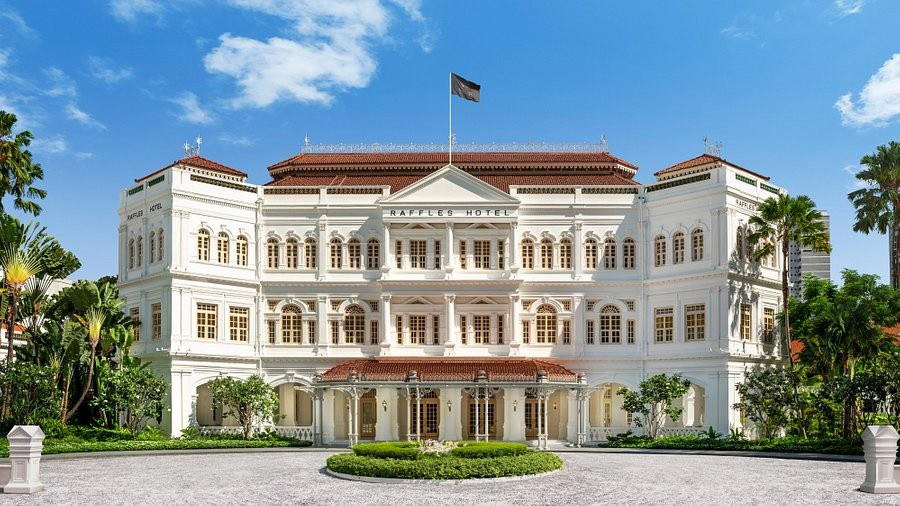
Singapore rewards hotels with a clear spatial argument. Raffles Hotel Singapore trades on restored colonial scale and ritualized arrival. Capella Singapore shifts the equation toward resort privacy and greenery. 21 Carpenter speaks the language of adaptive reuse and compact urban heritage. Andaz Singapore reads as a high-rise lifestyle hotel tied to civic density. Against those clearer reference points, Frasers House needs verification before it can be judged as architecture, service proposition, or value.
Why the physical space is the real question
In Singapore, hotel architecture is rarely decorative alone. It solves for heat, rainfall, land scarcity, transit dependence, and the tension between international polish and local specificity. A strong hotel plan tells guests how to use the city: stay near the commercial core for quick meetings, near heritage districts for restaurants and walking, or near Sentosa for a slower resort rhythm. When a property record does not disclose an address, the design story remains incomplete because the building’s function depends on its urban setting.
That is especially true for accommodation that sits closer to a residence or serviced-stay model than a conventional grand hotel. Singapore has long supported extended-stay formats for corporate relocations, medical travel, regional headquarters work, and family stays, and those properties compete on floor plan more than ceremony. Kitchenettes, laundry access, work surfaces, storage, and transport links often matter more than lobby drama.
The Singapore comparable set is unusually precise
The city’s hotel market is dense enough that loose descriptions do not help. A traveller choosing between Amara Singapore, Carlton Hotel Singapore, Artyzen Singapore, and Como Metropolitan Singapore is not merely comparing beds. The decision usually turns on neighbourhood rhythm, size of room, depth of food and beverage, wellness ambitions, and the degree to which the hotel functions as a city base rather than a destination in itself.
That precision is why a sparse hotel record carries consequences. The recorded rate positions Frasers House against mid-market business hotels, premium serviced apartments, and luxury lifestyle properties. In a market where even small differences in address can shift the stay from efficient to inconvenient, the absence of location data is a material planning issue.
Design categories that shape a Singapore stay
Colonial restoration
Singapore’s restored heritage hotels work through scale, courtyards, verandas, and controlled nostalgia. The appeal is not merely age; it is the way thick walls, shaded passages, and ceremonial public rooms slow the pace of a dense city. Raffles remains the obvious reference in this category, but the broader point is that heritage architecture offers a strong identity before a guest reaches the room.
Urban lifestyle towers
The lifestyle tower is a different proposition. It depends on height, views, transit access, dining adjacency, and a lobby that can absorb both guests and locals. This model suits travellers who plan to spend more time outside the hotel than inside it. The design test is circulation: how quickly the building connects room, street, taxi, MRT, gym, and breakfast without turning every movement into a queue.
Resort compounds
Sentosa changes the measure. Properties such as The Outpost Hotel Sentosa by Far East Hospitality in Sentosa Island and Capella sit closer to leisure logic, where arrival, greenery, pool culture, and separation from the city core become part of the rate. This model is less useful for packed business schedules and better suited to travellers who want Singapore with more controlled edges.
Serviced and residential formats
The serviced-stay category is where the design conversation becomes less photogenic and more consequential. The measure is storage, privacy, laundry, desk comfort, kitchen practicality, lift speed, cleaning cadence, and noise control. If Frasers House belongs to this zone, the right comparison is not a grand hotel lobby but a week of living inside the room. That is a different editorial standard, and it deserves more attention than star language.
What the current record confirms, and what it does not
The confirmed data is narrow: the venue name is Frasers House, the city and country are Singapore, the hotel has 406 rooms, a five-star rating, and a nightly rate from about US$260. For a hotel page, several of those fields would usually anchor the reader’s decision. Their absence means the page should not invent a neighbourhood, imply a room view, describe lobby materials, cite service standards, or advise on a specific rate.
This matters because Singapore has many hotels with abundant third-party signals. Awards, guest review volume, published star classifications, architectural press, restaurant credentials, and brand affiliation all help establish trust. Here, the trust signal is editorial restraint: the available record does not support trophy claims. That does not make the property weak; it means the sensible reader should treat every practical variable as pending confirmation.
How to compare it against better-documented stays
A useful Singapore hotel comparison starts with purpose. For a dining-led trip, the property should be judged by its access to restaurants, hawker centres, cocktail bars, and late transport rather than by lobby photography. Our full Singapore restaurants guide helps map that side of the decision. For bar-led evenings, especially when taxis and ride-hailing demand rises late, Our full Singapore bars guide provides the stronger planning frame. For the hotel field itself, Our full Singapore hotels guide is the cleaner comparison set.
Travellers building a wider itinerary can also use category guides to avoid overloading the hotel with expectations it cannot meet. Our full Singapore experiences guide gives context for cultural programming, while Our full Singapore wineries guide is useful for readers tracking wine-focused venues and retail rather than vineyard travel. The point is practical: in a city with short transfer times but sharp differences in neighbourhood texture, the hotel should support the trip’s centre of gravity.
International references sharpen the design question
Singapore is often compared with other high-control luxury cities, but the better comparison is not always price. It is how the building mediates between privacy and public life. The Fifth Avenue Hotel in New York City uses urban eccentricity and dense restaurant culture as part of the stay. Aman New York in New York City goes the other direction, creating a highly controlled interior world inside a frenetic grid. Hôtel de Paris Monte-Carlo in Monte Carlo and Badrutt's Palace Hotel in St. Moritz depend on civic theatre and seasonal ritual. Singapore’s stronger hotels tend to solve a narrower problem: how to make density feel fluent rather than compressed.
European palace hotels such as Aman Venice in Venice, Cipriani, A Belmond Hotel, Venice in Venice, Mandarin Oriental Ritz, Madrid in Madrid, Le Bristol Paris in Paris, and Hotel Sacher Wien in Vienna carry inherited architecture as a central asset. Asian city hotels, including Bvlgari Hotel Tokyo in Tokyo and Mandarin Oriental Bangkok in Bangkok, often balance brand polish with vertical city pressure or riverside history. The hotel cannot be placed in that international design spectrum until its physical facts are confirmed, but those references clarify the right question: what kind of spatial promise is being made?
Planning notes for a research-first stay
Direct verification should come before rate comparison. The basic checklist is simple: confirm the exact address, current operating status, booking channel, total nightly cost, cancellation rules, room category, included services, housekeeping schedule, check-in requirements, and transport access. In Singapore, this is not bureaucratic fussiness. It is how travellers avoid paying premium rates for a location or format that does not match the trip.
Price should be read against function. A lower rate can become poor value if the hotel sits away from the guest’s real itinerary or lacks the room features needed for a longer stay. A higher rate can be rational if it shortens transfers, improves sleep, or gives enough space to work and unpack. At about US$260 per night, value should be judged against function and location rather than against a missing price range.
Reputation & Price
Comparable venues nearby, for context on price, style, and recognition.
| Venue | Price | Awards | Notes |
|---|---|---|---|
| Frasers HouseThis venue — the venue you are viewing | $$$$ | 5-Star | Not listed |
| Pan Pacific Serviced Suites Orchard, Singapore | $$$$ | 5-Star | SOMERSET, Luxury serviced apartments with home-like comforts in prime shopping location |
| Singapore Marriott Tang Plaza Hotel | $$$$ | 5-Star | BOULEVARD, Well-known urban luxury resort |
| THE WESTIN SINGAPORE | $$$$ | 5-Star | CENTRAL SUBZONE, Contemporary wellness retreat in the heart of Marina Bay |
| Raffles Sentosa Singapore | $$$$ | 5-Star | SENTOSA, Modern luxury all-villa resort blending contemporary design with tropical island sensibility and Raffles heritage elegance. |
| Shangri-La Singapore | $$$$ | 5-Star | NASSIM, Luxury urban resort with garden sanctuary |
Recognition history
Dated appearances from independent guides and award organizations, with the underlying list record or original source where available.
Forbes Recommended
Forbes
Michelin Selected
Michelin
World Luxury Hotel Awards WLHA Country Winner
World Luxury Hotel Awards
At a Glance
- Elegant
- Classic
- Sophisticated
- Modern
- Well Known
- Business Trip
- Family Vacation
- Weekend Escape
- Romantic Getaway
- Group Retreat
- Celebration
- Historic Building
- Design Destination
- Terrace
- Panoramic View
- Private Dining
- Wi Fi
- Pool
- Spa
- Fitness Center
- Room Service
- Concierge
- Business Center
- Skyline
- Street Scene
- Wi Fi
- Pool
- Spa
- Fitness Center
- Room Service
- Concierge
- Business Center
A five-star, heritage-rich city hotel with Peranakan-inspired interiors, classic yet updated rooms, and a polished atmosphere that feels refined but comfortable in the busy Bugis district.