
Preferred Hotels Preferred Residences
Positioned along Tanjong Pagar Road in Singapore's most commercially dense southern corridor, Amara Singapore operates as a 389-room full-service hotel with direct access to one of the city's fastest-evolving hospitality districts. Where neighbours like Capella Singapore and Raffles Hotel Singapore trade on heritage or seclusion, Amara occupies a different tier: urban utility combined with a neighbourhood that has genuinely changed around it.

Pearl is the En Primeur Club membership app, where members save venues, book tables and use the concierge.
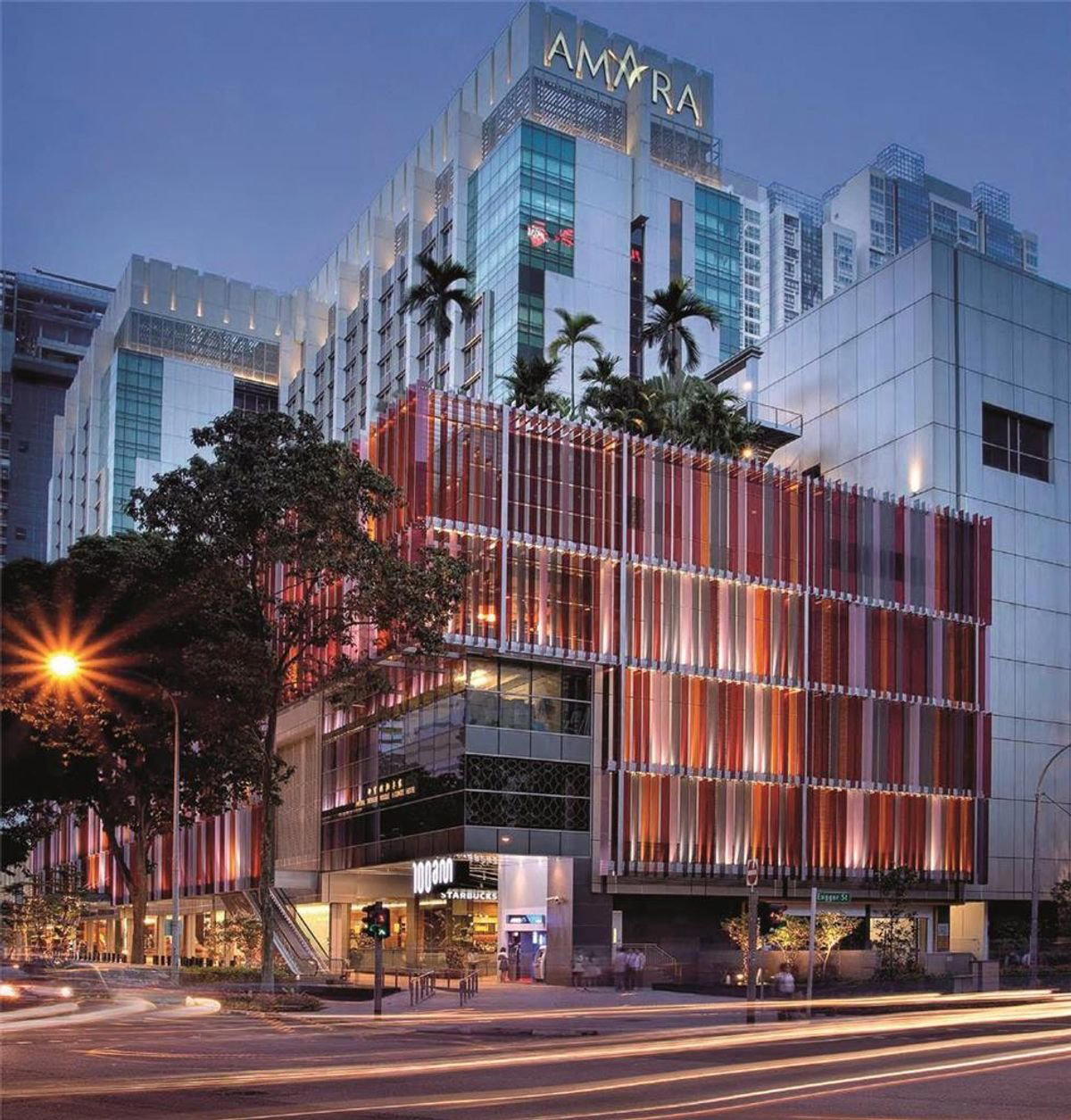
Tanjong Pagar and the Case for Location Over Prestige
Singapore's hotel market has long sorted itself into legible tiers: the Marina Bay addresses that sell views and spectacle, the Orchard Road properties anchored to retail, and a smaller, more operationally focused cohort that bets on neighbourhood rather than brand mythology. Amara Singapore, at 165 Tanjong Pagar Road, belongs to that third category. At 389 rooms, it is a mid-to-large property by Singapore standards, and its competitive logic rests almost entirely on what the address delivers rather than on design awards or celebrity chef residencies.
Tanjong Pagar has undergone a structural shift over the past decade. What was once a container-port-adjacent district with ageing shophouses has become one of Singapore's most layered urban zones: the CBD's southern edge, a dense concentration of Japanese restaurants along Tras Street, one of the city's more active bar corridors, and the Tanjong Pagar MRT station sitting within walking distance of the hotel entrance. For a traveller whose primary purpose in Singapore is business or structured exploration rather than resort-style removal from the city, this positioning is a practical argument, not a marketing one.
What the Address Actually Provides
The geography around 165 Tanjong Pagar Road rewards close reading. The hotel sits within the Circle Line and East-West Line interchange zone, which means virtually every major commercial district in Singapore is reachable without a taxi. Marina Bay, where properties like Conrad Singapore Marina Bay anchor the waterfront tier, is minutes away by MRT. The Orchard Road corridor, home to Conrad Singapore Orchard, is under 20 minutes. Sentosa, accessible via the Harbourfront interchange, is similarly close for travellers combining business with leisure, a cohort that properties like The Outpost Hotel Sentosa by Far East Hospitality serve at the other end of the spectrum.
What Tanjong Pagar provides that Marina Bay does not is street-level texture. The immediately surrounding blocks contain some of the highest density of independent food operators in Singapore, a city that already competes globally on that metric. The Keong Saik Road strip, less than ten minutes on foot, has developed into one of the more interesting short-block dining corridors in Southeast Asia, with independent operators across multiple price points. For a guest who wants proximity to that kind of city fabric rather than isolation from it, Amara's location functions as genuine infrastructure.
Scale, Format, and Where Amara Sits in the Singapore Hotel Market
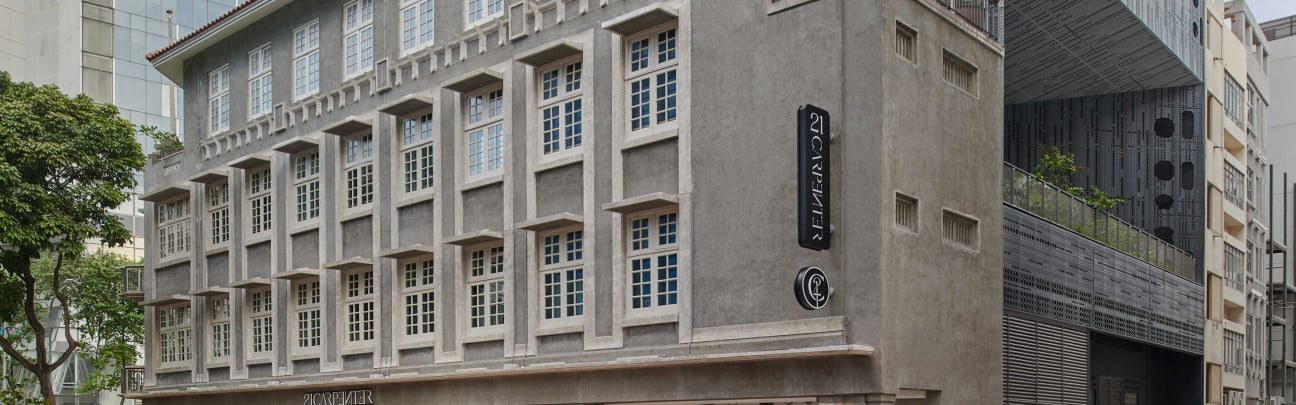
At 389 rooms, Amara Singapore operates at a scale that places it outside the boutique tier occupied by properties like 21 Carpenter or Artyzen Singapore, and below the room counts of Singapore's large convention-oriented hotels. That middle position has its own logic. The property can absorb corporate group travel and individual leisure bookings simultaneously without the friction that smaller properties encounter, but it does not depend on conference-centre revenue the way a 600-room property might.
Singapore's hotel market at this scale tends to compete on consistency and location rather than on differentiated experience design. Properties like Carlton Hotel Singapore and Andaz Singapore occupy adjacent market positions, each with a different neighbourhood anchor and a different emphasis on design or brand identity. Amara's primary differentiator within that cohort is the Tanjong Pagar address, which carries more operational relevance in 2024 than it did when the district was primarily known for its port-adjacent warehousing history.
Travellers considering properties at the upper end of Singapore's market, including Raffles Hotel Singapore or Capella Singapore, will find a fundamentally different proposition at Amara. Those properties trade on heritage, architectural distinction, and highly curated guest ratios. Amara's offer is more transactional in the leading sense: a large, functional urban hotel in a neighbourhood that has significantly increased in interest and activity, priced and positioned accordingly.
Planning a Stay: Practical Considerations
Tanjong Pagar MRT station provides the most direct access point from Changi Airport via the East-West Line, making arrivals relatively uncomplicated. The hotel's address on Tanjong Pagar Road places it within easy reach of both the financial district and the evolving Duxton Hill and Keong Saik corridors, which have consolidated as Singapore's most active zones for independent food and bar operators over the past several years. Guests primarily interested in the Marina Bay waterfront experience will find the commute manageable but not incidental; those with business in the CBD's southern cluster will find the location directly useful. For reference points on how Singapore's hotel market structures itself across neighbourhoods and price tiers, our full Singapore restaurants guide maps the city's key zones and the dining and hospitality infrastructure around them.
Room Selection at Amara Singapore
With 389 rooms across a full-service urban property, room categories at Amara follow the standard tiering of Singapore's mid-to-upper hotel market: base categories oriented toward the building's internal aspects, and higher-tier rooms or suites offering city views toward the CBD skyline or the Tanjong Pagar corridor. In a district where the surrounding streetscape now carries more interest than it did a decade ago, rooms with outward-facing orientations deliver context that purely inward-facing configurations do not.
Travellers accustomed to the heavily curated room environments of properties like Cheval Blanc Paris, Bvlgari Hotel Tokyo, or Hotel Plaza Athénée should calibrate expectations accordingly. Amara Singapore operates in a different register: the room is a base for city engagement rather than an environment designed to be the destination in itself. That distinction is not a criticism; it is a description of the hotel's functional identity within its market tier. For travellers whose Singapore itinerary is built around business meetings, restaurant exploration, and movement across the city's MRT network, a well-located 389-room property with consistent standards serves more practically than a smaller design hotel at a remove from the commercial centre.
Globally, the contrast is instructive: properties like Amangiri or Castello di Reschio are built around removal and immersion in place. Hotel Bel-Air or Badrutt's Palace Hotel sell neighbourhood prestige as a core part of the product. Aman New York or Hotel Sacher Wien combine scale with heritage identity. Amara Singapore's proposition is simpler and more honest: 389 rooms in one of Singapore's most transit-connected and gastronomically active districts, without the premium attached to Marina Bay views or Orchard Road retail adjacency. In a city where location genuinely determines what your day looks like, that straightforwardness has its own value.
A Minimal comparable set
Comparable venues nearby, for context on price, style, and recognition.
| Venue | Cuisine | Price | Awards | Notes |
|---|---|---|---|---|
| Amara SingaporeThis venue (the venue you are viewing) | Not listed | $100–200 | Preferred Hotels Preferred Residences | Not listed |
| M Hotel Singapore City Centre | ANSON, contemporary business hotel | Not listed | World Luxury Hotel Awards WLHA Country Winner | Not listed |
| Hotel Mono | Not listed | $100–200 | Michelin Selected | CHINATOWN, Independent boutique hotel designed as a minimalist concept property for design-conscious urban travelers, created by award-winning local design studio Spacedge Designs. |
| InterContinental Singapore Robertson Quay | Not listed | $300–500 | Michelin Guide New Hotels New Hotel · Michelin Selected | ROBERTSON QUAY, Luxury lifestyle riverfront residence merging modern elegance with urban serenity. |
| Carlton Hotel Singapore | Not listed | $100–200 | World Luxury Hotel Awards WLHA Continent Winner | CITY HALL, Upscale contemporary hotel with cosmopolitan amenities and multiple wings offering city, bay, and pool views. |
| The Barracks Hotel Sentosa | Not listed | $300–500 | Michelin Guide New Hotels New Hotel · Michelin Selected | SENTOSA, Restored colonial military barracks with contemporary luxury |
Recognition history
Dated appearances from independent guides and award organizations, with the underlying list record or original source where available.
Preferred Hotels Preferred Residences
Preferred Hotels
Continue exploring
More in Singapore
Hotels in Singapore
All hotels in Singapore →
Details
- Modern
- Lively
- Elegant
- Business Trip
- Romantic Getaway
- Family Vacation
- Weekend Escape
- Rooftop Pool
- Destination Spa
- Garden
- Terrace
- Panoramic View
- Wi Fi
- Pool
- Spa
- Fitness Center
- Room Service
- Concierge
- Business Center
- Restaurant
- Bar
- Garden
- Wheelchair Accessible
- Elevator
- Accessible Restroom