Four Seasons Hotel London at Tower Bridge



1 Michelin Key · La Liste Top Hotels · Forbes 5-Star
A seven-year restoration returned the 1922 Port of London Authority building to full Beaux-Arts grandeur, and the result sits among the more architecturally distinctive Four Seasons addresses in Europe. The 111-room property at 10 Trinity Square places guests within steps of the Tower of London, with a 18,083-square-foot spa, dual restaurants, and La Liste's 97-point recognition for 2026 confirming its position in London's premium hotel tier.

Pearl is the En Primeur Club membership app — saves, bookings, and concierge access live there. Same editors, same standards.
- Address
- 10 Trinity Square, London EC3N 4AJ
- Phone
- +44 20 3297 9200
- Website
- fourseasons.com
- Directions
- Get directions
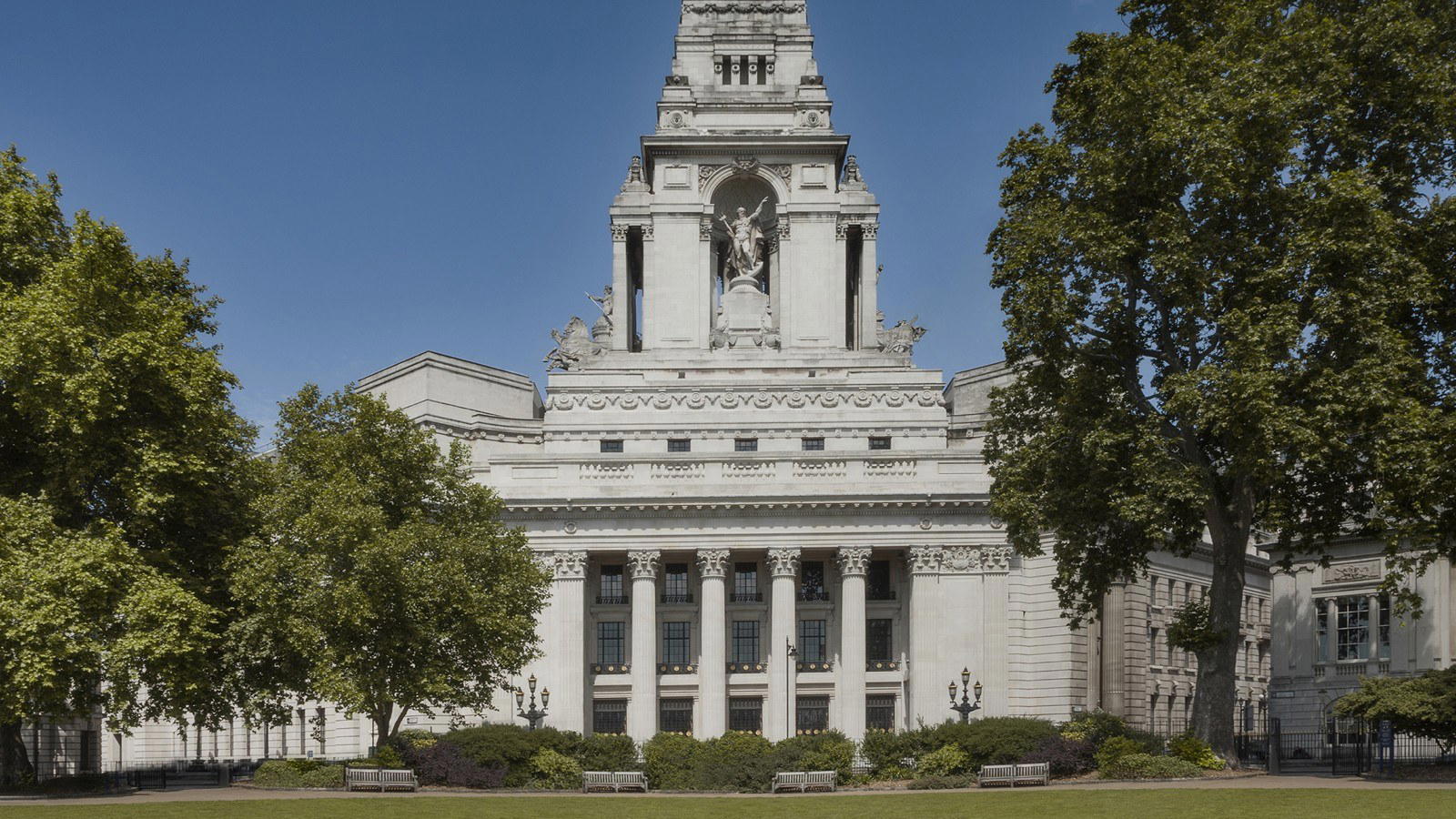
Where the Port of London Once Kept Its Accounts
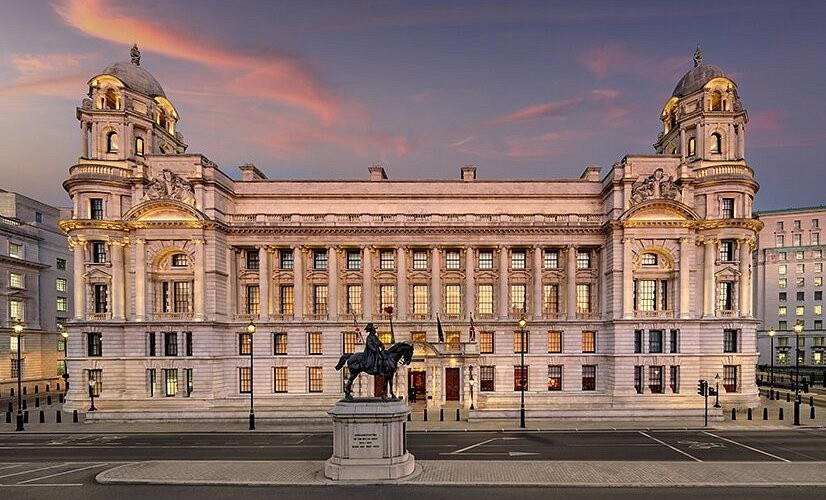
Approach 10 Trinity Square from the river side and the scale registers before you reach the entrance. The colonnaded facade of what was once the headquarters of the Port of London Authority occupies a full city block in EC3, its Beaux-Arts stonework holding its own against the medieval silhouette of the Tower of London a few hundred metres to the west. The building was completed in 1922, and during its operational peak more than a thousand people moved through its halls each day to settle dues on goods arriving from China and the East Indies. That commercial energy has long since departed, but the architecture that housed it has not: Corinthian columns, decorative woodwork, heavy crystal chandeliers, and 16-foot ceilings in the principal suites all survive from the original structure.
Historic conversion hotels in London divide broadly into two camps: those where the original fabric has been softened into something generic, and those where the building's proportions do the heavy lifting. Four Seasons Hotel London at Tower Bridge belongs to the second group. The central Rotunda, with its glass-domed ceiling, anchors the first floor and functions as the social core of the property, shifting from breakfast service through afternoon cocktails without losing its architectural authority. La Liste placed the hotel at 97 points in its 2026 Leading Hotels ranking, a signal that positions it within the upper band of London's historic-conversion luxury properties alongside addresses like Raffles London at The OWO and Claridge's.
The Rotunda and the Rooms: What the Architecture Delivers
London's premium hotel market has developed a clear hierarchy around architectural authenticity. Properties like The Savoy and The Connaught trade on century-long operational continuity, while more recently converted landmarks, including this Four Seasons address and NoMad London, are making a case based on the quality of their restoration work. Here, a seven-year renovation project — necessary because much of the interior had fallen into disrepair after the Port of London Authority moved downriver in the 1970s — produced 111 rooms and suites across four floors arranged around the Rotunda.
Standard Superior, Deluxe, and Premier rooms are finished in muted blue, grey, and beige tones with polished wood panelling and white marble bathrooms featuring heated flooring. Nespresso machines, complimentary iPads, and Bose sound systems sit alongside king-sized beds and bedside charging stations, which is broadly in line with what the Four Seasons brand delivers across its European addresses. The step up comes in the Executive rooms, which run 570 to 721 square feet, include lounge areas with sofa beds, and occupy a category closer to junior suites at comparable properties.
The suites located within the building's former executive offices are where the conversion's architectural dividend becomes most apparent: original crown moulding, hardwood flooring, fireplaces, and ceilings that reach 16 feet make them feel distinct from the standardised luxury suite format that characterises purpose-built hotels. At the leading, the 1,884-square-foot Presidential Suite adds a private terrace and garden. For longer stays, 35 individually designed residences offer one to four bedrooms, open-concept living and dining areas, and fully equipped kitchens with Gaggenau appliances, some with direct sight lines to Tower Bridge and the Tower of London.
The Sensory Register: Sound, Light, and Scale Underground
Much of what defines the experience here operates below street level. The spa and wellness facilities extend to 18,083 square feet, a footprint that places this among the larger urban hotel spas in central London. The 46-foot lap pool is the visual centrepiece: subterranean, with architectural finishes that reference the Moroccan-style bath tradition, and quiet in the way that basement spaces in thick-walled historic buildings tend to be. The 24-hour fitness centre and sauna and steam rooms complete a wellness offer that, in terms of sheer scale, is not matched by smaller boutique properties in the city.
Above ground, the Rotunda Bar runs live music from local artists every Thursday through Sunday, which introduces an ambient layer that distinguishes the evening atmosphere from the calmer daytime register. Afternoon tea, available daily and associated with the baker Lily Vanilli, takes place under the glass dome, where natural light filters through in a way that purpose-built hotel lobbies rarely achieve. These are not incidental details: in a hotel that occupies a genuine Beaux-Arts landmark, the quality of light at different times of day is part of what the building offers.
Restaurants and Eating on Site
The hotel operates two restaurants. Mei Ume covers Chinese and Japanese cuisine, a pairing that reflects London's appetite for Pan-Asian formats at the premium tier, seen at comparable properties across Mayfair and the City. Both restaurants carry children's menus, and the hotel's family positioning extends to arrival amenities including milk and cookies, kid-sized bathrobes, and alphabet bath sponges, details that signal an intentional appeal to travelling families that not all five-star properties in EC3 prioritise.
For those arriving primarily for the food and drink scene rather than the rooms, our full London restaurants guide maps the broader dining context across the city's neighbourhoods, which is particularly useful given that the Tower Hill and EC3 area, while convenient for sightseeing, does not carry the restaurant density of Mayfair, Soho, or the South Bank.
Location and Getting Around
The hotel's address at 10 Trinity Square places it within walking distance of the Tower of London and Tower Bridge, and Tower Hill Underground station connects directly to much of the network. For guests whose priority is monument-adjacency, this is among the more functional luxury hotel positions in the city. The trade-off is that EC3 is a working financial district with limited independent dining and nightlife, meaning guests who want to range across London's restaurant scene should factor transport time into their evening planning. Alternatives with Mayfair or West End positioning, such as The Emory or 1 Hotel Mayfair, address a different geographic priority.
Rates start from approximately $759 per night for standard room categories, placing the property in the same bracket as comparable historic-conversion luxury hotels in London. For those planning a wider UK itinerary, the Four Seasons group operates across multiple formats; separately, properties like Gleneagles in Auchterarder, The Newt in Somerset, Estelle Manor in North Leigh, and Lime Wood in Lyndhurst offer different formats for guests extending their stay beyond London. In the north, King Street Townhouse Hotel in Manchester, Hope Street Hotel in Liverpool, and Glasgow Grosvenor Hotel represent the independent luxury tier in their respective cities. Scotland's more remote options, including Gleneagles, Langass Lodge, Glen Mhor Hotel and Apartments, Dun Aluinn in Aberfeldy, and Burts Hotel in Melrose cover the countryside end of the spectrum. For coastal alternatives, Lifeboat Inn, St Ives and 11 Cadogan Gardens occupy separate niches within the broader UK luxury accommodation picture. International comparisons for guests cross-referencing this against other historic urban conversions might include Aman New York, The Fifth Avenue Hotel, Muir, A Luxury Collection Hotel, Halifax, and Aman Venice.
Planning Your Stay
The 111 rooms across four floors, combined with 35 longer-stay residences, give the property more inventory than many boutique conversions, which means availability is generally more accessible than at smaller London properties. Standard rooms, suites, and residences can be booked through the Four Seasons central reservations platform. The residential category, with its multi-bedroom configurations and full kitchen facilities, suits families and extended-stay guests who require a different format from a standard hotel room.
The Minimal Set
Comparable venues nearby, for context on price, style, and recognition.
| Venue | Price | Awards | Notes |
|---|---|---|---|
| Four Seasons Hotel London at Tower BridgeThis venue — the venue you are viewing | Not listed | 1 Michelin Key · La Liste Top Hotels | Not listed |
| One Aldwych | Not listed | 1 Michelin Key · La Liste Top Hotels | Aldwych, Contemporary independent British luxury in an Edwardian building |
| 1 Hotel Mayfair | $500–750 | 1 Michelin Key · Virtuoso Luxury Hotel Partner | Mayfair, Contemporary sustainable luxury with biophilic design principles, emphasizing natural materials and living elements integrated throughout the property. |
| Four Seasons Hotel Hampshire | $750–1,000 | 1 Michelin Key · La Liste Top Hotels | Dogmersfield, Hampshire, Quintessential English country estate combining restored 18th-century Georgian manor house with period-appropriate wings and modern luxury amenities across heritage buildings. |
| Shangri-La The Shard, London | $500–750 | 1 Michelin Key · La Liste Top Hotels | Borough, Luxury skyscraper hotel in London's tallest building |
| Broadwick Soho | Not listed | 1 Michelin Key · Mr & Mrs Smith Seal of Approval | Soho, Boutique luxury with maximalist opulence tailored to Soho's lively energy. |
Recognition history
Dated appearances from independent guides and award organizations, with the underlying list record or original source where available.
Michelin 1 Key
Michelin
La Liste Top Hotels
La Liste
Forbes 5-Star
Forbes
Full recognition history (5 entries)
Forbes 5-Star
Forbes
Michelin 1 Key
Michelin
Continue exploring
More in London
Hotels in London
Browse all →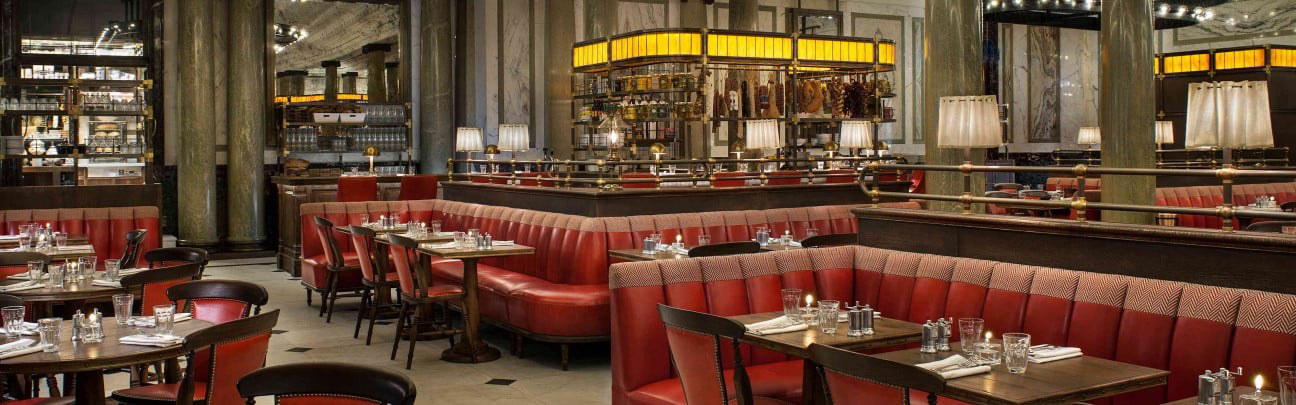
Bars in London
Browse all →
Restaurants in London
Browse all →



Details
- Elegant
- Sophisticated
- Ornate
- Classic
- Scenic
- Romantic Getaway
- Business Trip
- Family Vacation
- Anniversary
- Panoramic View
- Historic Building
- Rooftop Pool
- Waterfront
- Spa
- Pool
- Fitness Center
- Room Service
- Concierge
- Wi Fi
- Valet Parking
- Restaurant
- Waterfront
- Skyline
- Elevator
Refined and elegant atmosphere blending classical grandeur with modern luxury, featuring high ceilings, pianist in the Rotunda, and a relaxing retreat from the city.