Faro Capo Spartivento

A Michelin Selected property at the southernmost tip of Sardinia, Faro Capo Spartivento occupies a restored lighthouse complex on a headland where the island's coastline gives way to open Mediterranean. The architecture reads as functional monument first, luxury property second, a hierarchy that defines the experience. It sits in a category of Italian coastal stays where provenance of place outweighs conventional hotel amenity counts.
Pearl is the En Primeur Club membership app — saves, bookings, and concierge access live there. Same editors, same standards.
- Address
- Viale Spartivento, 09010 Domus de Maria CA, Italy
- Phone
- +39 393 827 6800
- Website
- farocapospartivento.com
- Directions
- Get directions
 Saves & bookings on Pearl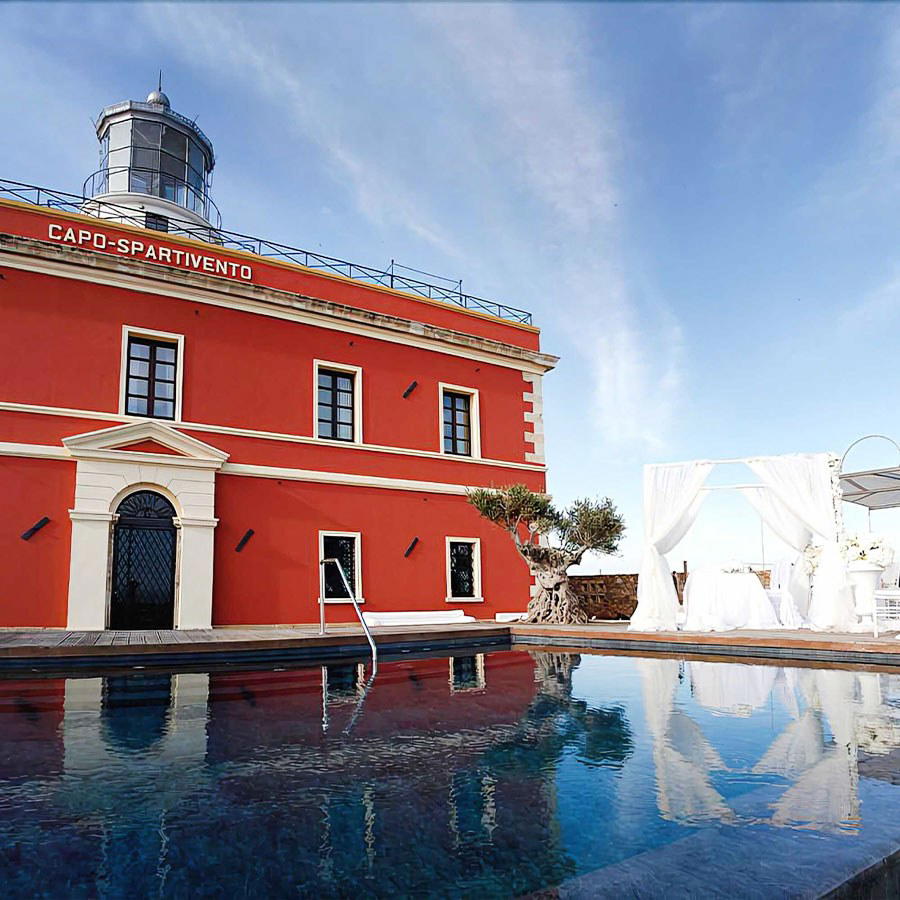
Where the Island Ends
Sardinia's southern coastline follows a different logic from the Costa Smeralda's manicured coves. Down here, in the municipality of Domus de Maria, the land narrows and the terrain becomes drier, more elemental. At the tip of this narrowing stands a lighthouse, not a decorative replica, but an actual working navigational structure with a documented history of maritime service. Faro Capo Spartivento is built around that lighthouse, and its architectural identity comes entirely from that fact.
The approach matters. Reaching this part of southern Sardinia requires commitment: the nearest commercial airport is Cagliari, roughly an hour's drive north, which means guests arrive having already passed through a sequence of landscapes rather than stepping off a transfer bus into a lobby. That journey functions as an architectural antechamber of sorts, calibrating expectations before the headland comes into view. When it does, the lighthouse tower reads against the sky before any accommodation detail is legible. The sequence is deliberate in effect if not necessarily in design.
The Architecture of Function Repurposed
The lighthouse typology carries its own design grammar: cylindrical tower, service buildings arranged around a compound, thick walls built to withstand exposure rather than to impress. Adaptive reuse of lighthouse structures into hospitality has become a recognisable category along Mediterranean coastlines, from the Portuguese Alentejo to the Croatian islands, but the approach varies considerably. At one end of the range, historic structures are preserved as backdrops for contemporary interiors that bear no relationship to the original function. At the other end, the functional aesthetic is extended, kept spare, kept purposeful, allowed to define the atmosphere.
Faro Capo Spartivento's Michelin Selected recognition, current for 2025, positions it within a cohort of Italian properties where editorial quality is assessed alongside physical credentials. The Michelin hotel programme, which operates separately from its restaurant guide, applies selection criteria that weight character, consistency, and contextual appropriateness. A lighthouse compound on a remote southern Sardinian headland satisfies that contextual criterion in direct terms: the building belongs to the place in a way that a purpose-built resort would not.
Across Italy's premium hotel register, properties occupying genuinely historic structures form their own competitive tier. Aman Venice in Venice operates inside a Renaissance palazzo; Castello di Reschio in Lisciano Niccone is built around a restored medieval castle in Umbria; Rosewood Castiglion Del Bosco in Montalcino centres on a Tuscan borgo. In each case the architecture precedes the hospitality programme, the building was there long before the hotel. Faro Capo Spartivento belongs to that lineage, not to the lineage of properties designed from scratch to evoke a sense of place.
The Southern Sardinian Context
Domus de Maria sits inside the Sulcis-Iglesiente region, a part of Sardinia that receives considerably fewer international visitors than the island's northern and northeastern shores. The Costa Smeralda, developed from the 1960s onward as a high-gloss international resort corridor, set the template that most visitors associate with Sardinian luxury. The south operates on different terms: less infrastructure, fewer international brands, more exposure to the actual Sardinian landscape.
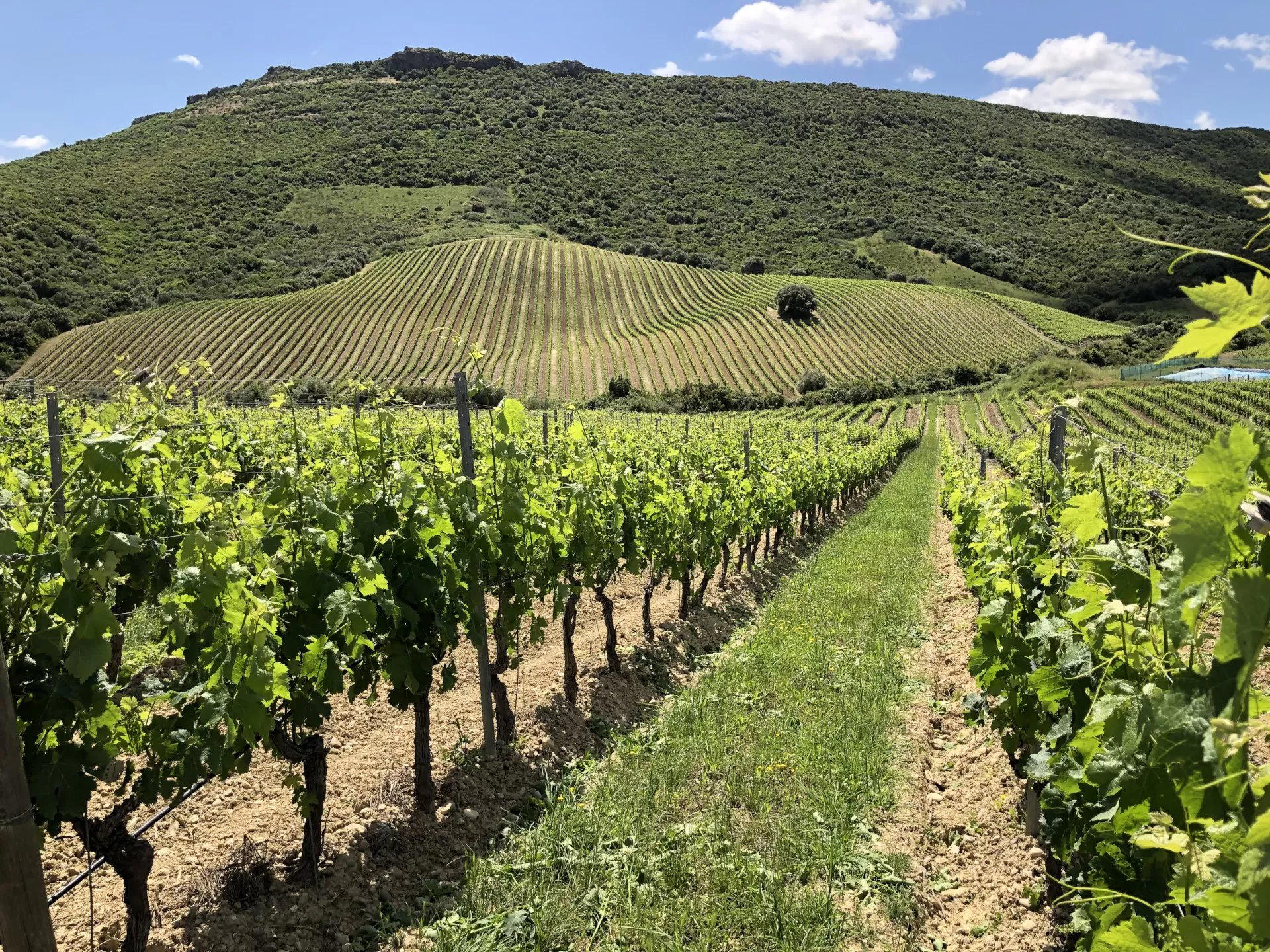
That exposure has a particular character. The macchia mediterranea, the dense scrubland of rosemary, myrtle, and cistus that covers much of Sardinia's hinterland, presses close to the coast here. The water off the Capo Spartivento headland is part of the Strait of Sardinia, the open channel between the island and the North African coast. On clear days the light has the flattened quality of a maritime environment with nothing blocking the southern horizon. These are conditions that a lighthouse was specifically built to address, which makes the architecture's original function legible in a way that doesn't require explanation.
Nearby Conrad Chia Laguna Sardinia represents the larger-footprint resort model on the same stretch of coastline, offering a different calculus of amenity versus atmosphere.
Where It Sits in the Italian Luxury Register
Italian luxury hospitality has been segmenting steadily over the past decade. The large international brands, Four Seasons, Bulgari, Rosewood, have planted flags in Italy's major cultural cities. Four Seasons Hotel Firenze in Florence, Bulgari Hotel Roma in Rome, and Passalacqua in Moltrasio on Lake Como each represent high investment in property, restoration, and service staffing. Against that tier, the more remote and character-specific properties compete on a different axis: not depth of amenity, but depth of specificity.
Properties like Il Pellicano in Porto Ercole, Borgo Santandrea in Amalfi Coast, and Il San Pietro di Positano in Positano have built reputations around sites that are essentially irreplaceable, cliffs, coves, headlands that could not be replicated at a different location. Faro Capo Spartivento operates on the same logic. The lighthouse is the southernmost point of Sardinia, and that geographical fact is not available at any other address.
Further afield in Italy's premium register, Portrait Milano in Milan, Casa Maria Luigia in Modena, and Borgo Egnazia in Savelletri di Fasano each demonstrate how Italian hospitality has developed distinct regional identities rather than converging on a single model. The Sardinian south is among the least represented of those regional identities at the premium level, which places the hotel in a thin competitive set by default.
Planning a Stay
Cagliari Elmas Airport is the logical entry point, with direct connections from multiple European cities during the peak summer season from June through September. The drive south to Domus de Maria passes through the Campidano plain before the terrain rises toward the Sulcis hills. Guests arriving without a vehicle will need to arrange transfers, as public transport to the cape is not a practical option. The lighthouse's position on a headland means there is no walkable town infrastructure nearby, the property functions as a self-contained compound, and stays should be planned accordingly.
The Michelin Selected designation applies to the 2025 edition of the Michelin hotel guide.
For international reference points, other properties that trade on architectural provenance and site specificity, Hôtel de Paris Monte-Carlo in Monte Carlo and Badrutt's Palace Hotel in St. Moritz sit in a different market register but share the premise that the building's history is part of what is being sold. The difference at the hotel is the scale of removal from urban infrastructure, this is not a historic building in a functioning city, but a working lighthouse at the edge of a Mediterranean island.
Comparable Venues
Comparable venues nearby, for context on price, style, and recognition.
| Venue | Cuisine | Price | Awards | Notes |
|---|---|---|---|---|
| Faro Capo SpartiventoThis venue — the venue you are viewing | Exclusive heritage conversion blending historical preservation with contemporary minimalism in a protected natural setting. | $$$$ | 5-Star | Not listed |
| Conrad Chia Laguna Sardinia | Modern luxury resort inspired by Sardinian nature | $$$$ | 5-Star | Domus de Maria |
| rhinoceros | Historic palazzo with contemporary design apartments | $$$$ | 5-Star | Velabro |
| Dimora Palanca Boutique & SPA | Timeless five-star elegance harmonizing classic architecture with bold modern art. | $$$$ | 5-Star | Historic Centre |
| Hotel Gabrielli Venezia | Refined five-star Venetian palazzo hotel combining historic architecture with contemporary Starhotels Collezione luxury in a prime lagoonfront location. | $$$$ | 5-Star | Castello / Riva degli Schiavoni (near St. Mark’s Square) |
| L'Olmo | Restored 17th-century Tuscan farmhouse with modern comforts. | $$$$ | 5-Star | Monticchiello |
Recognition history
Dated appearances from independent guides and award organizations, with the underlying list record or original source where available.
Michelin Selected
Michelin
Continue exploring
More in Domus de Maria
Hotels in Domus de Maria
Browse all →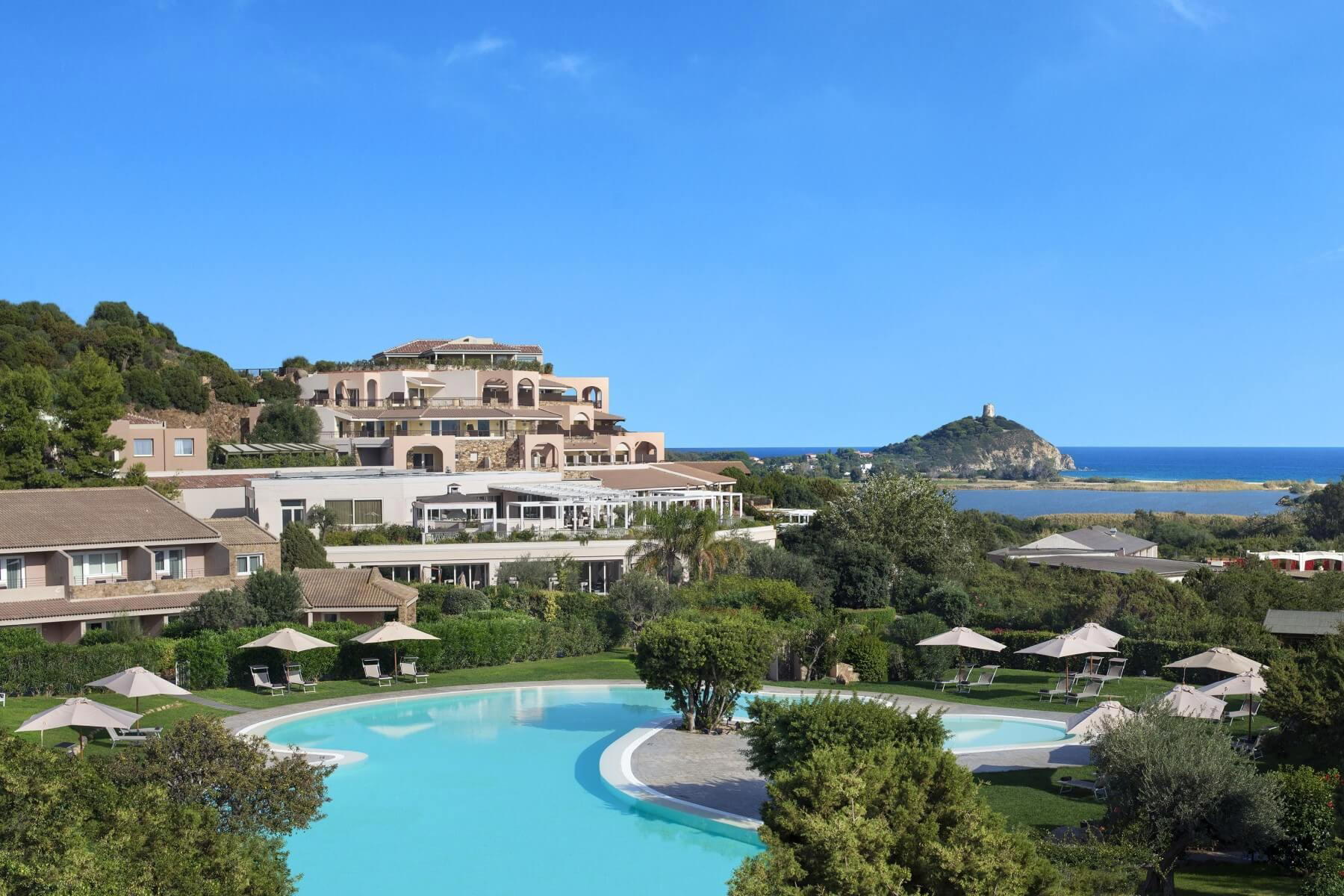
Bars in Domus de Maria
Browse all →
Restaurants in Domus de Maria
Browse all →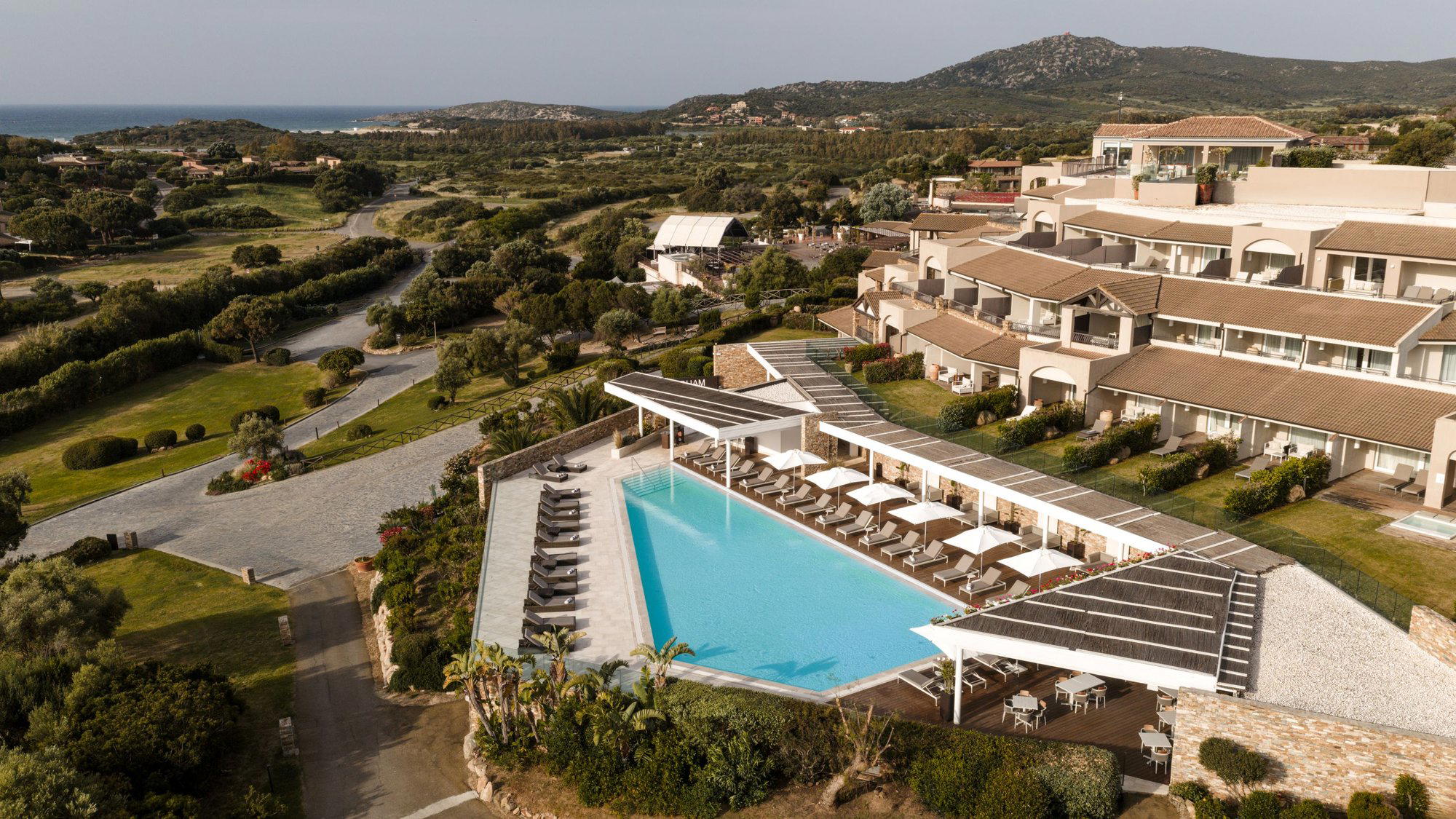

At a Glance
- Romantic
- Quiet
- Scenic
- Elegant
- Minimalist
- Well Known
- Romantic Getaway
- Honeymoon
- Anniversary
- Wellness Retreat
- Beachfront
- Infinity Pool
- Panoramic View
- Historic Building
- Waterfront
- Garden
- Terrace
- Private Dining
- Wi Fi
- Pool
- Spa
- Sauna
- Restaurant
- Concierge
- Garden
- Bar
- Massage
- Beach Access
- Waterfront
- Wi Fi
- Pool
- Spa
- Sauna
- Restaurant
- Concierge
- Garden
- Bar
- Massage
- Beach Access
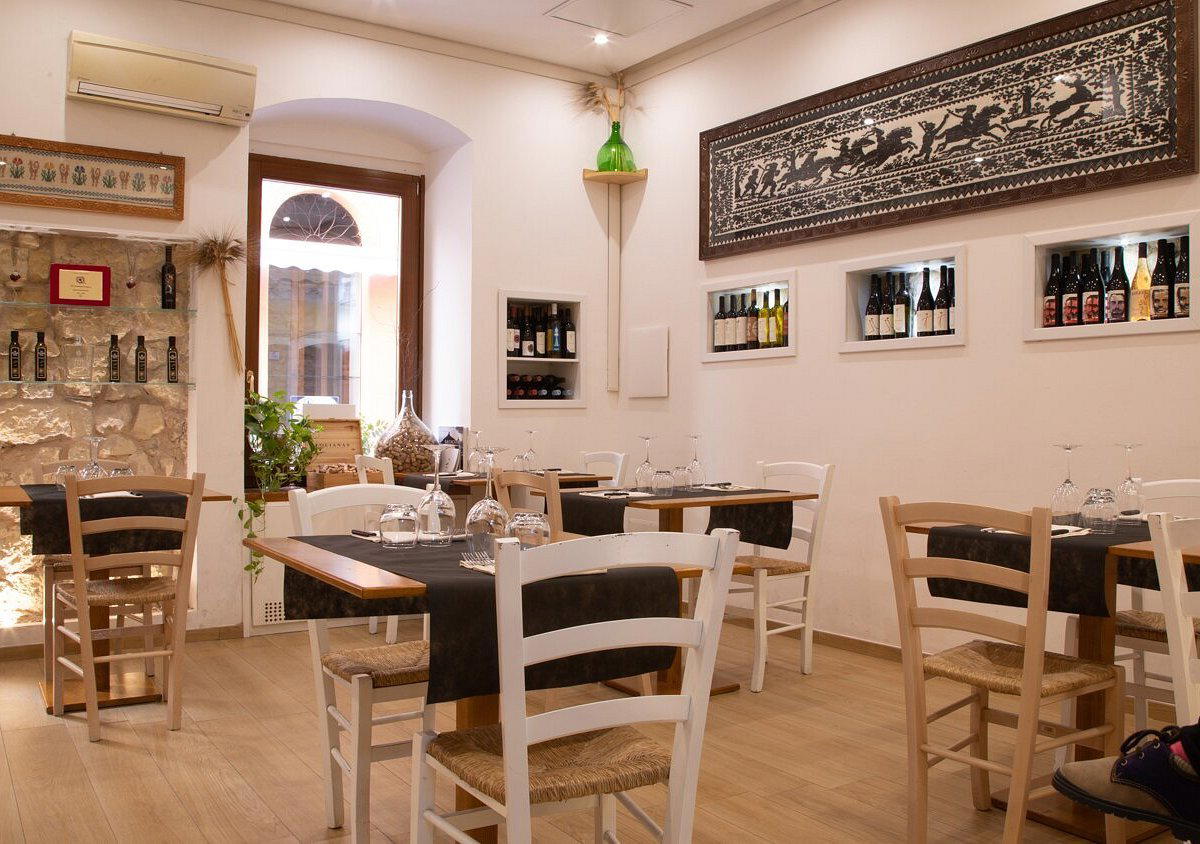
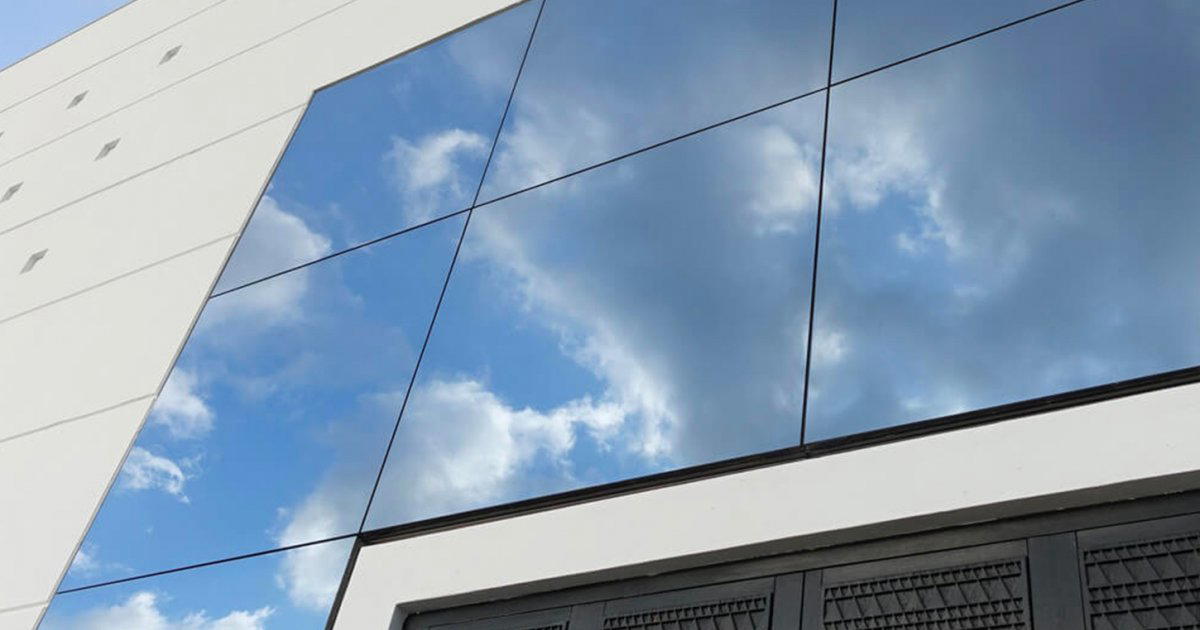
Serene and contemplative with white minimalist interiors, natural stone and wood elements, and tranquil grounds overlooking the Tyrrhenian Sea; guests report hearing only waves and experiencing absolute quiet at night.