ÉRA Hotel Heraklion belongs to the city-hotel side of Crete rather than the resort circuit, which makes its design and atmosphere the point of interest.

Pearl is the En Primeur Club membership app — saves, bookings, and concierge access live there. Same editors, same standards.
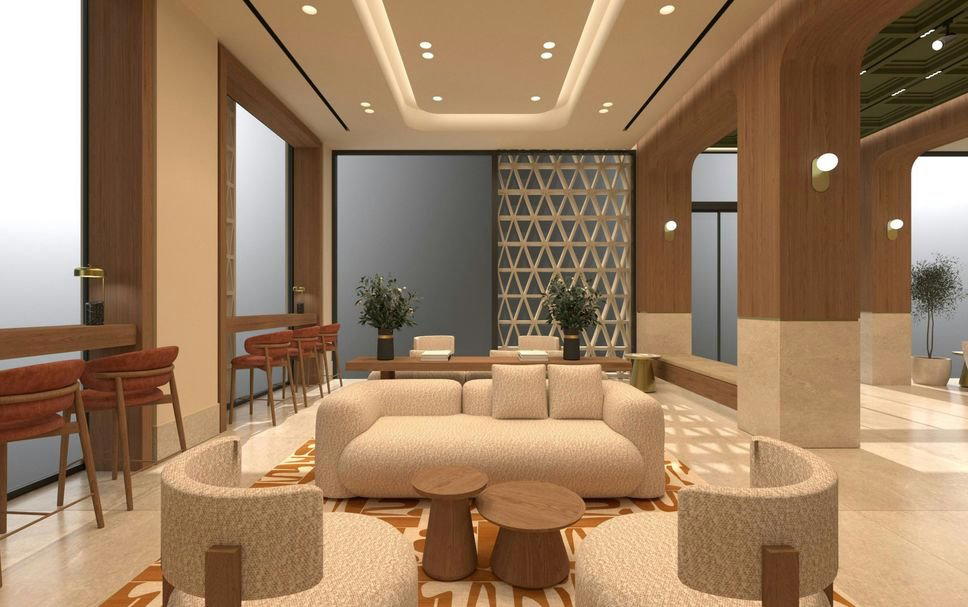
First impression: an urban Crete hotel, not a beach-resort fantasy
Heraklion announces itself in layers: port traffic, apartment balconies, stone fragments from Venetian fortification, café tables set close to the pavement, and the steady movement of a working Cretan capital. A hotel in this setting is read differently from a resort on a private-feeling bay. The question is not only thread count or pool photography; it is how the building handles the city around it. ÉRA Hotel Heraklion sits in that urban conversation, where architecture, arrival sequence, lobby scale, and room quiet matter more than theatrical seclusion.
That distinction is useful because Crete’s premium-hotel market often splits into two camps. One camp sells the island as a self-contained resort experience, with gardens, beach access, expansive pools, and a long-stay rhythm. The other works inside the city, where the guest is likely moving between the archaeological museum, the old harbour, business appointments, restaurants, and short drives inland. ÉRA Hotel Heraklion belongs to the second category by location and naming, and it should be assessed as a city base rather than as a coastal compound.
That absence matters. In a market where hotels often trade on labels, affiliations, and photographed amenities, missing public data shifts the burden back to fundamentals: location in Heraklion, clarity of booking information through reliable channels, and whether the physical environment suits the kind of trip planned.
Heraklion's hotel character is shaped by the city's density
Heraklion is not a resort town pretending to be a capital. It is Crete’s administrative and commercial centre, and that produces a different hospitality rhythm from the island’s north-coast leisure zones. The city has ferry arrivals, airport traffic, university and government life, late dinners, market streets, and a constant push-pull between antiquity and daily use. Hotels here tend to succeed when they make movement easy and do not overpromise retreat. A compact, well-composed interior can be more useful than a sprawling amenity list if the guest intends to spend the day outside the building.
This is where architecture becomes practical rather than decorative. In an urban hotel, the physical experience begins before check-in: street frontage, entrance legibility, sound buffering, lift flow, corridor lighting, and how public spaces handle guests arriving at uneven hours. Heraklion rewards hotels that feel composed after a hot walk through the centre or a late transfer from the port. Without verified room descriptions or amenity details for ÉRA Hotel Heraklion, the more responsible editorial point is that the property should be judged by those urban-hotel criteria, not by resort metrics imported from elsewhere on the island.
Crete also complicates the usual Greek-island hotel comparison. Santorini and Mykonos often frame design through cliff-edge drama or high-season social choreography. Heraklion is more archaeological, commercial, and lived-in. The palace of Knossos sits outside the centre, the Archaeological Museum anchors the cultural itinerary, and the waterfront carries both leisure and infrastructure. A hotel here does not need to stage a fantasy of isolation. It needs to let the city work.
Design-led travel in Greece now has several different comparable venues
Greek hospitality has become too varied for a single luxury template. On the mainland and Peloponnese, hotels such as Amanzoe in Porto Heli and Mandarin Oriental Costa Navarino in Pylos frame design through landscape, space, and destination-scale infrastructure. In Athens, Four Seasons Astir Palace Hotel Athens in Athens works from a Riviera model, where city access and seaside leisure meet. Those are not direct Heraklion comparisons, but they show how Greek hotels use architecture to define the trip before the guest reaches the room.
Island and regional properties form another group. Myconian Ambassador in Mykonos, Olea All Suite Hotel in Zakynthos, and Astra Suites in Santorini operate in markets where views, seasonality, and room typology often dominate the value equation. Further north and west, Eagles Palace in Halkidiki, Elix by Mar-Bella Collection in Perdika, and ALERÓ Seaside Skyros Resort in Skyros show how coastal Greece keeps producing highly specific resort formats rather than one national house style.
Crete has its own internal range. Around Heraklion and the broader regional market, Amirandes, A Grecotel Resort to Live, Autograph Collection, Seaside A Lifestyle Resort, and The Tenant point to different answers to the same traveller problem: how much of Crete should happen inside the hotel, and how much should happen outside it. ÉRA Hotel Heraklion belongs in that comparison because its city identity places design under pressure from use, not only from image.
That is also why international analogies need care. Grand-hotel tradition at Hôtel de Paris Monte-Carlo in Monte Carlo and alpine palace culture at Badrutt's Palace Hotel in St. Moritz rely on history, service ritual, and destination mythology. Contemporary design hotels such as The Fifth Avenue Hotel in New York City show another route: dense-city hospitality where interiors mediate the street. Heraklion is closer to that problem than to the alpine palace model, even when the budget or service tier differs.
How architecture should be read here
For a Heraklion hotel, design value starts with restraint. The city already supplies texture: Venetian walls, Ottoman traces, concrete apartment blocks, harbour light, and the plain fact of Cretan urban life. Hotels that overdecorate can feel disconnected from that setting. Better city properties tend to manage scale, shade, and acoustic comfort, then give the guest a clean base for moving through the day. The stronger point is how to evaluate the stay: look for coherence between the building and the city’s pace.
Heraklion’s climate also affects design. Summers are hot, shoulder seasons are more flexible, and winter brings a quieter urban rhythm rather than the closed-down feeling of some resort areas. A city hotel must serve short stays across that calendar: early museum mornings, ferry connections, airport nights, work trips, and dining-led weekends. Seasonal resort spectacle matters less here than reliable circulation, shade, ventilation, and an interior mood that does not exhaust the guest before dinner.
Architecture in this context is a form of editing. It decides what the visitor notices and what can be ignored. A good arrival experience can soften the jump from street traffic to guest room. A poorly handled one makes the city feel abrasive. Without verified amenity or service details, the editorial advice is to read recent guest photographs, confirm the exact address through the booking platform used, and compare room categories by floor, window orientation, and cancellation terms rather than by adjectives.
Food, drink, and the Heraklion decision
No cuisine type, chef name, restaurant programme, bar identity, or signature dishes are listed for this hotel. That does not weaken Heraklion as a dining base; it simply changes the planning assumption. The city is strong for tavern culture, Cretan produce, bakeries, rakí-led evenings, and restaurants that reflect both island agriculture and port-city pragmatism. A hotel restaurant may be convenient, but in Heraklion the more interesting eating often happens by walking outward.
Start with our Heraklion restaurants guide for dining context, then use our Heraklion bars guide if the evening is likely to continue after dinner. Crete’s wine identity also deserves attention; the island’s modern producers have moved well beyond the outdated holiday-carafe stereotype, and our Heraklion wineries guide is the more relevant planning tool than a generic Greek wine list.
Experience-led travel follows the same logic. Heraklion’s value is not only where the bed is, but what the city unlocks: archaeology, markets, inland villages, vineyards, and coastline in different directions. our Heraklion experiences guide helps separate serious cultural formats from generic sightseeing. For hotel comparison across the city, our Heraklion hotels guide gives the wider frame.
Planning the stay: what to verify before committing
The practical position is simple: the public record here is sparse, so the planning should be deliberate. That means readers should not rely on inferred luxury cues. Confirm the exact location, rate conditions, taxes, breakfast inclusion, cancellation deadline, and room category through a trusted booking channel before payment. If arriving by ferry or late flight, confirm reception arrangements in advance through the platform handling the reservation.
Price comparison in Heraklion should be anchored to trip purpose. A lower nightly rate can lose its advantage if the hotel sits awkwardly for museum visits, dining, or onward transfers. A higher rate can make sense for quiet rooms, stronger bedding, or better city access, but those details require verification because they are not present in the record. Travellers using Heraklion as a one-night transit point should prioritise logistics; travellers spending several days in the city should care more about daylight, noise, desk space, and the ease of walking out after dark.
The same caution applies to awards. In the guide terms, that absence is not a criticism; it is a trust boundary. Awarded hotels, branded resorts, and long-established grand hotels give the reader external signals. A property without those signals needs to be evaluated through confirmed details and current guest evidence. That is a more demanding process, but it can also identify hotels that suit a specific itinerary better than a louder name outside the city centre.
Who should consider it
ÉRA Hotel Heraklion is most relevant to travellers who want Heraklion itself in the foreground. That means museum days, restaurants within the urban fabric, port or airport convenience, and an interest in Crete beyond the beach-resort script. The fit is less obvious for travellers whose priority is a self-contained coastal stay with extensive grounds, multiple pools, and a resort-only rhythm. For that brief, the Heraklion-region resort set and other Greek coastal properties provide clearer comparators.
The editorial case is therefore conditional but useful. In a city where the built environment matters, a hotel should be chosen for how it frames movement through Heraklion. If the hotel offers the right location, verified rate, and room type for a city-led trip, it can sit in the practical centre of a strong Cretan itinerary. If the goal is destination-resort theatre, the wider Greek hotel field will provide a better match.
How It Compares
Comparable venues nearby, for context on price, style, and recognition.
| Venue | Cuisine | Price | Awards | Notes |
|---|---|---|---|---|
| ÉRA Hotel HeraklionThis venue — the venue you are viewing | Urban, boutique Mix Collection hotel in a renovated landmark building, positioned as a year-round lifestyle stay for leisure and business travelers in the heart of Heraklion. | $$$ | 5-Star | Not listed |
| Pnoé Breathing Life | Contemporary wellness resort blending luxury with natural Cretan elements, built on ruins with sustainable local materials. | $$$$ | 5-Star | Karteros |
| Seaside A Lifestyle Resort | Modern lifestyle resort with panoramic sea views and private pool options. | $$$$ | 5-Star | Agia Pelagia |
| Amirandes, A Grecotel Resort to Live | Minoan Palace-inspired waterfront resort with reimagined suites and villas blending indoor-outdoor living. | $$$$ | 5-Star | Kato Gouves |
| Rocca a Mare Heraklion - Handwritten Collection | Luxury urban seafront boutique hotel blending Cretan heritage with contemporary design and high-tech comforts. | $$$ | 5-Star | Heraklion city center |
| Autograph Collection | Mediterranean luxury resort combining ancient Greek design inspiration with contemporary elegance, positioned as an upscale family-friendly and romantic destination. | $$$$ | 5-Star | Elounda |
Continue exploring
More in Heraklion
Hotels in Heraklion
Browse all →
Restaurants in Heraklion
Browse all →
Wineries in Heraklion
Browse all →
At a Glance
- Modern
- Elegant
- Scenic
- Sophisticated
- Cozy
- Weekend Escape
- Business Trip
- Romantic Getaway
- Family Vacation
- Wellness Retreat
- Celebration
- Rooftop Pool
- Waterfront
- Historic Building
- Design Destination
- Panoramic View
- Terrace
- Wi Fi
- Pool
- Spa
- Fitness Center
- Room Service
- Concierge
- Waterfront
- Mountain
- Skyline
- Wi Fi
- Pool
- Spa
- Fitness Center
- Room Service
- Concierge
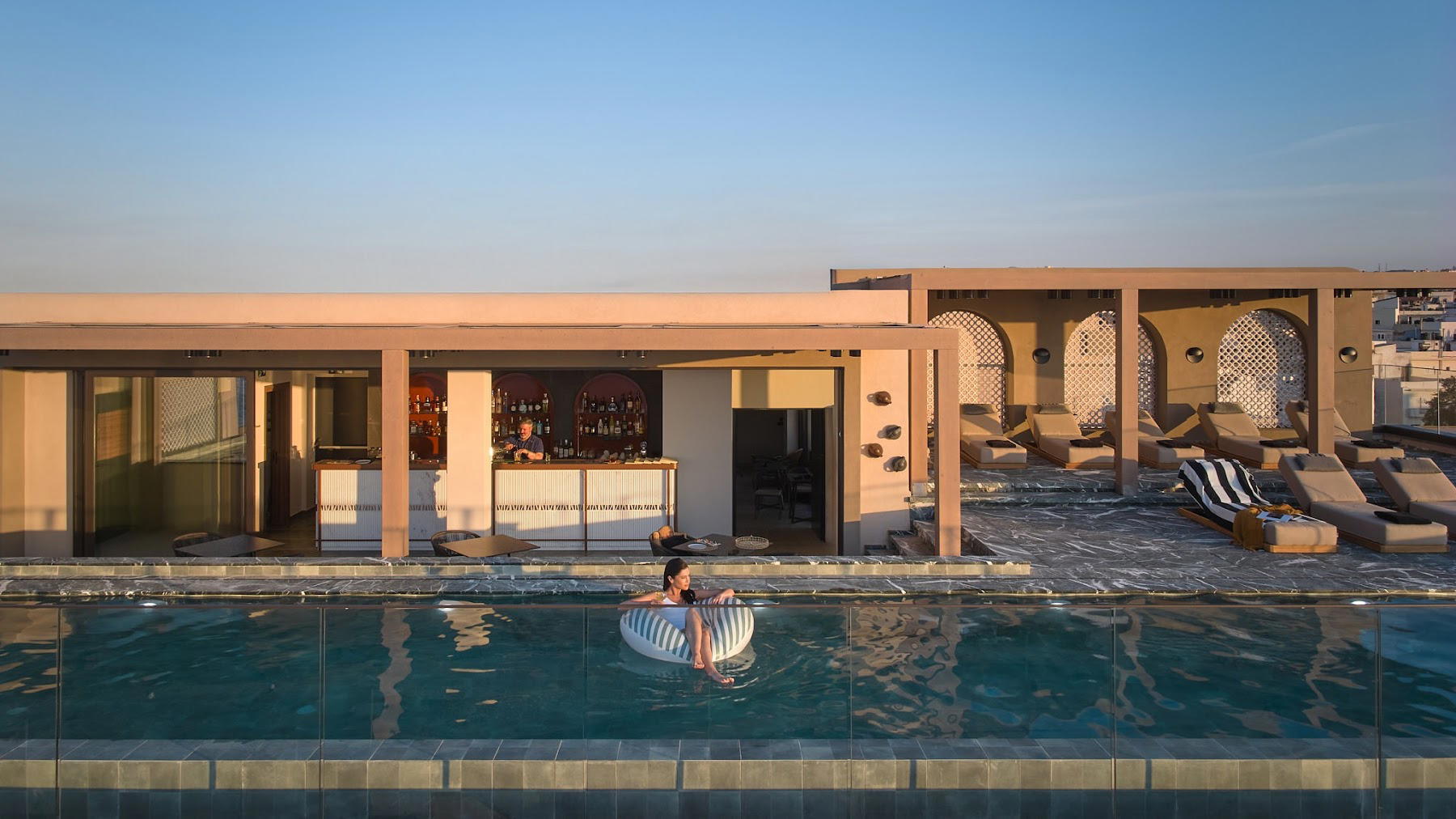
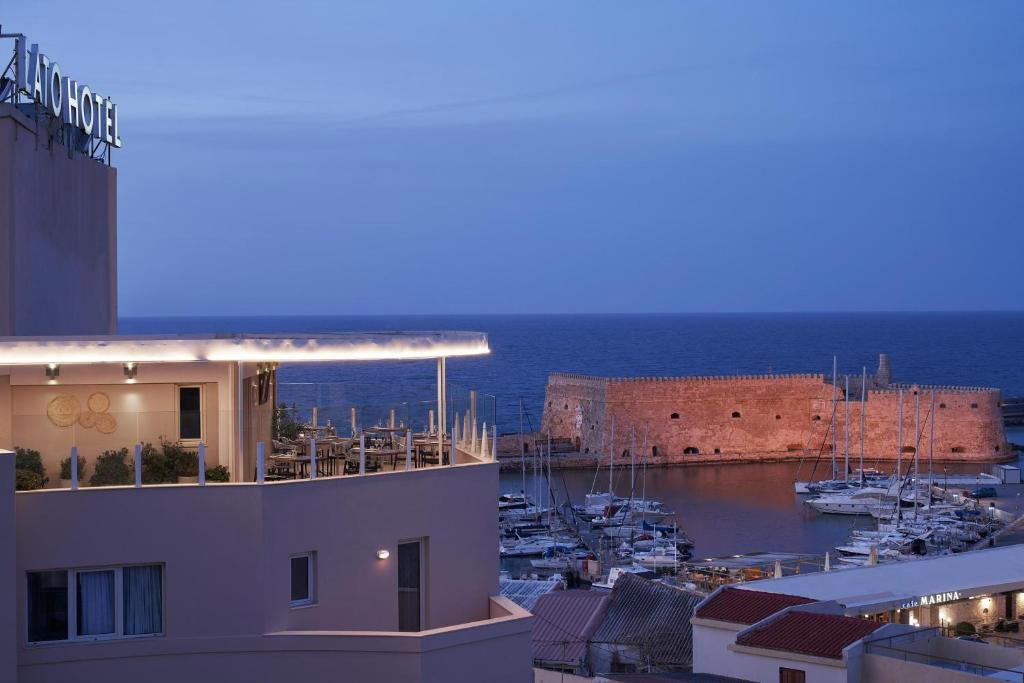
A contemporary boutique atmosphere that blends authentic Cretan character with modern comforts, featuring a locally inspired, design-led interior and relaxed social spaces like a rooftop restaurant, café, and library.