Occupying a prime position at the foot of Gellért Hill on the Buda bank of the Danube, the Danubius Hotel Gellért is among Budapest's most recognisable early-twentieth-century properties. Its Art Nouveau architecture, thermal baths complex, and proximity to the Liberty Bridge place it firmly within the city's grand hotel tradition, drawing visitors who want direct access to one of Europe's most storied spa cultures alongside central Budapest sightseeing.
- Address
- Budapest, Szent Gellért tér 2, 1114 Hungary
- Phone
- +36 1 889 5500
- Website
- danubiushotels.com
- Directions
- Get directions
A Building That Arrived Before Budapest Became Budapest
Approaching the Danubius Hotel Gellért from the Pest side of the Elizabeth Bridge, the building reads as a statement about a particular moment in Central European confidence. The Art Nouveau facade, with its curved gables and ornamental stone detailing, belongs to the architectural generation that believed grand public buildings could civilise a city simply by existing in it. Completed in 1918, the Gellért opened at the precise moment the Austro-Hungarian Empire was collapsing around it, which gives the building a quality common to that era’s grandest hotels: it was designed for a world that had already started to change.
That tension between ambition and circumstance is built into the stone. The hotel sits at the foot of Gellért Hill on the Buda bank of the Danube, positioned where the hill meets the river at Szent Gellért tér. The tram lines converge here, the river bends, and the city’s two halves become briefly visible at once. Few hotel locations in Budapest carry this kind of urban weight, and the building was designed to match it.
The Architecture as the Argument
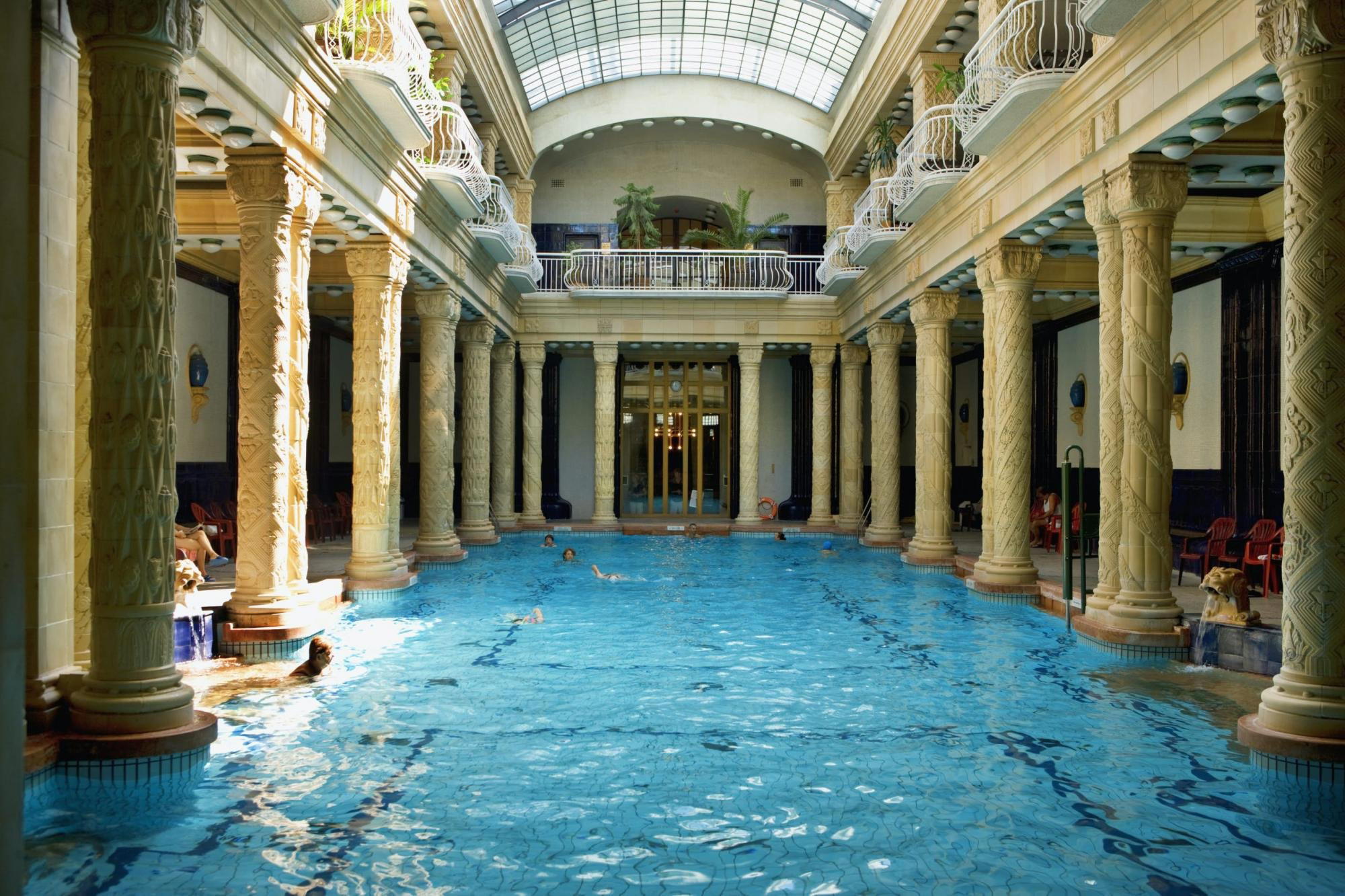
Budapest’s major historic hotels divide broadly into two categories: those that survived the twentieth century largely intact, and those that were rebuilt, rebranded, or refaced into a different identity. The Gellért falls into the first group, though not without damage. The interior still carries the signature of its original architects, Armin Hegedűs, Arthur Sebestyén, and Izidor Sterk, whose approach to Art Nouveau was more structural than decorative compared to some of their Viennese contemporaries. The thermal bath complex attached to the hotel is the clearest expression of this: the main pool hall uses mosaic tiles, carved stone columns, and a glazed barrel vault in a way that treats the bathing ritual as civic ceremony rather than private luxury.
This is the design logic that separates the Gellért from newer competition in Budapest’s five-star tier. Hotels like the Anantara New York Palace Budapest Hotel or the Aria Hotel Budapest by Library Hotel Collection operate with restored or reinterpreted grandeur; the Gellért operates with original grandeur that has simply accumulated a century of use. That distinction matters to a specific kind of traveller. The patina is not a deficiency. It is the credential.
The thermal bath wing functions as a semi-public institution connected to the hotel, which creates a dynamic rare in European hospitality: the building’s most architecturally significant spaces are accessible to non-guests. The indoor pool hall in particular draws visitors who have no interest in the hotel rooms, which keeps the building alive as a working piece of the city rather than a sealed luxury product. Hotels further along the contemporary design spectrum, such as the Bohem Art Hotel or the BoHo Hotel Budapest, have no equivalent civic layer.
Where It Sits in the Budapest Hotel Market
Budapest’s premium hotel market has expanded considerably since 2010. Properties with international backing and full renovation programmes have entered the market at the summit of the price range, and the competitive set now includes the Al Habtoor Palace at the upper end and smaller boutique properties like the Balt azár Boutique Hotel or Brody House targeting a design-led traveller at lower price points. The Gellért does not compete for the same guest as either extreme. Its positioning is based on heritage category rather than finish quality or amenity density.
This creates a clear practical question for travellers. If the priority is contemporary room specification, new plumbing infrastructure, or the kind of consistency that comes with a recent renovation under a major hotel group, the Gellért is not the obvious answer. If the priority is architectural authenticity, the specific emotional register of a building that has been receiving guests since the early twentieth century, and a location with direct Danube frontage on the Buda bank, it belongs in a short list of one. No other Budapest hotel combines that vintage with that position.
For travellers extending their time in Hungary beyond the capital, the contrast between the Gellért’s urban grandeur and the country’s manor and castle properties is worth noting. Properties like BOTANIQ Castle of Tura or Hotel Palota Lill afüred offer a different register of historic accommodation, and the Hotel Petit Bois in Balatonfüred extends the itinerary to Lake Balaton.
Planning Your Stay
The hotel’s address at Szent Gellért tér 2 places it at one of the city’s major tram intersections, with lines connecting directly to the inner city on both banks. The Gellért Hill itself rises directly behind the building and is walkable to the Citadella and the Liberty Statue, which frames the hotel as a base for Buda-side exploration rather than a Pest-centric location. Guests focused on the ruin bars, Jewish Quarter restaurants, or the central market hall will find themselves crossing the bridge regularly, which is not an inconvenience from this position but does mean planning for the commute.
The thermal baths are the logistical centrepiece of any stay. The baths operate on a ticketing system with different access levels, and the historic indoor pool hall is the element most visitors cite as the architectural high point. Weekends draw higher visitor volumes, and the outdoor pools in season attract a broader mix of day visitors. Booking accommodation in advance around peak travel periods in Budapest, particularly April through October, is advisable given the hotel’s heritage appeal and its recommended reservation policy.
Travellers who use Budapest as a jumping-off point for Central European hotel comparisons will find useful reference points in properties like Badrutt’s Palace in St. Moritz or the Hôtel de Paris Monte-Carlo, which occupy a comparable tier of historic grand hotel with accumulated institutional identity. The Gellért operates in that tradition, at a price point in line with its upper-midscale positioning while delivering a built environment of equivalent age and ambition.
Quick Comparison
Comparable venues nearby, for context on price, style, and recognition.
| Venue | Cuisine | Price | Awards | Notes |
|---|---|---|---|---|
| Danubius Hotel GellértThis venue — the venue you are viewing | Historic Art Nouveau landmark hotel with elegant bygone-era charm. | $$$ | 4-Star | Not listed |
| Park Plaza Budapest | Trendy lifestyle hotel with artistic flair and riverfront elegance. | $$$ | 4-Star | Varhegy |
| Pest-Buda Design Hotel | Boutique design hotel in a preserved 1696 historic mansion. | $$$ | 4-Star | Varhegy |
| Hotel Collect | Boutique luxury with curated vintage and modern design | $$$$ | 4-Star | Belvaros |
| Brody House - Rooms | 19th-century Neo-classical palazzo with shabby-chic bohemian renovations | $$$$ | 4-Star | Belvaros |
| Bohem Art Hotel | Modernized 17th-century building with bohemian art gallery vibe | $$$ | 4-Star | Belvaros |
Continue exploring
More in Budapest
Hotels in Budapest
Browse all →
Bars in Budapest
Browse all →
Restaurants in Budapest
Browse all →


At a Glance
- Classic
- Elegant
- Well Known
- Historic
- Romantic Getaway
- Weekend Escape
- Historic Building
- Panoramic View
- Waterfront
- Terrace
- Pool
- Spa
- Wi Fi
- Room Service
- Concierge
- Restaurant
- Waterfront
- Skyline
- Pool
- Spa
- Wi Fi
- Room Service
- Concierge
- Restaurant
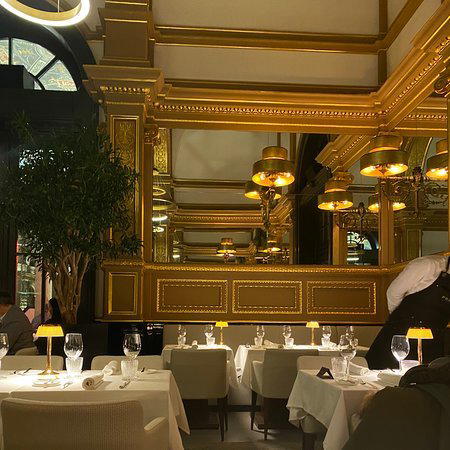
Faded elegance with ornate Art Nouveau interiors, high glass cupolas, wrought iron details, and a grand historic atmosphere.