Copacabana Palace, A Belmond Hotel, Rio de Janeiro






Ranked #11 on the World's 50 Best Hotels list in 2025 and awarded 94.5 points by La Liste in 2026, the Copacabana Palace has anchored Rio's luxury hospitality scene since 1923. The Belmond property's 140 rooms face either Copacabana Beach or the city skyline, while three distinct restaurants and a poolside terrace define its culinary reputation. Rates from $956 per night.
 Discover on Pearl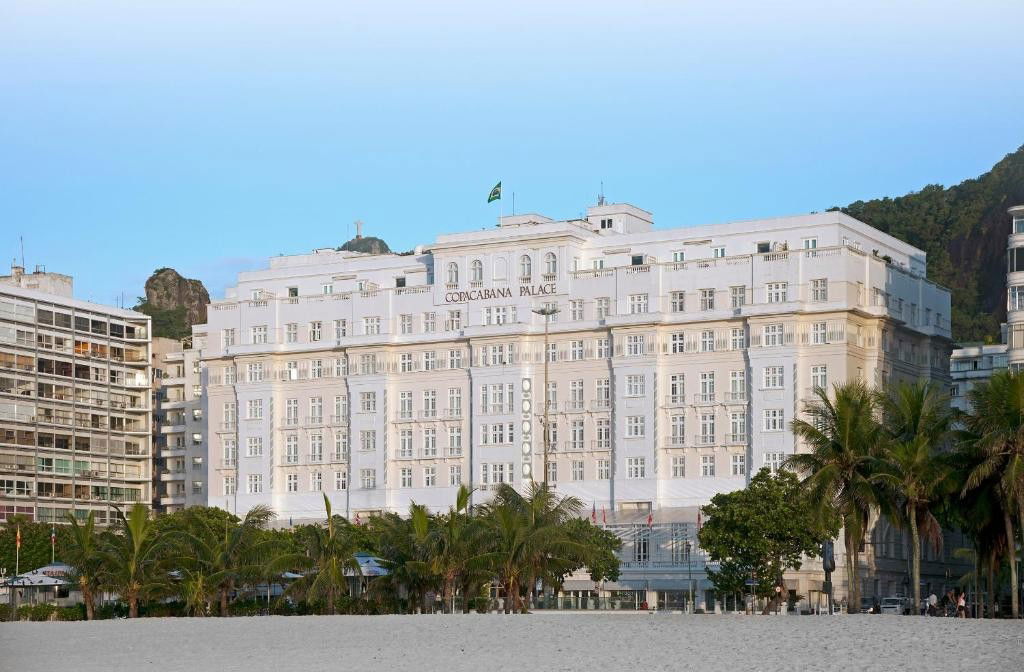
The White Façade That Defines Copacabana
There is a particular kind of hotel that stops being a building and becomes a reference point — a place the city organises itself around rather than one that simply sits inside it. The Copacabana Palace occupies that position on Avenida Atlântica. Its Belle Époque façade, modelled on the Negresco in Nice and the Carlton in Cannes when it opened in 1923, has been maintained and lit with enough precision that the white marble reads as freshly installed against the South Atlantic darkness each evening. Over a century on, the property belongs to Belmond (now part of LVMH), a portfolio that includes Hotel das Cataratas, A Belmond Hotel, Iguassu Falls and several other landmark addresses across Brazil.
Rio's luxury hotel market has fractured in interesting ways over the past two decades. Design-led boutique properties such as Emiliano Rio and the architecturally celebrated Hotel Fasano Rio de Janeiro now compete for the same high-spend traveller, while larger-footprint operations like the Fairmont Rio de Janeiro Copacabana hold ground at the volume end of the prestige tier. The Copacabana Palace sits outside these comparisons in one meaningful sense: its 102-year operational history and its placement at #11 on the World's 50 Best Hotels list in 2025 put it in a peer set that is defined as much by provenance as by contemporary amenity. The La Liste Leading Hotels score of 94.5 points in 2026 confirms the same reading. This is not a hotel that needs to prove itself against new arrivals.
Three Restaurants, Three Distinct Registers
The dining programme at the Copacabana Palace reflects a deliberate decision to run multiple culinary identities under one roof rather than centralise around a single flagship. That approach is more common among grand-hotel addresses in Europe — think the multi-restaurant structures of major palace hotels in Paris or Geneva , and it positions the property differently from competitors like Hotel Fasano, which built its Rio identity around a single strong culinary concept. Here, the three venues address different occasions rather than competing with each other.
Ristorante Hotel Cipriani connects the property directly to Venice's Hotel Cipriani, one of the most recognised names in Italian hospitality. The menu draws on traditional and seasonal Italian cooking with local Brazilian produce incorporated where the kitchen finds it appropriate. The chef's table format within the restaurant is the booking to request for occasion dining, and the Venice reference is not merely decorative: the Cipriani name carries a specific culinary lineage that positions this restaurant in a different peer set from Rio's standalone Italian addresses. For travellers interested in how that original Venetian tradition translates across the Atlantic, Aman Venice offers a useful comparison point in the source city.
MEE operates in the pan-Asian register , a format that has expanded across major luxury hotels globally, though few execute the sake programme with the specificity offered here. A dedicated sake sommelier works through 25 imported varieties, which is a substantial and curated list by any measure. The omakase and tasting menu options sit alongside an à la carte format that includes sushi, giving the restaurant flexibility across different guest intentions. The depth of the sake programme, in particular, places MEE closer to specialist beverage-led dining than to the generic pan-Asian hotel restaurant format that characterises most of its category peers.
Pérgula, the poolside all-day restaurant, operates at a different register entirely. Its position adjacent to the outdoor pool means it functions as both a casual dining venue and a social focal point , on Fridays, live samba accompanies the service; on Sundays, a brunch format runs alongside DJ sets. The feijoada, Brazil's canonical bean and meat stew, is on the menu here, which matters. A hotel that has been a reference point for Rio's social life for over a century placing feijoada on its poolside menu is both a practical decision and a cultural statement about the hotel's relationship to Brazilian identity rather than purely to international luxury conventions.
The Copacabana Piano Bar completes the on-site evening circuit. Its clientele list over the decades has included figures ranging from Marlene Dietrich and Princess Diana to Robert De Niro, which tells you something about the register the bar has historically occupied. Whether that celebrity-adjacent social function persists is a matter for current visitors to assess, but the physical space and its position within the hotel's evening architecture remain intact.
Room Tiers and What They Actually Mean
The 140 rooms are distributed between the original building and a newer tower, with the split producing two meaningfully different experiences. Rooms face either Copacabana Beach or the city skyline , the hotel does not offer standard rooms with a direct beach view, which is a deliberate tiering decision. To access a beachfront perspective from a guest room requires moving into the suite category. That constraint is worth understanding before booking, because the difference between a city-view standard room and a beach-view suite here is both spatial and experiential.
Suites include separate living room and bedroom spaces, and some Pool Ocean View Suites carry small kitchen facilities. The décor across the property runs to French-influenced neutrals and rich fabrics with Etro bath products, writing desks, and fully stocked minibars , a classical hotel aesthetic that makes no concession to minimalism. For the highest tier of accommodation, the seven Penthouse Suites each include a private terrace, original artworks, exotic carpets, French fabrics, and marble bathrooms with exclusive access to a private pool and wet bar. These are the rooms that justify the property's position in the 50 Best Hotels ranking at the amenity level, not just the heritage level. Rates begin at $956 per night, which places the property within the upper tier of Rio luxury alongside Emiliano Rio and above the mid-range segment represented by the Santa Teresa Hotel RJ - MGallery Hotel Collection.
The Pool Terrace and Beach Access
The outdoor pool and its terrace operate as one of the hotel's most socially active spaces, particularly during daylight hours. Poolside service runs throughout the day, and the terrace's position within the hotel's original architecture gives it a visual coherence that newer properties in the city typically cannot replicate. The private beach arrangement on Copacabana extends the pool experience to the sand, with sun loungers, umbrellas, and beach attendants provided. The practical value of attended beach access on Copacabana, one of the most visited urban beaches in the world, should not be underestimated: the logistical difference between managing your own towel and valuables situation on a crowded public beach and having a dedicated assistant handle that is considerable.
The Spa and Supporting Amenities
The Copacabana Palace Spa covers a range from standard treatments (facials, massage formats) through to Brazilian-specific services that reflect local wellness traditions. The two-storey salon adds beach-preparation services including highlights, pedicures, and bronzing treatments, which speaks to the hotel's understanding that Copacabana Beach is a social environment as much as a leisure one. Tennis courts and a business centre round out the amenity set, placing the property firmly in full-service grand-hotel territory rather than the amenity-light design-hotel niche occupied by some of its boutique competitors.
Planning a Stay: What to Know
Copacabana Palace sits at Av. Atlântica, 1702, directly on the beachfront in Copacabana. Entry-level rooms start at $956 per night; Penthouse Suites represent a significant premium above that floor. Given the hotel's standing in the 50 Best Hotels list and its consistent profile among international high-spend travellers, advance booking is advisable, particularly for beach-view suites during Carnival season and the Southern Hemisphere summer months of December through February. The Cipriani chef's table warrants a separate reservation inquiry at the time of booking.
For travellers building a wider Brazilian itinerary, the Belmond portfolio offers natural extensions: Hotel das Cataratas at Iguaçu Falls is the obvious pairing. Beyond the Belmond network, Brazil's premium hotel scene spans from Rosewood São Paulo and Fasano Boa Vista in Porto Feliz to more remote addresses such as Caiman, Pantanal in Miranda and Awasi Santa Catarina. For coastal alternatives outside Rio, Kenoa Exclusive Beach & Spa Resort and Carmel Taíba Exclusive Resort represent the design-led beach property end of the market. For heritage and cultural contrast, Fera Palace Hotel in Salvador and Toca da Coruja in Tibau Do Sul each operate in different registers again.
For broader Rio planning, see our full guides to Rio de Janeiro hotels, Rio de Janeiro restaurants, Rio de Janeiro bars, Rio de Janeiro experiences, and Rio de Janeiro wineries.
Frequently Asked Questions
- What is the main draw of Copacabana Palace, A Belmond Hotel, Rio de Janeiro?
- The combination of a verified 102-year operating history, a #11 ranking on the World's 50 Best Hotels list (2025), a 94.5-point La Liste score (2026), and direct beachfront positioning on Copacabana puts this property in a category that no newer Rio hotel can replicate purely through design or service investment. The three-restaurant structure and the Cipriani name add culinary depth that is unusual at this address type in Latin America. Rates from $956 per night.
- Which room category should I book at Copacabana Palace?
- Standard rooms face the city skyline , beach-facing views require a suite booking. Pool Ocean View Suites are the sensible midpoint: they carry separate living and bedroom spaces and some include small kitchens, without the full premium of the seven Penthouse Suites (which add private terraces, original artworks, and exclusive pool access). If the beach view is the point of the stay, it is worth committing to a suite at booking rather than hoping for an upgrade.
- How difficult is it to secure a reservation?
- The Copacabana Palace does not operate a timed-entry or advance-lottery booking model, but its consistent presence in the 50 Best Hotels list generates sustained international demand. Carnival season (February/March) and the summer months (December through February) fill early at the suite tier. The Cipriani chef's table is a separate booking and requires advance coordination with the hotel directly. Outside peak periods, availability is more accessible than the property's profile might suggest, particularly for city-view rooms.
A Pricing-First Comparison
These are the closest comparables we have in our database for quick context.
| Venue | Price | Awards | Notes |
|---|---|---|---|
| Copacabana Palace, A Belmond Hotel, Rio de Janeiro | La Liste Top Hotels: 94.5pts | This venue | |
| Fairmont Rio de Janeiro Copacabana | |||
| Hotel Fasano Rio de Janeiro | |||
| Santa Teresa Hotel RJ - MGallery Hotel Collection | |||
| Emiliano Rio |
Preferential Rates?
Our members enjoy concierge-led booking support and priority upgrades at the world's finest hotels.
Get Exclusive Access