
Carrossa Hotel & Spa sits on a rural estate outside Artà in northeast Mallorca, earning 95.5 points in La Liste's 2026 Top Hotels ranking. The property belongs to a cohort of Mallorcan rural retreats that trade resort scale for something quieter and more considered. It is the kind of place that rewards guests who know what they are looking for.
 Discover on Pearl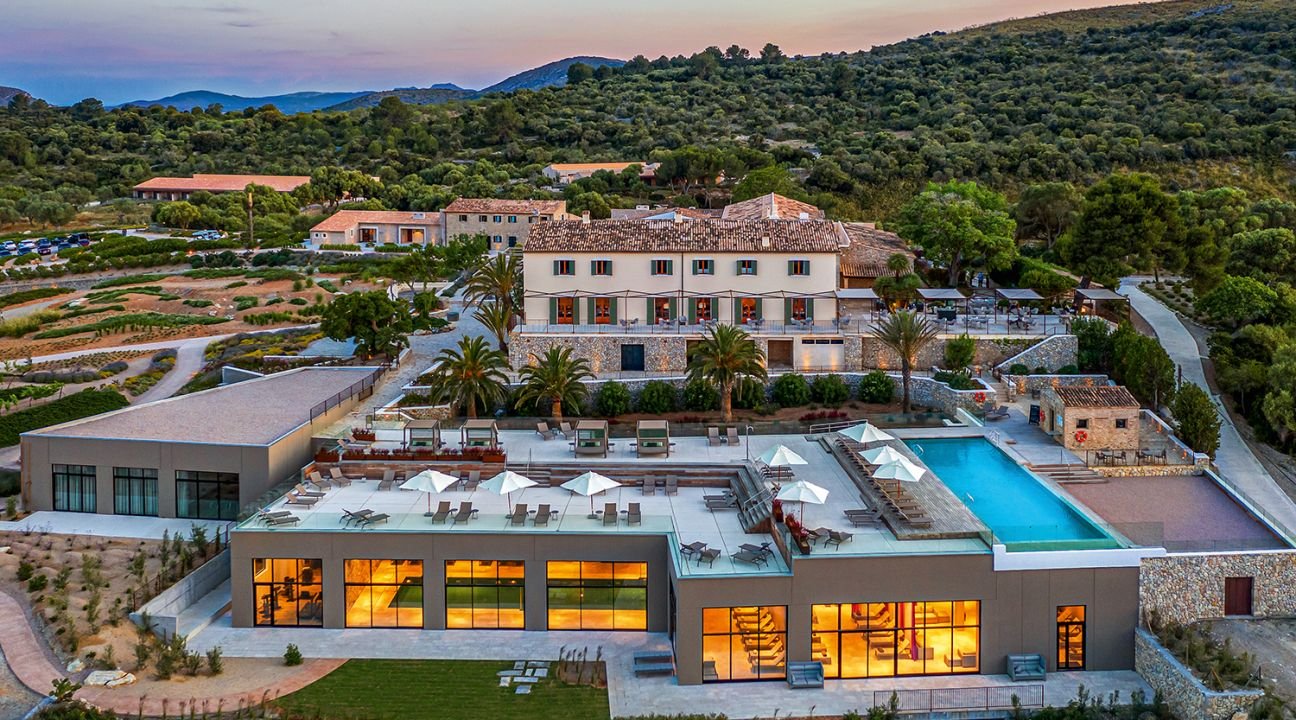
Stone, Silence, and the Northeast Corner of Mallorca
The road to Artà from Palma runs northeast through almond groves and limestone ridges before the island's interior opens into something less visited and more austere than the resort coastline to the south. This corner of Mallorca has always attracted a different kind of traveller: one drawn to the Serra de Llevant rather than the Serra de Tramuntana, to village markets over marina lunches. Carrossa Hotel & Spa sits within this quieter geography, on an estate road (Camí de Carrossa, KM 3.4) that signals from the outset that arrival here is deliberate, not accidental.
Rural hotel properties on Mallorca have split into two broad tiers. The first is the large, amenity-heavy resort that happens to use stone cladding and local olive oil in its branding. The second is the smaller, estate-rooted property where the physical fabric of the building, its age, its materiality, and its relationship to the surrounding land, does most of the communicative work. Carrossa sits firmly in the latter category. That positioning is confirmed by its 95.5-point score in La Liste's 2026 Leading Hotels ranking, a list that weights guest experience and property character alongside conventional hospitality metrics, and one that places Carrossa among the most highly regarded rural hotels in Spain.
The shortlist, unlocked.
Hard-to-book tables, cellar releases, and concierge-planned trips.
Get Exclusive Access →Architecture as Argument
Mallorcan vernacular architecture is not decorative. The thick-walled construction that defines the island's traditional finca typology was a practical response to Mediterranean heat: walls that absorb warmth through the day and release it slowly overnight, deep window reveals that shade interiors from direct sun, and stone sourced locally because importing materials over water was expensive. At Carrossa, this logic is not reconstructed for aesthetic effect; it is the building's actual condition. The property's stone construction and estate setting place it in a lineage of rural Mallorcan properties that were built to endure rather than to impress, and the distinction matters when you are spending several days inside a space.
That architectural honesty is what separates this tier of Mallorcan property from competitors that apply a rustic aesthetic to otherwise contemporary hotel infrastructure. Properties such as Hotel Can Ferrereta in Santanyí and La Residencia, A Belmond Hotel, Mallorca occupy adjacent positions in this cohort, each using a historic built structure as the frame for a considered hospitality offering. What they share is a commitment to the building's existing character rather than a redesign that erases it. Across Spain, a similar instinct is visible at Abadía Retuerta LeDomaine in Teruel and Terra Dominicata in Escaladei, both of which use agricultural or monastic heritage structures as the basis for high-end rural accommodation.
The spa element at Carrossa fits within a broader shift in rural Mallorcan hospitality. Wellness infrastructure has become a near-standard component at properties in this tier, partly because the island's outdoor character (walking, cycling, open water) generates the kind of physical activity that makes recovery programming genuinely useful rather than cosmetic. The presence of spa facilities here is less a marketing differentiator than a functional acknowledgment of how guests actually use the surrounding landscape.
Artà and the Northeast Question
Artà itself is worth understanding as a context, not merely a postcode. The town sits above a plain overlooked by the Sanctuary of Sant Salvador, and its weekly market has remained a working market rather than a tourist-facing spectacle. The northeast of Mallorca, from Artà down through the Llevant coast to Cala Ratjada, has developed more slowly than the southwest, which means the infrastructure is thinner but the landscape is less managed. For a detailed breakdown of where to eat and drink in the area, our full Artà restaurants guide covers the options worth knowing. Es Raco d'Artà is the other property in the town worth benchmarking against for guests comparing accommodation options in this specific area.
The island's west and southwest, anchored by Palma and Deià, carry most of the international hospitality profile. Hotel Can Cera in Palma and the Belmond property in Deià represent that more established, better-signposted circuit. Carrossa is the argument for going further east, accepting a longer transfer from Palma airport in exchange for a less travelled approach to the island.
Where Carrossa Sits in the Broader Spanish Rural Hotel Picture
La Liste's 95.5-point score for 2026 places Carrossa in serious company within Spain's rural and boutique hotel sector. For context, properties earning scores in this range on La Liste tend to sit alongside urban flagships and internationally recognised destination hotels. The score is not a guarantee of any single attribute; La Liste aggregates across multiple review and data sources to produce its rankings. But a 95.5 in 2026 is a signal that Carrossa is performing consistently across the metrics that matter to discerning long-haul and European travellers.
Across Spain, properties that earn comparable recognition tend to operate at a specific intersection: historic or architecturally distinctive physical fabric, a location with genuine landscape interest rather than manufactured scenery, and a hospitality format that does not try to replicate an urban five-star template in a rural context. Atrio Restaurante Hotel in Cáceres, Mas de Torrent Hotel & Spa in Torrent, and Cap Rocat in Cala Blava each occupy versions of this position in their respective regions. Carrossa's placement in northeast Mallorca gives it a geographic distinctiveness within the island's own competitive set that the score reflects.
Planning Your Stay
Mallorca's peak season runs from late May through September, with August representing the most congested period across the island's roads and ferry connections. The northeast corner of the island is less affected by this pressure than the Palma-to-Andratx corridor or the Port de Pollença area, but accommodation at properties of this size books ahead regardless of season. The La Liste recognition for 2026 will increase international attention, and guests targeting specific dates in summer should treat advance booking as essential rather than optional. The shoulder seasons, April through May and October, offer the most reliable combination of workable weather and availability.
Guests arriving via Palma airport should factor in a drive of approximately 75 kilometres to Artà, which translates to roughly an hour to an hour and fifteen minutes depending on traffic and route. There is no meaningful public transport connection to the estate address; a hire car or private transfer is the practical approach. For those building a broader Balearic itinerary, Can Alberti 1740 Hotel Boutique in Mahón on Menorca and BLESS Hotel Ibiza represent the peer-level options on the other two main islands, though the character of those properties is entirely different from what Carrossa offers.
Frequently Asked Questions
- Is Carrossa Hotel & Spa more formal or casual?
- Rural estate properties in northeast Mallorca, including Carrossa, operate at a level that is considered rather than casual, but not ceremonially formal. The setting and architecture establish a certain seriousness, and the La Liste 95.5-point score for 2026 confirms a high standard of hospitality delivery. Guests should expect a polished experience without the dress-code formality associated with urban five-star properties in cities such as Madrid or Barcelona.
- Which room offers the leading experience at Carrossa Hotel & Spa?
- Specific room-category data is not available in our current records. Properties at this tier and La Liste score level typically differentiate rooms by size, views, and terrace access. Guests should contact the property directly or consult a travel specialist to identify which category leading suits their priorities, particularly if landscape views or private outdoor space are the deciding factor.
- What is the standout thing about Carrossa Hotel & Spa?
- The combination of genuine vernacular architecture on an estate site in northeast Mallorca, with a La Liste 2026 score of 95.5 points, is what distinguishes Carrossa from the broader field of rural Mallorcan accommodation. The northeast positioning is itself a differentiator: this is not the Tramuntana or the Palma orbit, and guests who choose Artà are making a different kind of decision about the island.
- Is Carrossa Hotel & Spa reservation-only?
- Phone and direct booking details are not held in our current records. Given the property's La Liste recognition and the limited capacity typical of estate hotels in this category, advance reservation is strongly advisable. Guests should use the official website or contact the property directly to confirm availability and booking procedures, particularly for peak summer dates.
At-a-Glance Comparison
These are the closest comparables we have in our database for quick context.
| Venue | Cuisine | Price | Awards | Notes |
|---|---|---|---|---|
| Carrossa Hotel & Spa | This venue | |||
| Mandarin Oriental Ritz, Madrid | Michelin 3 Key | |||
| Four Seasons Hotel Madrid | Michelin 2 Key | |||
| La Residencia, A Belmond Hotel, Mallorca | Michelin 2 Key | |||
| Mandarin Oriental Barcelona | Michelin 2 Key | |||
| Rosewood Villa Magna | Michelin 2 Key |
Preferential Rates?
Our members enjoy concierge-led booking support and priority upgrades at the world's finest hotels.
Get Exclusive AccessThe shortlist, unlocked.
Hard-to-book tables, cellar releases, and concierge-planned trips.
Get Exclusive Access →