

Positioned at the southern tip of Attica, 67 kilometres from Athens, Cape Sounio – A Grecotel Resort to Live occupies one of the most historically charged coastal sites in Greece, with the Temple of Poseidon visible across the bay. A Regional Winner for Luxury Resort and Continent Winner for Luxury Beach Retreat, it holds a Star Wine List award (2026) and sits at a tier above standard Athens Riviera accommodation.
Pearl is the En Primeur Club membership app — saves, bookings, and concierge access live there. Same editors, same standards.
- Address
- 67 km Athens, Sounio Road, Sounio
- Phone
- 30-22920-69700
- Website
- grecotel.com
- Directions
- Get directions
 Saves & bookings on Pearl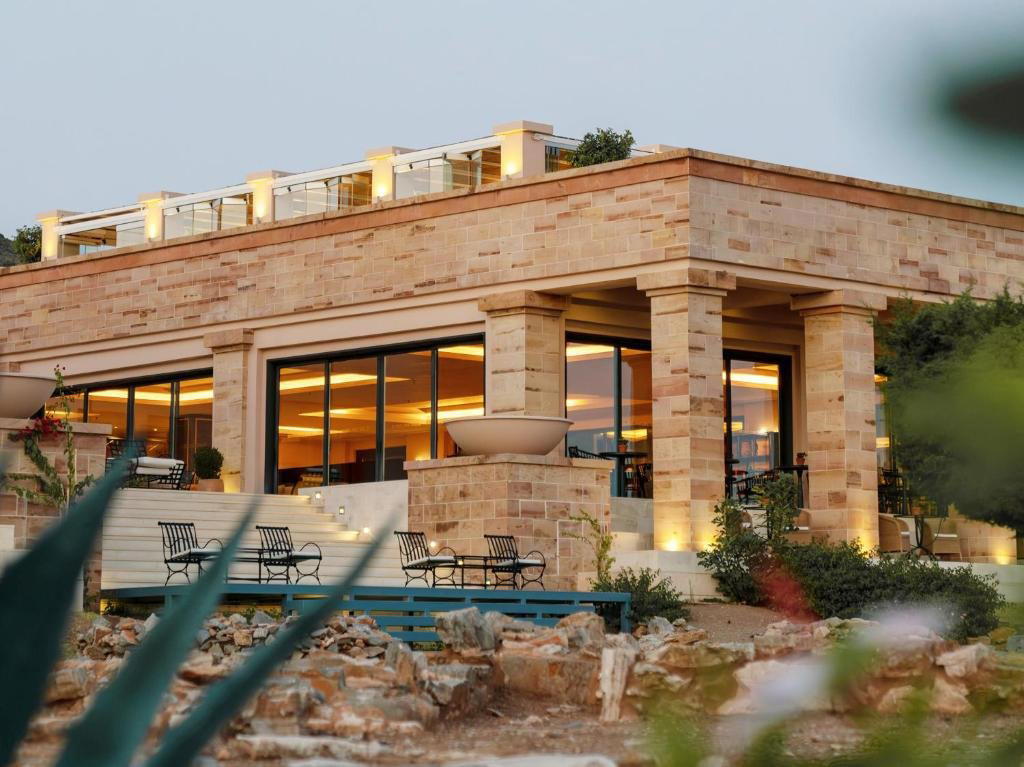
Where the Aegean Meets Ancient Stone
The Athens Riviera has long operated as a two-speed coastal corridor: a string of beach clubs and mid-range hotels within easy reach of the capital, and a smaller tier of destination properties that treat the coastline as a genuine end-point rather than a weekend detour. Cape Sounio – A Grecotel Resort to Live sits firmly in the second category, positioned at the 67-kilometre mark along the Sounio Road where the land narrows and the Aegean opens on three sides. The approach matters here. The coastal drive south from Athens is its own editorial statement, the road hugging cliffs above water that shifts from pale turquoise near the shore to deep Prussian blue at the horizon. Arriving at the property, the Temple of Poseidon appears across the bay, rising on its promontory in a way that makes the 5th-century BCE structure feel less like a monument and more like a neighbour.
That relationship between the built environment and the ancient one is the defining spatial tension at Cape Sounio. Very few coastal resorts in Greece can claim an unobstructed sightline to a UNESCO-level archaeological site as part of their standard guest experience. The Grecotel group, which also operates Amirandes in Heraklion, has positioned Cape Sounio within its premium "Resort to Live" sub-brand, a designation that signals a more architecturally considered, longer-stay orientation than the group's volume properties.
The Architecture of Place
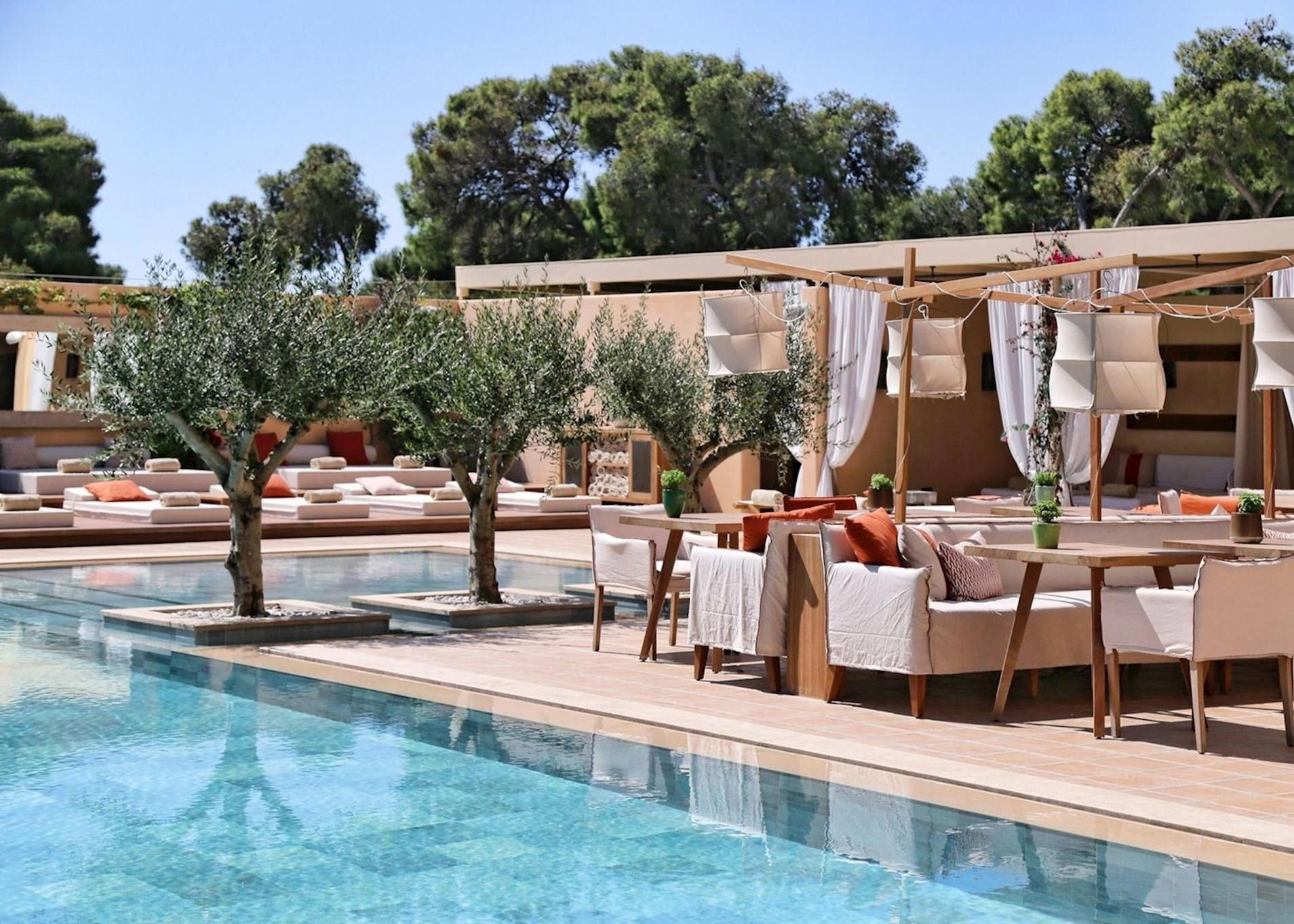
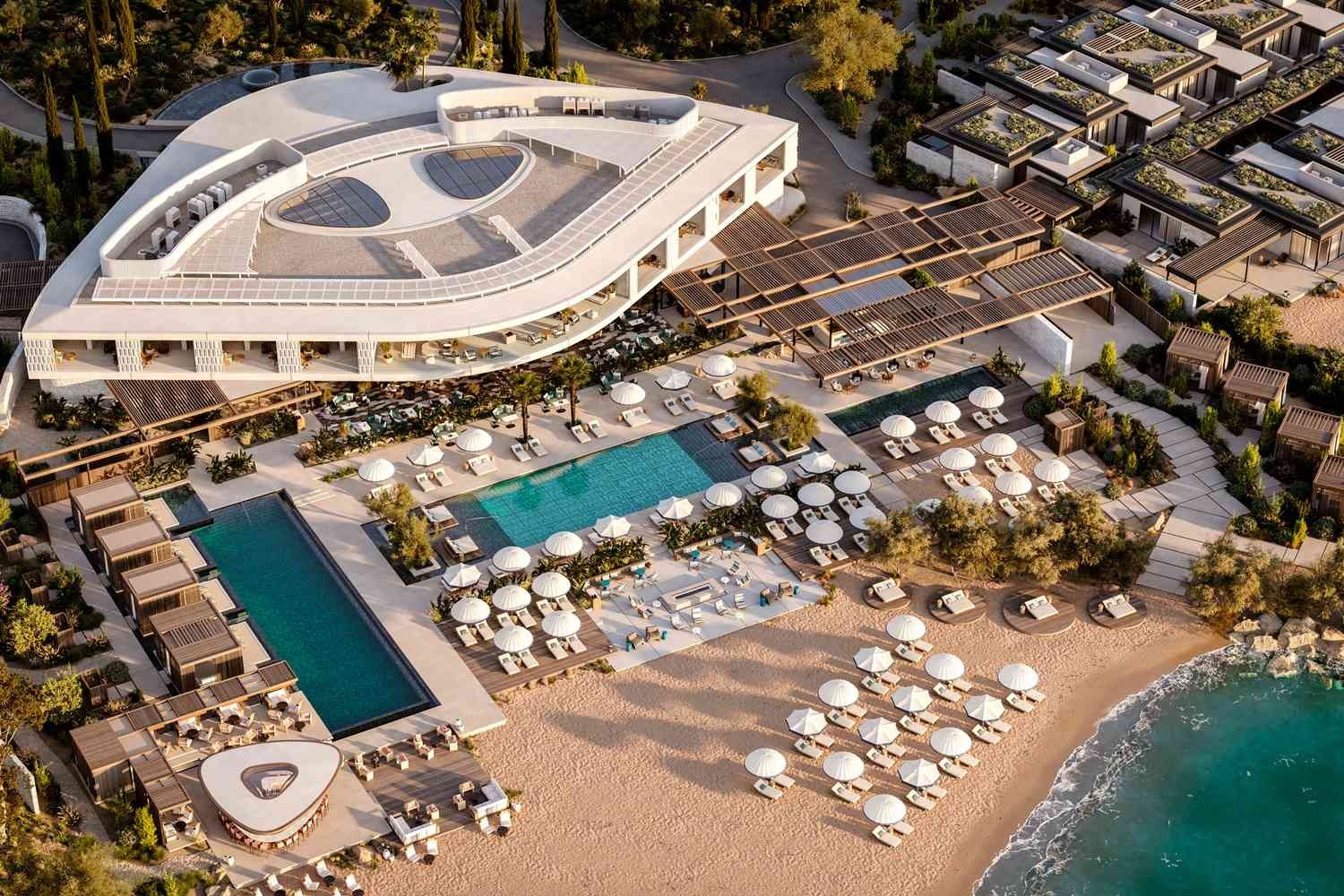
The design logic at this tier of the Athens Riviera tends to split between two orientations: properties that import a generic Mediterranean-luxury vocabulary regardless of site, and those that use local materiality and topography as the primary design driver. Cape Sounio belongs to the latter. The resort is arranged across pine-covered terrain on a natural promontory, which means that circulation between spaces is as much about landscape as it is about interior architecture. Stone pathways, terraced structures that follow the slope rather than flatten it, and an insistence on framing the sea at every turn are the grammar of the place.
This approach connects Cape Sounio to a broader tradition in Greek luxury hospitality that has gained international recognition over the past decade, one in which the physical setting is treated as load-bearing rather than decorative. Properties like Amanzoe in Porto Heli, which employs a neo-classical pavilion language drawn from the surrounding Peloponnesian landscape, operate on a similar principle. The difference at Cape Sounio is the density of historical charge in the immediate viewshed. You are not simply looking at a beautiful coast; you are looking at a site where ancient Greeks built a temple to the god of the sea precisely because the promontory commands attention from every vessel passing through the Saronic Gulf.
For guests making comparisons across the Grecotel portfolio or wider Greek luxury tiers, Cape Sounio occupies a different competitive frame than an island property like Amoudi Villas in Oia or a design-forward Cycladic option such as Andronis Minois in Paros. The proposition here is archaeological proximity married to coastal resort comfort, a combination that plays particularly well for guests who want historical depth alongside beach access without committing to a full island itinerary.
Wine Recognition and On-Site Dining
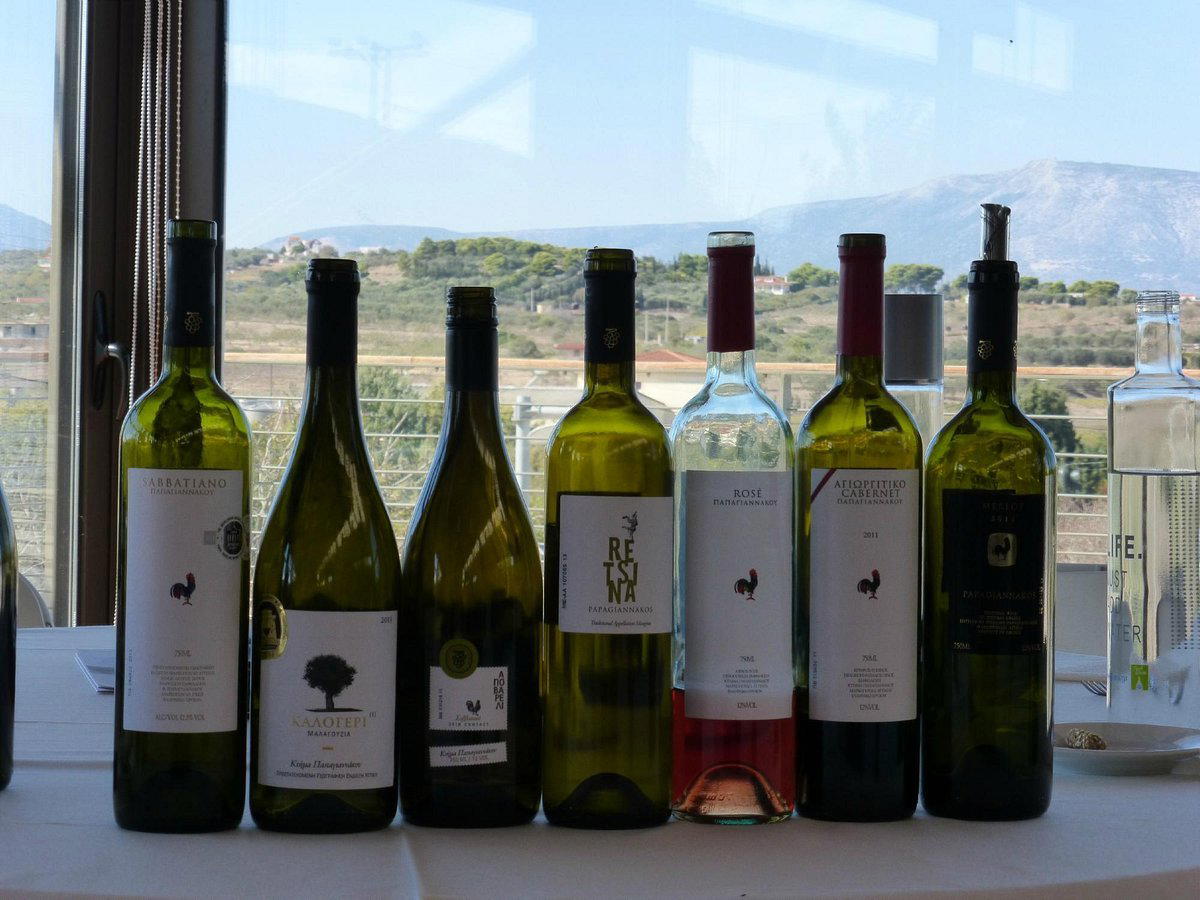
Cape Sounio holds a Star Wine List award for 2026, placing its wine program inside a peer group recognised for selection depth and list curation rather than volume. In the Athens Riviera context, this is a meaningful distinction. Resort wine programs in Greece have historically leaned on reliable labels from Nemea or Santorini with limited investment in list architecture. A Star Wine List accreditation suggests the opposite: a list built with editorial intent, likely featuring indigenous Greek varietals alongside international benchmarks, and priced and presented to reward guests who arrive with a specific point of view rather than defaulting to house pours.
For guests comparing wine-forward coastal stays across the Greek mainland and islands, properties like Le Méridien Sissi Crete or Abaton Island Resort in Chersonisos represent the broader competitive range of resort dining. Cape Sounio's 2026 wine recognition puts it in a more selective sub-tier of that field.
Awards and Competitive Position
The property holds two major hospitality awards: Regional Winner in the Luxury Resort category and Continent Winner for Luxury Beach Retreat. The continental designation is the more significant signal. At that level, the comparison set is no longer other Greek coastal resorts but luxury beach properties across Europe and potentially the wider Mediterranean basin. Properties that achieve continent-level recognition in the beach retreat category typically do so on the strength of site quality, architectural coherence, and a service model calibrated to longer stays rather than high turnover. Cape Sounio's position on this list places it in a peer group that includes properties well above the standard Athens Riviera offering, closer in competitive terms to a property like the Four Seasons Astir Palace Hotel Athens than to mid-range coastal accommodation along the Attica coast.
For travellers building a Greece itinerary around verified quality signals, this combination of awards creates a clear case for Cape Sounio as an Athens-adjacent base that punches above the typical day-trip infrastructure of the cape area. Other recognised Crete properties such as Acro Suites in Agia Pelagia and Anemos Luxury Grand Resort in Chania offer comparable award-tier assurance but in a different island context. Cape Sounio's advantage is its proximity to Athens combined with a site that delivers the kind of historical specificity most island properties cannot replicate.
Getting There and Planning Your Stay
The property sits 67 kilometres south of Athens along the coastal Sounio Road, a drive that takes approximately 90 minutes from the city centre depending on traffic. The route itself follows the eastern Attic coast and is most direct from Athens International Airport via the Attiki Odos ring road before joining the coastal highway south. For guests arriving from abroad, Athens functions as the natural gateway; the airport is among the most connected in the Eastern Mediterranean, with direct services from major European hubs. The temple of Poseidon at Cape Sounio itself operates on seasonal hours and is a short distance from the resort, making it accessible as an evening visit when the crowds thin and the light on the marble columns shifts toward amber.
Guests considering the wider Greek luxury circuit can use Cape Sounio as either an anchor or a first stop. From Athens, connections to island properties like Pegasus Suites in Fira, Eréma in Milos, or Gundari in Petousis are all feasible by ferry or short domestic flight. For the full Athens Riviera and Attica context, our Sounio restaurants and venues guide covers the broader area in detail.
Recognition history
Dated appearances from independent guides and award organizations, with the underlying list record or original source where available.
Star Wine List
Star Wine List
World Luxury Hotel Awards WLHA Regional Winner
World Luxury Hotel Awards
World Luxury Hotel Awards WLHA Continent Winner
World Luxury Hotel Awards
Continue exploring
More in Sounio
Hotels in Sounio
Browse all →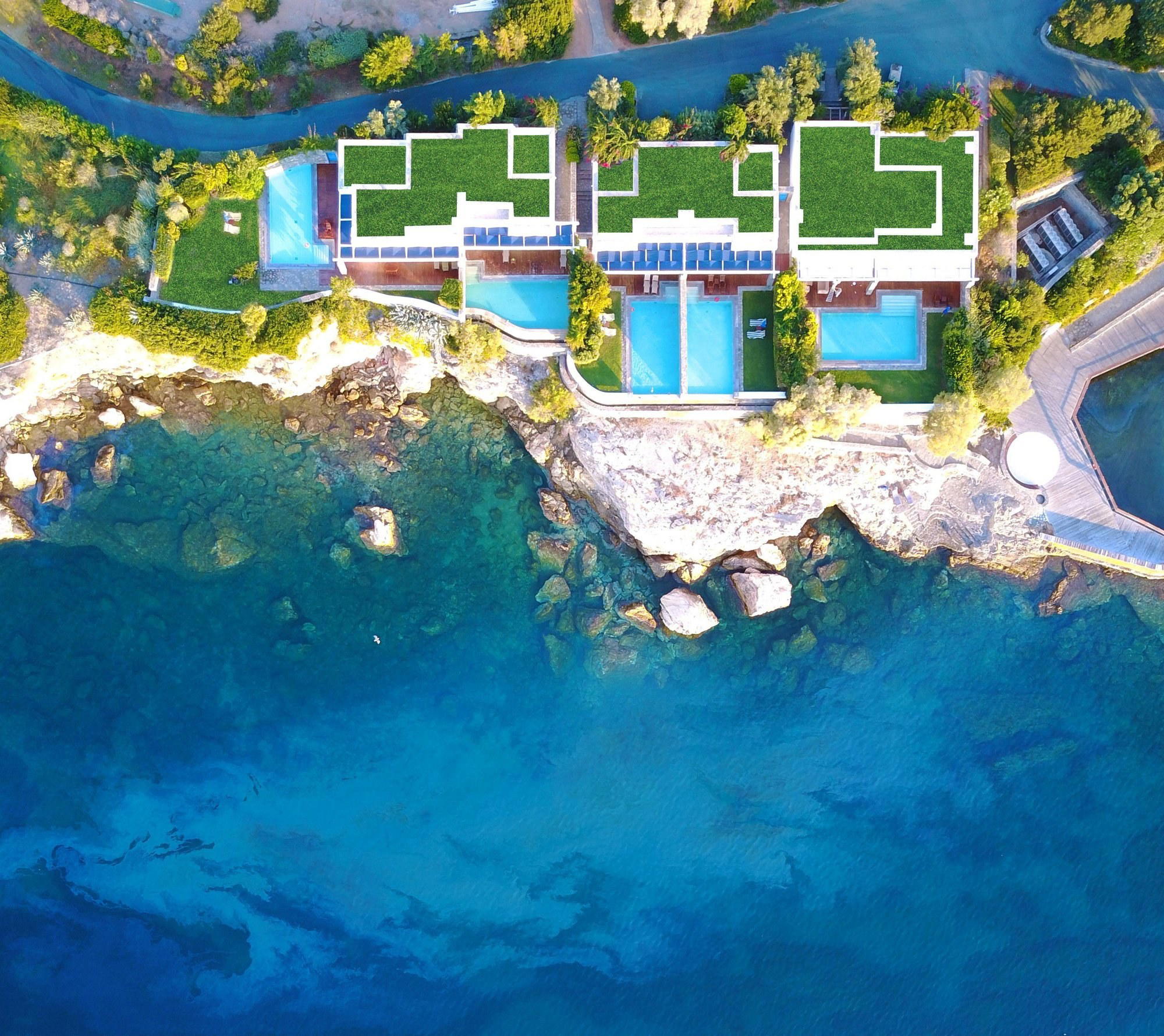
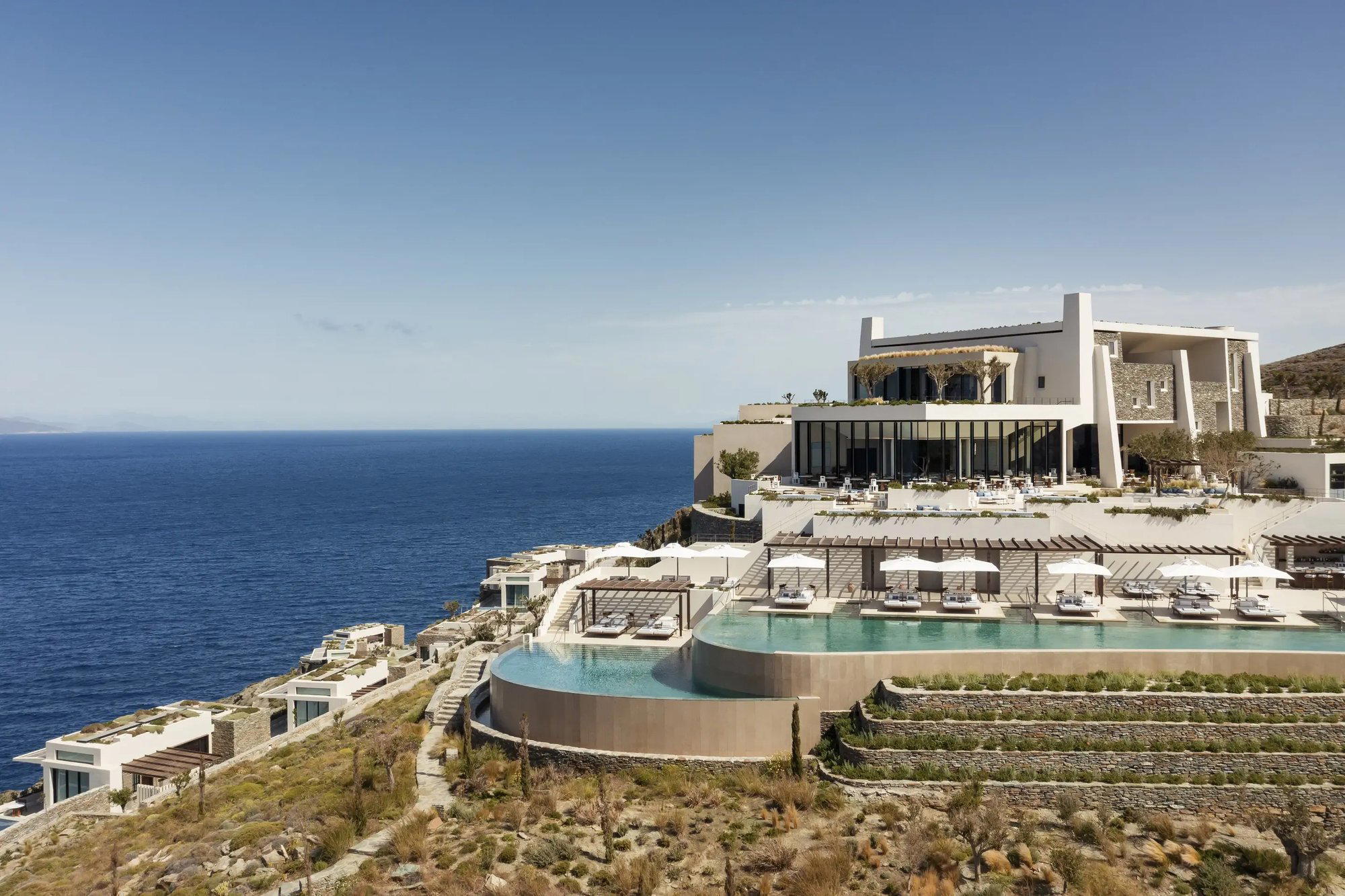
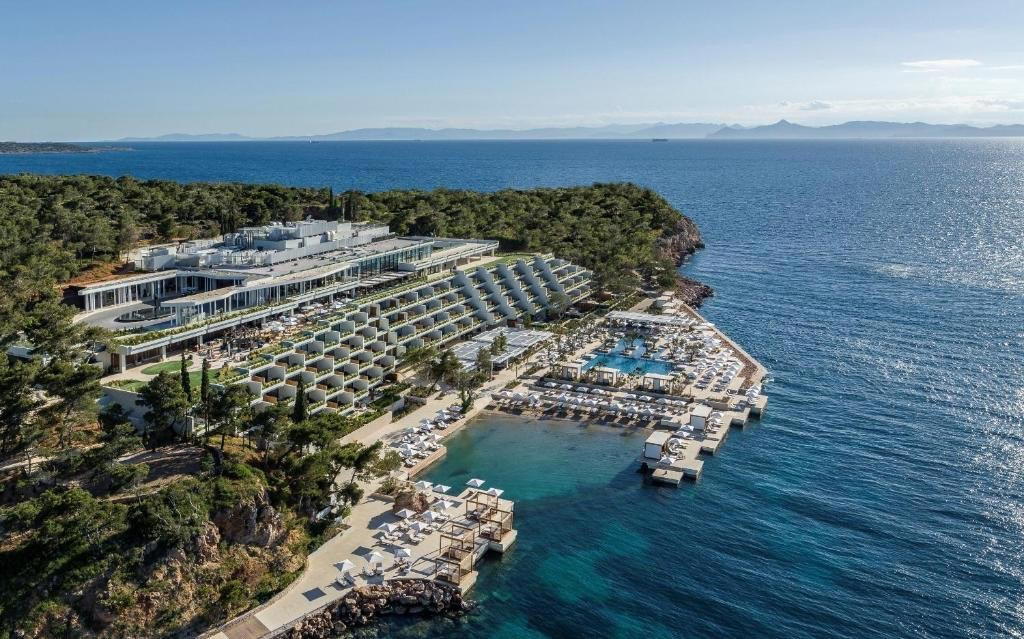
Bars in Sounio
Browse all →
Restaurants in Sounio
Browse all →

At a Glance
- Romantic
- Scenic
- Elegant
- Sophisticated
- Honeymoon
- Romantic Getaway
- Family Vacation
- Wellness Retreat
- Anniversary
- Destination Wedding
- Beachfront
- Infinity Pool
- Private Villa
- Destination Spa
- Panoramic View
- Private Dining
- Waterfront
- Garden
- Terrace
- Wi Fi
- Pool
- Spa
- Fitness Center
- Room Service
- Concierge
- Kids Club
- Beach Access
- EV Charging
- Tennis
- Waterfront
- Garden
- Wi Fi
- Pool
- Spa
- Fitness Center
- Room Service
- Concierge
- Kids Club
- Beach Access
- EV Charging
- Tennis
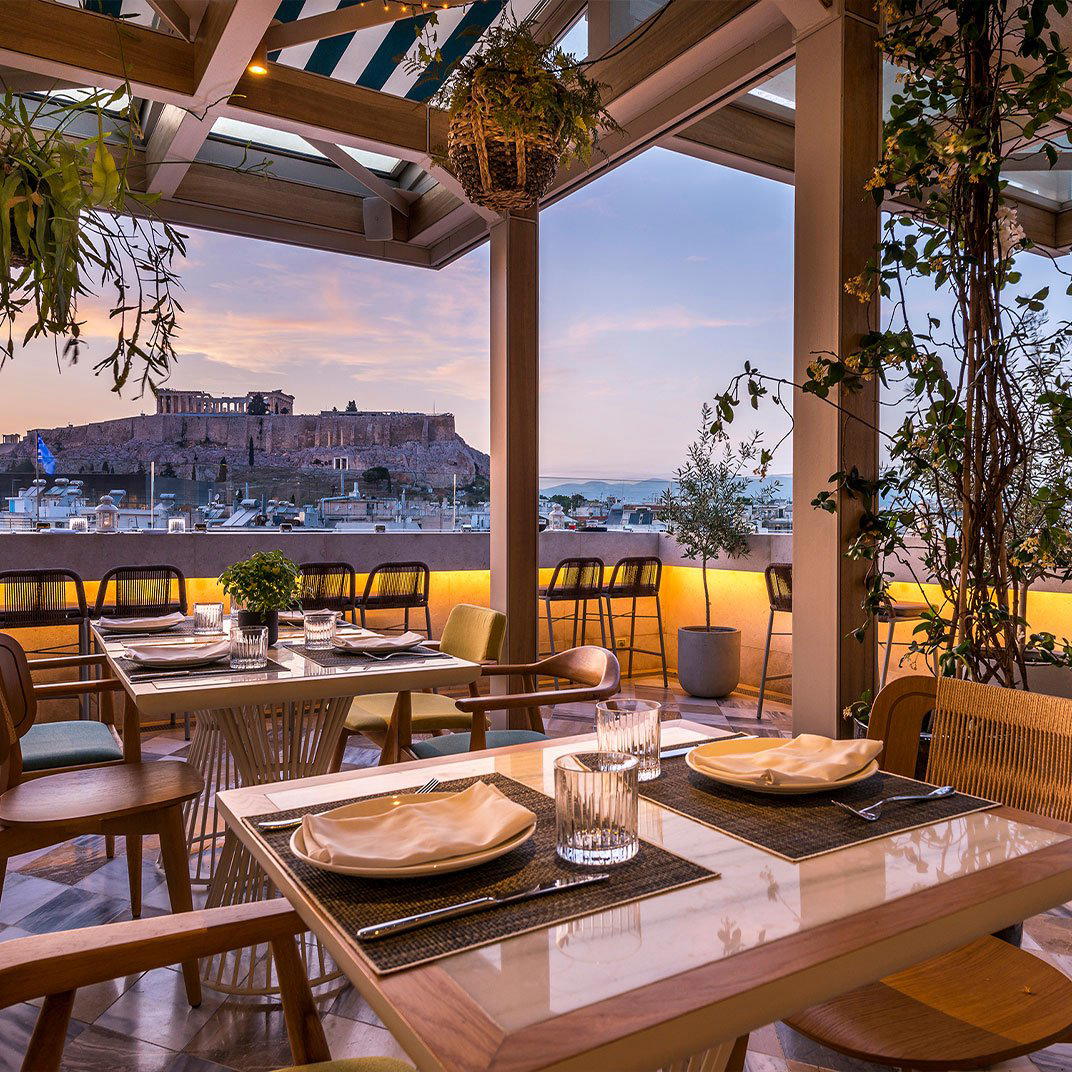
Serene and sophisticated with natural light flooding through airy interiors, terracotta-hued architecture blending into unspoiled landscape, and tranquil views of the Aegean Sea and ancient temple.