CAMP-of-the-WOODS
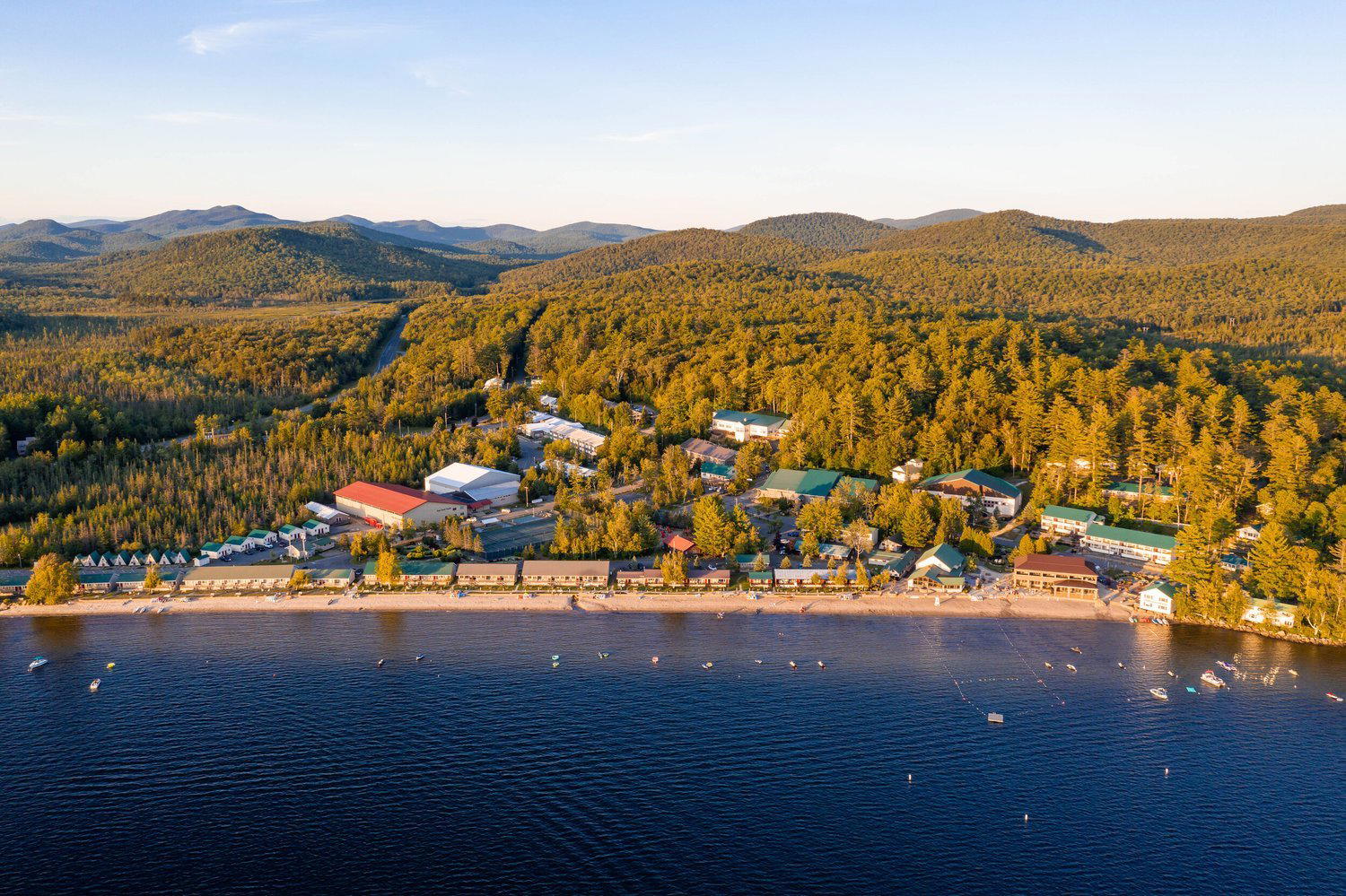
CAMP-of-the-WOODS pairs 100 rooms with pool and beach access at 106 Downey Ave, and mountain views suit travelers who want on-site dining and a quiet base.
Pearl is the En Primeur Club membership app — saves, bookings, and concierge access live there. Same editors, same standards.
- Address
- 106 Downey Ave, Speculator, NY 12164
- Phone
- +1 518 548 4311
- Website
- camp-of-the-woods.org
- Directions
- Get directions
 Saves & bookings on Pearl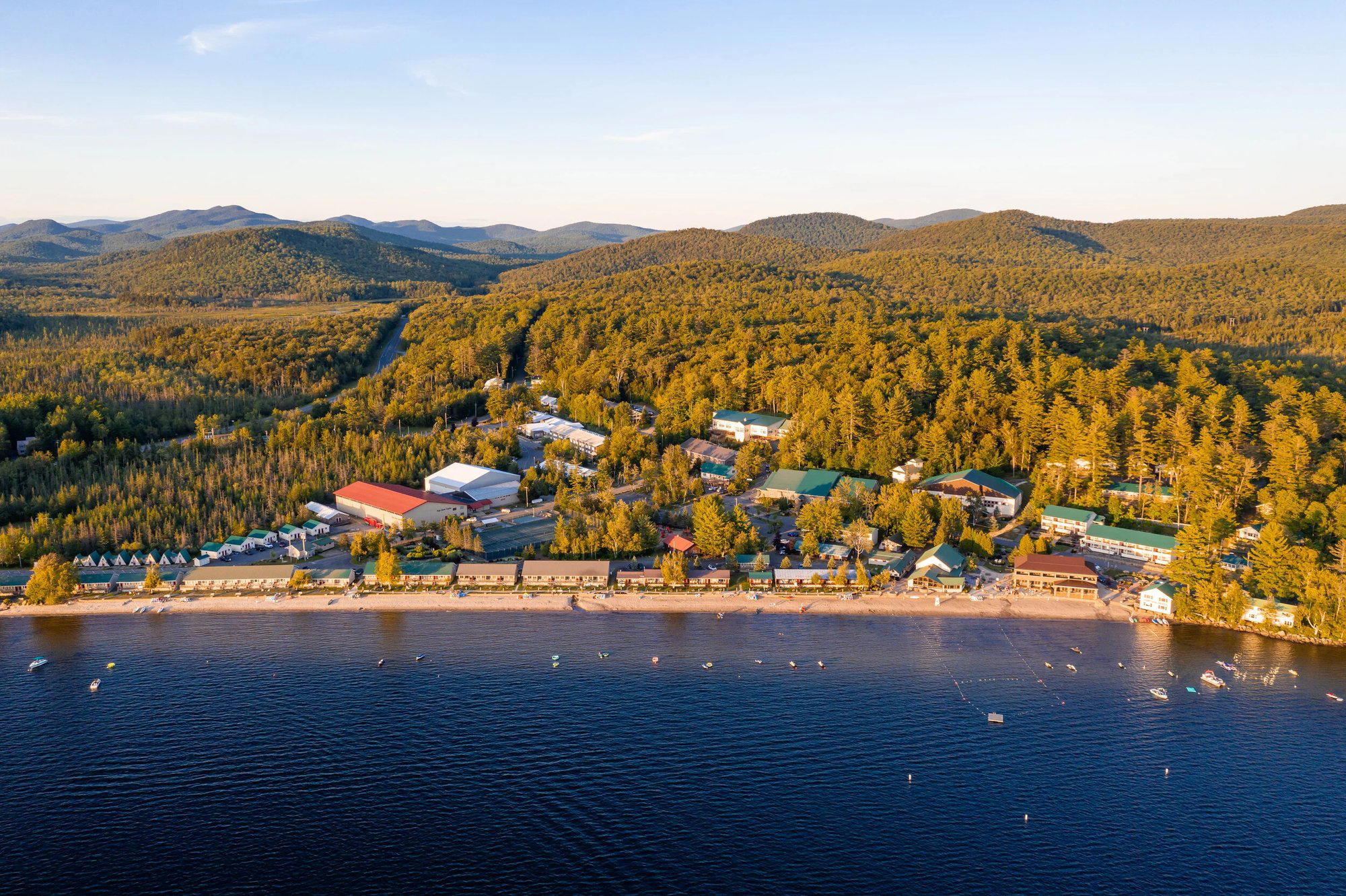
Deep in the Adirondacks: What Camp Architecture Actually Means
The Adirondack Great Camp tradition is one of American architecture's more specific achievements. From the late nineteenth century onward, wealthy families commissioned sprawling, deliberately rustic compounds along the lakes and forests of upstate New York, buildings that rejected Victorian ornament in favor of rough-hewn timber, native stone, and structures that appeared to grow from the land rather than sit on top of it. That tradition produced a recognizable idiom: covered walkways between buildings, open porches oriented toward water, interiors that mixed hunting-lodge functionality with a certain theatrical wildness. CAMP-of-the-WOODS is a hotel at 106 Downey Ave, Speculator, NY 12164. The surrounding southern Adirondacks shaped its physical logic before any architect ever drew a plan. The property has 100 rooms.
Speculator itself is a small lakeside settlement on Lake Pleasant in Hamilton County, one of the least densely populated counties in New York State. The town draws visitors from the Albany corridor and from downstate, but it has not been absorbed into the mass-market resort circuit that has reshaped parts of the Lake George or Lake Placid zones. That relative quietness is not accidental. Hamilton County's terrain, its distance from interstate arteries, and its comparatively limited commercial development have kept the area within a specific register of Adirondack experience: working forests, genuine dark skies, and a proportionally small year-round population. Arriving in Speculator, particularly in the warmer months, means arriving somewhere that still reads as a destination rather than a throughway.
The Physical Logic of a Great Camp Setting
The Great Camp format, as architectural historians have documented it, solved a specific problem: how to house extended families and their guests in a wilderness setting without either roughing it in the frontier sense or importing the conventions of a city hotel. The answer was a campus model, multiple structures grouped around a common landscape, with each building serving a defined purpose. The main lodge anchored the social life; satellite cabins provided privacy; boathouses and recreation facilities pushed outward toward the water. The result was a kind of distributed domesticity that could be calibrated to the scale of the family using it.
That campus logic remains visible across the surviving Great Camps of the Adirondacks, from the state-owned Camp Sagamore to Uncas and beyond. It also informs the broader experience at places like CAMP-of-the-WOODS, where the spatial relationship between structures, open ground, and waterfront defines the rhythm of a stay more than any single building does. When evaluating a camp-format property in this region, the question is less about room design in isolation and more about how the campus holds together: whether the path from cabin to dining hall to lake feels intentional, whether the transitions between spaces reinforce or interrupt the atmosphere.
Across the American retreat category, properties that have held this campus logic most consistently tend to produce stronger guest loyalty than single-building resorts of comparable amenity. The Adirondack format creates a particular intimacy, a sense that the grounds themselves are part of the accommodation, not just a setting for it. Properties in comparable positions, from Blackberry Farm in Walland in Tennessee to Troutbeck in Amenia in the Hudson Valley, have each demonstrated that the campus model, when executed with consistency, creates a competitive position that standard hotel formats find difficult to replicate.
Placing CAMP-of-the-WOODS in Its comparable set
Within the northeastern wilderness retreat category, properties occupy a spectrum that runs from rustic family camp on one end to design-forward luxury lodge on the other. The Adirondack market skews toward the former more than, say, the Montana or Wyoming mountain resort market, where properties like Amangani in Jackson Hole or Sage Lodge in Pray have positioned themselves firmly in the high-design luxury tier. The Adirondacks' appeal is partly the opposite: a resistance to over-programming and high-polish finish that reads, to the right traveler, as integrity rather than deficiency.
CAMP-of-the-WOODS operates in Speculator, which places it outside the higher-traffic Adirondack corridors. That positioning is relevant because it shapes who uses the property and how. Guests arriving here are not passing through on the way to somewhere else. The journey to Speculator from New York City runs roughly four hours by car, long enough to function as a genuine transition from urban to wilderness register. In this sense, the logistical friction of reaching the property reinforces the experience of arriving at it. For contrast, properties closer to interstate access, like those in the Lake George corridor, have broader walk-in traffic but also more of the commercial texture that comes with it.
The broader category of American wilderness retreat has seen meaningful investment over the past decade, with properties like Post Ranch Inn in Big Sur, Canyon Ranch Tucson in Tucson, and Little Palm Island Resort & Spa in Little Torch Key each capturing distinct geographic niches. The Adirondack camp format serves a different appetite: less spa-architecture, more lake-and-forest immersion, with a program that tends toward outdoor activity rather than interior wellness.
Planning a Visit
Speculator sits in the southern Adirondacks, accessible by car via Route 30 north from the Albany area. The town has limited commercial infrastructure, which makes planning ahead the practical approach rather than an optional one. The Adirondack summer season, roughly late June through Labor Day, represents peak demand across the region, and camp-format properties in Hamilton County tend to fill their better accommodation well in advance of that window. Early-season visits in late May or early June trade peak foliage and warm swimming conditions for meaningfully quieter grounds. Fall foliage in the Adirondacks typically peaks in early to mid October, which has its own draw for guests less interested in lake-centered activity.
For those building a broader itinerary through the northeastern United States, the hotel combines logically with Hudson Valley properties: Troutbeck in Amenia sits roughly two to two-and-a-half hours south, offering a different register of countryside stay before or after the Adirondack portion. New York City serves as the natural entry or exit point, with properties like Aman New York in New York City or The Fifth Avenue Hotel in New York City providing an urban counterpoint.
A Quick Peer Check
Comparable venues nearby, for context on price, style, and recognition.
| Venue | Cuisine | Price | Notes |
|---|---|---|---|
| CAMP-of-the-WOODSThis venue — the venue you are viewing | Christian family resort with Great Camp-style architecture using native logs and stone. | $$ | Not listed |
| Camptown Catskills | Renovated 1930s motor lodge with distinctive cabins on wooded acres | $$ | Leeds |
| Lake George / Saratoga KOA Journey | rustic campground with cabins and RV sites | $$ | Lake Luzerne |
| The Webster | blends classic New York charm with a fresh, modern edge | $$$ | Times Square |
| The Jane Hotel | historic nautical pod hotel | $ | West Village |
| Freehand New York | Adaptive reuse of historic 1928 George Washington Hotel with restored interiors and modern artistic touches. | $$ | Gramercy |
Continue exploring
More in Speculator

At a Glance
- Rustic
- Scenic
- Cozy
- Family Vacation
- Group Retreat
- Weekend Escape
- Beachfront
- Historic Building
- Pool
- Beach Access
- Mountain
- Pool
- Beach Access
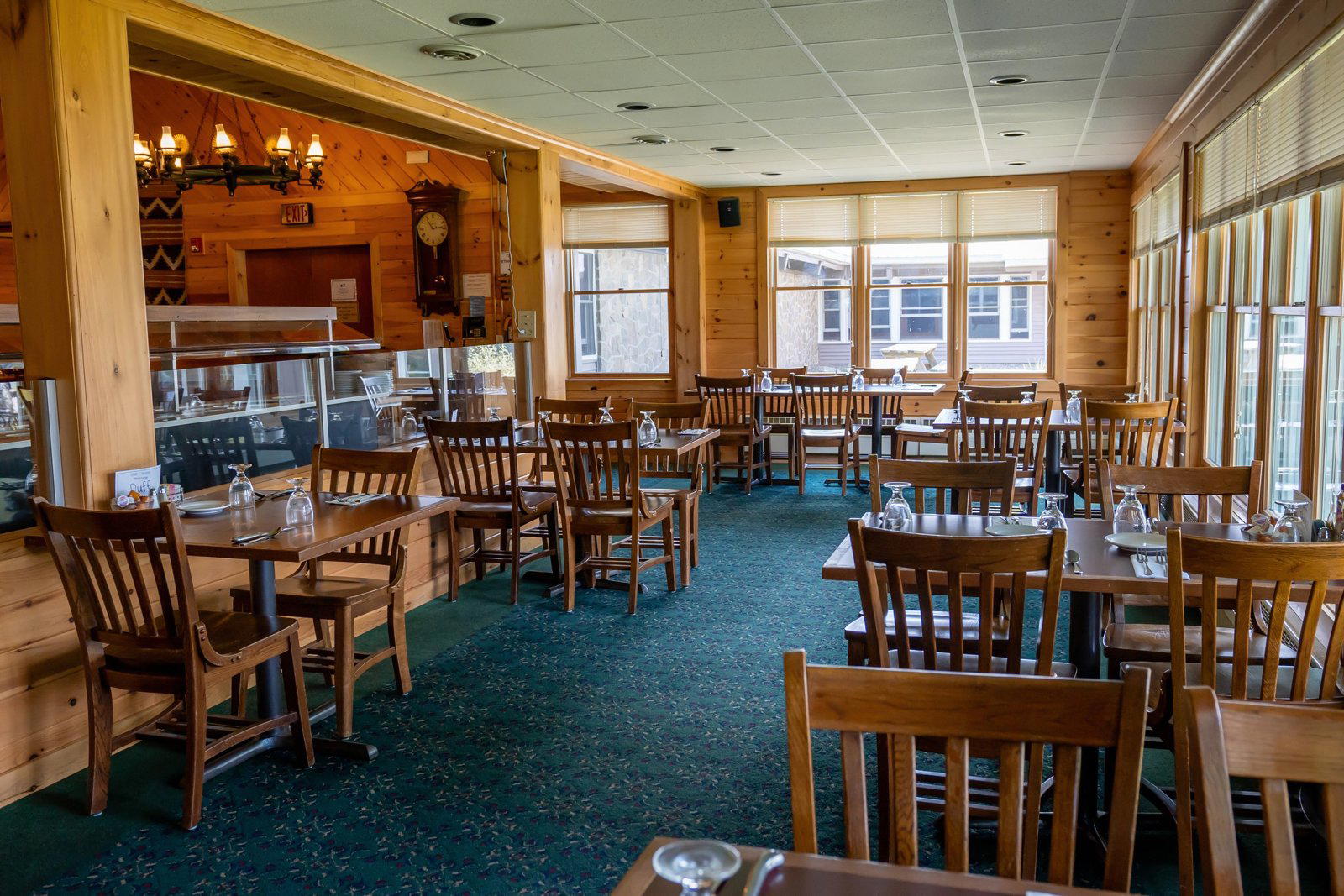
Relaxing and wholesome atmosphere in a family-oriented Christian retreat surrounded by Adirondack mountains and lakes.