
Tepoztlán's first high-end boutique hotel places 37 rooms inside a design vocabulary that draws from colonial stonework, timber beams, and Aztec cultural heritage. Rates from $384 put it in a distinct tier for the region, where the offer extends from a locally sourced restaurant to spa treatments rooted in pre-Columbian ritual. For travellers already looking past Mexico's beach corridor, this is the property that makes the mountain town a credible destination.
 Discover on Pearl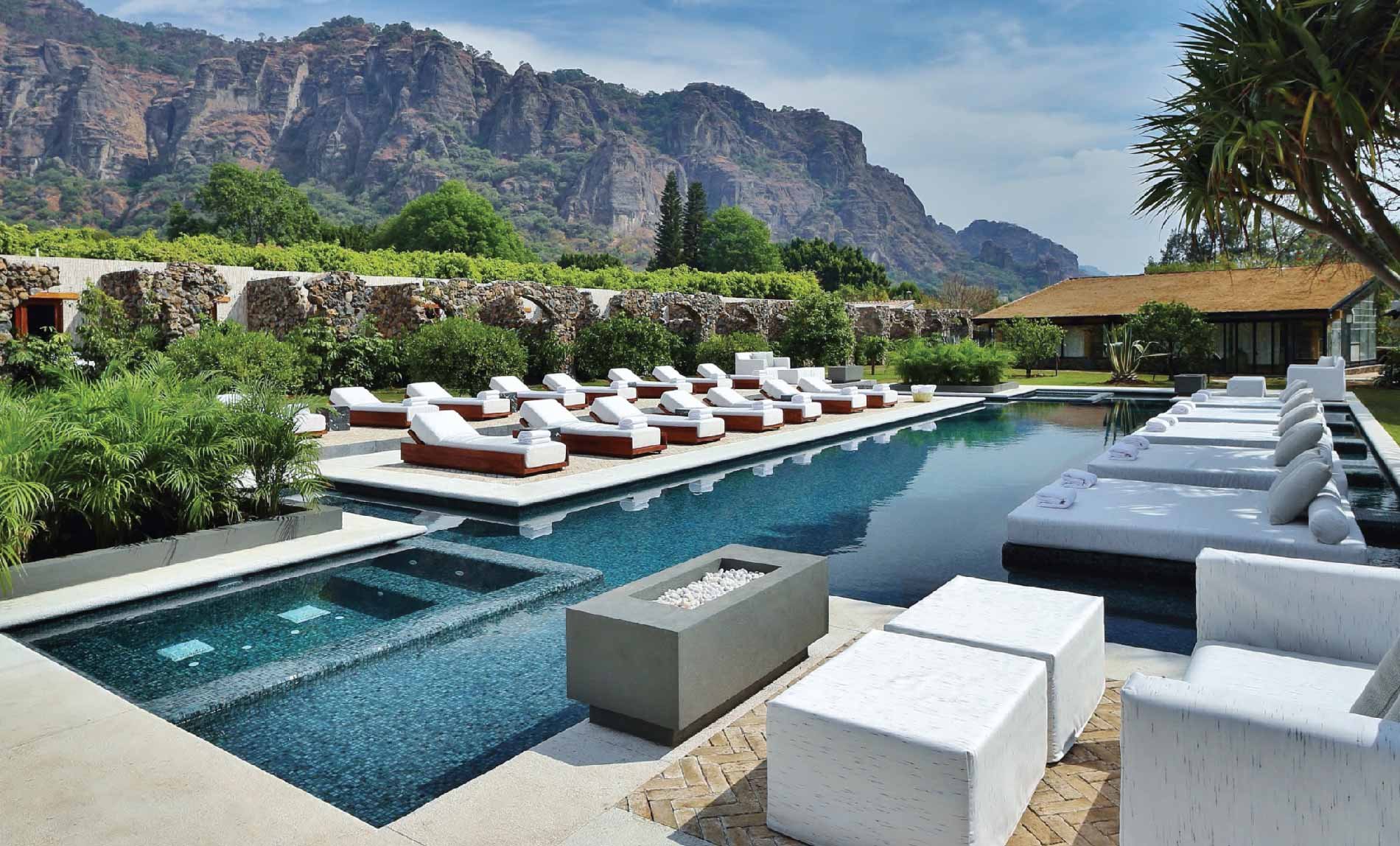
A Mountain Town That Finally Has the Hotel It Deserves
The approach to Tepoztlán already does much of the work. The town sits inside a dramatic volcanic valley in Morelos state, roughly an hour south of Mexico City, with the forested ridgeline of the national park rising sharply above the colonial-era streets. For decades, international visitors passed through on day trips from the capital or skipped it entirely in favour of the country's coastal resorts. The boutique-hotel era has changed that calculus in town after town across Mexico, and Tepoztlán is now part of that shift. Our full Tepoztlán restaurants guide maps the broader scene, but the accommodation picture sharpened considerably with the arrival of Amomoxtli, positioned as the region's first high-end luxury boutique property.
The Architecture: Colonial Grammar, Contemporary Inflection
Boutique hotels in Mexico's interior cities have long worked within a specific design tradition: thick stone walls, clay tile floors, carved timber, and courtyard planning that owes as much to pre-colonial spatial logic as to Spanish colonial overlay. Amomoxtli operates within that grammar, but with deliberate calibration. The emphasis leans toward the historical rather than the contemporary, which is an editorial choice that the better properties in this tier tend to make consciously. Where some competitors in Mexico's heritage-town circuit deploy too much modern intervention and thin the atmosphere, Amomoxtli holds the balance: beamed ceilings and stonework carry the rooms, while individual pieces of contemporary furniture and artwork provide contrast rather than competition.
The shortlist, unlocked.
Hard-to-book tables, cellar releases, and concierge-planned trips.
Get Exclusive Access →That approach places it in a peer set distinct from the coastal luxury properties that dominate Mexican hotel conversation. Compare it against beach-positioned properties like Hotel Esencia in Tulum or Maroma in Riviera Maya, and the design language diverges immediately: the latter trade in palapa architecture and ocean-facing terraces, while Amomoxtli's identity is fundamentally interior and geological, shaped by the volcanic terrain and the built heritage of the valley rather than by any coastline logic. The more relevant design comparisons are properties like Casa de Sierra Nevada in San Miguel de Allende or Casa Antonieta in Oaxaca City, where colonial architecture is the medium and heritage density is the draw.
The Rooms: 37 Keys, a Range of Private Outdoor Spaces
At 37 rooms, Amomoxtli sits in a size bracket that allows for meaningful service-to-guest ratios without tipping into the ultra-exclusive single-digit key counts of properties like Cuixmala in La Huerta or Las Alamandas on the Costalegre. The rooms themselves carry the design principles through: tile and stonework ground the interiors, king beds and down duvets signal the comfort tier, and organic bath products align with the wellness positioning the property pursues more broadly. The practical differentiator at this scale is outdoor access: many rooms include private patios, balconies, or terraces, which matters considerably in a setting where the mountain views are a primary reason to be here at all. A rate from $384 positions the property competitively within Mexico's interior boutique luxury segment, below the price ceilings of the major coastal resort brands but above the midrange heritage inns that populate towns like Tepoztlán.
Spa and Pool: Aztec Heritage as Design Logic
The most conceptually coherent element of Amomoxtli's offer is its spa program, which draws from Aztec-inspired ritual and mysticism rather than defaulting to the generic wellness menu that most luxury properties in Mexico import wholesale. Tepoztlán itself carries significant weight in Aztec cultural history, and the El Tepozteco temple ruins above the town give that heritage a physical presence that makes the spa's approach feel grounded rather than decorative. Conventional massage and treatment formats sit alongside the ritual programming, which gives guests entry points at different levels of engagement with the cultural material.
The pool operates on a self-serve basis within this wellness logic, positioned against the mountain backdrop that defines the property's setting. In the broader market for spa-led boutique properties in Mexico, this places Amomoxtli in a different category from the more elaborate wellness infrastructure at properties like Chablé Yucatán or Palmaïa in Playa del Carmen, but the cultural specificity of the programming is a genuine differentiator that those larger properties, with their broader audience mandates, cannot easily replicate.
The Restaurant: Local Sourcing as Constraint and Identity
Mexico's serious boutique hotel restaurants have broadly moved toward hyper-local sourcing as a point of identity rather than just a supply-chain decision. Amomoxtli's restaurant works within that frame, with dishes built from locally sourced ingredients and flavour profiles rooted in regional tradition. The kitchen does not appear to chase fusion complexity or international fine-dining signals; the direction is traditional Mexican with the quality uplift that comes from rigorous ingredient selection. For guests whose primary reference points are the destination-restaurant programs at properties like One&Only; Mandarina in Riviera Nayarit or Zadun, A Ritz-Carlton Reserve, the register here will read as quieter and more contextually specific, which is a feature of the property's positioning rather than a gap in its ambition.
Planning Your Stay
Tepoztlán is accessible from Mexico City in approximately one hour by road, making Amomoxtli workable as either a short escape from the capital or a standalone destination stay. The national park and El Tepozteco ruins add a clear structural activity to any visit, and the town's market culture and food scene give the stay texture beyond the hotel perimeter. Rates from $384 cover the 37-room property; outdoor-facing rooms with private terraces or balconies represent the most direct access to the mountain setting that defines the experience. For travellers building a wider itinerary across Mexico's interior, properties like Hotel Demetria in Guadalajara, Casa Polanco in Mexico City, or Casa Silencio in Oaxaca represent logical companions in a similar design and cultural tier. Those seeking a contrast in the coastal luxury register can cross-reference Four Seasons Punta Mita, Las Ventanas al Paraíso in Los Cabos, or Montage Los Cabos, though the experience type is categorically different.
Frequently Asked Questions
- What's the general vibe of Amomoxtli?
- Amomoxtli positions itself as a property where Aztec cultural heritage and colonial architecture do the atmospheric heavy lifting. At $384 and 37 rooms, it is neither a minimalist design hotel nor a large resort: it reads as a culturally specific boutique property in a mountain town with genuine historical depth. Tepoztlán's significance in pre-Columbian history, the presence of the El Tepozteco ruins above the town, and the national park setting give the property a sense of place that beach-corridor luxury cannot replicate. The pace is quieter than Mexico's coastal resorts, the programming leans toward wellness and cultural engagement rather than water sports or nightlife, and the restaurant keeps its frame local.
- What's the leading room type at Amomoxtli?
- Given the mountain setting that defines the property's appeal, rooms with private patios, balconies, or terraces make the strongest case for the $384-and-up rate. At 37 rooms total, the spread of room types is not large, but direct access to outdoor space and the volcanic valley views is the single most important variable in differentiating the stay. King beds, down duvets, and organic bath products are consistent across the property, so the outdoor space question is where the room selection decision concentrates.
Peer Set Snapshot
These are the closest comparables we have in our database for quick context.
| Venue | Cuisine | Price | Awards | Notes |
|---|---|---|---|---|
| Amomoxtli | This venue | |||
| One&Only Mandarina | Michelin 3 Key | |||
| Las Ventanas al Paraíso, A Rosewood Resort | Michelin 2 Key | |||
| Montage Los Cabos | Michelin 2 Key | |||
| Rosewood Mayakoba | Michelin 2 Key | |||
| Zadun, A Ritz-Carlton Reserve | Michelin 2 Key |
Preferential Rates?
Our members enjoy concierge-led booking support and priority upgrades at the world's finest hotels.
Get Exclusive AccessThe shortlist, unlocked.
Hard-to-book tables, cellar releases, and concierge-planned trips.
Get Exclusive Access →