Airelles Gordes, La Bastide





A 16th-century bastide carved into the limestone edge of Gordes, Airelles Gordes, La Bastide occupies one of the Luberon valley's most commanding positions. Forty rooms and suites draw on Provençal craft traditions, while five dining outlets range from Jean-François Piège's Clover Gordes to a Sunday champagne brunch that draws the local village in alongside guests.
Pearl is the En Primeur Club membership app — saves, bookings, and concierge access live there. Same editors, same standards.
- Address
- 61 Rue de la Combe, 84220 Gordes
- Phone
- +33 4 90 72 12 12
- Website
- airelles.com
- Directions
- Get directions
 Saves & bookings on Pearl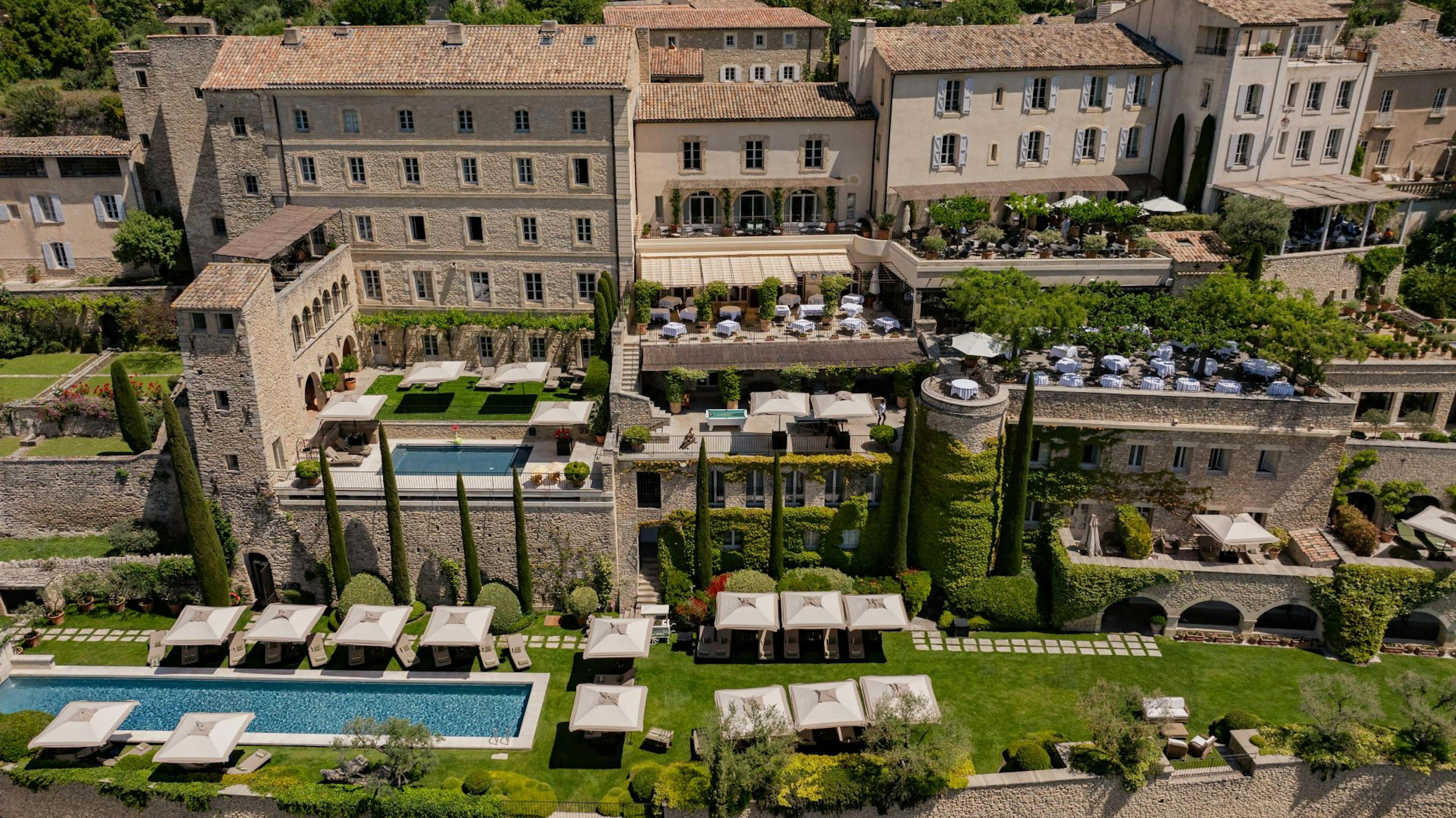
Stone, Sky, and the Architecture of Staying Still
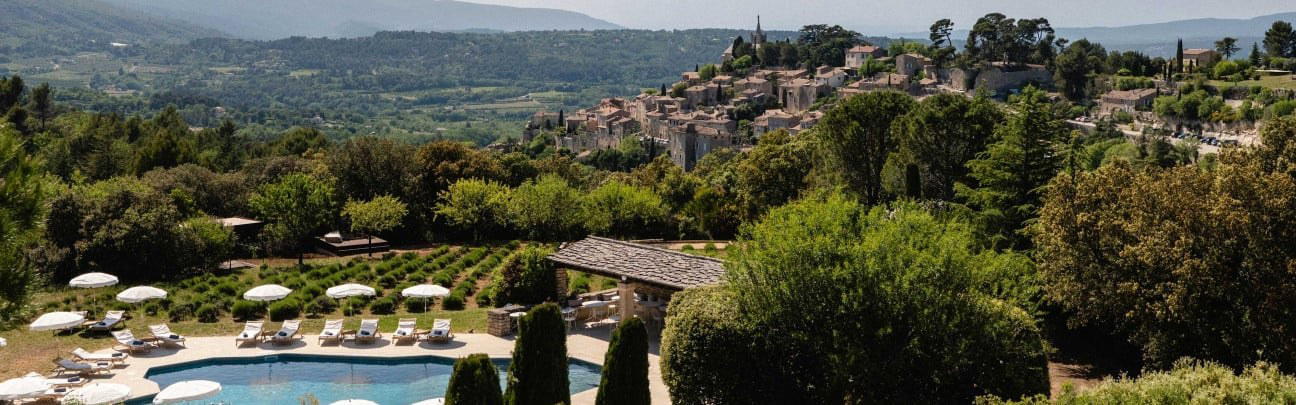
The Luberon has always attracted a particular kind of attention. Writers, painters, and eventually hoteliers have all been drawn to its pale-limestone villages and mistral-scoured light, and the competition for the leading position in the leading of those villages is genuinely fierce. Gordes, which clings to a rocky escarpment above the valley floor, has accumulated a small cluster of serious properties over the decades. Airelles Gordes, La Bastide occupies particularly structurally dramatic of those positions: a compound of historic edifices and original ramparts, some of them carved directly into the ivory-hued calcaire, that reads from the valley below as an extension of the village itself rather than an intrusion into it. The approach through the medieval lanes, past the Saturday market stalls and the 12th-century château, reframes the property immediately as architecture rather than hospitality product.
Baumanière Les Baux-de-Provence in Les Baux and Villa La Coste in Le Puy-Sainte-Réparade represent the regional benchmark for design-led properties with serious culinary programs. La Bastide belongs in that conversation but competes on different terms: not the contemporary art-and-architecture idiom of Villa La Coste, nor the historic gastronomic prestige of Baumanière, but something more theatrically Provençal in its references, more overtly romantic in its register.
What Christophe Tollemer Did With Eighteen Rooms of Stone
Interior design in converted historic properties carries a specific risk: the temptation to either over-restore into a museum stillness or over-modernise into something that could be anywhere. The Tollemer approach here threads between those two failures. Each of the 40 rooms and suites draws on a consistent material vocabulary, with toile fabrics, wood-beam ceilings, French push-out casement windows, and authentic antiques including oil paintings, travel trunks, and leather-bound books, while maintaining enough individual variation that rooms feel discovered rather than replicated. Marble bathrooms carry vintage detailing through claw-foot bathtubs, and proprietary toiletries use summery fig and myrtle as their aromatic base.
The accommodation splits between village-facing and valley-facing orientations, and the distinction matters. Valley rooms look out over the Luberon massif and the rocky escarpment below; village rooms put you inside the architectural grain of Gordes itself. The Duc de Soubise Suite, with two bedrooms, two bathrooms, a full sitting room, and a private terrace, represents the upper end of the main house offering. For parties requiring complete separation, La Maison de Constance is a ten-person villa with its own pool and garden, operating at a remove from the main property's shared circulation.
The scale of La Bastide, 40 rooms, keeps it in the territory of properties where space and service ratios remain meaningful. It is not a boutique in the tightest sense, but it operates with enough physical complexity across its multiple historic buildings that guests rarely encounter the compressed feeling of larger resort formats. Comparable properties operating in this middle band of size and heritage include Château Saint-Martin & Spa and La Réserve Ramatuelle, though each occupies a distinct geographic and stylistic register.
Five Kitchens and the Logic Behind Them
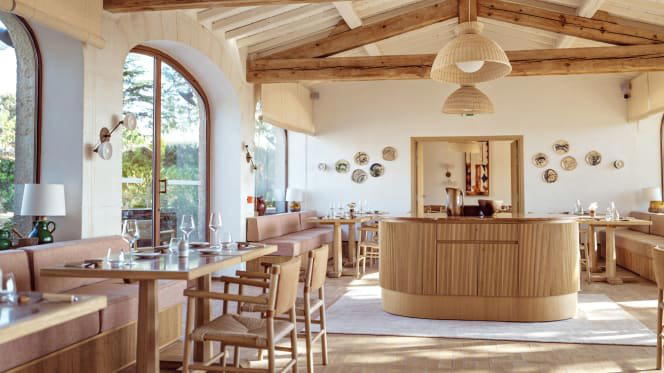
Most revealing thing about a serious hotel's dining program is what it chooses not to do. La Bastide's five-outlet structure, which spans La Table de La Bastide as the flagship restaurant, Clover Gordes by Jean-François Piège, the Asian-leaning Le TiGrr, the trattoria-format La Bastide de Pierres, and a Ladurée-affiliated tea room, reflects a deliberate decision to offer genuine plurality rather than a single restaurant that tries to be everything across different times of day. Piège, whose Paris base is the two-Michelin-starred Hôtel de Lutetia operation, brings a specific culinary credibility to the Gordes outpost; the wild squid carbonara at Clover Gordes has drawn consistent inspector attention as a dish that earns its place on the menu beyond simple resort positioning.
Sunday champagne brunch at L'Orangerie operates as a separate cultural institution within the property's weekly rhythm. Described by inspectors as drawing local residents alongside hotel guests, it runs on a scale and elaborateness that requires advance booking, particularly through the summer. The fact that it functions as a destination for the surrounding village rather than purely as an amenity for in-house guests is a reasonable indicator of its quality standing in the local community.
Spa, Pool, and the Physical Program
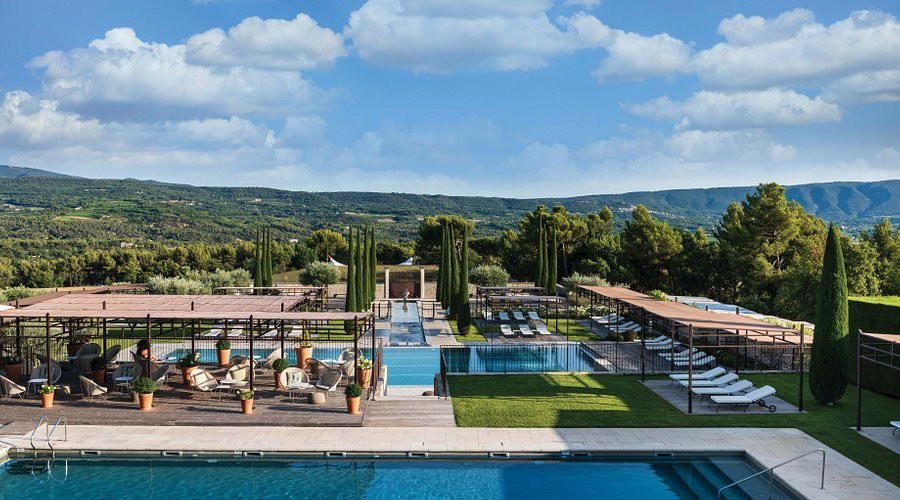
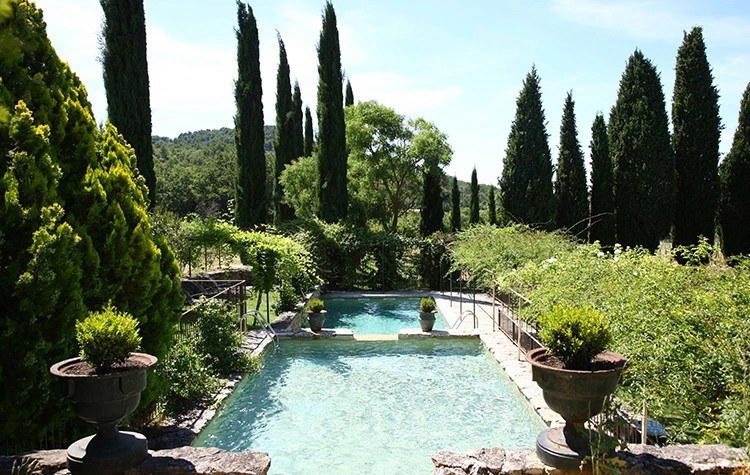
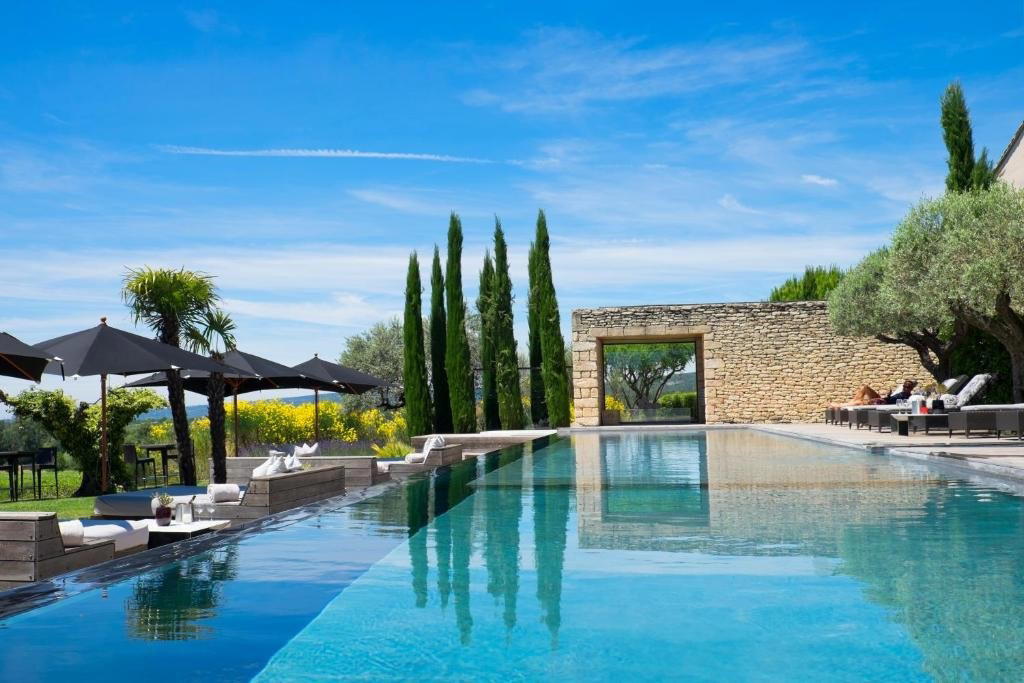
Airelles Spa by Guerlain takes Sénanque Abbey, the 12th-century Cistercian monastery visible from the valley several kilometres away, as its design reference point. The facility runs to four treatment rooms, a hammam, a sauna, and an indoor pool. The outdoor Terrace Pool, framed by cypress and ancient olive trees, provides valley views that function as the hotel's most frequently reproduced image for good reason: the combination of the shimmering water surface and the Luberon geology below is one of the more compositionally complete views in Provençal hospitality. A separate children's pool connects to an extensive children's program that includes a dedicated game room and daily activity schedule, which places La Bastide firmly within the category of Provence properties designed for family travel at a level of serious comfort.
Gordes in Context, and How to Get There
Gordes sits in the heart of the Luberon Natural Regional Park, roughly an hour's drive east of Avignon and around ninety minutes from Marseille Provence Airport. The village does not have meaningful public transport connections, and the road up to the property itself is narrow enough to make the on-site parking area and valet service genuinely useful rather than optional luxuries. The hotel provides complimentary e-bikes for exploring the surrounding area, which puts the lavender fields around the Abbaye Notre-Dame de Sénanque and the rosé-producing wineries of the Luberon within comfortable cycling range for those not wanting to drive every excursion.
Summer and holiday periods book quickly, and the combination of a 40-room scale and strong repeat clientele means that last-minute availability is rare. Planning around this calendar is the primary logistical consideration for first-time visitors.
Hotel Byblos Saint-Tropez or Hôtel Barrière Le Majestic. The contrast between inland Provence and the Côte d'Azur proper is significant enough that the two experiences complement rather than duplicate each other. La Bastide de Gordes represents the other notable address in the same village for those comparing options at a more restrained price point.
Within the Airelles group specifically, Airelles Saint-Tropez Château de la Messardière offers the coastal complement to the Gordes inland position, for those who prefer to stay within a consistent service philosophy across both legs of a Provence-and-Riviera trip.
Comparison Snapshot
Comparable venues nearby, for context on price, style, and recognition.
| Venue | Cuisine | Price | Awards | Notes |
|---|---|---|---|---|
| Airelles Gordes, La BastideThis venue — the venue you are viewing | 18th-century Provençal chateau carved into Gordes cliffside with valley panoramas | $$$$ | Michelin 3 Key | Not listed |
| Grand-Hôtel du Cap-Ferrat, A Four Seasons Hotel | Historic Art Deco palace reimagined as a contemporary luxury resort, blending Belle Époque architecture with modern amenities and design-forward interiors by Pierre-Yves Rochon. | $$$$ | Michelin 3 Key | Saint-Jean-Cap-Ferrat |
| Château Saint-Martin & Spa | Historic chateau estate blending Provençal heritage with modern luxury on 34 acres of gardens. | $$$$ | Michelin 1 Key | Vence |
| Hôtel Barrière Le Majestic | Well-known Belle Époque palace hotel with contemporary West Wing expansion, blending classical French architecture with modern luxury amenities. | $$$$ | 5-Star | Croisette, Cannes |
| JW Marriott Cannes | Contemporary luxury beachfront palace with cutting-edge design and Mediterranean elegance positioned as a premier destination on the French Riviera. | $$$$ | 5-Star | Croisette |
| Hotel Byblos Saint-Tropez | Well-known Provençal luxury palace hotel blending Mediterranean elegance with contemporary sophistication in a historic Saint-Tropez setting. | $$$$ | 5-Star | Saint-Tropez City Centre |
Recognition history
Dated appearances from independent guides and award organizations, with the underlying list record or original source where available.
Forbes 5-Star
Forbes
La Liste Top Hotels
La Liste
Virtuoso Luxury Hotel Partner
Virtuoso
Vogue 2026 Vogue Best Hotels in Provence
Vogue
Forbes 5-Star
Forbes
Michelin 3 Keys
Michelin
Michelin 3 Keys
Michelin
Continue exploring
More in French Riviera
Hotels in French Riviera
Browse all →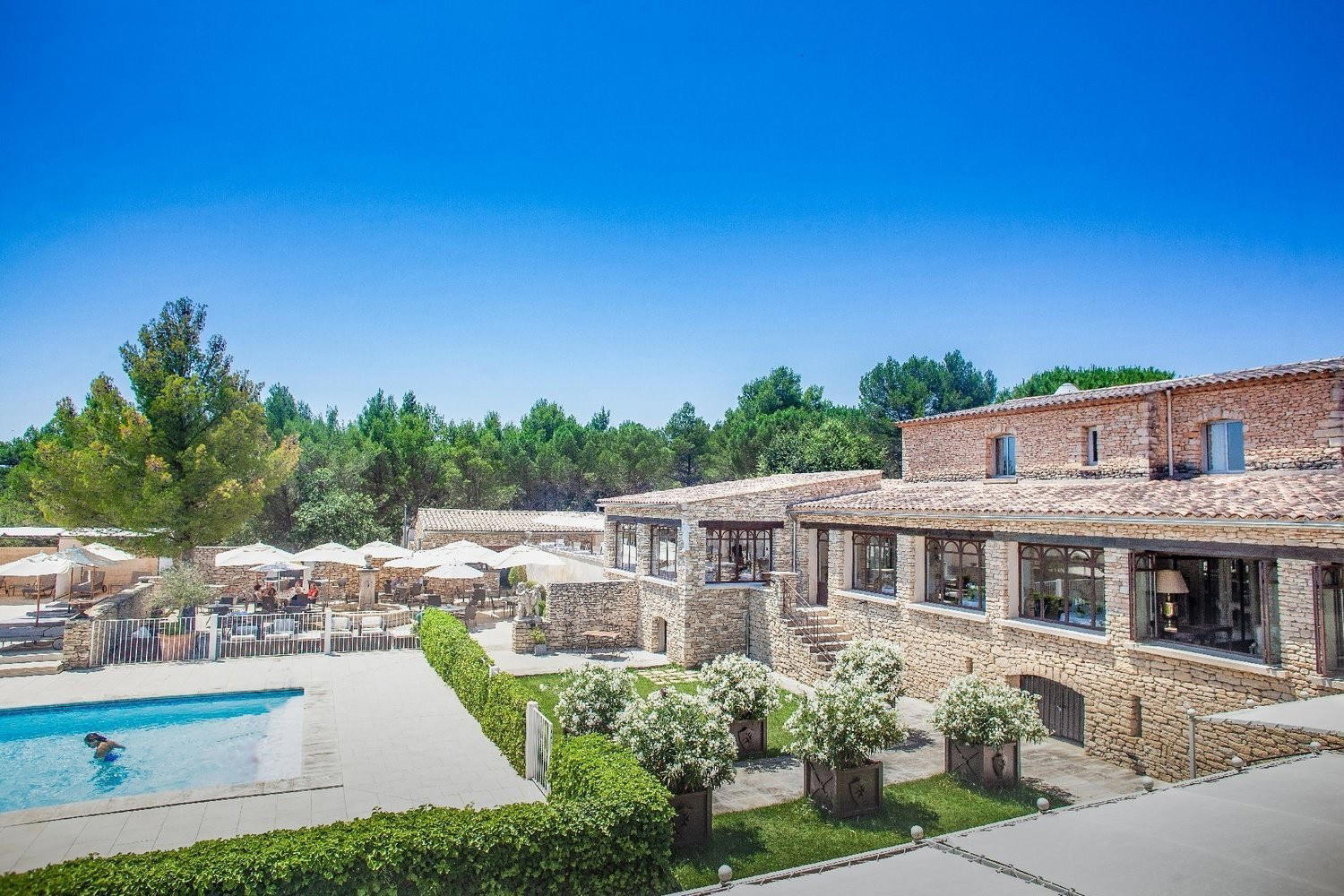
Bars in French Riviera
Browse all →
Restaurants in French Riviera
Browse all →
At a Glance
- Romantic
- Elegant
- Scenic
- Sophisticated
- Classic
- Ornate
- Honeymoon
- Romantic Getaway
- Wellness Retreat
- Anniversary
- Weekend Escape
- Panoramic View
- Historic Building
- Infinity Pool
- Destination Spa
- Private Villa
- Terrace
- Pool
- Spa
- Fitness Center
- Room Service
- Concierge
- Valet Parking
- Kids Club
- Restaurant
- Sauna
- Tennis
- Wi Fi
- Mountain
- Garden
- Pool
- Spa
- Fitness Center
- Room Service
- Concierge
- Valet Parking
- Kids Club
- Restaurant
- Sauna
- Tennis
- Wi Fi
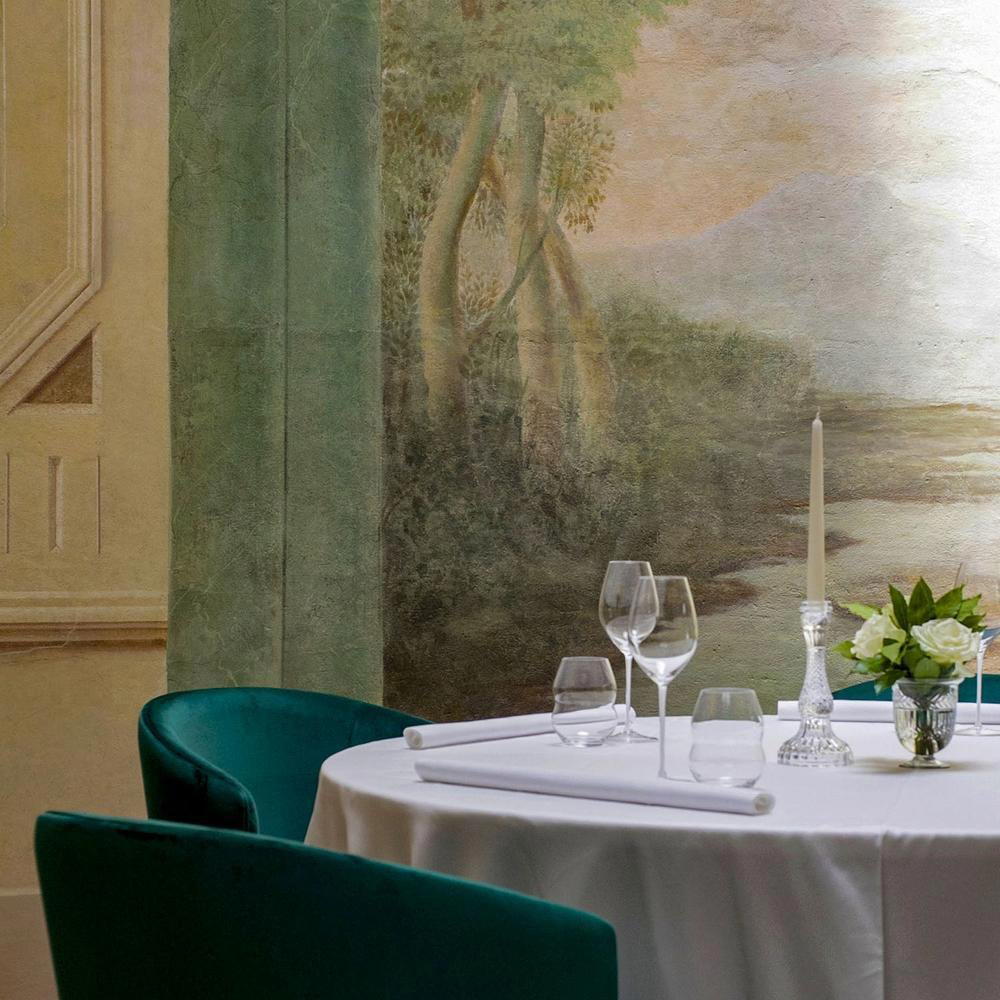
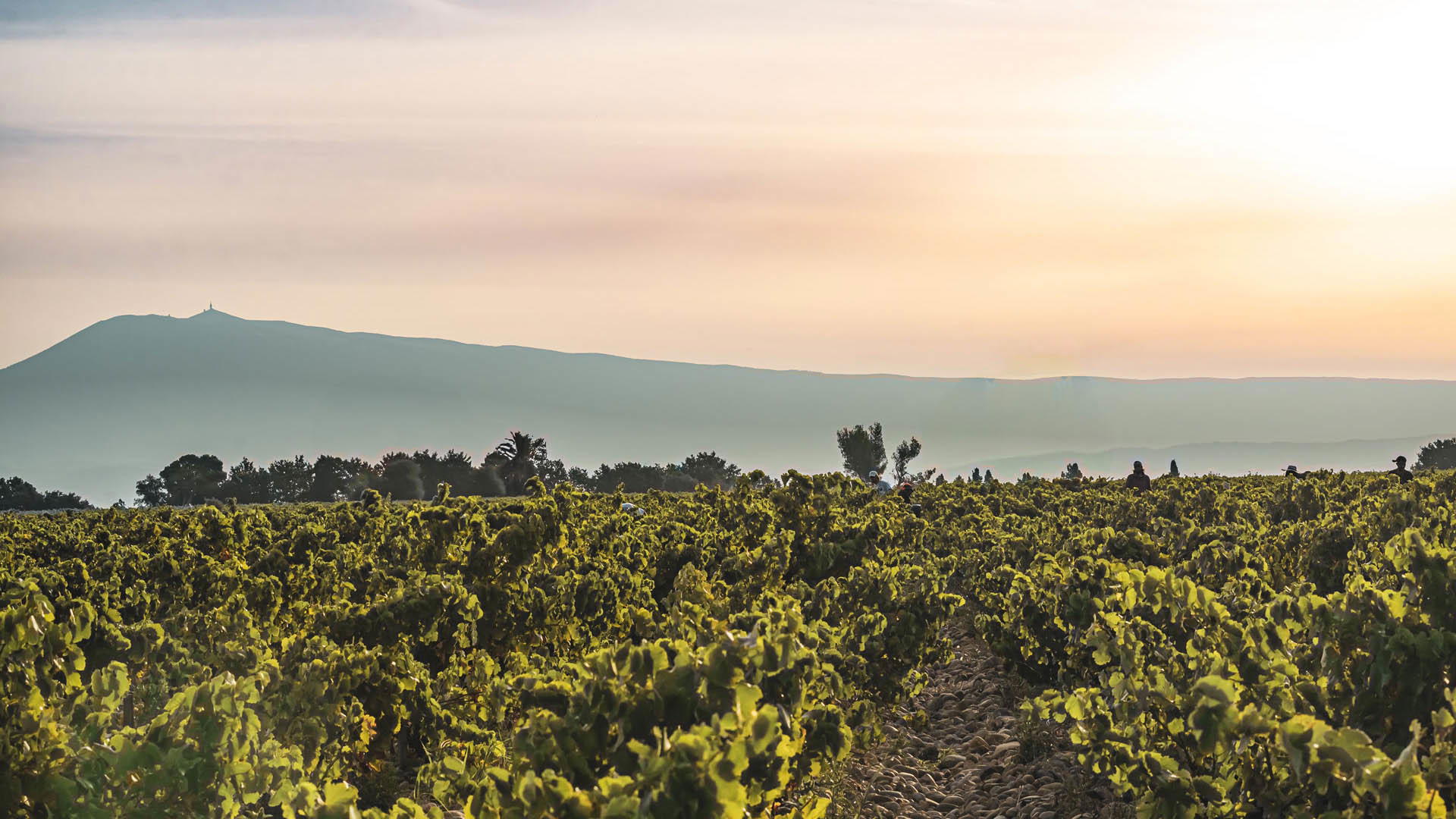
Warm Provençal light floods elegantly furnished rooms with period antiques, toile de Jouy fabrics, and terracotta tiles; serene spa under vaulted stone ceilings and lush garden terraces foster intimate, luxurious relaxation.