11 Howard



Michelin Selected · Mr & Mrs Smith Seal of Approval · Design Hotels Member
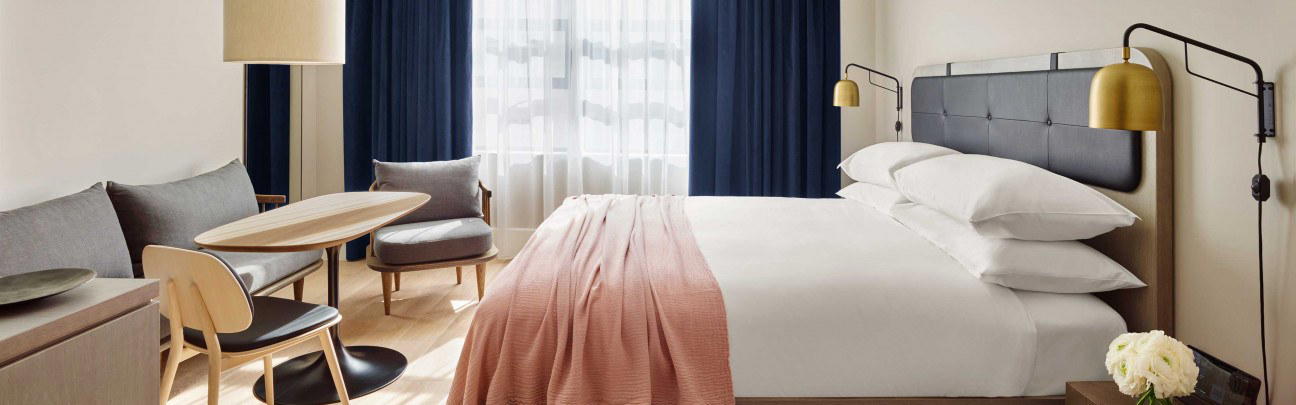
11 Howard occupies a SoHo address on Howard Street where Scandinavian design principles meet a hyperlocal, socially conscious program. The hotel positions itself within a downtown New York cohort that prizes restraint and material integrity over branded luxury. For travelers drawn to design-led independents in Lower Manhattan, it represents a considered alternative to the neighbourhood's more conventional options.

Pearl is the En Primeur Club membership app, where members save venues, book tables and use the concierge.
SoHo's Design-Led Independent, Reconsidered
Howard Street sits at the lower edge of SoHo, where the neighbourhood's cast-iron heritage gives way to the more utilitarian blocks leading toward Canal Street. It is a transitional zone that has, over the past decade, attracted a particular kind of hotel: design-conscious, independently positioned, and interested in ideas beyond conventional hospitality branding. Crosby Street Hotel brought a British-eclectic sensibility to the quarter; The Greenwich Hotel doubled down on craft and material texture a few blocks west in TriBeCa. 11 Howard arrived with a different proposition: Scandinavian design rigor applied to a New York address, combined with what the property describes as hyperlocal social consciousness. That combination placed it in a competitive set defined not by brand affiliation but by design credibility.
The Scandinavian Design Argument in a New York Context
Nordic minimalism has long circulated through New York interiors, but applying it at hotel scale requires discipline. The approach typically favors natural materials, restrained palettes, and spatial honesty over ornamental distraction. When 11 Howard opened on Howard Street, it entered a moment when downtown Manhattan was genuinely receptive to that register. SoHo's gallery culture and its proximity to the design trade showrooms of NoHo created an audience that understood the visual language. The hotel's Scandinavian framing was not decorative shorthand; it connected to a broader architectural seriousness that distinguishes a certain tier of New York independent from the boutique-formula properties that populate the midrange.
That positioning has consequences for who stays here and why. Guests arriving at 11 Howard are, in most cases, arriving with awareness of the design conversation rather than brand loyalty or points accumulation. Across New York, the independents that sustain this kind of positioning over time tend to evolve rather than hold still: refining their food and beverage program, updating their social commitments, and recalibrating their room design as the reference points shift. For context on how that evolution plays out across the city's hotel spectrum, our full New York City guide maps the relevant tiers.
Hyperlocalism as a Program, Not a Slogan
The phrase "hyperlocal" has been applied so broadly across the hospitality industry that it risks losing meaning. In New York, where every block carries a distinct identity and where sourcing relationships with local producers are genuinely available, the concept has more traction than in cities where it functions primarily as marketing language. 11 Howard's social-consciousness framing connects to a real strand of downtown New York culture: the idea that a hotel should be embedded in its neighbourhood rather than merely occupying it.
That philosophy, when executed with consistency, changes how a property ages. Hotels that commit to local sourcing, community programming, and design integrity tend to accumulate cultural credibility over time rather than depreciate it. The risk is that the commitment softens as operational pressures mount. The ones that hold the line, like 1 Hotel San Francisco on the sustainability axis, or SingleThread Farm Inn in Healdsburg on the food-provenance axis, build a reputation that compounds. 11 Howard's evolution will be measured against that standard.
Evolution: From Opening Statement to Settled Identity
Hotels in the design-conscious independent category tend to move through a recognizable arc. The opening period is defined by the initial statement: the design concept, the food and beverage positioning, and the social commitments. The middle period tests whether those commitments survive the pressure of occupancy targets and operational realities. The later period, if the property navigates it well, produces something more durable: a settled identity that guests recognize and return to without needing the property to explain itself.
11 Howard has been operating long enough to be in that middle-to-later transition. SoHo's hotel market has shifted around it: new openings have raised the design bar in some respects while the broader market has consolidated around branded operators. An independent on Howard Street in 2024 faces a different competitive context than it did at launch. The Scandinavian design framework that felt fresh on arrival now needs to be supported by program depth, staff continuity, and food and beverage quality that gives guests a reason beyond the room. Properties in comparable positions elsewhere, from Troutbeck in Amenia to Post Ranch Inn in Big Sur, have shown that design-led independents can sustain relevance when the program evolves rather than calcifies.
Placing 11 Howard in the Downtown New York Tier
Downtown Manhattan's hotel market now spans several distinct tiers. At the upper end, properties like Aman New York and Casa Cipriani New York price against global ultra-luxury. The Upper East Side corridor, anchored by The Carlyle and The Mark, operates on a different register entirely. Midtown alternatives like The Fifth Avenue Hotel draw on address prestige. 11 Howard sits in a more specific niche: the design-led SoHo independent that competes on taste and cultural positioning rather than scale or brand. Within that niche, the relevant comparison points are properties like The Whitby Hotel in Midtown West, which shares the design-forward independent DNA, and Crosby Street, which occupies a similar SoHo address with a different aesthetic language.
Internationally, the Scandinavian design frame connects most naturally to properties like Aman Venice and Badrutt's Palace Hotel in St. Moritz, where design identity is held as seriously as program.
Planning a Stay: What to Know Before Booking
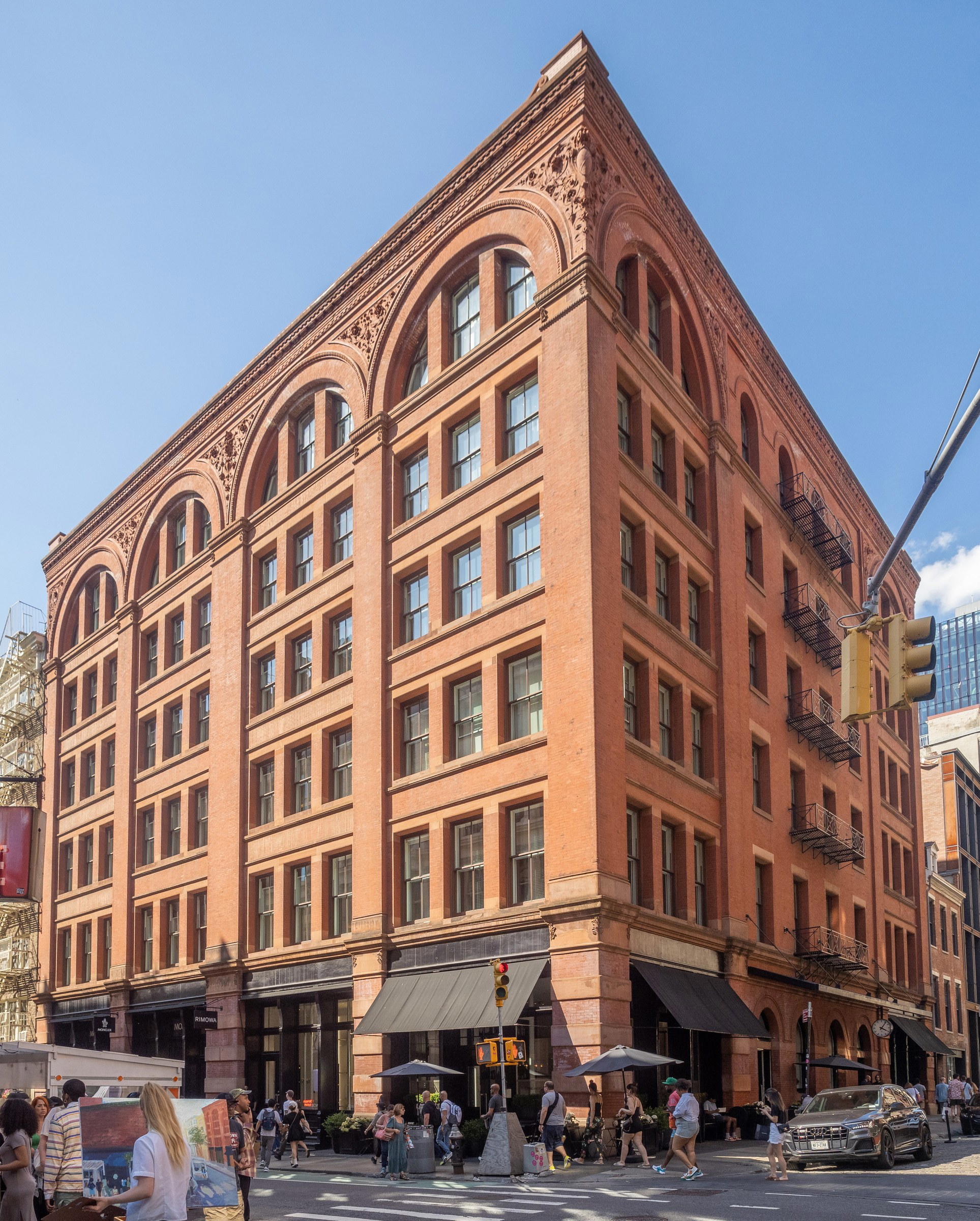
11 Howard is located at 11 Howard Street in SoHo, at the intersection of Howard and Crosby streets, within walking distance of Canal Street subway connections and the Prince Street and Spring Street stations that serve the N, Q, R, W, and 6 lines. The address puts guests in the centre of SoHo's gallery and retail district, with TriBeCa accessible on foot and the West Village within a short cab or ride-share distance. Room booking is handled directly through the property. Given the hotel's independent positioning and the general compression of downtown Manhattan inventory during fashion weeks and major trade events, planning ahead by several weeks is advisable for peak periods. The design-led independent category in New York skews toward guests who research carefully and arrive with specific expectations; confirming room category and current food and beverage programming directly with the hotel before arrival is worth the extra step.
Cost Snapshot
Comparable venues nearby, for context on price, style, and recognition.
| Venue | Price | Awards | Notes |
|---|---|---|---|
| 11 HowardThis venue (the venue you are viewing) | Not listed | Michelin Selected · Mr & Mrs Smith Seal of Approval | Not listed |
| The James New York - SoHo | Not listed | Michelin Selected · Preferred Hotels Member | SoHo, Bauhaus-inspired art hotel blending modernist design with curated contemporary art collection; formerly The James, now ModernHaus SoHo. |
| 33 Hotel - NYC Seaport | Not listed | Michelin Selected | Financial District-Battery Park City, Contemporary luxury boutique in historic landmark building |
| The Standard, High Line | $300–500 | Michelin Selected | West Village, Bold architectural statement perched on stilts above the High Line park |
| Hotel Seville NoMad - The Unbound Collection by Hyatt | $300–500 | Not listed | Midtown South-Flatiron-Union Square, Beaux Arts landmark blending historic character with contemporary luxury |
| W New York - Times Square | $300–500 | Michelin Selected | Midtown-Times Square, Luxury lifestyle hotel with bold modern design and cultural positioning; recently renovated to emphasize contemporary art and see-and-be-seen social spaces. |
Recognition history
Dated appearances from independent guides and award organizations, with the underlying list record or original source where available.
Michelin Selected
Michelin
Design Hotels Member
Design Hotels
Mr & Mrs Smith Seal of Approval
Mr & Mrs Smith
Continue exploring
More in New York City
Hotels in New York City
All hotels in New York City →
Bars in New York City
All bars in New York City →




Details
- Modern
- Elegant
- Minimalist
- Sophisticated
- Trendy
- Romantic Getaway
- Business Trip
- Weekend Escape
- Design Destination
- Terrace
- Wi Fi
- Room Service
- Concierge
- Business Center
- Valet Parking
- Street Scene
- Wheelchair Accessible
- Elevator
- Step Free Entrance
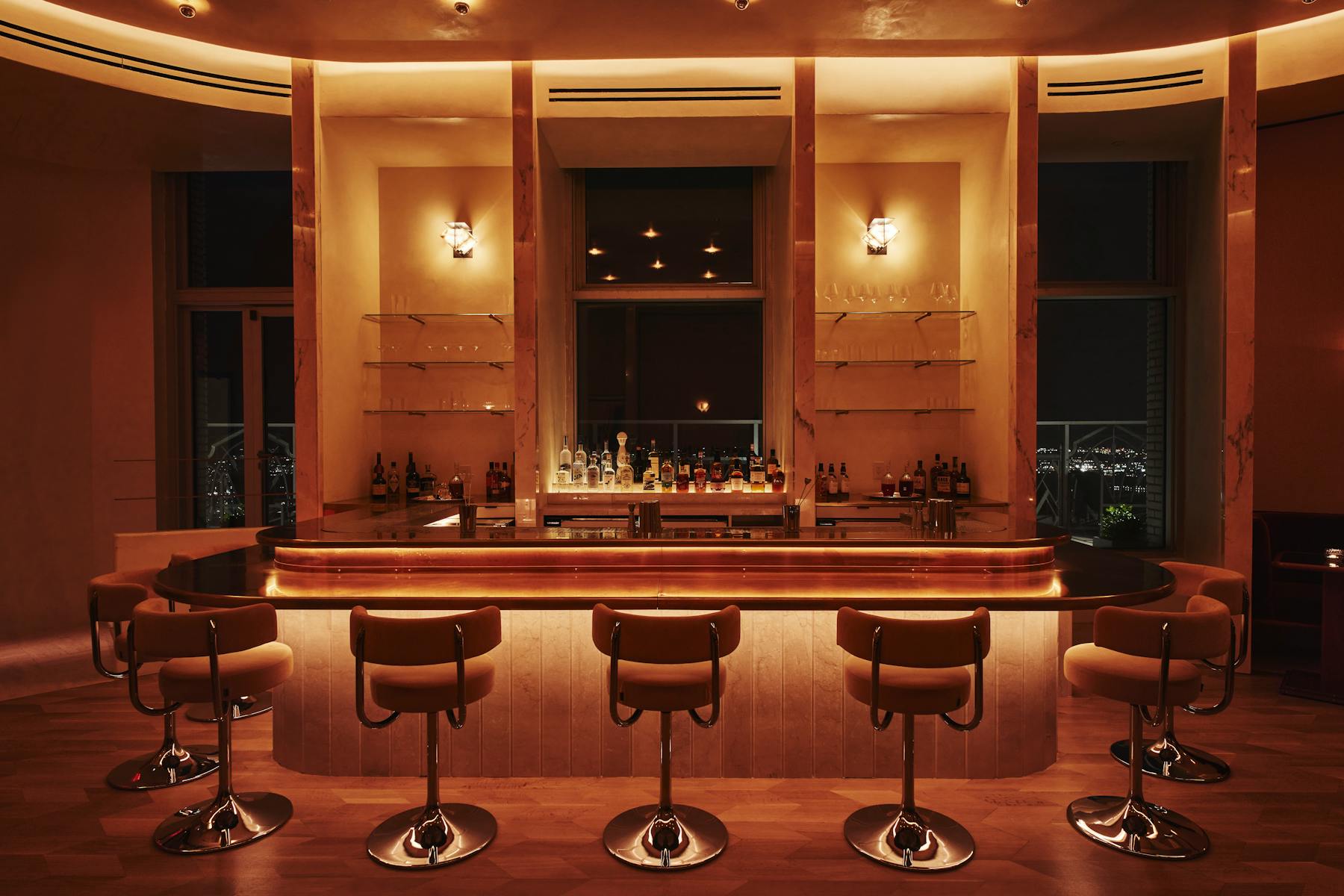
Bright and spacious rooms with thoughtful dimmable lighting, minimalist design, and a cozy library space; some rooms may experience street noise but overall quiet hallways.