← Guides
Château Latour's parent company and Champagne Bollinger have deployed capital, winemakers, and a half-million-dollar sorting line at Ponzi, validating Oregon Pinot Noir as a internationally prominent terroir.
Château Latour's parent company and Champagne Bollinger have deployed capital, winemakers, and a half-million-dollar sorting line at Ponzi, validating Oregon Pinot Noir as a internationally prominent terroir.
In 2024, Damien Lapuyade stepped into the cellar at Beaux Frères, the Oregon estate Michael G Etzel founded in the 1980s and Artémis Domaines now owns, alongside the French firm's Château Latour and Clos de Tart. Lapuyade, born and raised in Napa Valley despite his French surname, arrived at a winery that has moved through two French ownership changes since 2017. His appointment tells you how France's wine elite now read Willamette Valley: not as a New World trial, but as a serious Pinot Noir terroir deserving patient capital and first-rate cellar talent.
The same thread runs beyond Beaux Frères. Champagne Bollinger acquired Ponzi Vineyards in 2021 and quickly installed a $500,000 Bucher optical sorting line, the kind of cellar tool a house buys when it intends to stay.
Jean-Baptiste Rivail, a Rhône Valley native whose family has nearly two centuries in the wine business, now leads Ponzi as CEO. Max Bruening, who took over the winemaker role from Luisa Ponzi in 2024, says Bollinger 's checkbook has removed the maintenance compromises that shaped the estate for decades.
Ponzi now works with new stainless steel and concrete tanks, additional land, and a consulting contract with Italy-based vine consultants Simonit & Sirch, the same firm that advises Burgundy's Domaine Leroy.
These moves trace back to 1965, when David Lett, struck by what he called a 'cosmic brick' of Burgundian Pinot Noir, planted Willamette Valley 's first Pinot Noir vines. The Burgundy and Oregon connection, once cosmic, has become practical. French firms are not merely buying Oregon estates. They are folding them into portfolios that include Bordeaux first growths and Burgundy grand crus, treating Willamette Valley as a peer terroir rather than a side project.
Willamette Valley speaks to French investors through climate and soil, especially its parallels with Burgundy. Its cool growing season and ancient volcanic and sedimentary soils drew pioneering families such as the Letts, Eraths, Adelsheims, and Ponzis in the 1960s and 1970s, often against the advice of experts who doubted fine wine could grow in Oregon. Their work helped lead to the Willamette Valley AVA in 1983, Oregon's first American Viticultural Area. Today, the region holds more than two-thirds of Oregon's wineries and vineyards, and its elegant, balanced Pinot Noir has earned an international audience.
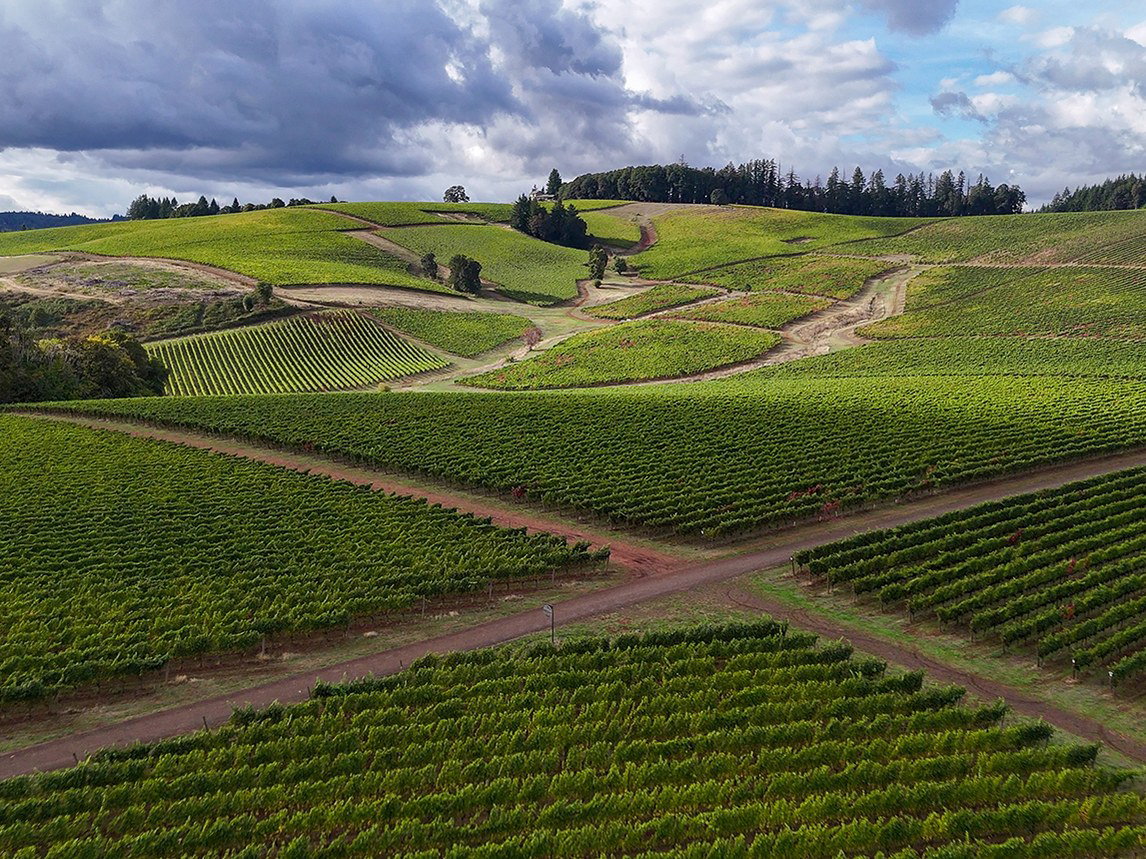
French firms are betting that Willamette Valley can produce wines that stand beside Burgundy's best, not as copies, but as wines rooted in their own place. Artémis Domaines, which merged with Maisons & Domaines Henriot in 2022, now controls Beaux Frères alongside Château Latour and Clos de Tart.
Bollinger, a Champagne house with centuries of winemaking behind it, has put more capital into Ponzi than the founding family could have committed alone. Domaine Drouhin, the first modern French-owned winery to open in Oregon, has continued to expand its Willamette Valley holdings.
These are not speculative purchases. They are deliberate estate decisions by firms that already farm some of the world's most valuable vineyard land.
The logic is plain enough in the glass: Willamette Valley's terroir can support Pinot Noir at the highest quality tier, and deep capital can move vineyard and cellar work forward faster than family ownership often allows. Bollinger's willingness to spend $500,000 on a sorting line at Ponzi, and to bring in Simonit & Sirch, whose consulting fees are not trivial, points to Oregon as a long-term quality commitment rather than a search for volume.
the only thing that never changes is the soil he says the weather changes every year people change decisions change the plans change but the soil you need thousands of years to see those1
Felipe Ramirez, Winemaker
Beaux Frères was acquired by Maisons & Domaines Henriot in 2017. When Henriot merged with Artémis Domaines in 2022, the estate joined a portfolio that includes Château Latour, Bordeaux's most storied first growth, and Clos de Tart, a Burgundy grand cru monopole. Mikey Etzel, who took over winemaking duties from his father in 2017, remains Beaux Frères' CEO and technical director, but he has handed the winemaker title to Damien Lapuyade, an Evening Land alumnus born and raised in Napa Valley.

Lapuyade's appointment changes the frame around Beaux Frères. The winery is no longer simply a standalone Oregon estate. It now sits inside a global fine-wine network with centuries of farming and cellar knowledge behind it.
Lapuyade has said that Artémis gives the estate access to domaines with centuries of experience, allowing knowledge transfer and cross-pollination that independent ownership could not offer.
That backing means Beaux Frères can work with the same quality protocols and capital access as Château Latour and Clos de Tart, estates where allocation lists close years in advance and secondary-market prices track Liv-ex indices.
If you collect Beaux Frères, the question is whether this support will bring higher scores, tighter allocations, or a shift in winemaking style. The Artémis-Henriot merger in 2022 placed Beaux Frères under the same ownership structure as Château Latour and Clos de Tart, a portfolio that includes some of the highest-value vineyard land in France. The merger indicates that Artémis sees Willamette Valley as a peer region to Bordeaux and Burgundy, not a secondary market. For Beaux Frères, that brings access to capital, consulting expertise, and a global distribution network few Oregon wineries can match.
Ponzi Vineyards was acquired by Champagne Bollinger in 2021. Jean-Baptiste Rivail, a Rhône Valley native whose family has nearly two centuries in the wine business, arrived as CEO with Bollinger's checkbook and permission to use it. Rivail has said that the trust Bollinger has placed in the Ponzi team is unbelievable. In cellar terms, it means this: what Ponzi needs, Ponzi gets.
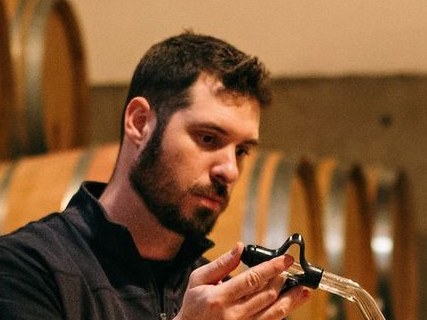
Max Bruening, who inherited the winemaker role from Luisa Ponzi in 2024, has said he didn't know what CapEx was before Bollinger's acquisition. The comment says plenty about the constraints family-owned wineries face, including hard maintenance and investment tradeoffs that can slow quality gains. Under Bollinger, Ponzi has installed a $500,000 Bucher optical sorting line, acquired new stainless steel and concrete tanks, purchased additional land, and brought in Simonit & Sirch, the Italy-based vine consultants who work with Burgundy's Domaine Leroy.
The Bucher sorting line is the tell. Optical sorters use cameras and pneumatic ejectors to remove substandard fruit at speeds manual sorting cannot match. A $500,000 sorting line is not a cosmetic upgrade. It changes how fruit reaches the fermenters, permanently and at scale. The Simonit & Sirch contract adds another layer: the firm's pruning protocols are designed to extend vine life and improve fruit quality, and their client list includes Domaine Leroy, one of Burgundy's most allocated estates, where bottles trade at four-figure secondary-market prices.
For collectors, the implication is tighter fruit selection and more consistent quality across vintages at Ponzi. The infrastructure upgrades, new tanks, additional land, and consulting contracts with firms that work with Burgundy's elite suggest that Bollinger is positioning Ponzi to compete at the highest quality tier.
Ponzi was founded in 1970 and had been headed by a Ponzi family member since its founding. Rivail's appointment as CEO marks the first time the estate has been run by someone outside the founding family. For Bollinger, the acquisition is a bet that Willamette Valley can produce Pinot Noir worthy of Champagne-house-level investment.
For Ponzi, it means access to capital and expertise that family ownership could not have deployed.
Domaine Drouhin was the first modern French-owned winery to open in Oregon. The estate has continued to expand its Willamette Valley holdings, signaling that the Drouhin family sees Oregon as a long-term investment rather than a satellite project. Domaine Drouhin 's presence in Willamette Valley predates the recent wave of French acquisitions, but the estate's continued expansion shows that the region's appeal to French investors is not new. It is a multi-decade trend that has accelerated in the past five years.
The Artémis-Henriot merger in 2022 did not directly affect Domaine Drouhin's ownership structure, but it placed Beaux Frères under the same corporate umbrella as Château Latour and Clos de Tart. The merger suggests that French wine firms are bringing Oregon holdings into portfolios that include some of the world's most valuable vineyard land. For collectors, Willamette Valley estates are no longer New World curiosities. They are entering the same investment and quality conversations that shape Bordeaux first growths and Burgundy grand crus.
For collectors, the French investment wave in Willamette Valley opens several doors. First, estates such as Beaux Frères and Ponzi are likely to see quality gains from capital and winemaking expertise.
Damien Lapuyade's appointment at Beaux Frères and Max Bruening's access to Bollinger's resources suggest that both estates are positioned to meet their pre-acquisition benchmarks, and move beyond them. Second, French ownership may tighten allocations as firms favor quality over volume.
If you follow Beaux Frères and Ponzi, keep an eye on allocation lists and mailing-list access, since institutional ownership often brings more selective distribution.
The infrastructure investments at Ponzi, including a $500,000 Bucher sorting line, new stainless steel and concrete tanks, additional land, and a consulting contract with Simonit & Sirch, show Bollinger positioning the estate to compete at the highest quality tier. Beaux Frères, under Artémis Domaines, has access to the same quality protocols and capital that guide Château Latour and Clos de Tart. For collectors, French-owned Willamette Valley estates are increasingly likely to produce wines that justify allocation-list waitlists and secondary-market premiums.
For visitors, French investment has lifted hospitality infrastructure at several Willamette Valley estates. Bollinger's capital at Ponzi covers not only winemaking equipment but also tasting room and visitor experience improvements. Beaux Frères, under Artémis Domaines, can draw on the same hospitality expertise that shapes visits at Château Latour and Clos de Tart. The result is tasting experiences that stand beside Burgundy and Bordeaux, not as imitations, but as expressions of Oregon's own wine culture.
The larger point is that Willamette Valley is no longer merely a New World alternative to Burgundy. It is a peer region where French firms believe Pinot Noir can reach the highest quality tier. The capital placed into Beaux Frères and Ponzi since 2021 exceeds what most family-owned Oregon estates could invest over a decade.
The result is that French-owned estates are likely to set quality benchmarks other Willamette Valley producers will need to meet. For collectors and visitors, the region's top estates are entering a new phase of quality and hospitality, shaped by institutional capital and centuries of French winemaking expertise.
David Lett's 1965 Pinot Noir plantings in Willamette Valley were an experiment, a search to see whether Burgundy's fickle grape could reach the same pinnacle of quality in Oregon.
Sixty years later, the answer is clear: France's wine elite now sees Willamette Valley as a terroir worthy of institutional capital, upper-tier winemaking talent, and a place in portfolios that include Bordeaux first growths and Burgundy grand crus.
The Burgundy and Oregon connection, once cosmic, is now concrete, supported by half-million-dollar sorting lines, consulting contracts with Simonit & Sirch, and winemaker appointments that point to long-term quality ambitions.
The wave of Willamette Valley French investment between 2021 and 2024, including Bollinger's acquisition of Ponzi, the Artémis-Henriot merger that placed Beaux Frères alongside Château Latour, and Domaine Drouhin's continued expansion, suggests that Oregon Pinot Noir is no longer a New World curiosity.
It is a peer terroir where French firms believe wines can stand with Burgundy's best. For collectors, that means tracking allocation lists and mailing-list access at French-owned estates. For visitors, it means tasting experiences informed by centuries of French hospitality expertise.
For the Willamette Valley wine industry, it means the region's top estates are entering a new phase of quality and recognition, shaped by institutional capital and the validation of France's wine elite.
Get the App
Take the shortlist into the En Primeur Club app for concierge access, saved places, and the next step after discovery.
Get Exclusive AccessMore from the editors