← Guides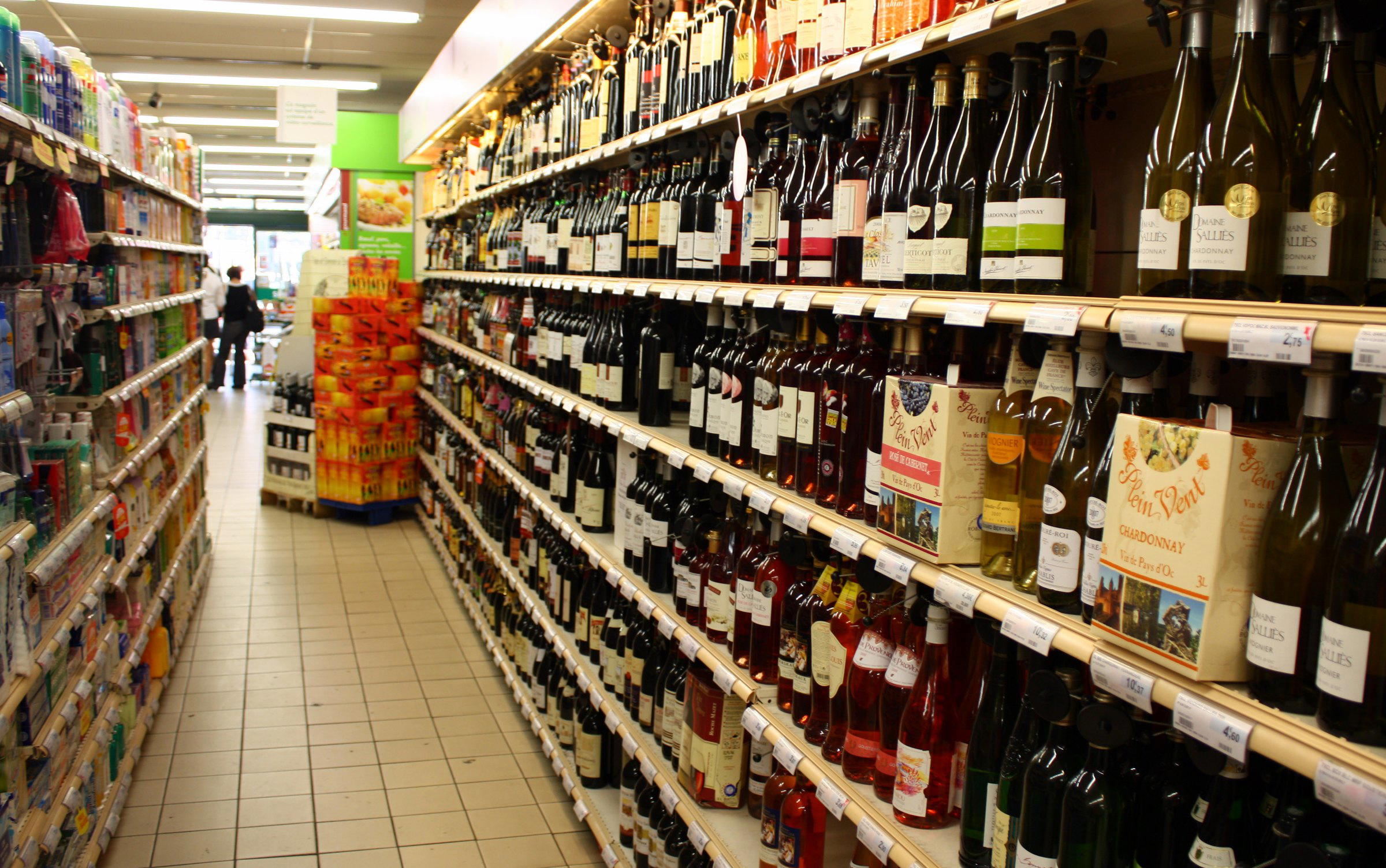
Wine's reliance on tradition and jargon is pushing new drinkers away. Millennials are now the largest group of US wine drinkers, but global consumption hit a 63-year low in 2024 and US sales fell 7.2%.
Wine's reliance on tradition and jargon is pushing new drinkers away. Millennials are now the largest group of US wine drinkers, but global consumption hit a 63-year low in 2024 and US sales fell 7.2%.
I love wine the way a lot of people love wine, with the slightly embarrassed awareness that loving it correctly seems to require homework. The terroir lectures. The pronunciation traps. The unspoken rule that you should know which bank of which river produced the bottle in your glass before you're allowed to say whether you like it. For a long time this was charming. It is no longer charming. It is killing the category.
Let's start with the numbers, because the numbers are not subtle. Two independent trackers converge on 2024 as the worst year for wine consumption in over six decades. Vinetur reports global wine consumption hit a 63-year low. OIV data, reported via just-drinks, pins the floor even more precisely: the lowest level since 1961. Globally, drinking fell 3% in 2024.
The US picture is worse. US wine sales fell 7.2% in 2024. That means the US market is contracting more than twice as fast as the global market, a 7.2% domestic drop against a 3% global decline. The Silicon Valley Bank State of the US Wine Industry Report is now in its 23rd annual edition, and across that arc you'd be hard pressed to find a more alarming inflection.
Here is the part that should keep producers awake. Millennials have overtaken boomers as the largest US wine-drinking cohort, now 31% of drinkers. In any normal narrative, that's a triumph: the generation everyone has been worried about has finally shown up. And yet US sales fell 7.2% anyway, meaning the millennial takeover is failing to offset a domestic decline running roughly 2.4 times faster than the global one. Demographic salvation arrived, and the bleeding continued.
You cannot blame Gen Z's sobriety statistics for that. You cannot blame GLP-1 drugs alone. You cannot even blame inflation in any clean way. The cohort the industry told itself would eventually "graduate" into wine has graduated, and the category is shrinking under their feet. The simplest explanation is also one uncomfortable one: when millennials show up to the wine aisle, they are not finding a product that talks to them, and they are leaving with something else.
Tradition in wine has always been sold as a feature. The vines are old. The family is older. The technique predates the printing press. The label has not been redesigned since a great-grandfather signed it in 1923. This is, on its merits, lovely. It is also, increasingly, a tax, paid by the consumer in cognitive load, and paid by the producer in lost shelf turn.
Consider what a thirty-year-old wandering into a wine shop is asked to know. Region versus grape, which varies by country. Vintage variation, which varies by region. Producer reputation, which varies by importer. Classification systems that are different in Bordeaux, Burgundy, Champagne, Tuscany, Piedmont, Rioja, the Mosel, and Napa, and that within each of those places have exceptions, sub-exceptions, and historical footnotes. The average wine label communicates less actionable information to a new drinker than the average can of seltzer, while demanding vastly more prior knowledge to decode.
Wine asks for more homework than other beverages because the industry has refused, for generations, to do the translation work. Karen MacNeil spent eight years writing The Wine Bible, an act of devotion that I admire enormously and that also, read in 2024 light, illustrates the problem.
The reason a definitive consumer-facing wine reference required nearly a decade of one expert's life is that the category is structured as a knowledge trap. You don't need an eight-year reference to understand beer. You don't need one to understand spirits, or hard seltzer, or the entire ready-to-drink cocktail boom that has been eating wine's lunch.
The tradition tax is what every new drinker pays just to participate. And paying taxes for fun is, broadly, not what people in their thirties want to do with their disposable income.
The industry's go-to response, for as long as I have been paying attention, has been some version of "we need to educate the consumer." More sommeliers. More wine clubs. More tasting rooms. More content. More certifications. The premise is that if people only understood wine the way insiders understand it, they'd love it the way insiders love it.
This premise is wrong, and the 2024 numbers prove it. Education has never been more available. There are more wine podcasts, more wine TikTok accounts, more wine newsletters, more wine sommeliers per capita in major US cities, and more direct-to-consumer wine club mailers cluttering kitchen counters than at any previous moment in history. And US sales fell 7.2% while global consumption hit a 63-year low. The educational firehose is on. The bucket is leaking faster than the firehose fills it.
The reason "educate the consumer" doesn't work is that it is a category-side framing of what is actually a product-side problem. You don't have to educate anyone to enjoy a White Claw. You don't have to educate anyone to enjoy a margarita in a can. You don't have to educate anyone to enjoy a craft beer with a flavor description on the can that tells you, in plain English, whether it tastes like grapefruit or coffee. These products did the translation work for the consumer. Wine, by and large, has refused to.
And when wine has done the work, see the entire natural wine movement, see the rise of pet-nat in the same demographic that allegedly doesn't drink wine, see canned wine when it's done with confidence, those products grow. The lesson is sitting in plain sight. Translate the category, and the category responds. Refuse to, and the category contracts.
Return to particularly damning fact in this whole picture. Millennials are now 31% of US wine drinkers. They have, by sheer demographic weight, taken the throne. The industry got what it asked for.
And US sales still fell 7.2%.
They are drinking less of it per occasion. They are drinking it less often. They are switching out of it more readily. They drink without cellars and without loyalty to producers whose marketing predates the iPhone. The cohort showed up; the consumption pattern did not transfer.
This is the part where tradition stops being charming and starts being expensive. A producer whose entire brand architecture rests on "we have been doing this since 1875" is, in 2024, communicating something the millennial buyer increasingly hears as: this product is for someone else. The signaling worked beautifully when the audience was a boomer who associated heritage with quality. It works much less well for an audience that associates heritage with stodginess and price gouging.
The producers I see growing inside this collapsing market are the ones who treat tradition as an ingredient. They use the old vineyard. They use the old technique. And then they put it in a bottle that a thirty-two-year-old can pick up, understand within five seconds, and feel okay about Instagramming. That is the only way tradition survives the transition.
I want to be careful here, because there is a lazy version of this argument that says wine should become more like seltzer, flatter, sweeter, simpler, anonymized.
What I'm arguing for is translation, not dilution. The wine itself can be exactly as serious as it has always been. What has to change is the layer between the wine and the buyer: the label, the shelf positioning, the language, the price architecture, the format. A 2017 single-vineyard Nebbiolo can be a magnificent thing and also live on a shelf next to a clearly written description, an honest price, a QR code that takes you to a thirty-second video instead of a six-page tasting note, and a bottle design that doesn't look like it was rejected from a 1978 estate-planning brochure.
The producers who figure this out in the next five years are going to inherit the category. The ones who keep telling themselves that the problem is consumer ignorance, that what's needed is more education, more reverence, more gatekeeping, are going to find themselves writing increasingly defensive editions of the SVB State of the US Wine Industry Report, which is already in its 23rd annual edition and which has watched this slow-motion failure unfold in real time.
The thing I keep coming back to is the velocity. A 3% global decline would be a manageable headwind on its own, a category resetting, a healthy correction. A 7.2% US decline in the same year is something else. It's the sound of a market that has lost the ability to defend itself in its single largest premium territory, even as that territory's dominant new cohort, millennials at 31%, was supposed to be the rescue.
And the consumption floor is a global story. Global wine drinking at its lowest level since 1961 means the category has unwound more than half a century of growth. That is a generational reset, and generational resets do not reverse on their own. They reverse when somebody changes the product.
Tradition will be fine. Old vines will keep producing. Families will keep handing estates down. The question is whether the bottles those estates make in 2026, 2027, and 2028 will be designed for the buyer who actually exists, or for the buyer the industry wishes still existed. Right now, far too many producers are designing for the second one. The 7.2% is what designing for a phantom buyer costs you.
If you make wine, stop treating your label as a museum plaque. Treat it as a five-second pitch to a thirty-year-old who has eleven other things in their cart. If you sell wine, stop arranging your shelves by region and start arranging them by occasion, mood, or flavor, the way every other beverage category figured out a decade ago.
If you write about wine, stop assuming the reader has done the homework, and stop punishing them when they haven't. If you drink wine and love it, the pro-tradition thing you can do right now is buy from the producers who are translating, not the ones who are gatekeeping.
Because the alternative is watching a 63-year low become a 70-year low, and then a 75-year low, while the people who could have saved the category keep insisting that the problem is everyone else.
Wine doesn't need to abandon what makes it wine. It needs to stop charging admission to learn what that is. The bill for not doing that work is already on the table, and 2024 just told us how big it is.
Header photo: Andy Mitchell, CC BY-SA 2.0, via Wikimedia Commons.
Get the App
Take the shortlist into the En Primeur Club app for concierge access, saved places, and the next step after discovery.
Get Exclusive AccessMore from the editors
.jpg)