← Guides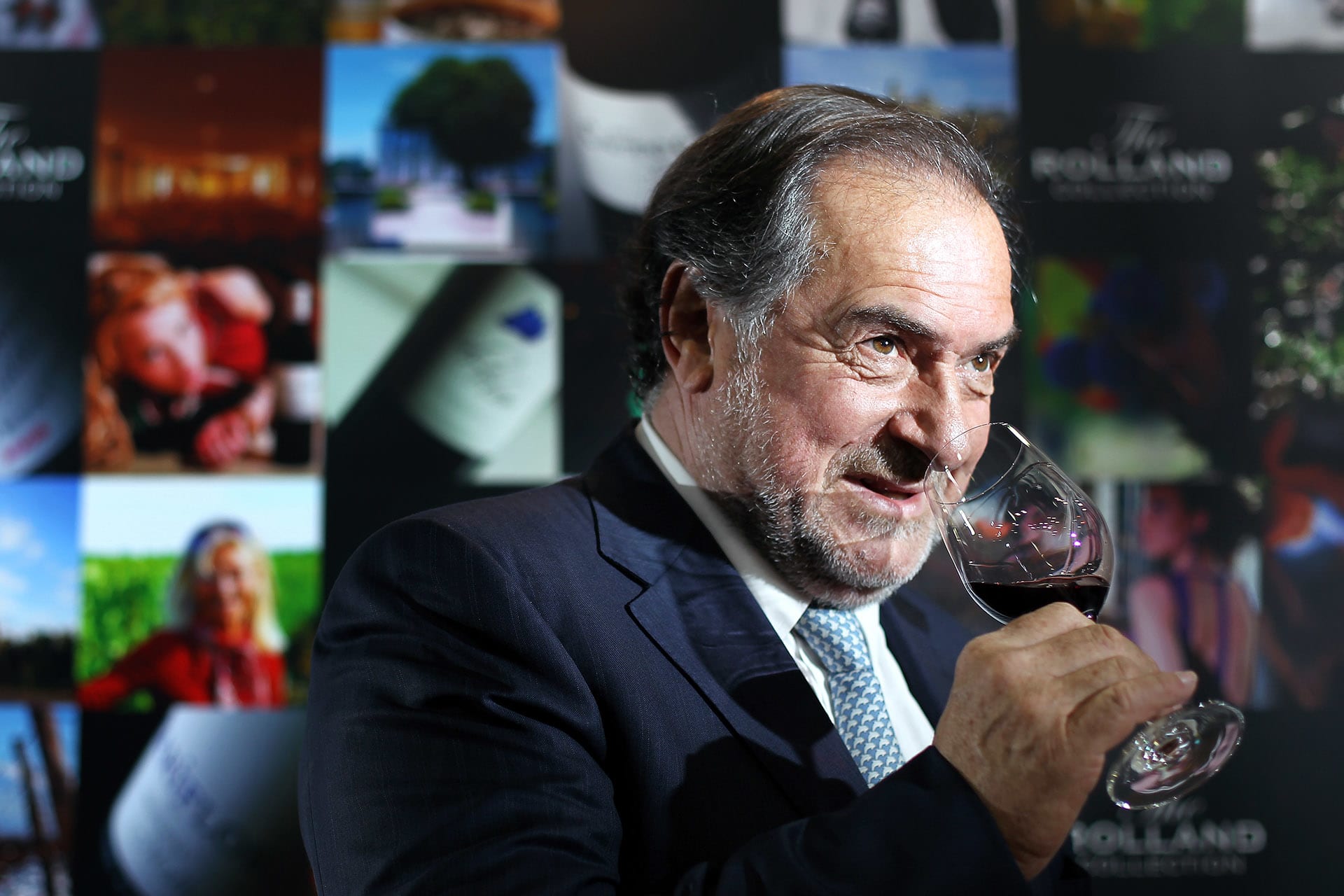
Michel Rolland, the original flying winemaker, has died at 78. His 50-year career touched more than 150 estates across 14 countries — and changed how the world thinks about wine.
Michel Rolland, the original flying winemaker, has died at 78. His 50-year career touched more than 150 estates across 14 countries — and changed how the world thinks about wine.
At any given moment over the past half-century, Michel Rolland might have been tasting barrel samples in Pomerol at dawn, boarding a flight to Oakville by midday, and reviewing blending trials in Mendoza by nightfall.
The man who earned the title of the original "flying winemaker", a Bordeaux oenologist whose consulting reach stretched across 14 countries on five continents, died from a heart attack on Friday at the age of 78, according to The Drinks Business. No single figure in modern winemaking touched more cellars, shaped more cuvées, or provoked more debate.
The Michel Rolland legacy is not a footnote in wine history. It is the spine of the book.
To understand Rolland's influence, you have to understand Bordeaux in the 1970s. The decade delivered a brutal run of vintages that left the region struggling for quality and confidence. Rolland, born in Libourne in 1947 into a family of Pomerol winegrowers, the family estate being Château Le Bon Pasteur, was among the oenologists credited with helping Bordeaux find its footing again. He didn't do it from behind a desk. He did it in the chai, in the vineyard, and eventually on planes crisscrossing the globe.
His education had prepared him for exactly this kind of ambition. After studying at the Tour Blanche Viticultural and Oenology school in Bordeaux, where he was one of five students chosen by director Jean-Pierre Navarre to evaluate the program's quality against that of the Bordeaux Oenology Institute, Rolland enrolled at the Institute itself.
There he studied under Pierre Sudraud, Pascal Ribéreau-Gayon, Jean Ribéreau-Gayon, and Émile Peynaud, figures he described as the "fathers of modern oenology" and a great influence on his work. That lineage matters. Peynaud, in particular, had already begun transforming Bordeaux winemaking through rigorous science and cellar hygiene.
Rolland would take that scientific rigor and carry it, literally, around the world.
What set Rolland apart from his contemporaries was not just technical skill but a willingness to move. Before budget airlines and video calls, he was logging hundreds of thousands of air miles each year, visiting estates in person, tasting through fermentations, adjusting blends. The term "flying winemaker" existed before Rolland, but he gave it gravity. His 50-year career and its reach, more than 80 Bordeaux estates, more than 150 international wine estates, remain unmatched by any single consulting oenologist.
The engine behind Rolland's career was Laboratoire Rolland, the wine analysis and consultation laboratory he established in 1973 in Pomerol with his wife Dany, also an alumna of the University of Bordeaux. The laboratory offered analysis, consultation, and collaboration with ten other oenologists, and it grew quickly. According to The Drinks Business, it served more than 400 wine-growing estates at its peak, a staggering client list for a laboratory rooted in a small Pomerol town.
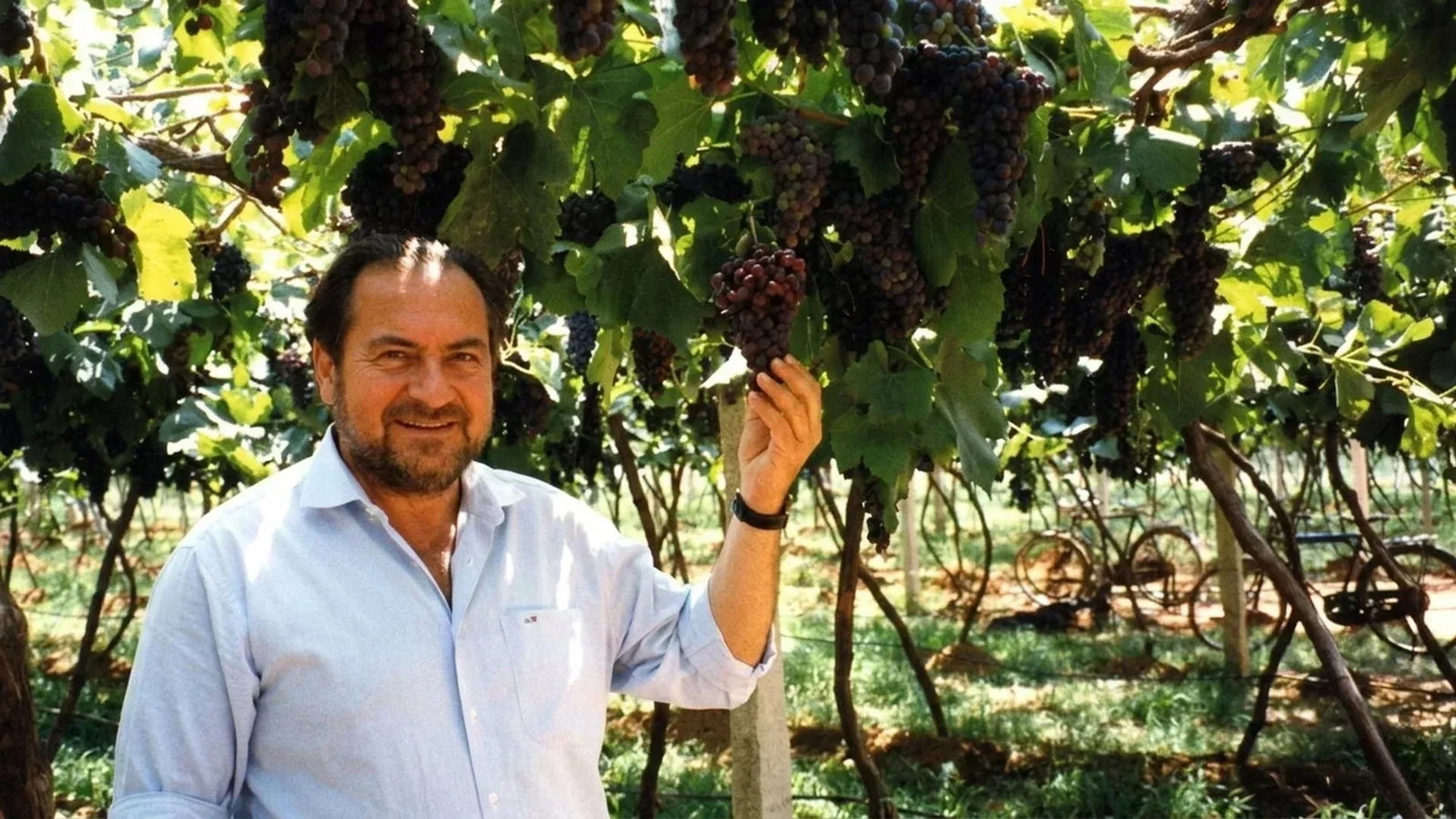
His first Bordeaux clients included Château Troplong Mondot, Château Angélus, and Château Beau-Séjour Bécot. Over the decades, the roster expanded to include Château Figeac, Château Pontet-Canet, Saint-Émilion Premier Grand Cru Classé A estates Château Ausone, Château Angélus, and Château Pavie, as well as La Conseillante and the Bordeaux estates of Vignobles André Lurton. More than 80 Bordeaux properties in total. That number alone would constitute a career. For Rolland, it was the home base.
The international portfolio was even broader. Rolland consulted for more than 150 wine estates across Europe, France, Spain, Italy, Croatia, Armenia, as well as North and South America, South Africa, India, and Israel.
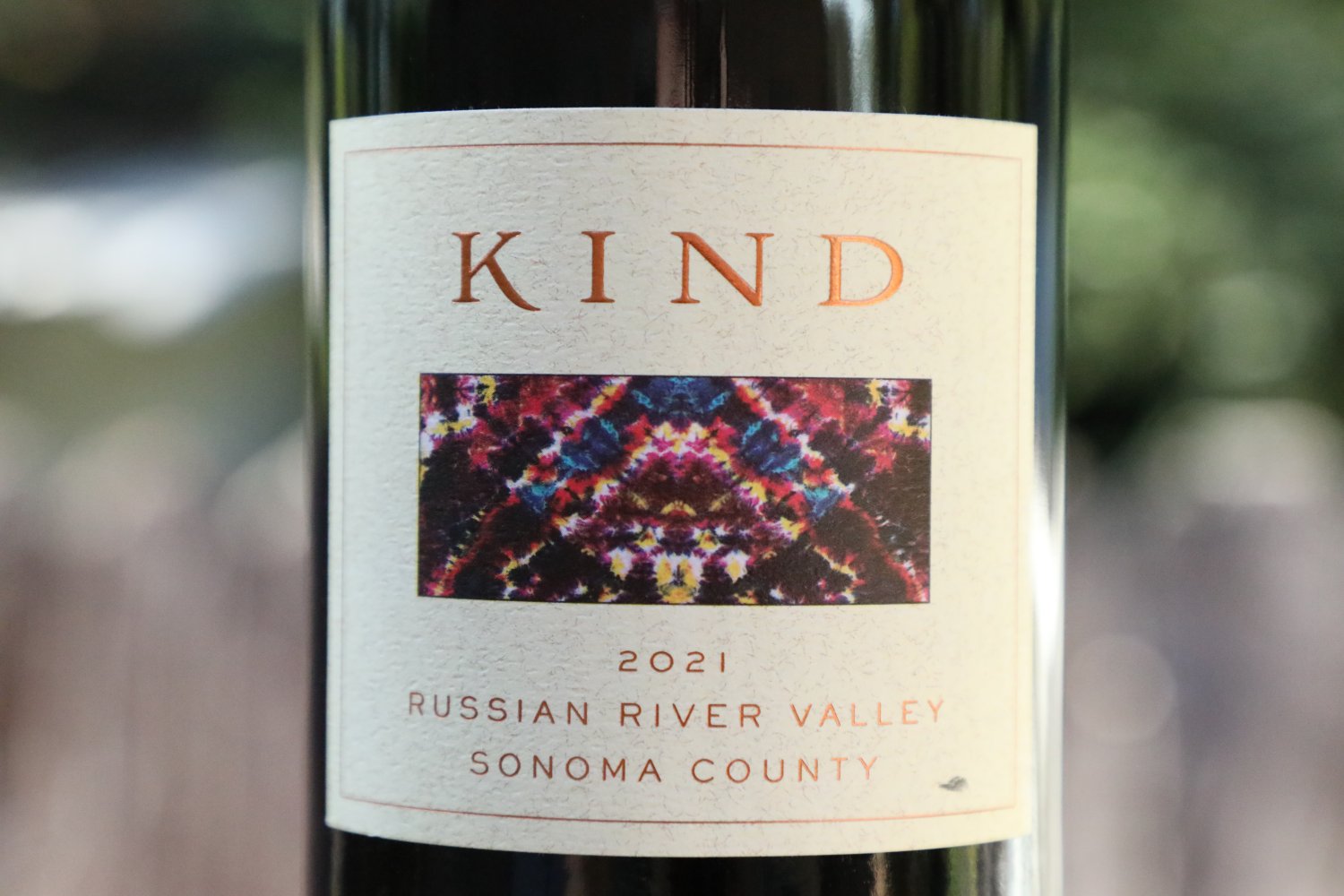
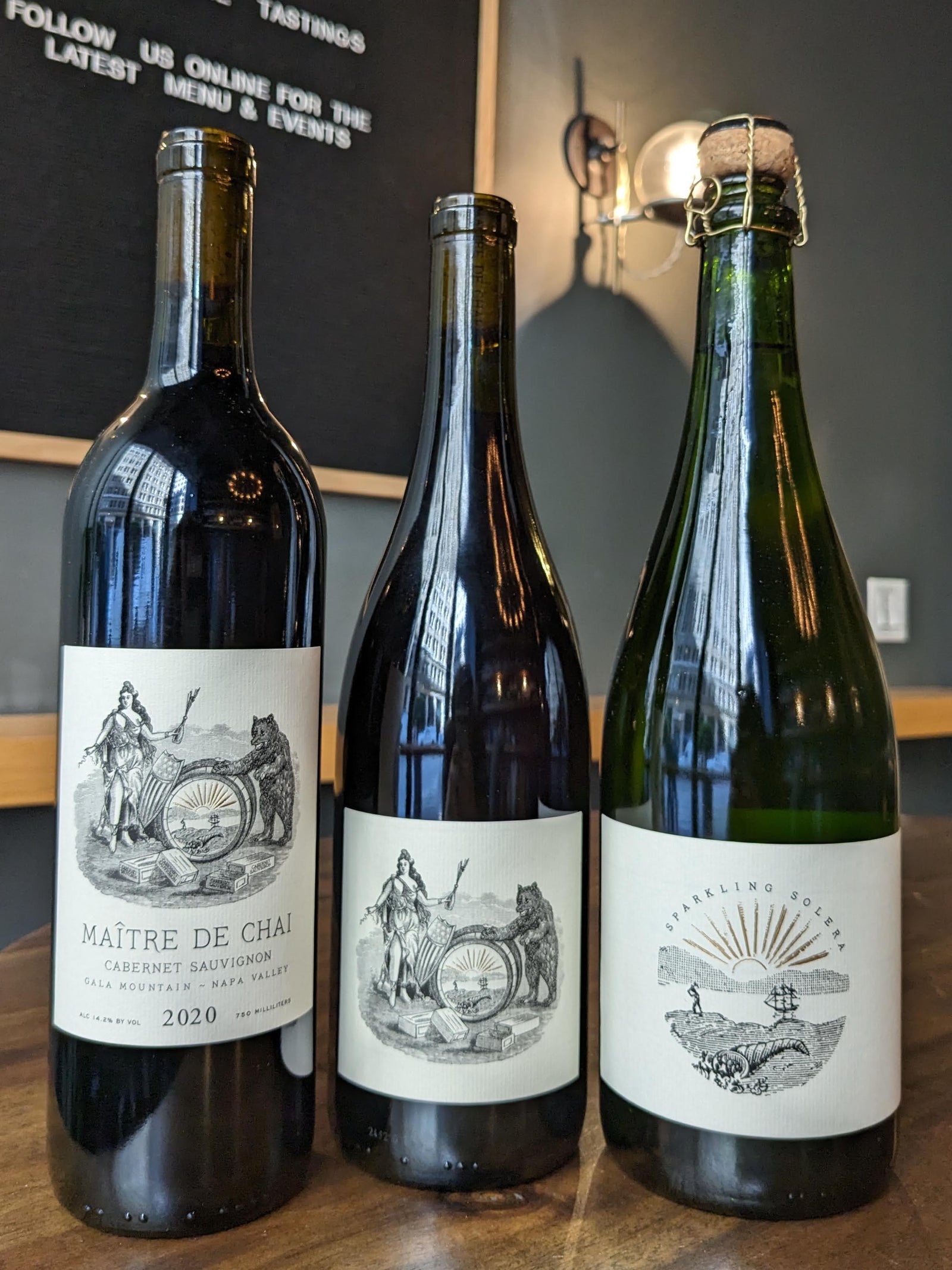
The names read like a collector's wish list: Ornellaia and Monteverro in Italy; Casa Lapostolle in Chile; Marqués de Cáceres in Spain; Harlan Estate, Dalla Valle Vineyards, Bryant Estate, Ovid Napa Valley, Staglin Family Vineyard, St. Supéry, Jericho Canyon Vineyard, and Lithology across Napa Valley's appellations from Oakville to Pritchard Hill to St.
Helena. He consulted for Armavir in Armenia and worked with China's state-owned conglomerate COFCO across its domestic and imported wine portfolio. He also partnered in joint ventures including Clos de Los Siete in Argentina and Campo Eliseo in Spain.
If you have ever opened a bottle from any of these estates, you have tasted, at least in part, the Michel Rolland legacy at work.
Critics often reduced Rolland to a caricature: the man who made every wine taste the same, who favored extraction and new oak, who homogenized terroir in pursuit of high scores. Rolland's own words tell a different story.
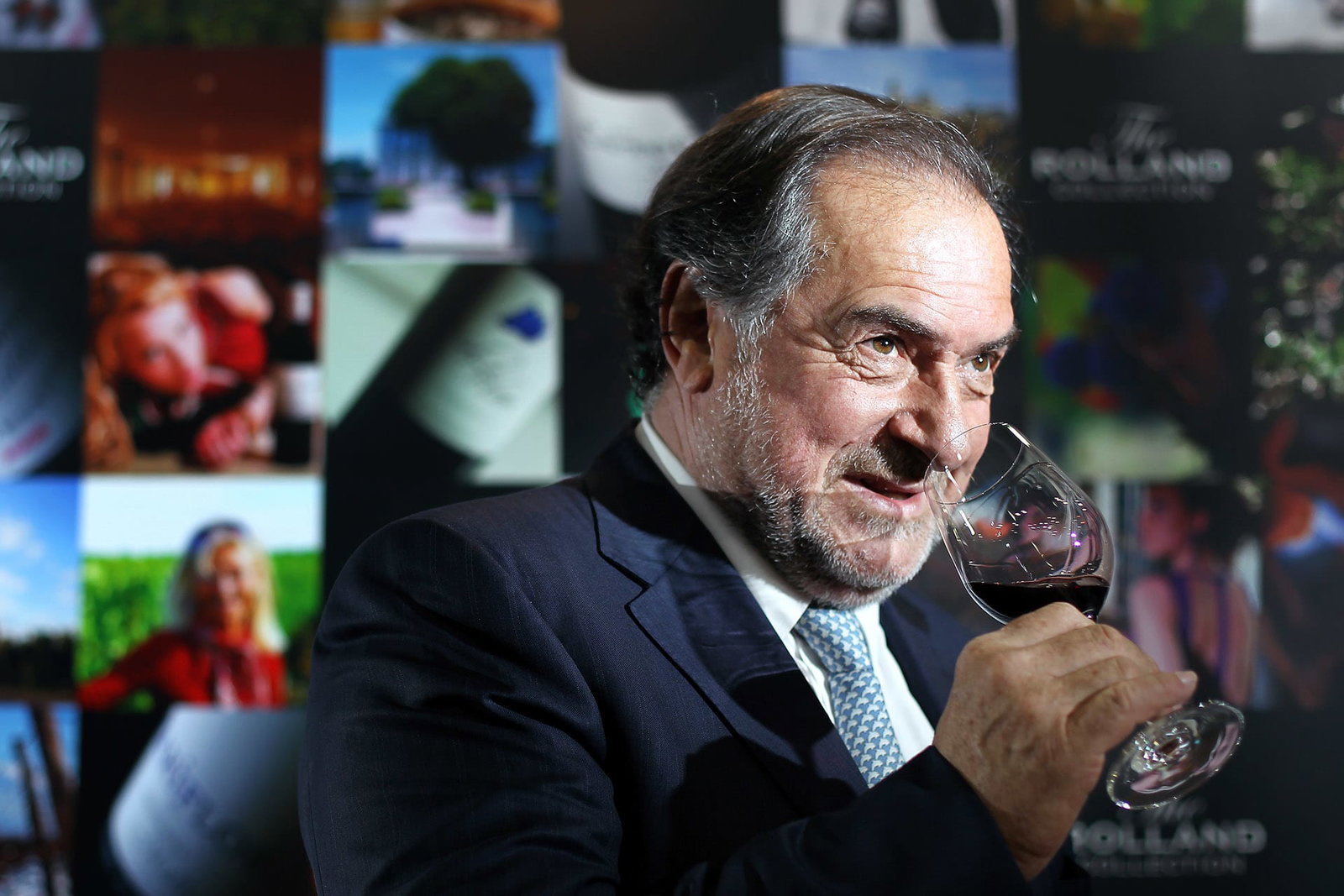
"I never look for a style," he told The Drinks Business. "I'm looking for the wine in the location where I am."
That sentence, deceptively simple, was the philosophical core of his work. Rolland argued that blending is not merely the amalgamation of wines made from different grape varieties. It extends to single-varietal wines composed of fruit from different plots, each plot contributing its own character to the final assemblage. He believed that whatever the target market, a wine should relate to its source. Terroir, in Rolland's hands, was not a marketing slogan. It was a technical challenge, how to reveal stronger examples from a site through the act of blending.
He described the current winemaking era as "a golden age of blending," arguing that one of the reasons wine quality is so high today is precisely because the art and science of assemblage have advanced so far. In a Proust-style interview with The Drinks Business, he quipped that "his nose" was one of his most treasured possessions, a self-deprecating nod to the sensory tool that underpinned five decades of tasting, evaluating, and deciding which lots to blend and which to set aside.
Rolland was also an early advocate of "hyperselection" through the use of optical sorting machines, a technology that allows winemakers to remove damaged or underripe berries with a precision impossible by hand alone. The technique has since become standard at top estates worldwide. Rolland saw it early and pushed for its adoption, a pattern that repeated throughout his career: identify a tool or technique that could raise quality, then champion it across his client network.
No profile of Rolland is complete without addressing the backlash. The 2004 documentary Mondovino, directed by Jonathan Nossiter, cast Rolland as a central figure in the perceived globalization of wine, a consultant who, alongside critic Robert Parker, was accused of flattening regional identity in favor of a rich, ripe, oak-driven style that scored well but erased distinctiveness. The film was polarizing. It made Rolland famous far beyond wine circles and turned him into a symbol of a debate that still simmers: does consulting oenology sharpen terroir or erase it?
Rolland's career offers its own rebuttal. The sheer diversity of his client list, from Pomerol to Pritchard Hill, from Fronsac to the Colchagua Valley, makes it difficult to argue that every wine he touched tasted the same. Ornellaia's Bolgheri blend and Harlan Estate's Oakville Cabernet are profoundly different wines, shaped by different soils, climates, and grape varieties. What Rolland brought to each was a methodology: rigorous fruit selection, attentive élevage, and above all, the blending skill to find the expression of a given site in a given year.
He was not immune to friction. Early in his career, Rolland lost two Saint-Émilion first growths, Château Canon and Château La Gaffelière, due to disagreements in style with their owners. He later said the experience led him to "calm down." Both estates returned to the fold more than 20 years later. That arc, the young consultant pushing too hard, learning restraint, and earning back trust through results, says more about Rolland's evolution than any documentary ever could.
The criticism, too, evolved. As natural wine movements gained traction and low-intervention philosophies found their audience, Rolland's interventionist approach drew fresh scrutiny. But the estates he advised continued to produce wines that collectors sought and critics scored highly. The market, in the end, rendered its own verdict.
In 2013, Rolland sold Château Le Bon Pasteur, the family estate in Pomerol where he had grown up among the vines, to Chinese businessman Pan Sutong. It was a significant personal transition, though Rolland maintained his own estates: Château Fonténil in Fronsac and Val de Flores and Bodega Rolland in Argentina.
He also continued to build collaborative ventures. With Spanish wine entrepreneur Javier Galarreta of Araex, he produced R&G, a range of wines from Rueda, Rioja, and Ribera del Duero designed to retain regional character while appealing to an international palate.
Other partnerships included Bonne Nouvelle and Remhoogte in South Africa, and Pangea, a collaboration with Canadian-born South African investor Travis Braithwaite, which released a Bordeaux-style multi-blend cuvée made from grapes spanning five countries on three continents.
In 2022, Rolland handed the majority shareholding of the newly renamed Laboratoire Rolland & Associés to his business partners Jean-Philippe Fort, Mikaël Laizet, and Julien Viaud. The succession was deliberate, a recognition that the institution he and Dany had built in 1973 needed to outlast its founder. But stepping back from the laboratory did not mean stepping back from wine. According to an email sent to clients by Laboratoire Rolland on Friday, Rolland was "still full of energy, projects, and travel plans" right until his heart attack.
That detail, a man of 78 still planning his next trip, his next tasting, his next blend, captures something essential about Rolland. He did not slow down because the work was not finished. For a consultant whose philosophy centered on finding the wine a place could produce, there was always another place, another vintage, another assemblage to get right.
For collectors and enthusiasts, the Michel Rolland legacy is embedded in bottles already sitting in cellars around the world.
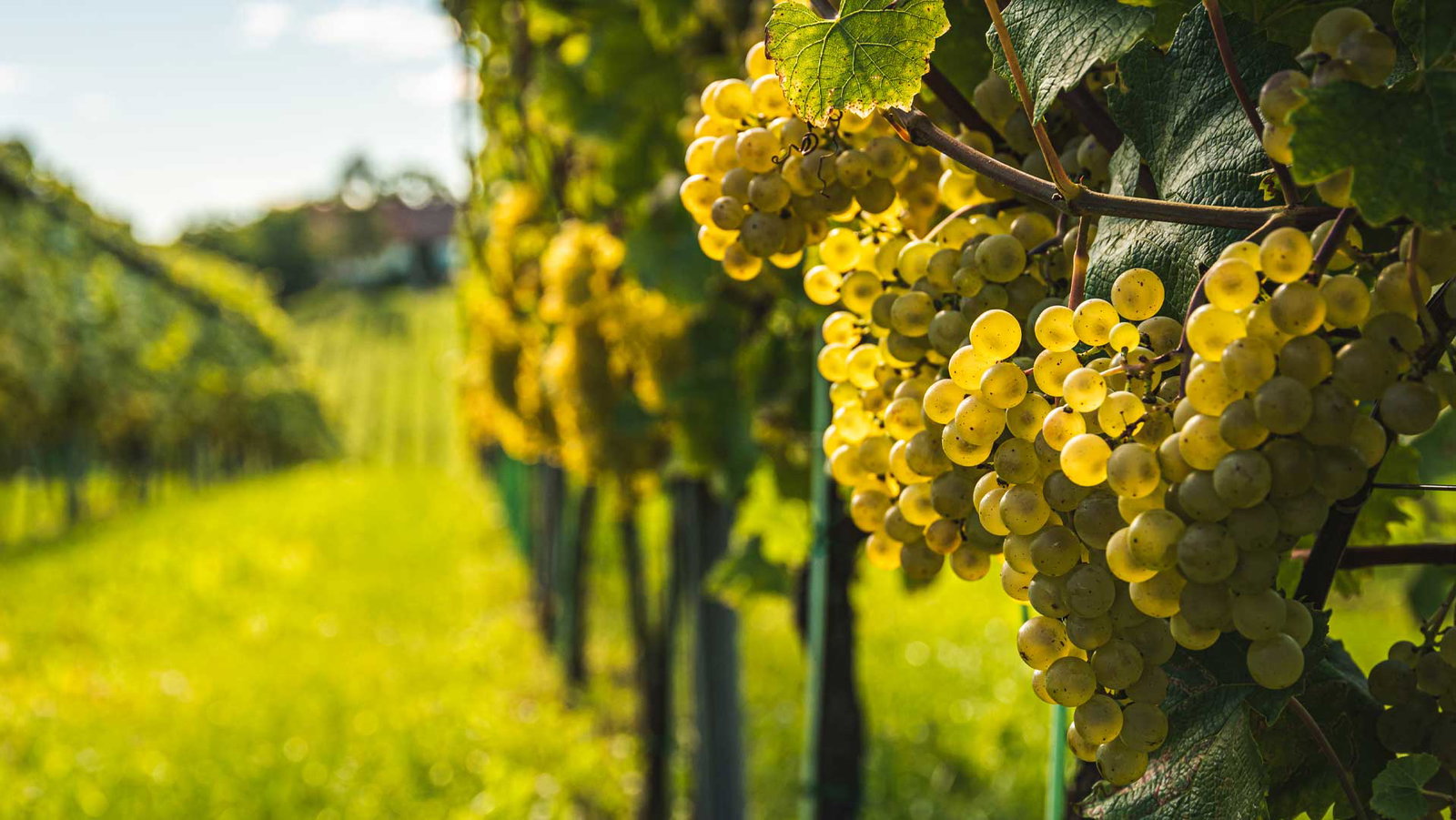
His consulting fingerprint appears on wines from Château Ausone and Château Pavie in Saint-Émilion, Château Pontet-Canet in Pauillac, La Conseillante in Pomerol, Ornellaia in Bolgheri, Harlan Estate in Oakville, Casa Lapostolle in Chile, and Clos de Los Siete in Argentina, among dozens of others.
Understanding that Rolland advised these estates does not diminish them. It contextualizes them. It helps explain certain stylistic threads, the emphasis on fruit purity, the precision of the blend, the attention to extraction and élevage, that run through otherwise different wines from different places.
His own estates offer a more intimate window. Château Fonténil in Fronsac, a less celebrated appellation than Pomerol or Saint-Émilion but one Rolland believed in, reflects his conviction that great wine can come from sites the market undervalues. Val de Flores and Bodega Rolland in Argentina represent his commitment to the Malbec-driven wines of Mendoza, a region he helped put on the international fine wine map through Clos de Los Siete and his own labels.
The breadth is almost disorienting. From Staglin Family Vineyard in Rutherford to Marqués de Cáceres in Rioja, from Bryant Estate on Pritchard Hill to Amphorae Winery in Israel, the consulting portfolio reads less like a client list and more like an atlas of modern fine wine. Rolland did not just visit these places. He shaped the wines they made.
Laboratoire Rolland & Associés continues under Fort, Laizet, and Viaud, the partners Rolland chose to carry the work forward. The methodology endures. The client relationships endure. But the man who could walk into a cellar in Tuscany on Tuesday and a chai in Pomerol on Thursday, tasting with a palate calibrated across five decades and five continents, that singular instrument is gone.
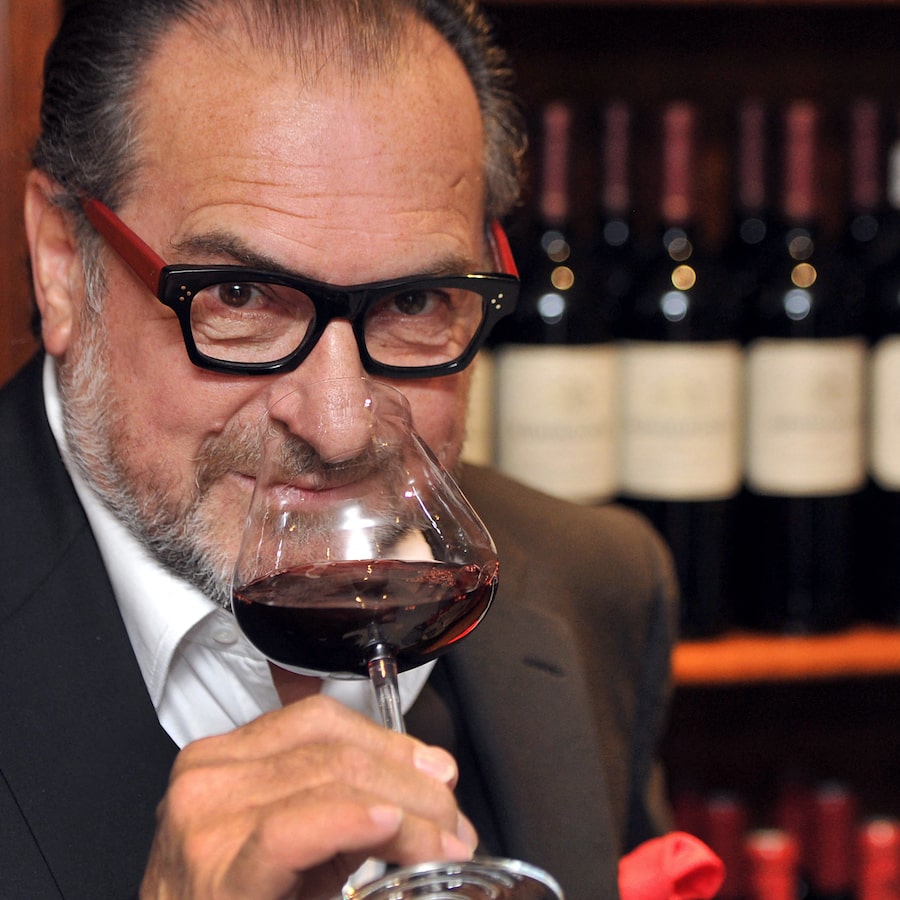
The debate Rolland provoked will outlast him, too. Every time a winemaker hires a consultant, every time a critic questions whether a wine tastes "of its place" or "of its maker," the conversation circles back to the questions Rolland spent his career answering, or refusing to answer in the way his critics wanted. He never claimed to have a style. He claimed to have a method. The distinction matters.
Rolland's influence is woven so deeply into the fabric of modern winemaking that separating it out is nearly impossible. The optical sorting machines now standard at top estates. The emphasis on blending as a creative act, not just a corrective one. The idea that a consulting oenologist could work across appellations, across countries, across continents, and still produce wines that spoke of where they were grown. These are not abstract contributions. They are in the glass every time you open a bottle from an estate Rolland touched, and from many he never did, because his methods became the methods of an entire generation.
He was, as he put it, looking for the wine in the location where he was. He just happened to be in more locations than anyone else.
Get the App
Take the shortlist into the En Primeur Club app for concierge access, saved places, and the next step after discovery.
Get Exclusive AccessMore from the editors