← Guides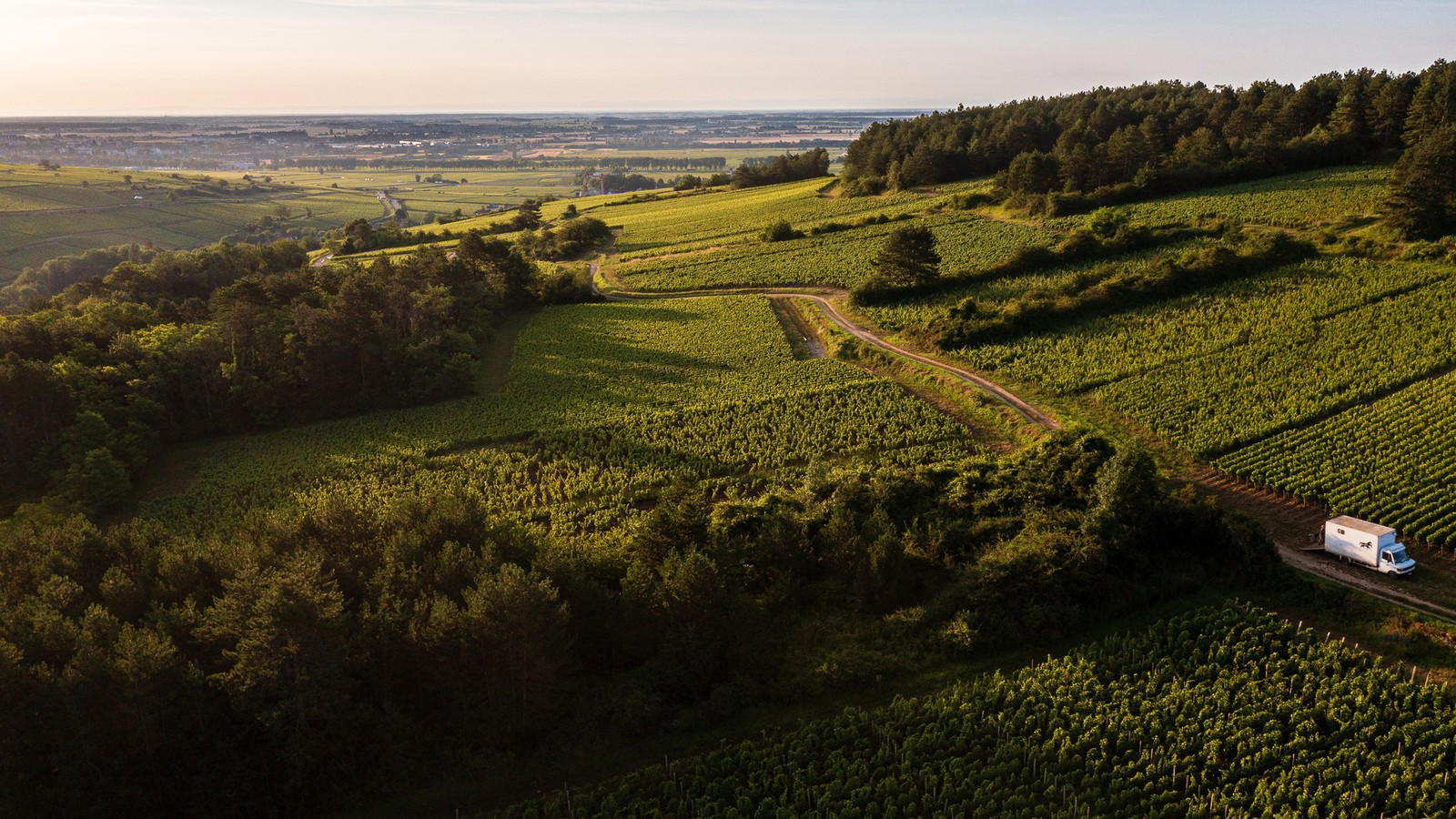
The Syndicat des Hautes-Côtes' Horizon initiative, backed by the BIVB, puts Burgundy's high-altitude plateau on the map, and the window to buy before prices catch up is closing.
The Syndicat des Hautes-Côtes' Horizon initiative, backed by the BIVB, puts Burgundy's high-altitude plateau on the map, and the window to buy before prices catch up is closing.
There are about 2,400 hectares of land in Burgundy classified for AOC wine production that nobody has planted yet.
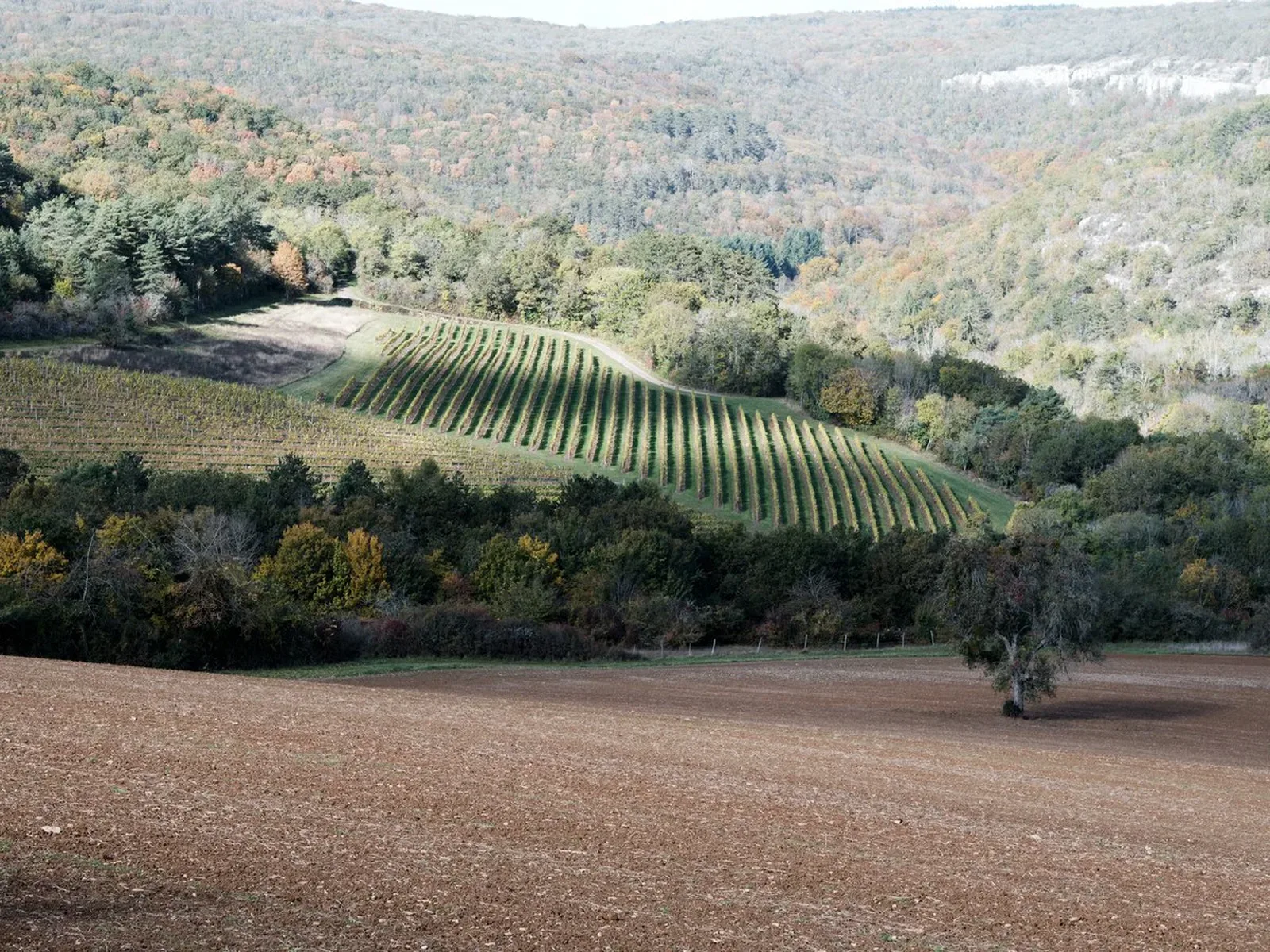
They sit above the Côte d'Or escarpment, between 300 and 460 metres, where the nights run cooler, the limestone breaks into granite near Maranges, and the villages, Meloisey, l'Étang-Vergy, Magny-lès-Villers, barely register on most collectors' radar. The Syndicat des Hautes-Côtes, the appellations' own growers' body (ODG), has noticed.
Its formal 'Horizon Hautes-Côtes' initiative, backed by the full institutional weight of the Bureau Interprofessionnel des Vins de Bourgogne, is now mapping this plateau, geologically, climatically, and commercially, with the explicit aim of making the Hautes-Côtes Burgundy value frontier the region's next serious address.
For collectors and wine travelers who move early, the timing is precise.
The Hautes-Côtes appellation didn't exist on paper until 1961, a full 24 years after the regional Bourgogne appellation was codified in 1937. That gap tells you something about how the plateau was regarded.
After phylloxera swept through Burgundy in the late 19th century, growers replanting the high slopes prioritized yield over quality, producing inexpensive bulk wine that cemented the region's reputation as the Côte d'Or's poor relation. Wine production was effectively at a nadir from the end of the 19th century through the Second World War.
The 1961 appellation designation was a first step toward rehabilitation, but the stigma of those bulk-wine decades proved durable.
The geography itself contributed to the confusion. The Hautes-Côtes de Beaune stretches across the hills from Corton down to Maranges, south of Santenay, a broad, sprawling arc. The Hautes-Côtes de Nuits is more compact, confined to the hills above the southern Côte de Nuits from Chambolle-Musigny to Nuits-Saint-Georges. Together they span 47 villages and produce an average of nearly 9 million bottles of red, white, and rosé wine annually. Some 1,838 hectares are currently planted, but the roughly 2,400 hectares of unplanted, AOC-classified land still available for expansion is the figure that stops you mid-sentence.
The internal diversity is equally underappreciated. Nicolas Thévenot, head of the Hautes-Côtes growers union, puts it plainly: "Many vines are planted on clay and limestone soils similar to those found at lower elevations in the Côte d'Or, although it is also possible to have granite soils in the south near Maranges. The one common element is the elevation."1 That elevation is, increasingly, the point.
One structural obstacle to recognition persists: in export markets, négociant houses routinely buy grapes that qualify as Hautes-Côtes and sell them under a simple Bourgogne label. The appellation name disappears before it reaches the shelf. That practice has kept village names invisible to international buyers even as the quality inside the bottles has quietly improved. Saint-Romain offers a precedent for what happens when a Hautes-Côtes village earns its own identity, it was once classified within the appellation and is now a stand-alone cru. The question is which village moves next.
| Sub-appellation | Geographic Position | Elevation Range | Dominant Soil Types | Hectares Currently Planted | Key Village Referenced | Benchmark Producer |
|---|---|---|---|---|---|---|
| Hautes-Côtes de Beaune | Hills from Corton south to Maranges / Santenay | 300 to 460 m | Clay-limestone; granite near Maranges | Majority of the 1,800+ ha total | Meloisey | Denis Carré |
| Hautes-Côtes de Nuits | Hills above southern Côte de Nuits, Chambolle-Musigny to Nuits-Saint-Georges | 300 to 460 m | Clay-limestone | Remainder of the 1,800+ ha total | Magny-lès-Villers | N/A |
If you ask producers on the plateau which village has the clearest claim to leading the next wave, Meloisey comes up first. It is an ancient village in the Hautes-Côtes de Beaune with a mix of historic domaines and younger producers starting new properties, the latter still possible here in a way it hasn't been on the Côte de Beaune floor for decades.
Denis Carré is the benchmark reference: a winemaker whose domaine in Meloisey has demonstrated for years that terroir-expressive Pinot Noir and Chardonnay are achievable at this altitude, not as approximations of village-level Côte de Beaune but as wines with their own taut, high-acid character.
The vineyard name that appears on labels from this village, La Perrière, signals the direction the serious producers are moving. Rather than leaning on the appellation name alone, they are building recognition parcel by parcel, the same way Burgundy's premier crus earned their reputations over generations.
Agnès Paquet also works from Meloisey, and her wines from La Perrière carry the lifted, red-fruited profile that defines the stronger Hautes-Côtes de Beaune: Pinot Noir with a nervy acidity and violet aromatics that distinguish it sharply from the richer, more extracted style of the Côte de Beaune floor.
That freshness is not a limitation, it is the argument for the appellation in a warming climate.
The current generation of producers in Meloisey includes both those inheriting established estates and passionate newcomers building from scratch. That combination, institutional memory plus new energy, is precisely the dynamic that preceded quality leaps in other Burgundy villages. The fact that land is still acquirable here, and that a young winemaker can still start a domaine without generational wealth, is itself a signal that the Hautes-Côtes Burgundy value frontier has room left to run.
Saint-Romain's trajectory is the clearest proof of concept the Hautes-Côtes has. Once classified within the appellation, it earned stand-alone cru status, a promotion that came precisely because its wines developed a recognizable, altitude-driven identity that buyers could name and return to. The elevation that once marked Saint-Romain as peripheral is now its defining asset: cooler growing-season temperatures, longer hang time, and the kind of natural acidity that winemakers on the Côte de Beaune floor are increasingly chasing through earlier picking dates and cellar intervention.
Agnès Paquet's work at La Perrière is one instructive current example of what that altitude can produce. Her Chardonnay from this parcel carries the tension of a wine grown where ripeness is earned rather than assumed, green apple and citrus rather than stone fruit, with a mineral persistence that reads as precision rather than underripeness. For sommeliers building lists around freshness-driven Burgundy, La Perrière is the kind of address that circulates quietly before it appears in print. The allocation is small, the profile is specific, and the price still reflects the appellation rather than the quality inside the bottle.
The Saint-Romain precedent also matters for how collectors should think about the broader Hautes-Côtes. The cru's elevation from appellation wine to stand-alone status didn't happen overnight, it required producers building a consistent house style, critics noticing, and buyers returning. That process is now underway across multiple Hautes-Côtes villages simultaneously, accelerated by the BIVB's institutional attention and the climate-change argument that makes high-altitude sites structurally more valuable than they were twenty years ago.
The Hautes-Côtes de Nuits is the more compact of the two appellations, confined to the hills above the southern Côte de Nuits, from Chambolle-Musigny to Nuits-Saint-Georges, and it has historically sat in the shadow of its more southerly counterpart. Alexandre Parigot is making the case that the northern plateau can match the Hautes-Côtes de Beaune for complexity and, in the right parcels, for age-worthiness.
The two vineyard names to note are Les Dames Huguettes and En Bully. Both sit within the commune of Nuits-Saint-Georges but are classified as Bourgogne Hautes-Côtes de Nuits, a designation that currently undersells them.
Parigot's single-vineyard bottlings from these parcels produce Pinot Noir with the structure you would expect from proximity to the Côte de Nuits: darker fruit, firmer tannin architecture, and a depth that rewards three to five years of cellaring.
The contrast with the more lifted, red-fruited style of Meloisey is instructive, the Hautes-Côtes is not a monolithic appellation, and the stronger producers are already making that argument through their labels.
Laurent Delaunay, co-president of the BIVB and head of Maison Edouard Delaunay, based at Château de Chaumont in l'Étang-Vergy, directly above Nuits-Saint-Georges, is among the more prominent voices making the case for the Hautes-Côtes de Nuits from an institutional perspective.
His position at the BIVB gives him both the platform and the commercial incentive to push the appellation's profile in export markets, where the négociant habit of downgrading Hautes-Côtes grapes to simple Bourgogne has done the damage.
The Edouard Delaunay Le Mont, Hautes-Côtes de Nuits 2022, with its bright lemon peel aromatics, white flowers, and finesse, is a useful entry point for understanding what the northern plateau produces at its most polished.
The Hautes-Côtes de Nuits also benefits from proximity to some of Burgundy's most storied names. Domaine de la Romanée-Conti once vinified several vintages of grapes grown at the Abbaye Saint-Vivant de Vergy, a detail that says something about the plateau's potential, even if those vines were ultimately pulled up. Anne Gros, Emmanuel Rouget, and Sylvain Cathiard all produce Hautes-Côtes de Nuits cuvées, giving international buyers a familiar name on the label as an introduction to the appellation's character.
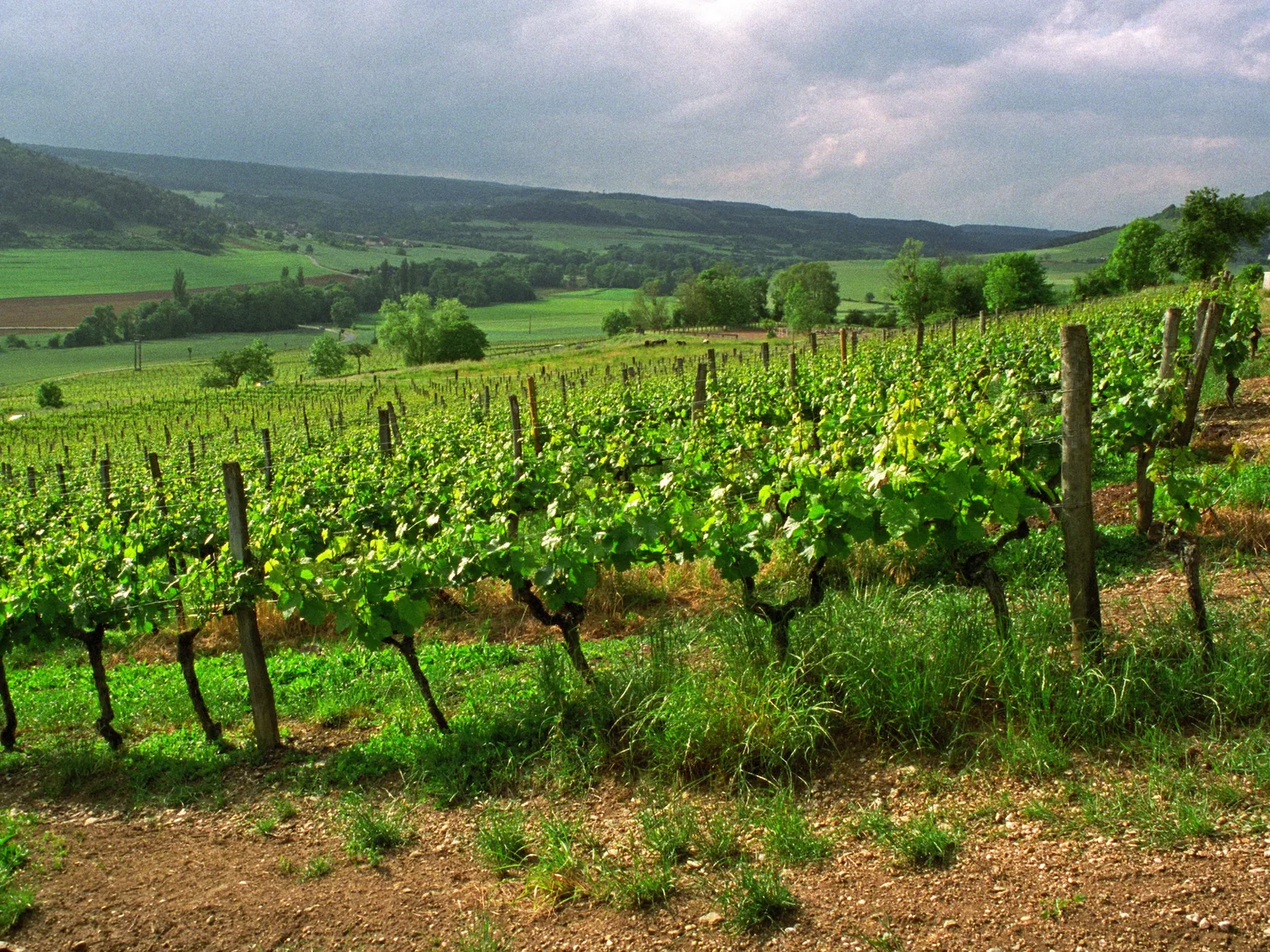
One of the Hautes-Côtes' most distinctive viticultural features is also one of its least-discussed advantages. The 'haute et large', high and wide, training system, a low-density planting method that the region was among the first in Burgundy to adopt, now looks well-suited to the direction the climate is moving. Nicolas Thévenot estimates that approximately 40 to 50% of vines in the Hautes-Côtes are trained in this fashion.
The practical benefits are multiple. Vines trained high sit above the frost layer that settles near the base of the plant, a meaningful advantage on plateau sites where spring frost is a recurring risk. The wider spacing facilitates cover crops and mechanical harvesting, reducing labor costs that would otherwise make small-domaine economics unworkable at this appellation's price points. And if conditions remain dry and hot, the direction the climate is moving, lower-density planting is thought to improve drought resistance by reducing competition for soil moisture.
The climate argument for the Hautes-Côtes Burgundy value frontier runs deeper than vine training. At 300 to 460 metres, the plateau runs cooler than the Côte d'Or floor during the growing season.
As lower-lying appellations warm and winemakers on the Côte de Beaune and Côte de Nuits chase freshness through earlier picking, the Hautes-Côtes retains the natural acidity that once read as a limitation. The high-altitude character, taut red-fruit profile, lifted violet aromatics, nervy acidity, is now a selling point rather than an apology.
Pierre-Yves Colin-Morey's Hautes-Côtes de Beaune Au Bout du Monde 2024 captures this precisely: green apple rather than citrus, hawthorn flowers, a saline edge, and a lively texture that owes everything to elevation.
Claire Naudin's Clematis Vitalba, Hautes-Côtes de Nuits 2024, gooseberry, green plum, nectarine, fresh and lively, makes the same argument from the northern plateau.
The Syndicat's Horizon Hautes-Côtes initiative, with BIVB backing, is formalizing this climate logic through systematic mapping. Renowned geologist Françoise Vannier is mapping the underlying geology of the entire plateau. Environmental consultant Marc Ouvrié is mapping climate risks including frost and hail. That data will be layered with Natura 2000 information, more than 85% of the wine-producing surface of the Hautes-Côtes is protected under European law as a Natura 2000 nature preserve, to identify where development can proceed without compromising the biodiversity that makes the plateau ecologically distinctive as well as viticulturally promising.
The price gap between Hautes-Côtes and village-level Côte d'Or appellations remains wide. A bottle from Denis Carré in Meloisey or Agnès Paquet's La Perrière sits at a fraction of what a comparable-quality Pommard or Volnay village commands, not because the terroir is inferior, but because the appellation name hasn't yet done the marketing work that those village names have had decades to accomplish. That gap is the collector's opportunity, and the BIVB's institutional attention is the signal that it is closing.
The scarcity dynamic is already in play. Production volumes from the serious small domaines in Meloisey and the Hautes-Côtes de Nuits are modest, and allocations are not yet on most négociant radar in the way that Côte d'Or village wines are. Buyers who establish direct relationships with producers now, through domaine visits, through the Horizon Hautes-Côtes tasting infrastructure, through the handful of importers who have been working this plateau for years, are accessing wines at prices that reflect the appellation's historical reputation rather than its current quality trajectory.
The Saint-Romain precedent is worth holding in mind. That village's elevation to stand-alone cru status came after a sustained period of quality improvement and critical attention, and prices moved accordingly. The same process is now underway across multiple Hautes-Côtes villages at once, with the added acceleration of a formal BIVB initiative, systematic geological and climatic mapping, and a generation of producers who are labeling by vineyard name rather than appellation. Les Dames Huguettes and En Bully are not yet household names. La Perrière is known to sommeliers but not yet to the broader collector market. That is the window.
For collectors building a cellar around value and aging potential rather than brand recognition, the Hautes-Côtes de Nuits single-vineyard bottlings from Parigot, with their Côte de Nuits-adjacent structure, are one compelling case for laying down bottles now. The Hautes-Côtes de Beaune whites from Colin-Morey and the reds from Carré and Paquet offer a different proposition: wines to drink in the near term that deliver the freshness-driven Burgundy profile that the market is increasingly seeking, at prices that still reflect the appellation's past rather than its future.
The plateau above the Côte d'Or is not difficult to reach, it is simply undervisited. Most wine tourists arriving in Beaune or Nuits-Saint-Georges follow the Route des Grands Crus south through the famous villages and never turn west onto the country roads that climb into the Hautes-Côtes. The Syndicat's Horizon Hautes-Côtes initiative is building the tasting-route infrastructure that gives visitors a structured entry point into a plateau that most international wine travelers have never navigated.
Meloisey is the logical first stop for anyone approaching from Beaune. Denis Carré's domaine is the anchor, a historic estate with the kind of tasting-room experience that rewards a morning visit, particularly if you are trying to understand how the plateau's clay-limestone soils translate into the glass relative to the Côte de Beaune floor.
Agnès Paquet's domaine is nearby, and the contrast between her Chardonnay and Pinot Noir from La Perrière and Carré's interpretations of the same terroir is instructive. The village itself, ancient, unhurried, with rolling hillsides and country roads threading through the Hautes-Côtes, earns the drive on its own terms, before you open a bottle.
For the Hautes-Côtes de Nuits, the approach from Nuits-Saint-Georges takes you up through l'Étang-Vergy, where Laurent Delaunay's Château de Chaumont sits above the town.
Maison Edouard Delaunay offers a useful introduction to the northern plateau's character, and the château's position above Nuits-Saint-Georges gives a literal vantage point on the elevation argument: you can see the Côte de Nuits below and feel the temperature differential that defines the Hautes-Côtes' climate advantage.
Alexandre Parigot's domaine, with its single-vineyard bottlings from Les Dames Huguettes and En Bully, is the next essential visit for anyone serious about understanding what the Hautes-Côtes de Nuits can produce at the parcel level.
The geological mapping by Françoise Vannier and the climate-risk work by Marc Ouvrié will eventually produce a detailed terroir atlas of the plateau, the kind of document that, once published, tends to move prices. The Hautes-Côtes Burgundy value frontier offers 47 villages, nearly 9 million bottles of annual production, and about 2,400 hectares of unplanted potential waiting for the next generation of producers to arrive. The time to visit, and to buy, is before that atlas lands.
The Hautes-Côtes Burgundy value frontier refers to the plateau above the Côte d'Or escarpment, between 300 and 460 metres, where about 2,400 hectares of AOC-classified land remain available for planting. It is significant now because the Syndicat des Hautes-Côtes' formal 'Horizon Hautes-Côtes' initiative, supported by the BIVB, is actively mapping the region geologically, climatically, and commercially, signalling institutional momentum that typically precedes price appreciation.
About 2,400 hectares of AOC-classified land in the Hautes-Côtes remain available for planting, compared to the 1,838 hectares currently under vine. That ratio of available-to-planted land is essentially unmatched anywhere else in Burgundy's recognised appellations.
Négociant houses routinely purchase Hautes-Côtes grapes and sell the resulting wine under a generic Bourgogne label, causing the appellation name to disappear before it reaches international retailers. This practice has kept village names like Meloisey and Magny-lès-Villers invisible to collectors even as quality has quietly improved.
Meloisey, in the Hautes-Côtes de Beaune, is the village producers most frequently cite as the clearest candidate to lead the next wave of recognition. Denis Carré's domaine there is the benchmark reference, having demonstrated that terroir-expressive Pinot Noir and Chardonnay with a distinct high-acid character are consistently achievable at plateau elevations.
Saint-Romain was once classified within the Hautes-Côtes appellation and has since been polished to a stand-alone cru with its own appellation identity. Producers and observers point to Saint-Romain as the model for what becomes possible when a plateau village accumulates enough critical and commercial momentum.
Get the App
Take the shortlist into the En Primeur Club app for concierge access, saved places, and the next step after discovery.
Get Exclusive AccessMore from the editors