← Guides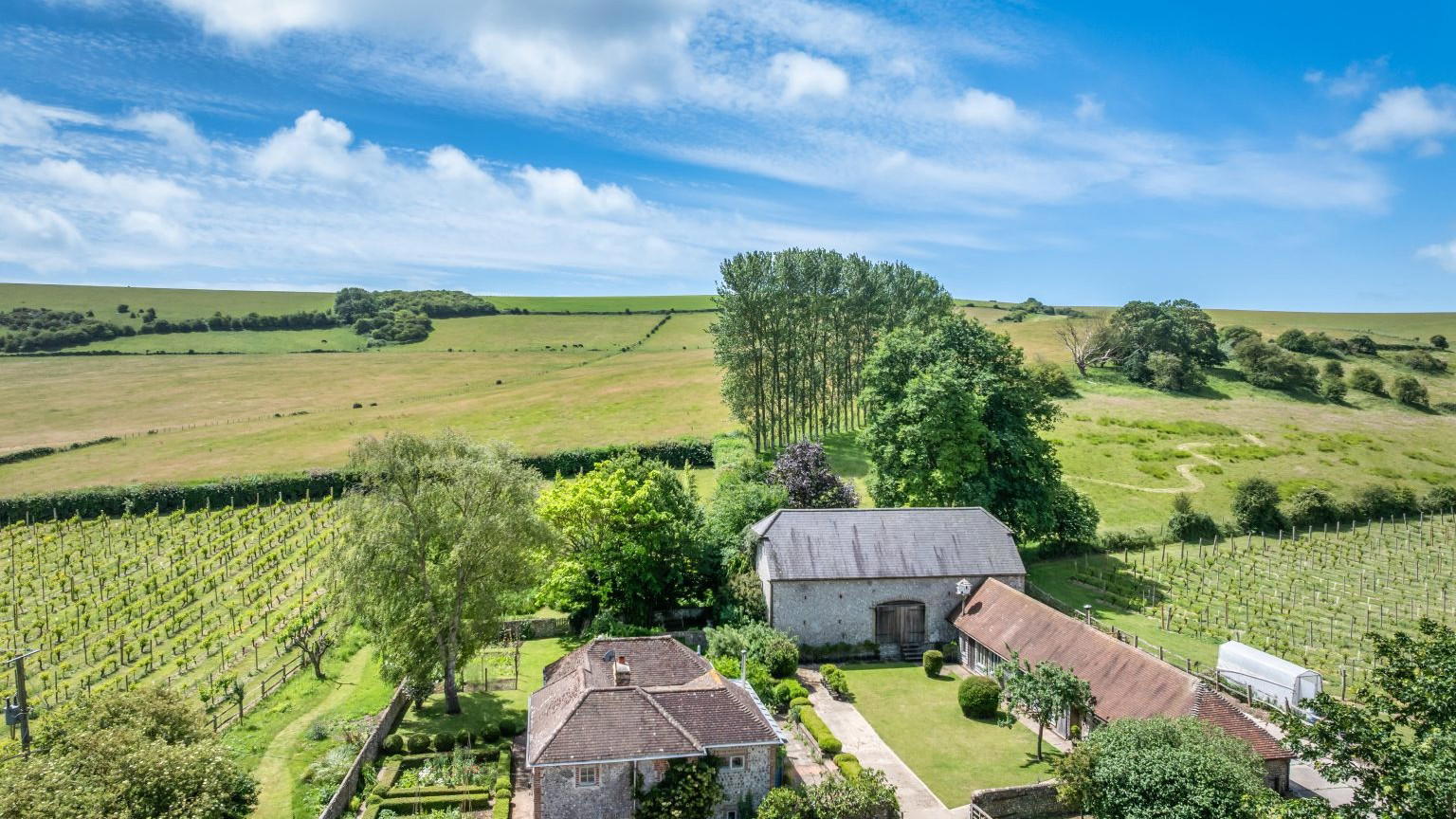
According to The Drinks Business, the Sussex estate that poured sparkling wine at King Charles III's coronation is on the market for the first time since 1974, following founder Peter Hall's death.
According to The Drinks Business, the Sussex estate that poured sparkling wine at King Charles III's coronation is on the market for the first time since 1974, following founder Peter Hall's death.
According to The Drinks Business, Breaky Bottom Vineyard, the 15-acre South Downs estate that supplied sparkling wine to King Charles III's coronation, Queen Elizabeth II's Platinum Jubilee, and the London 2012 Olympic Games, has been listed for sale at £4 million, the first time the property has changed hands since Peter Hall planted its first vines in 1974. The sale, handled by Knight Frank's viticulture team, follows Hall's death in October 2025 and marks the end of a five-decade chapter in English wine history. When Hall established the estate, Britain had seven vineyards. Today the sector counts more than 1,300.
The estate produces approximately 10,000 bottles annually from six acres under vine, a scale Hall maintained deliberately, prioritizing meticulous winemaking over volume. The guide price reflects both the property's productive capacity and its place in the origin story of modern English sparkling wine. For prospective buyers, the acquisition offers not just a working vineyard but a trophy asset with royal provenance and a half-century track record of quality production.
Breaky Bottom is among the oldest commercial vineyards in England's modern wine industry. Hall planted the original six-acre vineyard himself in 1974, when the idea of producing sparkling wine in Sussex was met with skepticism. Over the following decades, the estate built a reputation not through marketing or expansion, but through consistency, vintage after vintage of small-production sparkling wine that earned its way onto royal tables and Olympic podiums.
The estate's two sparkling cuvées anchor its production: a Seyval Blanc bottling, long considered the signature wine, and a traditional-method blend of Chardonnay, Pinot Noir, and Pinot Meunier introduced in the early 2000s. The Seyval Blanc represents a link to the early years of English wine, when hybrid varieties offered a hedge against the climate risks that made vinifera plantings a gamble. The later addition of Champagne varieties signaled Hall's confidence that the South Downs terroir could sustain the same grapes grown on the chalk belt that wraps through northern France.
Hall's wines were poured at the coronation of King Charles III, Queen Elizabeth II's Platinum Jubilee celebrations, and the London 2012 Olympic Games, a track record that positioned Breaky Bottom as a credible representative of English sparkling wine on the national stage.
That royal provenance is now part of the estate's value proposition for prospective buyers, alongside the established vineyards, production facilities, and half a century of winemaking knowledge embedded in the site.
The estate's placement at these landmark national occasions was not the result of marketing campaigns, it reflected the quality and consistency Hall achieved over decades of work.
The property extends to approximately 15 acres, with six acres currently under vine. The sale includes a four-bedroom brick and flint farmhouse, a traditional Sussex barn that serves as the winery, additional storage and labeling facilities, and agricultural buildings that support vineyard operations. The vineyards themselves are established and productive, with the estate's annual output holding steady at around 10,000 bottles, a yield of roughly 1,667 bottles per acre that prioritizes quality and hand-crafted production over commercial scale.
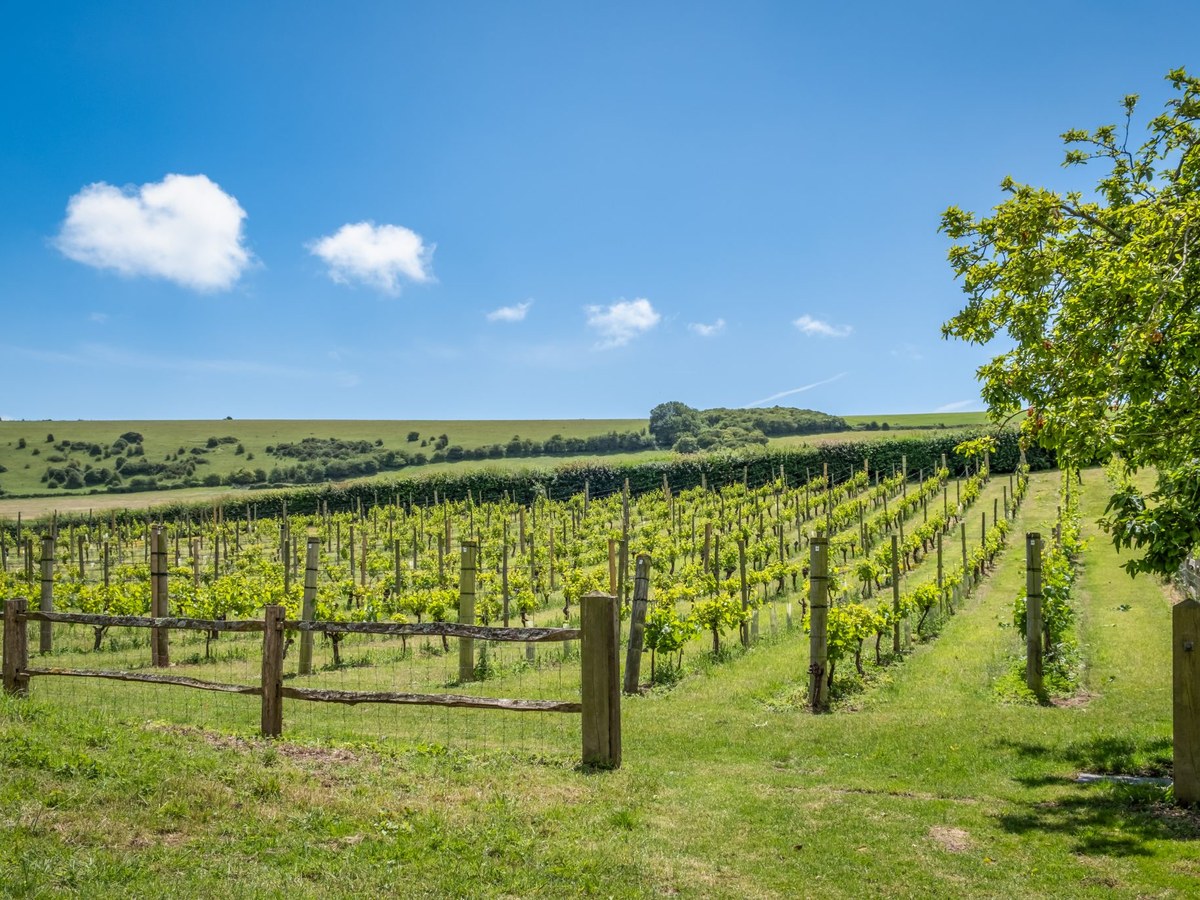
Knight Frank's viticulture team is managing the sale on behalf of the executors of Hall's estate and the lasting powers of attorney for his widow, Christine Hall. The £4 million guide price positions Breaky Bottom at the upper end of English vineyard valuations, reflecting both the property's productive capacity and its historical significance.
For collectors and investors evaluating the opportunity, the math is direct: 10,000 bottles annually from six acres, with royal supply credentials and five decades of quality track record.
The question is whether that combination justifies the asking price in a market where larger producers are acquiring smaller estates and consolidation is reshaping the sector.
The sale offers a turnkey operation: the winery is equipped and functional, the vineyards are mature and bearing fruit, and the estate's reputation provides a foundation for the next owner to build on. Whether the buyer intends to continue Hall's winemaking approach, expand production, or reposition the brand will shape the estate's next chapter. The property also includes residential space and agricultural infrastructure, making it viable as both a working vineyard and a country estate.
The timing of the sale, following Hall's death and the conclusion of the 2025 harvest, allows for a clean transition. The estate's production cycle, vineyard management practices, and distribution relationships are all in place, offering the buyer an established business rather than a greenfield project. The challenge will be preserving the reputation Hall built while navigating the commercial realities of a 10,000-bottle-per-year operation in a market increasingly dominated by larger producers.
Peter Hall is often treated as one of the founding fathers of English wine. He arrived at the South Downs site in 1968, purchasing what was then a small cottage in the valley bottom. The property's location on the same chalk belt that extends through Champagne informed his decision to plant vines six years later, in 1974. At the time, Britain had only seven vineyards, and the notion that English sparkling wine could compete with French Champagne was far from settled.
Hall planted the original six acres himself and oversaw every aspect of production for decades. His approach was hands-on and uncompromising: small production runs, meticulous attention to vineyard work, and a focus on consistency over volume. The estate's annual output remained at approximately 10,000 bottles, a scale that allowed Hall to maintain direct control over winemaking decisions and quality standards. That discipline earned Breaky Bottom a reputation for reliability in an industry still finding its footing.
The estate's wines were served at landmark national occasions, including the coronation of King Charles III, Queen Elizabeth II's Platinum Jubilee celebrations, and the London 2012 Olympic Games. Those placements were not the result of marketing campaigns or distribution deals, they reflected the quality and consistency Hall achieved over decades of work.
The royal provenance became part of Breaky Bottom's identity, signaling that English sparkling wine could stand alongside Champagne on particularly formal occasions. For collectors, that track record offers a credential that few English estates can match: royal supply history spanning three major national events over two decades.
Hall's death in October 2025 closed a chapter that began when English wine was a curiosity and ended with the sector counting more than 1,300 vineyards. His legacy is not just the estate he built, but the proof of concept he provided: that the South Downs chalk, the English climate, and patient winemaking could produce sparkling wine worthy of royal tables. The £4 million sale will test whether the market values that legacy as highly as the industry does.
Breaky Bottom sits in a secluded valley near Lewes, on the South Downs chalk belt that extends through Sussex and into northern France. The chalk provides the drainage and mineral structure that Hall identified as ideal for cool-climate viticulture. The valley's topography offers protection from wind and frost, creating a microclimate that has sustained vine growth and fruit ripening for five decades.
The estate's six acres under vine are planted to Seyval Blanc, Chardonnay, Pinot Noir, and Pinot Meunier. The Seyval Blanc was Hall's original planting, a hybrid variety chosen for its resilience in the English climate and its ability to produce sparkling wine with structure and acidity. The Champagne varieties came later, in the early 2000s, as Hall's confidence in the site's potential grew. The blend of traditional and hybrid varieties reflects the estate's evolution from pioneering experiment to established producer.
The estate's production model, 10,000 bottles from six acres, reflects a commitment to quality over scale. That yield allows for selective harvesting, hand sorting, and the kind of attention to detail that larger operations cannot sustain. The South Downs terroir provides the raw material; Hall's winemaking approach extracted its potential.
Whether the next owner maintains that balance or pursues a different model will determine whether Breaky Bottom's terroir continues to express itself in the same way. For buyers evaluating the estate, the terroir is not just a marketing claim, it's a five-decade track record of consistent fruit quality on chalk soils that share geology with Champagne.
The £4 million guide price positions Breaky Bottom as an acquisition for buyers who value historic provenance and established terroir. The estate's royal supply history, five-decade track record, and reputation within the English wine industry make it a trophy property, but the 10,000-bottle annual production raises questions about commercial viability at this price point. The buyer will need to decide whether to preserve Hall's small-production model, expand the vineyard and increase output, or reposition the estate within the luxury wine market.
One scenario: a collector or wine enthusiast with the resources to operate Breaky Bottom as a passion project, maintaining the estate's artisanal scale and reputation. Another: a larger English wine producer seeking to acquire a historic brand and integrate it into a broader portfolio. A third: a hospitality or luxury group that sees value in the estate's royal provenance and South Downs location as a destination experience, adding tastings, tours, and events to the revenue model.
The sale will test whether the market assigns a premium to historic English vineyard estates with proven quality and royal credentials. Breaky Bottom's value is not just in its productive capacity, six acres and 10,000 bottles, but in its place in the origin story of English sparkling wine. Whether that story commands a price that reflects its cultural significance or whether buyers focus on the financial fundamentals will shape the outcome. For investors tracking the English wine sector, the sale offers a data point on how the market values heritage assets versus pure production capacity.
The English wine sector has grown from seven vineyards in 1974 to more than 1,300 today. Breaky Bottom's sale arrives at a moment when the industry is consolidating, larger producers are acquiring smaller estates, and the question of scale versus artisanal production is being answered in real time. The estate's next owner will inherit not just a vineyard and winery, but a legacy that helped define what English sparkling wine could become. How they steward that legacy will determine whether Breaky Bottom remains a symbol of the industry's pioneering era or evolves into something new.
The sale is being managed by Knight Frank's viticulture team, with the executors of Hall's estate and the lasting powers of attorney for Christine Hall overseeing the process. The estate's production cycle, vineyard management practices, and distribution relationships are in place, offering the buyer an established business rather than a rebuild. The challenge will be balancing the estate's historical identity with the commercial realities of operating a small-production vineyard in a market increasingly dominated by larger players. Breaky Bottom's next chapter begins with the question: what is a pioneer's legacy worth?
If this is the kind of insider detail you look for in a glass, join the club, we'll keep pouring.
Tagged
Get the App
Take the shortlist into the En Primeur Club app for concierge access, saved places, and the next step after discovery.
Get Exclusive AccessMore from the editors