← Guides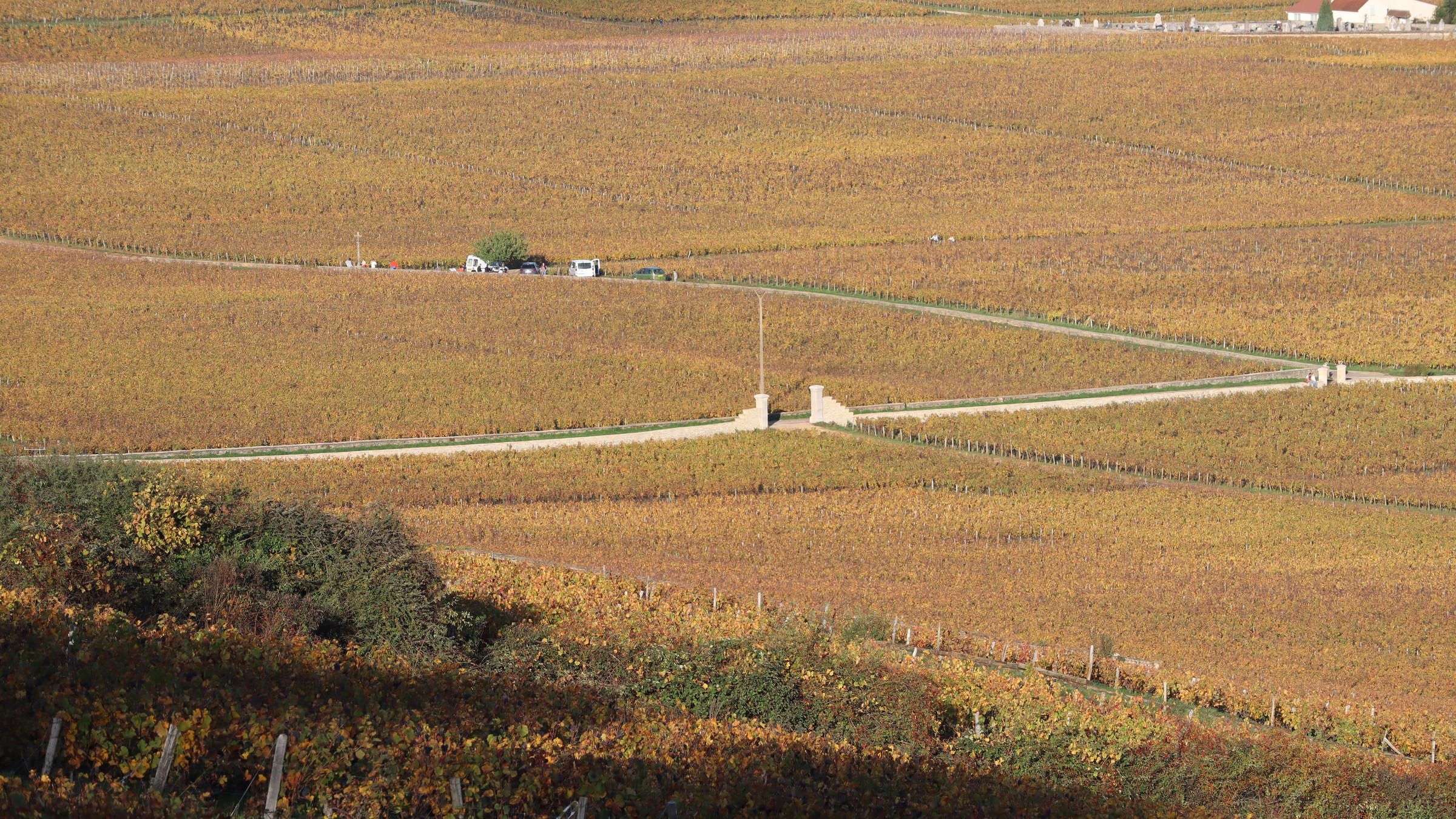
Côte-d'Or premier cru Chardonnay hit €2.7m per hectare in 2025 — while Pauillac and Margaux posted their steepest declines in years.
Côte-d'Or premier cru Chardonnay hit €2.7m per hectare in 2025 — while Pauillac and Margaux posted their steepest declines in years.
At a Safer press conference in Paris this spring, Nicolas Agresti, director of studies at France's official agricultural land agency, reached for an analogy to explain what is happening in Burgundy's vineyard market: some people with money buy a Ferrari, he said, while others buy a Côte-d'Or premier cru parcel. The comparison is not hyperbole.
A hectare of premier cru Chardonnay vines in the Côte-d'Or averaged €2.7 million in 2025, a confirmed record, per Safer transaction data, the same sum that buys a luxury apartment in central Paris or a collection of vintage sports cars. On the same day those figures were released, Safer reported that Margaux vineyard prices had fallen 43% in a single year.
The split between these two markets is no longer a matter of degree. It is a structural divergence.
Four transactions out of nearly eleven thousand accounted for a quarter of France's total vineyard transaction value of €1.65 billion last year, and most of those headline deals were in the Côte-d'Or, according to Safer president Thierry Bussy. That figure tells you more about the Burgundy land market than any average price can. This is not a broad market. It is a handful of parcels changing hands at prices that reset the benchmark each time.
Agresti put it plainly: 'That's where the land market gets complicated to analyse, because among people who have money, some are going to want to buy a Ferrari, while others will prefer to buy a Burgundy vineyard.' At €2.7 million per hectare, a premier cru Chardonnay plot is not being priced as agricultural land. It is being priced as a scarce object, one that happens to produce wine.
The Côte d'Or covers roughly 9,500 hectares, about a tenth of the Bordeaux vineyard area, according to Safer. That physical constraint is not incidental to the Burgundy vineyard prices 2025 story. It is the story. Agresti noted that all grand cru areas in Burgundy are fully planted, and, in his words, 'and that's that.' No new grand cru land can be created. No premier cru parcel can be extended. The appellation hierarchy, codified over centuries and locked in by French law, means supply is structurally fixed while demand, from collectors, investors, and a growing cohort of buyers who want the vineyard rather than the bottle, continues to accumulate.
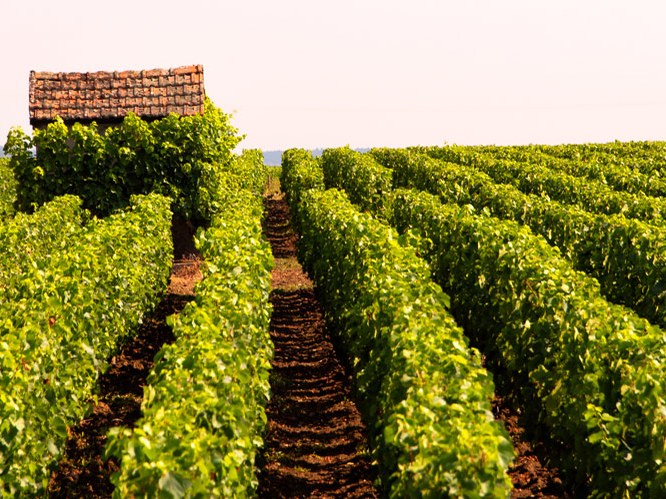
Loïc Jégouzo, head of studies at Safer, described this dynamic directly: 'There is a niche market for certain investors who don't want to own the bottle, but rather the vineyard that produces it.' That shift, from wine as a consumable to vineyard as an asset, is what Burgundy's fixed supply and parcel-level identity make structurally irreplicable in any other French appellation. Agresti also cited a 2023 analysis by researchers at INRAE, France's agricultural research institute, pointing to a degree of correlation between vineyard land prices and bottle prices in Burgundy. If that correlation holds, the land records of 2025 carry implications for the secondary market that extend well beyond the transaction itself.
That's where the land market gets complicated to analyse, because among people who have money, some are going to want to buy a Ferrari, while others will prefer to buy a Burgundy vineyard1
Nicolas Agresti, director of studies at Safer1
Wines from Burgundy's Côte de Beaune and Côte de Nuits consistently dominate Wine-Searcher's list of the world's top 50 most expensive wines. That dominance has persisted through the recent fine wine secondary market downturn, and it anchors the logic of the land price. Buyers paying €2.7 million per hectare for Chardonnay vines are not speculating on an unknown quantity. They are acquiring a share of reliably valued wine real estate on earth, with nearly three decades of price appreciation behind it.
Agresti also pointed to Burgundy's focus on terroir and small plots linked to specific wines as a system that is, in his words, 'distinctive and a system that's probably quite different from other wine markets.' The parcel-level identity of Burgundy wine, where a climat of a fraction of a hectare can command a distinct appellation and a distinct price, creates a granularity of scarcity that broader wine regions cannot replicate. You cannot manufacture a Montrachet. You can only wait for one to come to market, and in 2025, few did: of those 10,930 French vineyard transactions, the four that moved the needle most were almost all in the Côte-d'Or.
The contrast with Bordeaux is now impossible to frame as cyclical. Vineyard prices in Bordeaux fell for the fourth consecutive year in 2025, sliding 24% to an average of €85,595 per hectare, according to Safer. That average masks the severity of the declines in particularly storied appellations. In Pauillac, home to three of the five first growths, the average price per hectare fell 32% to €1.7 million. In Margaux, prices slumped 43% to €800,000 per hectare.
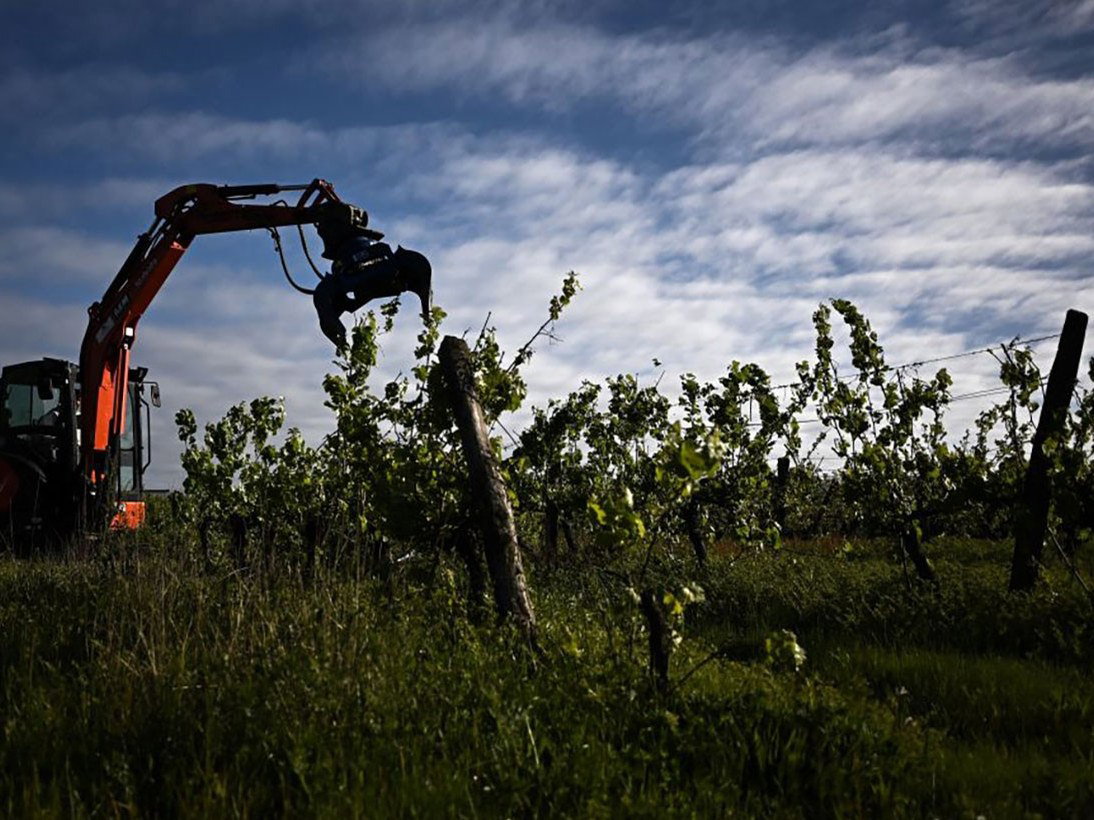
Jégouzo noted that even particularly storied Bordeaux appellations, which had previously held their ground, succumbed to pressure in 2025. Four consecutive years of decline, now reaching into Pauillac and Margaux, looks less like a trough than a repricing of the entire region's relationship with demand. Winemakers in the broader Bordeaux region have been physically removing vines in response to falling prices, a detail Safer included in its data commentary. The Côte d'Or, by contrast, has no vines to rip up. Every hectare is spoken for.
The per-hectare comparison between the two regions is now inverted in ways that would have seemed implausible a decade ago. A hectare of premier cru Chardonnay in the Côte-d'Or costs more than thirty times the Bordeaux regional average. Even Pauillac, at €1.7 million per hectare after its 32% fall, sits above the Burgundy premier cru Pinot Noir benchmark of €1.15 million, though the gap is narrowing fast and the direction of travel is what matters: one market is compressing, the other is not.
In the Côte des Blancs, the upper-tier Chardonnay appellation running south of Épernay, vine prices rose 3.5% to €1.69 million per hectare. That figure sits between Burgundy's premier cru Pinot Noir benchmark (€1.15 million) and its Chardonnay record (€2.7 million), and it moved in the right direction while the rest of France fell.
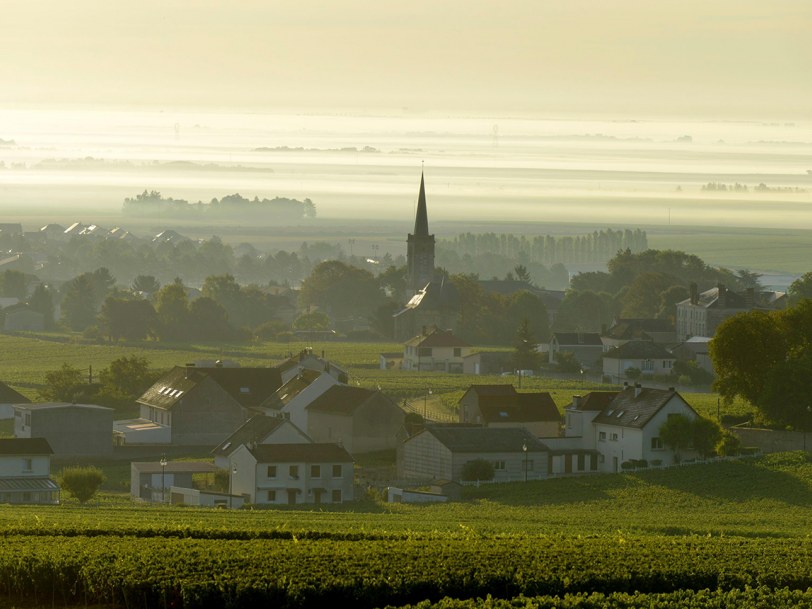
The Côte des Blancs trajectory reflects some of the same supply logic that drives Burgundy. The appellation's Chardonnay-only plantings, tied to the prestige cuvées of houses and growers alike, are finite. A 3.5% annual gain is not the headline that Burgundy's 6% and 11% figures produce, but in a year when the French wine property market averaged a 6.8% decline, holding and gaining is its own statement.
Burgundy is in a league of its own, because both the whites and reds are in their own little bubble.2
Loïc Jégouzo, in charge of studies at Safer2
For collectors thinking about French wine land as an asset class, the Côte des Blancs occupies a different position from Burgundy, more liquid by transaction volume, less extreme in its price concentration, and with a different relationship between land value and bottle price. But the direction of 2025 puts it firmly in the appreciating column alongside the Côte-d'Or, and clearly apart from Bordeaux.
The question Jégouzo posed publicly is the one every serious Burgundy collector should be sitting with: 'One might wonder whether, given what's happening in Bordeaux, the same thing could happen in Burgundy.' His own answer was direct. 'Burgundy is in a league of its own, because both the whites and reds are in their own little bubble.'
That bubble framing is not dismissive, it is descriptive. Burgundy's land market operates on different inputs from the rest of France. The buyers are not primarily négociants or regional growers responding to harvest economics. They are, as Agresti's Ferrari analogy suggests, people allocating capital across luxury asset classes. A Côte-d'Or premier cru parcel competes for that capital not against a Pauillac château but against a Mayfair flat or a Patek Philippe collection. When your buyer is choosing between a Ferrari and a vineyard, a global wine consumption slump is a secondary consideration.
For collectors, the Safer data carries a practical signal worth tracking. Vineyard land prices in Burgundy have shown a degree of correlation with bottle prices, per the INRAE analysis Agresti cited.
That does not mean land records automatically translate into higher auction results, the secondary market has its own dynamics, but it does mean the underlying asset that produces the wine you are buying or holding is appreciating.
The scarcity that makes a Puligny-Montrachet premier cru or a Gevrey-Chambertin premier cru worth what it is at auction is the same scarcity now priced at €2.7 million and €1.15 million per hectare on the land market. Those two numbers move together, and in 2025, both moved up.
The Burgundy vineyard prices 2025 data from Safer also reframes how collectors should read the Bordeaux declines. A Pauillac vineyard at €1.7 million per hectare, down 32% in a single year, is not automatically a buying opportunity.
Four consecutive years of decline, with Safer reporting that winemakers across the broader Bordeaux region are removing vines, suggests the market is still finding its floor. The appellation name has not been enough to arrest the slide.
What protects Burgundy, structural supply constraint, a parcel-level identity system, and a buyer profile that treats the land as a luxury object, does not apply to Bordeaux in the same way.
What the 2025 Safer data confirms is that the gap between the Côte-d'Or and the rest of the French wine property market is wider now than at any point in the nearly three decades of climbing prices Safer has tracked. Whether that gap narrows under a prolonged global fine wine downturn, Safer's next report will begin to answer.
Get the App
Take the shortlist into the En Primeur Club app for concierge access, saved places, and the next step after discovery.
Get Exclusive AccessMore from the editors