← Guides
Billecart-Salmon’s first Ratafia reaches Asia-Pacific in autumn 2026, with only two barrels from Clos Saint Hilaire Pinot Noir.
Billecart-Salmon’s first Ratafia reaches Asia-Pacific in autumn 2026, with only two barrels from Clos Saint Hilaire Pinot Noir.
Billecart-Salmon Ratafia will launch in Asia-Pacific in autumn 2026 after making its global debut at Rosewood Amsterdam in spring 2026. For a 208-year-old Champagne maison in Mareuil-sur-Aÿ, the news sits in the details: 100% Pinot Noir from Clos Saint Hilaire, four vintages from 2019 to 2022, 18% ABV, and an inaugural production of only two barrels.
The product is Billecart-Salmon ’s first Ratafia Champenois, and it turns second and third press juice into a fortified wine through mutage with Fine de Champagne. The 500mL bottle is priced in France at €58 (£49.50), while 5L Dame Jeanne bottles have been set aside for select hospitality venues. Small format for collectors. Large format for dining rooms.
For readers who follow Champagne beyond the grandes marques’ non-vintage blends, this is a useful signal from a family house that has been unusually patient. Billecart-Salmon has not rushed into a side category. It waited until the fruit, the format, and the sustainability question met in one parcel.
The story begins with press fractions rather than a marketing brief. According to The Drinks Business, Billecart-Salmon uses only first-press juice for its Champagne cuvées, which left the maison considering how to use second and third presses within its Look Beyond CSR vision of maximising terroir while minimising waste. Mathieu Roland-Billecart, seventh generation owner and head of Maison Billecart-Salmon, put the decision plainly: “We concluded that strong use of these presses was Ratafia, as it needs more richness in the juice to balance the alcohol needed for the mutage,” said Mathieu Roland-Billecart.1
That sentence matters because it explains why Ratafia makes technical sense here. The richer juice from later pressings can carry the alcohol added during mutage. Billecart-Salmon did not simply create a fortified wine because the category had room for another label; the maison identified a use for material that sits outside its Champagne cuvée standard.
The first experiment began with the 2019 harvest, which Roland-Billecart described in the source article as his second harvest in charge. The fruit came from Clos Saint Hilaire, the Mareuil-sur-Aÿ vineyard he cited as the place where the house’s best experiments traditionally began. The grape source is 100% Pinot Noir, and the vineyard is described in the source as fully biodynamically farmed.
That puts the Billecart-Salmon Ratafia close to the house’s own internal logic. It is not a blended afterthought built from anonymous material. It is a fortified expression of a single site, made from juice the maison chose not to put into its Champagnes. For a collector, that distinction changes the question from “Do I need a Ratafia?” to “What does Clos Saint Hilaire look like when the house is not making bubbles?”
The scarcity is immediate. Roland-Billecart told The Drinks Business that the inaugural production is only two barrels and is mainly offered to loyal partners. He also said the maison does not expect to advertise outside its own social media platforms. In practical terms, anyone hoping to taste it will likely do so first through restaurants, hotels, and long-standing Billecart-Salmon relationships rather than broad retail display.
Billecart-Salmon’s first Ratafia is built from four Champagne vintages: 2019, 2020, 2021, and 2022. Chief winemaker Florent Nys linked each vintage to a role in the final blend: “When we carried out our first blending trials at the end of 2025, each vintage brought its own distinctive contribution: 2019 for its richness and depth; 2020 for its maturity; 2021 for its freshness; and 2022 for its length,” said Florent Nys.2
Those four words, richness, maturity, freshness, length, give the clearest tasting frame available from the source. They also show why the blend could not have been reduced to a single-year curiosity. The 2019 component supplies weight; 2020 brings maturity; 2021 keeps a line of freshness; 2022 extends the finish. Billecart-Salmon has applied a Champagne house’s blending discipline to a fortified wine.
The method is specific. The Ratafia is produced by mutage of Pinot Noir grape must with Fine de Champagne. The source article states that the Pinot Noir must from a single vineyard parcel was blended with Fine de Champagne at 60% ABV, raising the alcohol level and naturally halting fermentation of the sugars in the must. The finished product sits at 18% ABV.
Ageing adds another layer. The source reports that the Ratafia was aged in mature Burgundy oak casks, and that the oldest component had six years of ageing while the youngest had three years in oak. This is where the format becomes useful for the table: not Champagne, not spirit, not dessert wine in the usual shorthand, but a fortified Pinot Noir must from Mareuil-sur-Aÿ shaped by time in Burgundy cask.
The packaging has also been split with intent. The Ratafia was divided between 500mL bottles and 5L Dame Jeanne bottles. The 500mL format suits a collector who might open one bottle over several evenings or serve it with a cheese course, while the 5L Dame Jeanne speaks to sommeliers working by the glass, by the pairing, or as a closing pour in a dining room.
The French price, €58 (£49.50) for 500mL, gives an early reference point. Asia-Pacific pricing has not yet been set, according to the source. Given the two-barrel first production, the French price may be less important than the channel: the maison is directing early access through loyal partners and selected hospitality venues rather than a broad commercial push.
Clos Saint Hilaire is the anchor fact in this release. Billecart-Salmon’s Ratafia comes from 100% Pinot Noir grown in that Mareuil-sur-Aÿ vineyard, and Roland-Billecart identified the site as the place where the house’s best experiments traditionally began. The source describes the grape as fully biodynamically farmed.
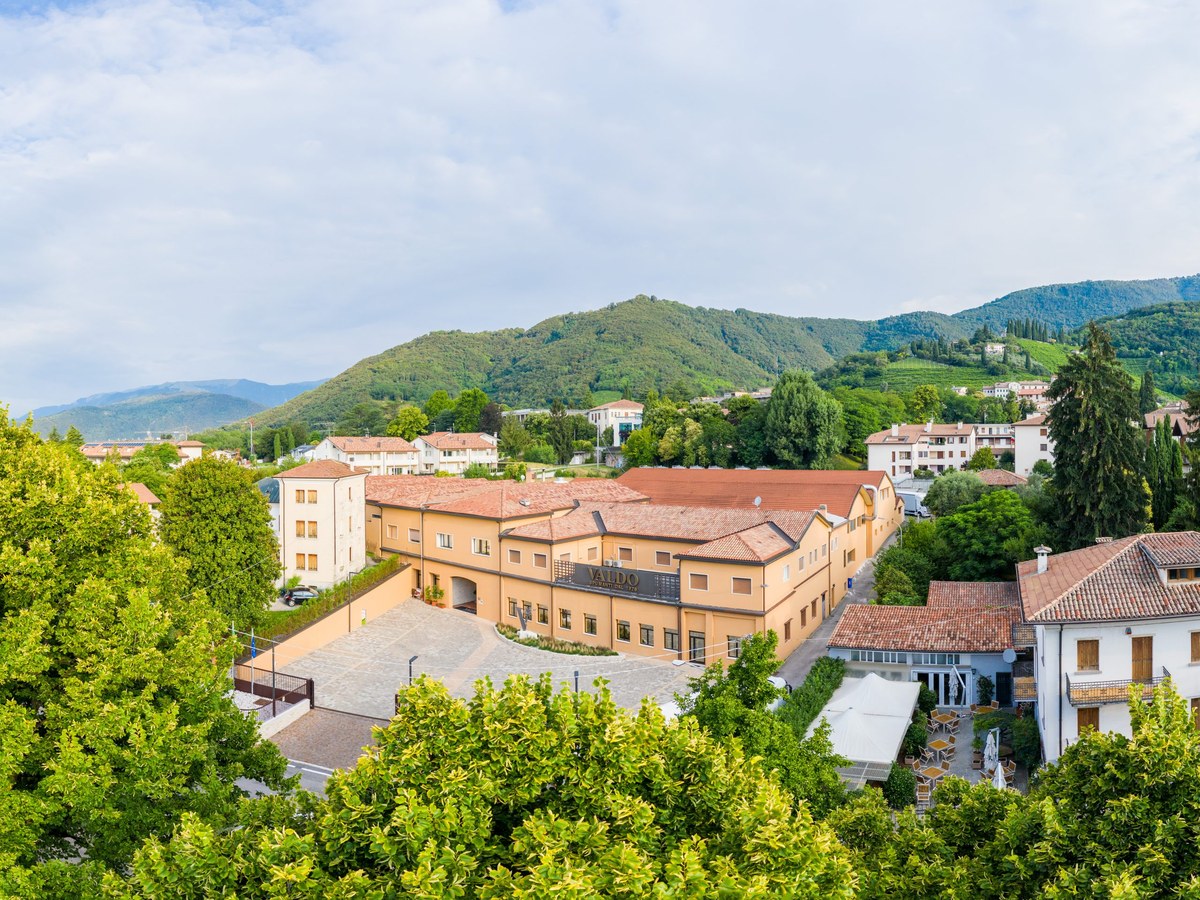
For anyone who plans Champagne travel by village rather than by region, Mareuil-sur-Aÿ is the right lens. This is not a generic fortified wine with a Champagne name attached; the maison has tied the inaugural Ratafia to its home village and to Pinot Noir, which Roland-Billecart called the king grape variety in Mareuil-sur-Aÿ in the source article. The Billecart-Salmon Ratafia therefore carries a clear internal geography: Mareuil-sur-Aÿ, Clos Saint Hilaire, Pinot Noir, second and third press juice.
That site specificity matters because Ratafia can easily be treated as a footnote, a useful glass at the end of a meal, poured after the main bottles have already had their moment. Here, the provenance asks for more attention. A single-vineyard source gives the wine a traceable origin; a four-vintage blend gives it a house signature; mutage with Fine de Champagne keeps the category rooted in the region’s own materials.
The phrase “second and third press” may sound utilitarian, but the release turns it into a question of selection. Billecart-Salmon keeps first press juice for its Champagne cuvées. For this Ratafia, the maison chose later press fractions because the richness of that juice could balance the alcohol needed for mutage. That is not waste dressed up for the shelf. It is a technical answer to a specific cellar problem.
There is also an elegant tension in the choice of oak. Mature Burgundy casks are not neutral as an idea, even when the source gives no cooperage detail or tasting note beyond the vintage contributions described by Nys. Burgundy oak in a Champagne house context points to a quieter ageing register than sparkling wine drinkers usually associate with Billecart-Salmon: stillness, concentration, and texture instead of mousse.
If you are building a Champagne itinerary around producer visits, this release adds a new reason to follow Mareuil-sur-Aÿ closely in 2026 and early 2027. Not because every visitor will find a bottle easily, the first production is too small for that, but because the project shows how a house can use a single vineyard beyond the cuvée format collectors already know.
The Billecart-Salmon Ratafia made its global debut at Rosewood Amsterdam in spring 2026. Its Asia-Pacific launch is scheduled for autumn 2026, with Rosewood Hong Kong and Agnes in Brisbane named among the partner venues. The source also mentions leading hospitality establishments in Singapore and Shanghai still to be confirmed.
The Hong Kong thread began before the official Asia-Pacific launch. At a spring Billecart-Salmon Champagne pairing dinner at Tébo in Hong Kong, The Drinks Business reported that the conversation turned quickly to the wine not yet on the menu. Regional sales manager Thibault Casoli was present, and the article frames the Ratafia as the object of anticipation around the table.
That is useful intelligence for travellers because this release will not behave like a standard bottle drop. The maison has said the inaugural production is only two barrels and mainly offered to loyal partners. For the first wave, access looks tied to on-trade relationships: hotels, restaurants, pairing dinners, and venues already close to Billecart-Salmon’s allocation network.
The 5L Dame Jeanne format makes that point visible. According to the source, those bottles were designed for select hospitality venues including Domaine Les Crayères and Arbane in Reims, Alléno in Paris, The Connaught Hotel in London, and the Waterside Inn in Bray. For a dining room, a 5L vessel turns the Ratafia into theatre without needing noise: the sommelier can pour a fortified Clos Saint Hilaire Pinot Noir from a format few guests will see in retail.
The 500mL bottles have a different route. The source states they will be distributed across independent retail outlets, top restaurants, and 5-star hotels in key Billecart-Salmon markets starting early in 2027. That timing matters for collectors who prefer to buy rather than chase a glass at dinner. Autumn 2026 is the Asia-Pacific on-trade moment; early 2027 brings the smaller bottle into wider partner channels.
For now, the practical move is to watch the named venues. Rosewood Hong Kong and Agnes in Brisbane are already attached to the Asia-Pacific launch. Rosewood Amsterdam has the global debut credential. In Europe, the Dame Jeanne list gives travellers a set of dining rooms where the format was specifically designed to appear.
This is not a release to evaluate by the usual Champagne markers. There is no dosage note in the source, no disgorgement date, no pressure, no vintage Champagne comparison to lean on. The facts point elsewhere: 18% ABV, four vintages, mutage with Fine de Champagne, mature Burgundy oak casks, 500mL and 5L formats, and only two barrels at the start.
For cellar planning, the important number may be the format. A 500mL bottle changes how you serve it. It can sit after Champagne and before coffee; it can close a meal without demanding the commitment of a full bottle; it can be shared among a small table with enough left in the glass for a second look. The better approach is restraint: treat it as a fortified wine with a Champagne house’s precision, and let the sommelier or merchant guide the pour.
The 5L Dame Jeanne belongs to hospitality. It gives restaurants a way to tell the story of second and third press juice, Clos Saint Hilaire Pinot Noir, and four-vintage blending at the table. For wine travellers, that is often strong version of access: not ownership, but a well-timed glass in a dining room that received the allocation because the maison trusts the service.
The Billecart-Salmon Ratafia also invites a wider look at how Champagne houses handle resources outside their flagship cuvées. The source frames the project within Billecart-Salmon’s Look Beyond CSR vision, and the logic is material rather than abstract: first press juice remains for Champagne; later press juice becomes the base for Ratafia because its richness can support mutage. The cellar choice does the talking.
Scarcity will shape the first year. Two barrels do not travel far across Rosewood Amsterdam, Rosewood Hong Kong, Agnes in Brisbane, European Dame Jeanne placements, independent retailers, restaurants, and 5-star hotels. The release therefore feels less like a new SKU than a controlled introduction to a category Billecart-Salmon had left untouched for 208 years.
The next signal will be whether the maison repeats the experiment beyond this inaugural blend from 2019 to 2022. If Billecart-Salmon continues, collectors will have a new thread to follow from Mareuil-sur-Aÿ: not only the Champagnes that made the house familiar, but a fortified Clos Saint Hilaire Pinot Noir shaped by the press fractions the cuvées leave behind.
Get the App
Take the shortlist into the En Primeur Club app for concierge access, saved places, and the next step after discovery.
Get Exclusive AccessMore from the editors