← Guides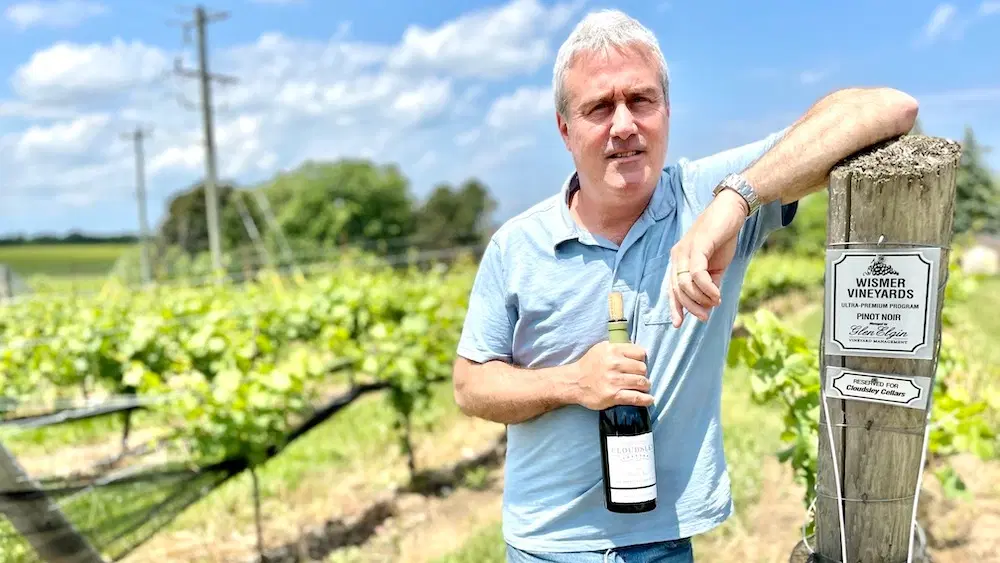
Former Ontario wine importer Adam Lowy turned 17 years of terroir literacy into Cloudsley Cellars — six distinct Pinot Noirs from one limestone bench in a single vintage.
Former Ontario wine importer Adam Lowy turned 17 years of terroir literacy into Cloudsley Cellars — six distinct Pinot Noirs from one limestone bench in a single vintage.
In 2020, a single limestone escarpment in Ontario's Twenty Mile Bench yielded six distinct Pinot Noirs under one label. Not six blends from six regions, six expressions from the same geological shelf, each pulling something different from the same bedrock. That kind of granularity is what Burgundy collectors spend decades chasing across village appellations. Adam Lowy, founder of Cloudsley Cellars, is making the case that it exists in Canada, too.
Lowy's path to the Twenty Mile Bench was neither accidental nor impulsive. After a brief, unsatisfying stint in finance following university, he took the advice of friends who had noticed his singular obsession. He joined an Ontario import agency and stayed for 17 years, selling wines from every major region, travelling to producers, and building a palate that few winemakers acquire even after decades in a cellar. That career, as Lowy tells it, was less a detour than a deliberate education.
During those years, he ran a tasting group with friends, working through the great wines of the world at a time when they were expensive but still within reach of a committed enthusiast. Burgundy kept pulling him back. Not just the wines, but the idea behind them, the notion that a specific patch of ground, farmed with attention, could produce something unrepeatable. Terroir, in other words, not as a marketing concept but as a lived argument.
The transition to production began modestly. While consulting in Niagara, Lowy started buying grapes and making small amounts of wine on the side. He scaled up within a couple of years. From the outset, he was clear about the parameters: Cloudsley Cellars would focus exclusively on Pinot Noir and Chardonnay. No hedging with easier varieties, no commercial concessions. The project would either prove the Twenty Mile Bench could produce serious cool-climate wine, or it wouldn't.
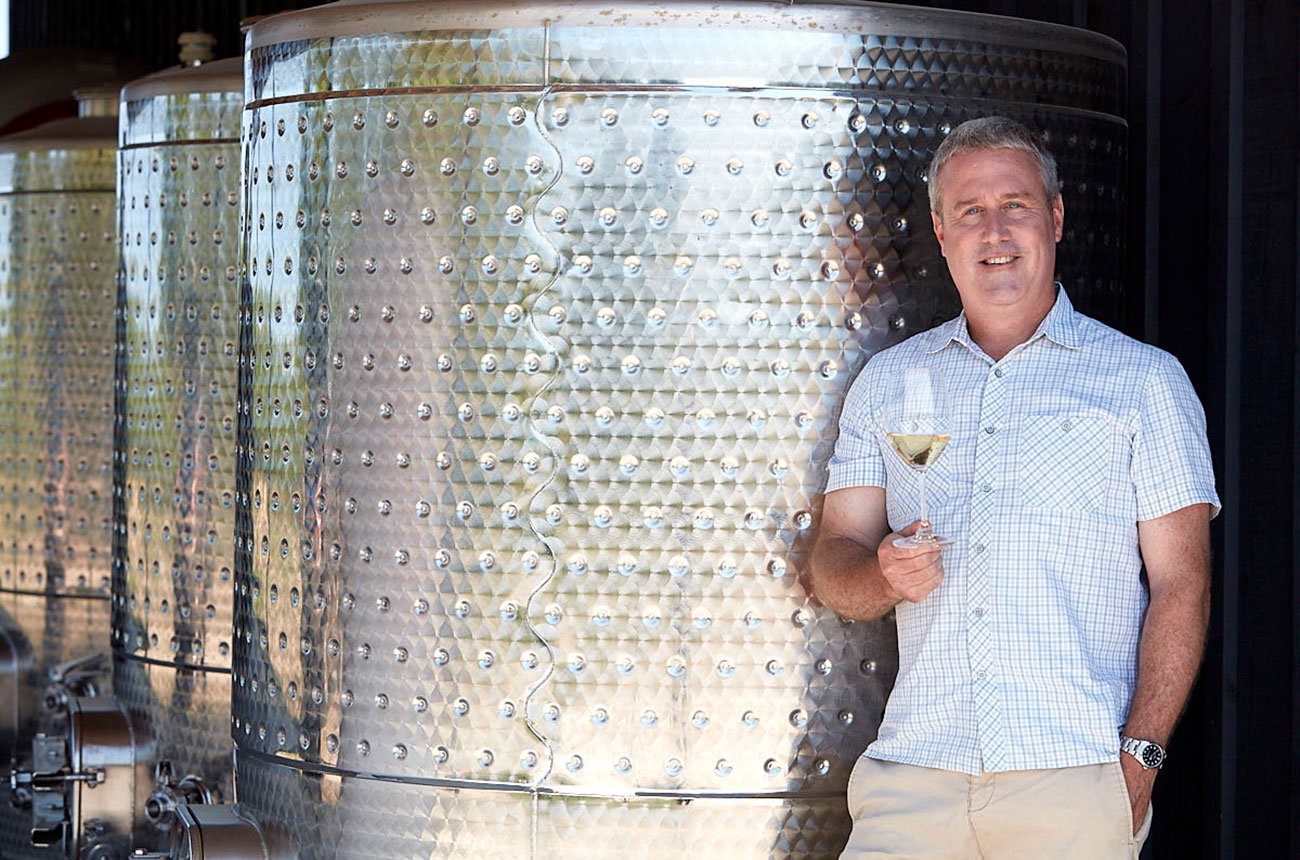
Lowy is candid about his technical limitations. He is not a trained winemaker. Winemaker Matt Smith handles production at Cloudsley; Lowy oversees the process and retains final say in blending. It is a division of labour that mirrors how many of Burgundy's most respected domaines operate, the vigneron's vision expressed through a skilled cellar hand's execution. The arrangement has clearly worked. Cloudsley's wines have featured strongly in Decanter tastings, bringing the project international attention it might otherwise have taken a decade longer to earn.
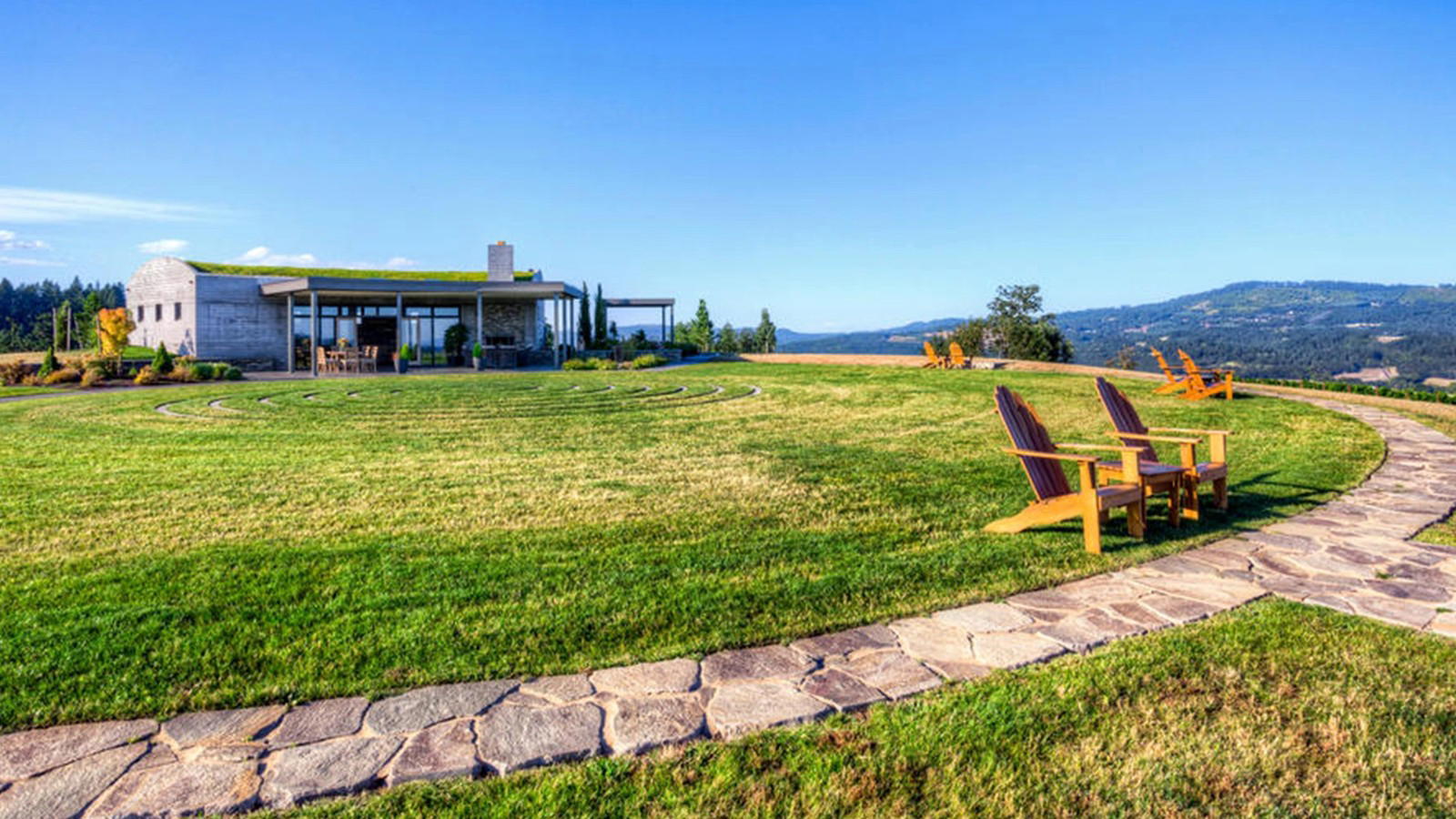
The Twenty Mile Bench is not a marketing construct. It sits on a limestone escarpment, the same geological feature that Niagara Falls flows over, running across the Niagara Peninsula between Lake Ontario and Lake Erie. As that escarpment has broken down over millions of years, it has produced a mosaic of exposures, soil depths, and compositions that make it, as Lowy puts it, an ideal canvas for exploring terroir.
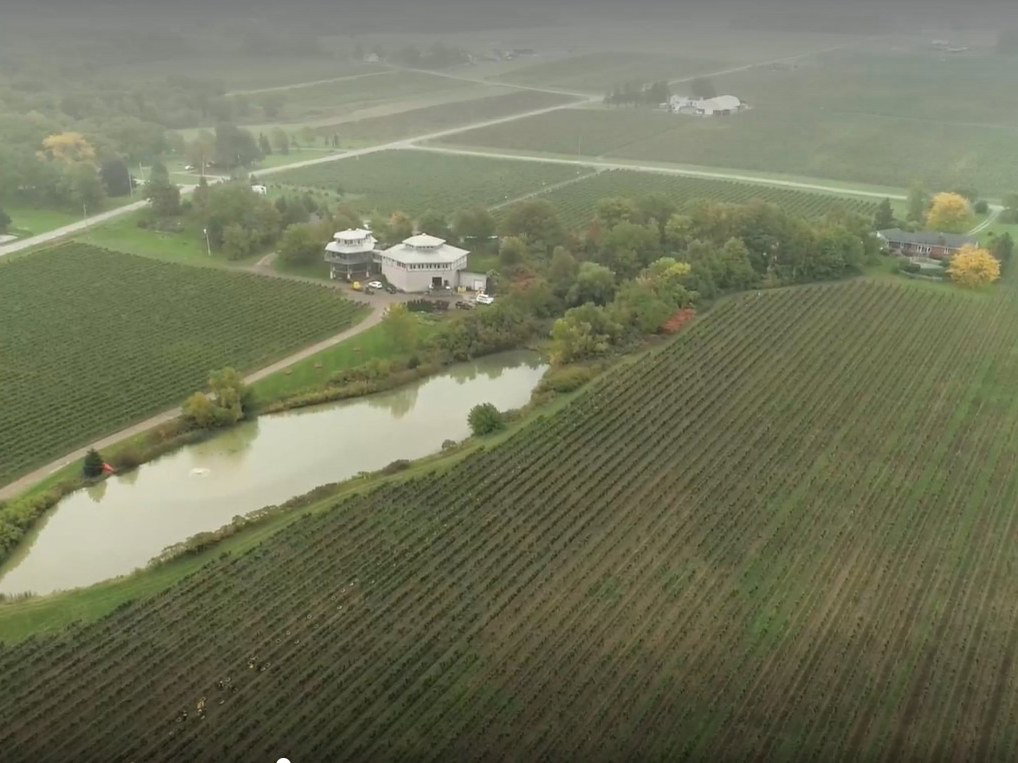
"It's that lake effect combined with the limestone soils that make this such a well-suited area for Chardonnay and Pinot."
Adam Lowy, Founder, Cloudsley Cellars (1
The lake effect is the other half of the equation. The dual influence of Lake Ontario to the north and Lake Erie to the south moderates temperatures through the growing season, extending ripening windows and preserving the natural acidity that both Pinot Noir and Chardonnay depend on for structure and longevity. Without that acidity, cool-climate wines collapse into flatness. Lowy is aware of how fortunate the site is in this regard.
The comparison to Burgundy is not rhetorical. Lowy draws it precisely: in Burgundy, a few metres of separation between vineyards can produce wines that taste like different conversations. The same variation exists on the Twenty Mile Bench, where shifts in limestone depth, drainage, and aspect create the kind of micro-differentiation that makes single-parcel winemaking meaningful rather than merely artisanal. Cloudsley's exclusive focus on Pinot Noir and Chardonnay is, in this context, a logical response to the site, these are the two varieties that translate limestone most faithfully, in Burgundy and, Lowy argues, here.
The clearest evidence for Lowy's terroir argument is the 2020 vintage. That year, Cloudsley produced six Pinot Noirs, all sourced from the Twenty Mile Bench sub-appellation, each one distinct from the others. Six wines, one bench, one vintage, the kind of lineup that forces a conversation about what the ground is actually doing.
"In 2020, we made six Pinot Noirs all from Twenty Mile Bench and all different. We're [also] blessed with great natural acidity."
Adam Lowy, Founder, Cloudsley Cellars (2
For collectors accustomed to tracking Burgundy's village and premier cru distinctions, the logic is immediately legible. What Lowy is doing with the Twenty Mile Bench is not so different from what a Gevrey-Chambertin producer does when separating Champeaux from Cazetiers, acknowledging that the land speaks in dialects, and that the winemaker's job is to listen rather than homogenise. Six Pinot Noirs from a single vintage is a statement of intent. It says the site is complex enough to sustain that level of differentiation, and that Cloudsley has the confidence to let the differences show.
The natural acidity Lowy mentions is not incidental. In Pinot Noir, acidity is the backbone that allows a wine to age, to carry fruit without becoming jammy, and to pair with food without overwhelming it. On the Twenty Mile Bench, that acidity comes built in, a function of the cool climate and the limestone's influence on vine metabolism. It is one of the structural reasons Burgundy collectors should be paying attention to this address.
Cloudsley's wines appearing in Decanter tastings, and performing well there, matters beyond the obvious validation. Decanter's reach into the collector community is deep, and strong results in its blind tastings carry weight with buyers who might otherwise never look north of the 49th parallel for serious Pinot Noir. Lowy presented Cloudsley wines at Decanter's Fine Wine Encounter in New York on 6 June, bringing the project directly in front of an audience that knows its Chambolle from its Morey-Saint-Denis.
Lowy's vision for how visitors experience Cloudsley is as deliberate as his vineyard philosophy. When the weather allows, patio tables go out and guests are welcomed to taste on-site. The model he describes is consciously drawn from Burgundy, not the grand château visit, but the vigneron experience: tasting the wine in the place it was made, speaking directly with the person responsible for it, understanding the decisions behind each cuvée.
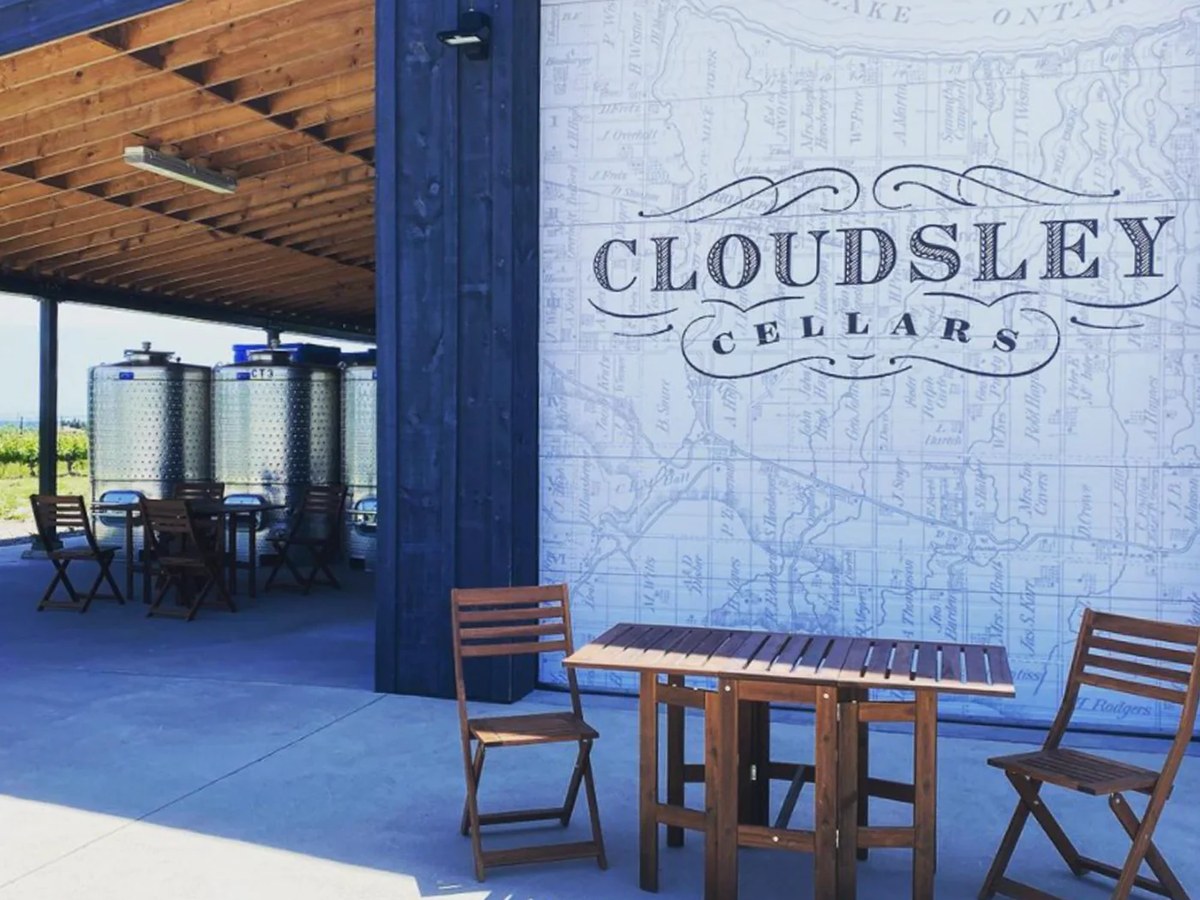
That format is rarer in Canadian wine country than it should be. The Niagara Peninsula has many tasting rooms, but the intimate, producer-direct experience Lowy is describing, where the conversation is as much about limestone depth and picking decisions as it is about retail price, is a different proposition. It is the kind of access that wine tourists in Burgundy take for granted and that collectors elsewhere travel specifically to find.
The Twenty Mile Bench and neighbouring Beamsville Bench are where the serious tasting happens, a different proposition from Niagara-on-the-Lake, which Lowy describes as a wonderful, historic town with many wineries but a different character. The bench areas offer smaller producers, more intimate visits, and, according to Lowy, the region's only Michelin-starred restaurant.
Lowy himself lives eight minutes from the winery, on a farm property where he keeps chickens for eggs, does woodworking and metalworking in his workshop, and spends time outdoors. The proximity is not incidental, it reflects the same commitment to place that shapes the wines. He is not a remote founder making decisions by email. He is on the bench, in the cellar, at the blending table.
Understanding what a winemaker drinks tells you something about what they are trying to make. Lowy's cellar runs heavily to Ontario wine, he drinks more Cloudsley Pinot Noir and Chardonnay than anything else, but outside of that, his references are French and Italian. Burgundy, Bordeaux, the Northern Rhône. Tuscany and Piedmont. German Riesling and Austrian wines. He describes himself, with some self-deprecation, as someone with grey hair who still believes in the classic wines from the classic regions.
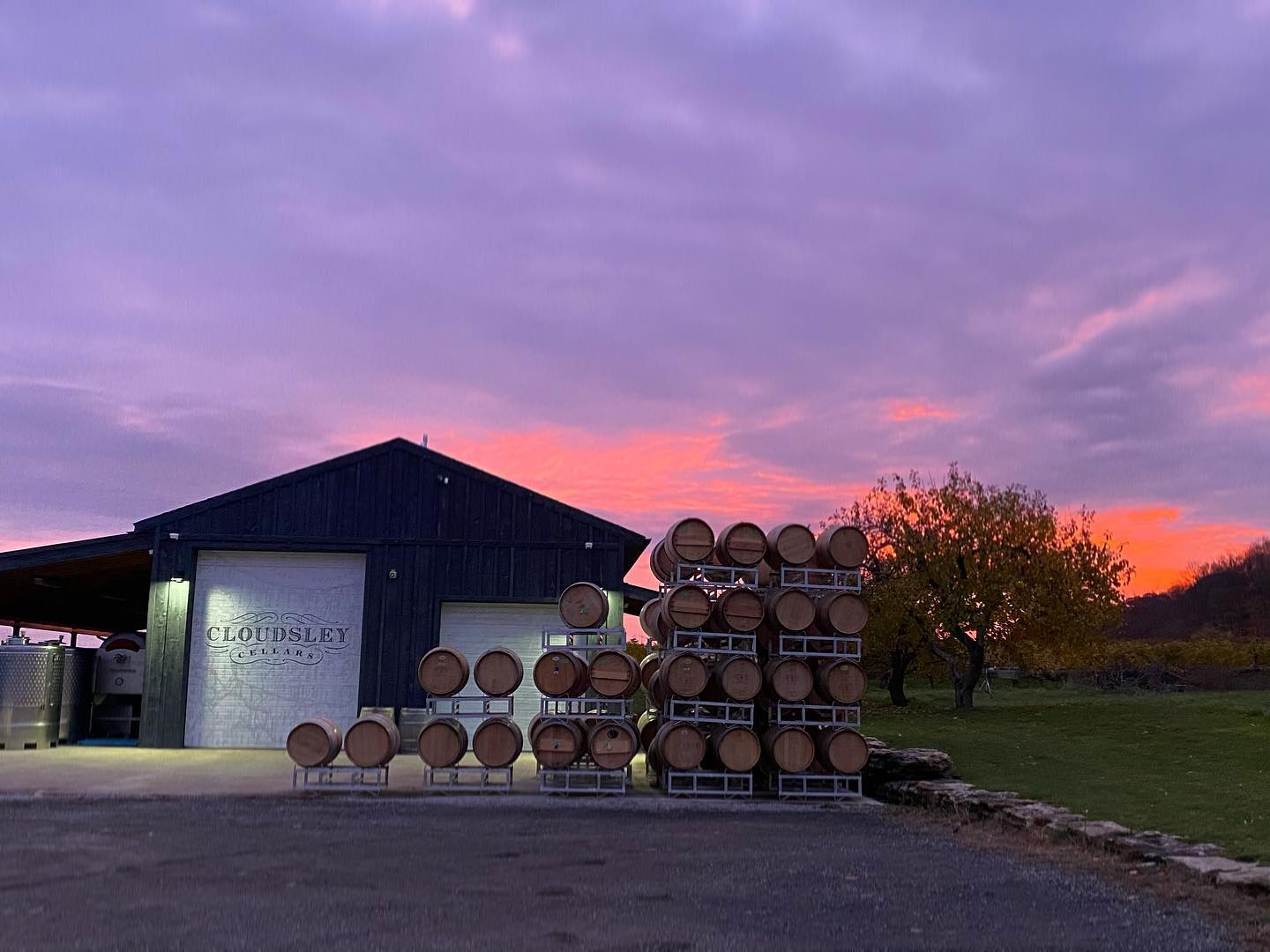
That classical orientation is not nostalgia. It is the foundation of Cloudsley's winemaking logic. If you have spent 17 years tasting the benchmarks, the wines that defined what terroir expression looks like in Pinot Noir and Chardonnay, you arrive at your own vineyard with a clear idea of what you are aiming for. Lowy's palate was built on wines that reward patience, that carry acidity as a structural asset, that speak of place rather than technique. Those are exactly the qualities he is pursuing on the Twenty Mile Bench.
His food and wine instincts follow the same logic. A roast chicken with Cloudsley Chardonnay or Pinot Noir. A prime rib with an aged Bordeaux for a special occasion. These are not fashionable pairings, they are the combinations that have worked for generations because the wines have the structure and the food has the weight. Lowy's early memory of wine is telling in this context: a teenage visit to Pommery's cellars in Champagne, not drinking but absorbing, the architecture of the place, the seriousness of it. That impression clearly stayed.
The broader significance of what Adam Lowy is building at Cloudsley Cellars extends beyond one producer's ambition. The Twenty Mile Bench has the geological and climatic credentials to produce Pinot Noir and Chardonnay that belong in the same conversation as cool-climate benchmarks elsewhere. What it has lacked, until recently, is a producer willing to make that argument with the same rigour that Burgundy's best domaines apply to their own parcels.
Cloudsley's approach, exclusive varietal focus, terroir-driven parcel differentiation, a tasting experience modelled on the vigneron tradition, is a coherent answer to the question of what serious Canadian wine looks like. The six Pinot Noirs of 2020 are especially concrete evidence yet that the bench can sustain that level of ambition. Each one different, each one from the same limestone shelf, each one carrying the natural acidity that makes cool-climate Pinot worth cellaring.
For collectors who have been watching Burgundy allocations tighten and prices climb, the Twenty Mile Bench offers something worth tracking: a site with genuine geological credentials, a founder with 17 years of palate-building behind him, and a winemaker in Matt Smith executing a vision that has already caught Decanter's attention. Cloudsley Cellars is not making a bid for novelty. It is making a bid for seriousness, and on the evidence of what has come out of that limestone escarpment so far, the case is building vintage by vintage.
Get the App
Take the shortlist into the En Primeur Club app for concierge access, saved places, and the next step after discovery.
Get Exclusive AccessMore from the editors