← Guides
After a fragmented May, the 2025 Bordeaux en primeur campaign enters its decisive phase — with Mouton Rothschild and Haut-Brion queued for June.
After a fragmented May, the 2025 Bordeaux en primeur campaign enters its decisive phase — with Mouton Rothschild and Haut-Brion queued for June.
Mouton Rothschild drops on 3rd June. Haut-Brion follows on the 9th. La Mission Haut-Brion and Pichon Lalande arrive on the 2nd. After a May that delivered more bank holidays than trading days, the 2025 Bordeaux en primeur releases are entering their densest and most consequential stretch, and collectors who've been watching the early scores have good reason to pay attention.
One merchant, speaking to Decanter, put it plainly: buyers recognise this is 'a vintage of excellent quality and a future great.' The same source noted 'significantly more large format bottling requests than normal', magnums and larger formats, the bottles you open at a table rather than sell at auction, a signal that serious buyers intend to drink these wines, not just cellar them.
The campaign opened with a scatter of high-profile names, Château Cheval Blanc, Château Pontet-Canet, Château Cos d'Estournel, and Lafleur, which arrived newly rebadged as Vin de France for the 2025 vintage, but the rhythm never settled. A succession of French bank holiday weekends broke the momentum before it could build, and the effective trading window shrank considerably. Then, as May drew to a close, a second disruption arrived: many of the Bordelais decamped to Asia for the Vinexpo trade show, leaving the release calendar essentially empty for the final week of the month.
The result was a campaign that felt, as Decanter described it, 'haphazard', big names appearing in clusters, then silence. For merchants trying to plan allocation communications and for collectors trying to track the release sequence, the stop-start pattern made May harder to navigate than most recent campaigns. That context matters now, because the June schedule is dense and moves fast. Missing a release window on a wine with limited production is not a recoverable mistake.
Giscours opens the sequence on 1st June. La Mission Haut-Brion, Pichon Lalande, and Pavie follow on the 2nd, alongside Lagrange and several other classified growths. Mouton Rothschild arrives on the 3rd, alongside Haut-Bailly and Brane Cantenac. Cantenac Brown on the 4th, Clos Fourtet on the 8th, and Haut-Brion, the last of the first growths to release, on the 9th.
A bit more lively, energetic and upfront than Lafite can sometimes be.1
Georgie Hindle, Decanter Critic
In the space of nine days, the campaign will deliver more pricing data points than the entire month of May produced. For anyone tracking the 2025 Bordeaux en primeur releases, this window sets the tone for everything that follows, both for individual purchase decisions and for the secondary market's early read on vintage value.
The concentration of releases also means that allocation decisions will stack up quickly. First-growth stock historically sells through within days of release. Buyers who haven't already spoken to their merchant about Mouton Rothschild or Haut-Brion should be doing so now, not on release morning.
Château Lafite Rothschild set the early benchmark when it released in late May, and the numbers are instructive. Berry Bros & Rudd is offering the 2025 at £1,047 per three bottles (£4,164 per 12x75), around 16% above the 2024 opening price, according to Decanter. Yields at the estate came in at just 27hl/ha, small even by Pauillac standards, and quantities are described as limited. Decanter's Georgie Hindle rated it 97 points. Carruades de Lafite, the second wine, was released alongside at £432 per three bottles.
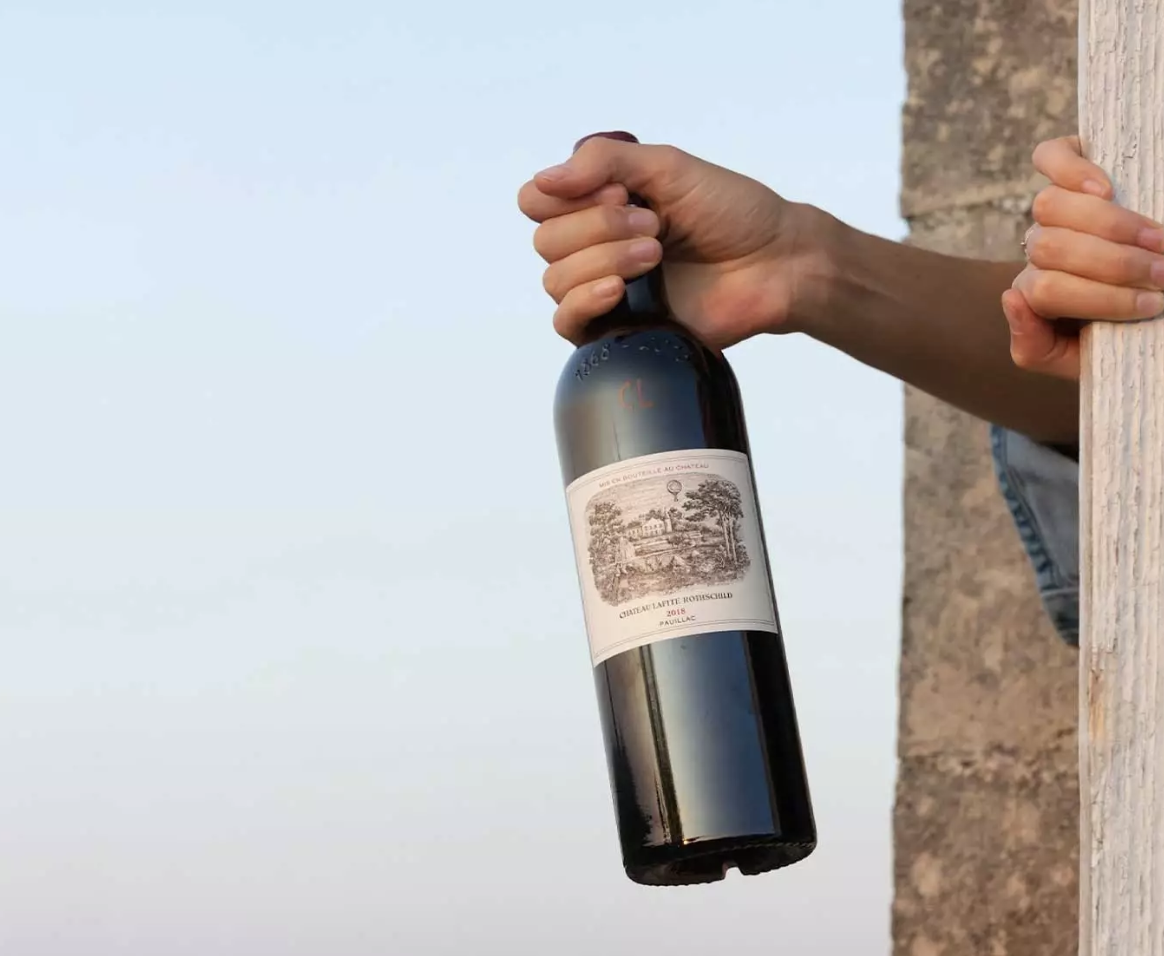
The Lafite pricing will function as a reference point when Mouton Rothschild and Haut-Brion open their books. Both estates will have watched merchant reaction to Lafite's 16% premium closely. If the trade absorbed that increase without significant pushback, and early reports suggest Lafite sold well, it gives the remaining first growths room to price assertively. If Mouton or Haut-Brion push materially beyond Lafite's level, expect merchant commentary to sharpen.
The broader question hanging over the June releases is whether the campaign can thread the needle between rewarding the vintage's quality and avoiding the overpricing that suppressed secondary market activity in 2023 and 2024. One merchant told Decanter that pricing so far has been 'sensible' but 'not necessarily at a level where the wine becomes a priority buy.' That tension, quality acknowledged, value debated, will define how the first-growth releases land.
The May releases gave collectors enough data to form a view. Château Angélus arrived on 21 May, scoring 97 points from Hindle, who wrote: 'The energy and balance is flawless. an elegant, elongated wine with such nuance of flavour.
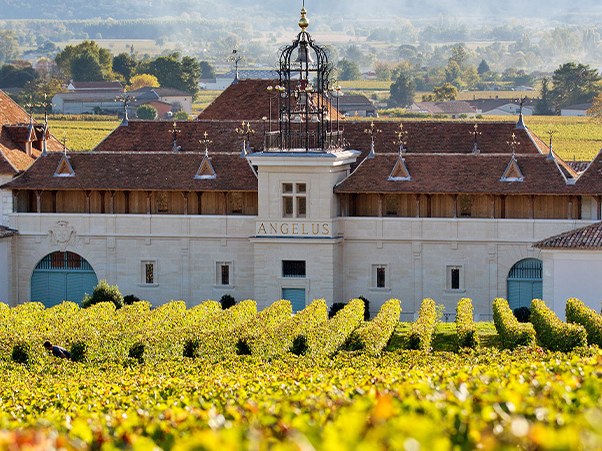
I love this and think they've done a super job, juicy, this brings a smile to your face.' Berry Bros & Rudd is offering Angélus at £606 per three bottles or £1,200 per six.
Liv-ex noted that the 2025 sits at the more expensive end of comparable recent vintages, with some older releases carrying equal or higher scores currently available for less on the secondary market, a detail worth factoring into any allocation decision.
Château Palmer followed on 22 May at £1,158 per six bottles, also 97 points from Hindle, who called it 'sturdy, stately, complex' and 'compelling.' Hindle's language for Palmer, sturdy and stately where Angélus is juicy and elongated, points to two distinct 2025 styles within the same score band: one for the cellar, one for the table sooner than you might expect. Liv-ex flagged Palmer similarly to Angélus, priced at the upper end of its recent vintage range, with older vintages at comparable scores available below the 2025 release price.
Further down the classification, the scoring-to-price relationships sharpen considerably. Léoville-Barton came in at £320 per six bottles with 97 points from Hindle, the same score as Angélus at roughly half the per-bottle cost. Lynch-Bages arrived at £402 per six with 96 points, Lascombes at £264 per six with 96 points, and Branaire-Ducru at £186 per six with 95 points. At that tier, the value case doesn't require a secondary market thesis, the numbers speak directly.
Hindle described Lafite 2025 as 'A bit more lively, energetic and upfront than Lafite can sometimes be', a character note that suggests a vintage with earlier accessibility than the more austere 2019 or the structured 2022. That 27hl/ha yield doesn't just constrain supply; it concentrates everything, the Pauillac graphite, the cassis, the fine-grained tannin structure that defines the estate at its best. For collectors who want to drink their Bordeaux within a decade rather than wait two, that profile carries weight.
The large-format bottling data sharpens the picture further. Significantly more magnum and larger-format requests than normal, according to one merchant, points to buyers who are buying to drink, not purely to trade. That's a different posture from the speculative allocation patterns that characterised the 2020 and 2021 campaigns, and it suggests the 2025 Bordeaux en primeur releases are attracting buyers with a specific occasion already in mind.
The release schedule gives you a clear sequence to work with. If Pichon Lalande is on your list, the window opens 2nd June. Mouton Rothschild on the 3rd. Haut-Brion on the 9th. Each of these estates produces a finite allocation, and merchants typically distribute on a first-come basis to existing clients, which means the relationship you have with your merchant matters as much as the release date itself.
For the classified growths that have already released, the Liv-ex secondary market data is worth consulting before committing. Both Angélus and Palmer were flagged as sitting at the more expensive end of their recent vintage ranges, with older releases at comparable scores available for less. That doesn't make them poor purchases, vintage character, provenance, and the specific 2025 growing conditions are distinct factors, but the value case rests on the vintage's long-term trajectory rather than immediate price arbitrage.
The wines that have drawn the clearest collector consensus so far are Lafite Rothschild, where production at 27hl/ha makes scarcity a genuine constraint, and Léoville-Barton, which at £320 per six bottles with 97 points from Hindle scores identically to Angélus at roughly half the per-bottle outlay. Lynch-Bages at £402 per six with 96 points and Branaire-Ducru at £186 per six with 95 points complete a Left Bank tier where the arithmetic is direct.
The 2025 vintage's character, lively and energetic at Lafite, flawless in balance at Angélus, sturdy and complex at Palmer, points to a Bordeaux that rewards those who buy to drink as much as those who buy to hold. The large-format demand confirms that buyers are already thinking in those terms. As Mouton Rothschild opens its books on the 3rd and Haut-Brion follows on the 9th, the question of whether 2025 prices itself into the collector conversation or out of it will be settled in a matter of days, and the allocation windows will close just as fast.
Get the App
Take the shortlist into the En Primeur Club app for concierge access, saved places, and the next step after discovery.
Get Exclusive AccessMore from the editors