The Red Hook Winery
A working winery operating out of a Red Hook warehouse on the Brooklyn waterfront, The Red Hook Winery produces small-lot wines from New York State grapes in a setting that blurs the line between production facility and tasting room. The industrial address puts it firmly outside Manhattan's drinking circuit, which is precisely the point — this is where serious wine finds an unglamorous, honest home.
Pearl is the En Primeur Club membership app — saves, bookings, and concierge access live there. Same editors, same standards.
- Address
- 175 Van Dyke St Suite 325A, Brooklyn, NY 11231
- Phone
- +1 347 689 2432
- Website
- redhookwinery.com
- Directions
- Get directions
 Saves & bookings on Pearl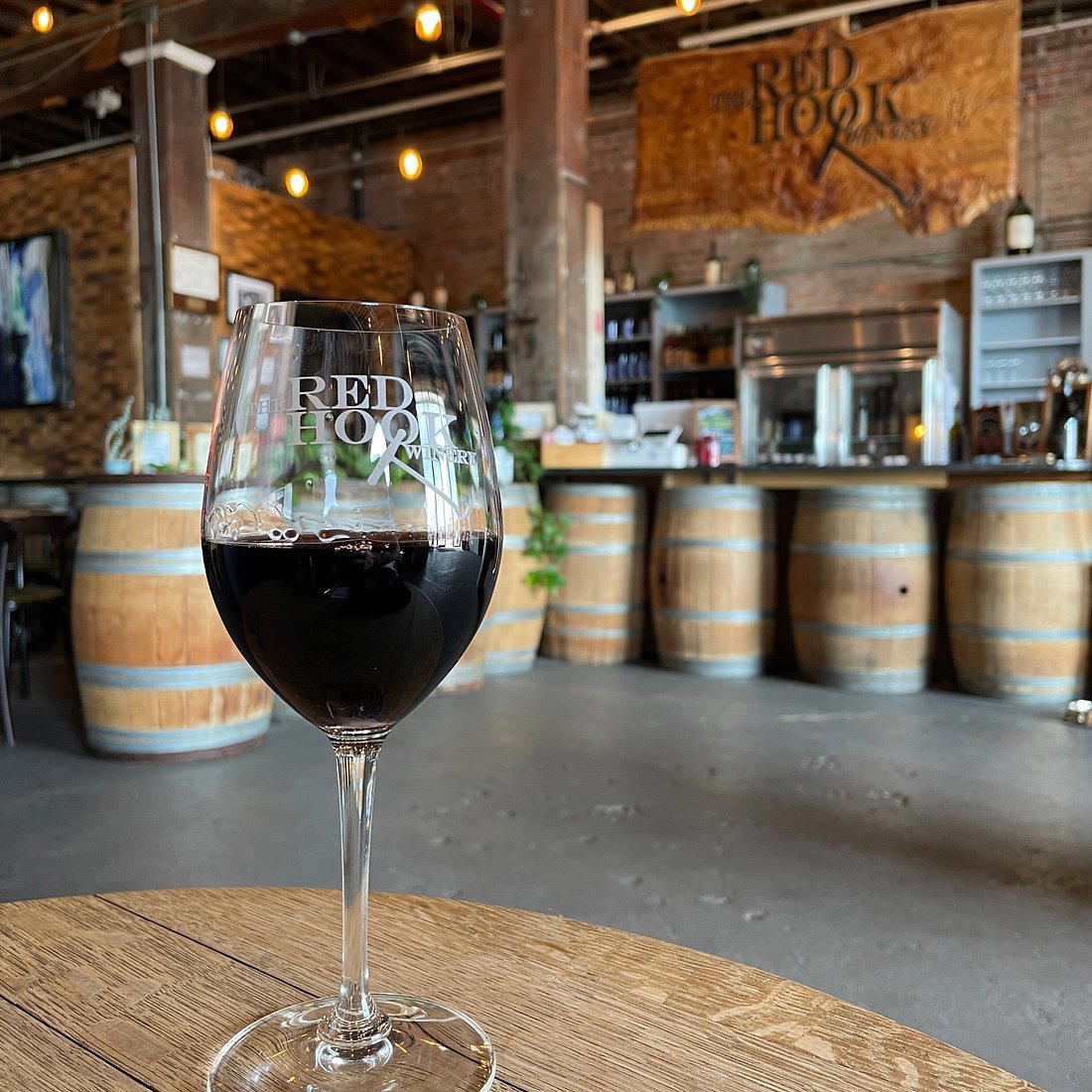
Brooklyn's Waterfront Winery and What It Says About Urban Wine Culture
Urban winemaking has carved out a credible niche in American wine culture over the past fifteen years, and few cities illustrate the tension between terroir romanticism and industrial pragmatism better than New York. The Red Hook Winery, operating out of a warehouse complex at 175 Van Dyke Street in Brooklyn's Red Hook neighborhood, sits squarely in that tension. The grapes come from upstate New York and Long Island vineyards; the winemaking happens on the waterfront, a short walk from the East River, in a space that has never pretended to be anything other than a production facility.
That lack of pretension is the operative detail. When the broader New York cocktail and drinks scene has increasingly shifted toward polished interiors and carefully curated atmospheres — think the precision programming at Amor y Amargo or the atmospheric restraint of Angel's Share — the Red Hook Winery remains warehouse-scaled, production-forward, and unapologetically functional. The tasting experience is framed by fermentation tanks and barrel stacks rather than by interior design.
Daytime vs. Evening: How the Two Versions of This Place Diverge
The Red Hook Winery is one of those venues where the time of day changes the fundamental character of the experience, not just the light. Afternoon visits, especially on weekends, attract a neighborhood-adjacent crowd making the deliberate journey to Red Hook, a part of Brooklyn that requires effort to reach, with no direct subway access. The waterfront industrial setting reads differently in daylight: more documentary, more process-focused. Visitors during daytime hours are more likely to observe production activity, to encounter the winery in a working state rather than a hospitality state, and to understand why the address makes operational sense even if it makes logistical inconvenience for the visitor.
Evening shifts the mood toward something closer to a conventional tasting room experience, with the warehouse atmosphere taking on a different register under lower light. That self-contained format is less common in New York's drinks scene, where venues like Superbueno and Attaboy NYC build identities around the full range of mixed drinks. Here, the proposition is narrower and more committed: New York State wine, made on these premises, poured in this room.
For value considerations, afternoon visits often present the stronger case. The tasting format suits deliberate, unhurried engagement with the wines, which range across the varieties that New York State viticulture does credibly, Riesling, Cabernet Franc, and native-influenced blends among them. Evening visitors tend to come for the atmosphere as much as the wine itself, which is a valid reason but a different one.
Red Hook as a Drinks Destination and Where This Winery Fits
Red Hook's identity as a Brooklyn neighborhood has always been defined by its physical isolation and its industrial heritage. The drinks and food venues that have taken root here share a common quality: they reward the effort required to get there, and they are not designed to compete with the density of options in Williamsburg or the West Village. The Red Hook Winery is among the most direct expressions of that character, a venue that exists because of what it makes, not despite where it's located.
Positioning this against New York's wider drinks circuit requires some calibration. The city's premium bar scene, from the technical programs at venues comparable to Kumiko in Chicago or Allegory in Washington, D.C. in terms of category seriousness, operates on entirely different terms. Those venues are defined by bartender craft, seasonal menus, and cocktail progression. The Red Hook Winery operates on winemaking logic: vintage variation, appellation identity, and the specific character of New York State fruit.
Nationally, urban winery formats share DNA with producers in other port and industrial cities. The model, grapes transported to an urban facility, wine made in close proximity to its eventual consumer, has taken hold in cities from San Francisco (where venues adjacent to ABV's neighborhood operate on similar principles) to New Orleans, where the craft beverage scene around spots like Jewel of the South has expanded the city's drinks identity well beyond its cocktail heritage. What distinguishes the Red Hook operation is the specificity of its source material: New York State viticulture, particularly from the Finger Lakes and North Fork of Long Island, has earned a genuine regional identity that urban winemakers here are drawing from directly.
The Practical Case for the Visit
Getting to Red Hook requires planning. The nearest subway stations are a considerable walk away, and the most practical approaches are by bike along the waterfront path, by cab or rideshare, or via the NYC Ferry's South Brooklyn route, which drops passengers close to Van Dyke Street. For visitors combining the winery with other Red Hook stops, the neighborhood rewards a half-day itinerary rather than a brief drop-in. The warehouse district surrounding 175 Van Dyke Street is not a high-footfall area, which is worth noting for first-time visitors who may arrive expecting a commercial strip.
Seasonal timing matters. Summer and early autumn visits align with the energy of the waterfront and with the period when New York's wine production cycle is most visibly active. Winter visits are quieter and more contemplative, which suits a certain kind of wine-focused visit but may disappoint those looking for the neighborhood's broader character.
For a broader map of where the Red Hook Winery sits within New York's drinking culture, the full New York City restaurants and bars guide places it in context alongside the city's bar and dining programs across all five boroughs. Those planning a drinks-focused trip might also compare the deliberate, craft-forward approach here with what's happening at venues like Bar Leather Apron in Honolulu, Julep in Houston, or The Parlour in Frankfurt on the Main, all venues where a clear regional or conceptual identity drives the program rather than breadth of offering.
Know Before You Go
- Address: 175 Van Dyke St, Suite 325A, Brooklyn, NY 11231
- Getting There: NYC Ferry (South Brooklyn route) is the most direct waterfront approach; rideshare is the most convenient alternative. No subway stop within easy walking distance.
- Leading Timing: Weekend afternoons in summer and early autumn for peak production activity and waterfront atmosphere.
- Format: Winery tasting room; the program is built around house-produced New York State wines rather than a cocktail or mixed drinks menu.
Peers Worth Knowing
| Venue | Cuisine |
|---|---|
| The Red Hook WineryThis venue — the venue you are viewing | This venue |
Continue exploring
More in New York City
Bars in New York City
Browse all →
Restaurants in New York City
Browse all →
Hotels in New York City
Browse all →




At a Glance
- Rustic
- Scenic
- Intimate
- Date Night
- Casual Hangout
- Waterfront
- Seated Bar
- Outdoor Terrace
- Conventional Wine
- Waterfront
Current opening hours
- Monday
- 12–7 PM
- Tuesday
- Closed
- Wednesday
- Closed
- Thursday
- 12–7 PM
- Friday
- 12–9 PM
- Saturday
- 12–9 PM
- Sunday
- 12–7 PM
Hours can change for holidays and private events. Last verified .
Rustic decor with a cool atmosphere, dramatic waterfront views of the Statue of Liberty and sunsets.
Know Before You Go
- Getting there
- 175 Van Dyke St Suite 325A, Brooklyn, NY 11231