The Hero

A Victorian pub dating to 1810, The Hero on Shirland Road operates across three distinct levels: a ground-floor local with real ales and British pub classics, a first-floor Grill Room centred on open-fire cooking, and a private dining room at the top. Restored by the team behind Notting Hill's Pelican, its emerald tiling and timber frames set a benchmark for heritage pub restoration in west London.
 Discover on Pearl
Pearl is the En Primeur Club membership app — saves, bookings, and concierge access live there. Same editors, same standards.
- Address
- 55 Shirland Rd, London W9 2JD, United Kingdom
- Phone
- +44 20 3432 1514
- Website
- theherow9.com
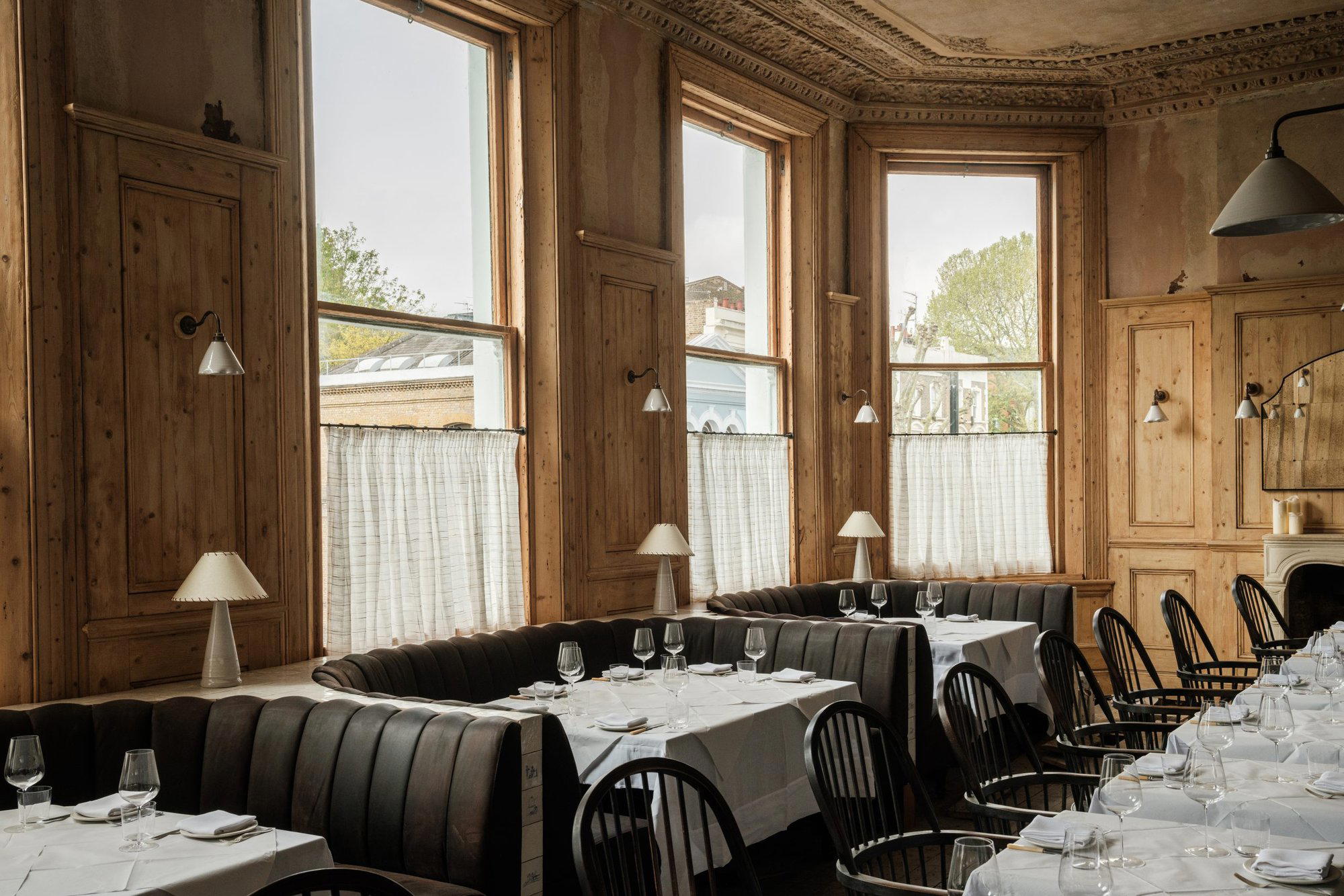
Three Floors, Three Registers: How The Hero Divides Its Rooms
Maida Vale sits at an interesting remove from London's more heavily trafficked dining neighbourhoods. It lacks the critical mass of Fitzrovia or the destination pull of Marylebone, which makes the presence of a pub operating at The Hero's level of architectural and culinary ambition all the more notable. At 55 Shirland Road, the building dates to 1810, placing it among the older surviving pub structures in west London. The team responsible for its restoration also operates the Pelican in Notting Hill, a pub that helped redefine what a neighbourhood dining room could look like in that part of the city. That lineage matters here, because The Hero follows a similar philosophy: take a heritage shell seriously, restore it with conviction, and programme each space according to its own logic rather than forcing a single concept across the whole building.
The exterior announces itself through emerald-green tiling, one of the more distinctive Victorian pub facades remaining in W9. That tiling is not decorative compromise, it is the building asserting its own period confidence, and the interior continues the argument. Timber frames, high corniced ceilings, and sash windows do the structural work, while leather banquettes and natural oak panelling on the first floor push the room closer to a private members' dining room than a conventional pub dining space. The ground floor, by contrast, keeps its Chesterfields and real ales firmly in place. The building operates as three distinct propositions stacked vertically, and that separation is the point.
Ground Floor: The Local as Starting Point
The ground-floor bar functions as a proper local in the traditional sense: a place where the menu is secondary to the room itself. British pub classics anchor the food offer, lamb ribs, cod cheeks, cheese toasties, fish pie, Barnsley chops, and roast chicken. These are not dishes straining to be something else. They sit in the register of direct cooking done with good ingredients, which is a more difficult thing to sustain than it sounds in a London pub market increasingly prone to either under-delivering on basics or over-reaching toward restaurant-style complexity.
Real ales are on tap, and the room is structured for staying rather than turning. Chesterfields are not a neutral design choice in a London pub, they signal an intention to keep people comfortable over time, which aligns with the ground floor's role as the more democratic and accessible entry point to the building. This is where walk-ins make the most sense, and where the atmosphere is least dependent on a booked table.
The Grill Room: Open Fire and a Different Set of Expectations
The first-floor Grill Room operates in a substantially different register. The room's physical character, high corniced ceilings, sash windows looking onto Shirland Road, natural oak panelling, leather banquettes, positions it closer to the dining rooms that define London's mid-tier fine dining than to anything typically associated with a pub first floor. The shift is deliberate. Warm brioche served with creamy salted butter on arrival is a signal about the kitchen's intentions as much as it is a practical welcome.
The menu focuses on special cuts of meat and fish cooked over an open fire, a format that has become more common across London's better neighbourhood restaurants over the past decade as wood and charcoal cooking moved from the domain of high-end destination restaurants into more accessible settings. What the Grill Room offers is that same technical approach applied to ingredients that reward it: lightly charred lamb's sweetbreads with a lobster gravy enriched with clotted cream; monkfish on the bone, well-timed, served on finely sliced runner beans with capers. Desserts hold to tradition, lemon tart, Eton mess, which is the right call for a room that draws its confidence from restraint rather than novelty.
Wine list is tailored to work across the building rather than exclusively for the Grill Room. Most selections are available by the glass, which is the appropriate structure for a venue operating across multiple price points and occasions. For comparison, The Hero's wine approach answers that expectation without overcomplicating it.
The Leading Floor: Private Dining as the Third Register
Uppermost level operates as a private dining room, completing the building's vertical segmentation. It sits above the Grill Room in both literal and functional terms, functioning as the most controlled environment in the building, intimate, removed from the ambient noise of the floors below. Private dining at this scale, within a pub structure, is a relatively recent development in London's neighbourhood dining market. It reflects a broader pattern in which independently operated pubs and restaurants have moved to monetise upper floors that might previously have been storage or staff space, while simultaneously offering a more exclusive product to groups who want a dedicated room without booking into a formal restaurant.
Where The Hero Sits in the Maida Vale Context
London's Victorian pub stock has been uneven in its fortunes over the past twenty years. Many buildings with comparable heritage credentials have been converted to other uses or stripped of their original features in refits that prioritised a generic contemporary aesthetic over the specifics of what made the building interesting in the first place. The Hero's restoration, under the same operator as the Pelican, represents a more careful approach: the emerald tiling and timber frames are treated as assets rather than problems. That matters not just aesthetically but commercially, because the building's heritage character is what allows it to sustain multiple formats under one roof without any of them feeling incoherent.
West London's pub dining scene occupies a different position from, say, the more concentrated clusters of bar-led operations found in Islington or Shoreditch. Venues like Academy and Amaro serve different neighbourhood demographics, but the broader principle of serious hospitality anchored in a considered physical environment connects them. Across the UK, the same commitment to place and character shows up in different formats: Bramble in Edinburgh, Merchant Hotel in Belfast, Schofield's in Manchester, Horseshoe Bar in Glasgow, and Mojo Leeds all demonstrate that the strongest independently operated venues in British cities tend to have a strong relationship with their physical space. The Hero belongs in that conversation.
Planning Your Visit
The Hero is at 55 Shirland Road, London W9 2JD, in Maida Vale. Reservations are recommended. Dress code is casual. Expect about $30 per person. The regular hours are Mon to Thu 12 to 11:30 PM, Fri and Sat 12 PM to 12 AM, and Sun 12 to 10 PM.
Credentials Lens
Comparable venues nearby, for context on price, style, and recognition.
| Venue | Cuisine | Price | Awards | Notes |
|---|---|---|---|---|
| The HeroThis venue — the venue you are viewing | pub | $$ | 1 recognition | |
| Cork and Bottle wine bar | wine_bar | $$ | 1 recognition | Leicester Square |
| The Princess Royal | pub | $$ | 1 recognition | Westbourne |
| Dram Bar | Bar | 1 recognition | St Giles | |
| Greenberry Café | lounge | $$ | , | Primrose Hill |
| Authentique Epicerie & Bar | wine_bar | $$ | 2 recognitions | Kentish Town |
Continue exploring
More in London
Bars in London
Browse all →
Restaurants in London
Browse all →
Hotels in London
Browse all →
Wineries in London
Browse all →
At a Glance
- Lively
- Cozy
- Classic
- Trendy
- After Work
- Group Outing
- Casual Hangout
- Historic Building
- Seated Bar
- Lounge Seating
- Booth Seating
- Communal Tables
- Craft Beer
Buzzy and electric on the ground floor with roaring fires and lively crowds; cozy and atmospheric upstairs with dimmed lights, leather banquettes, and retro decor.