Thai Table
Thai Table on University Avenue sits in Berkeley's informal, ingredient-attentive dining corridor, where Thai cooking ranges from fast-casual to thoughtful neighborhood restaurants with market-driven sourcing. The address places it within walking distance of the Gourmet Ghetto's wider food culture, and the broader Berkeley context suggests a kitchen likely shaped by the Bay Area's proximity to Central Valley produce and coastal suppliers.
Pearl is the En Primeur Club membership app — saves, bookings, and concierge access live there. Same editors, same standards.
- Address
- 913 University Ave, Berkeley, CA 94710
- Phone
- +1 510 705 1083
- Website
- thaitableberkeley.com
- Directions
- Get directions
 Saves & bookings on Pearl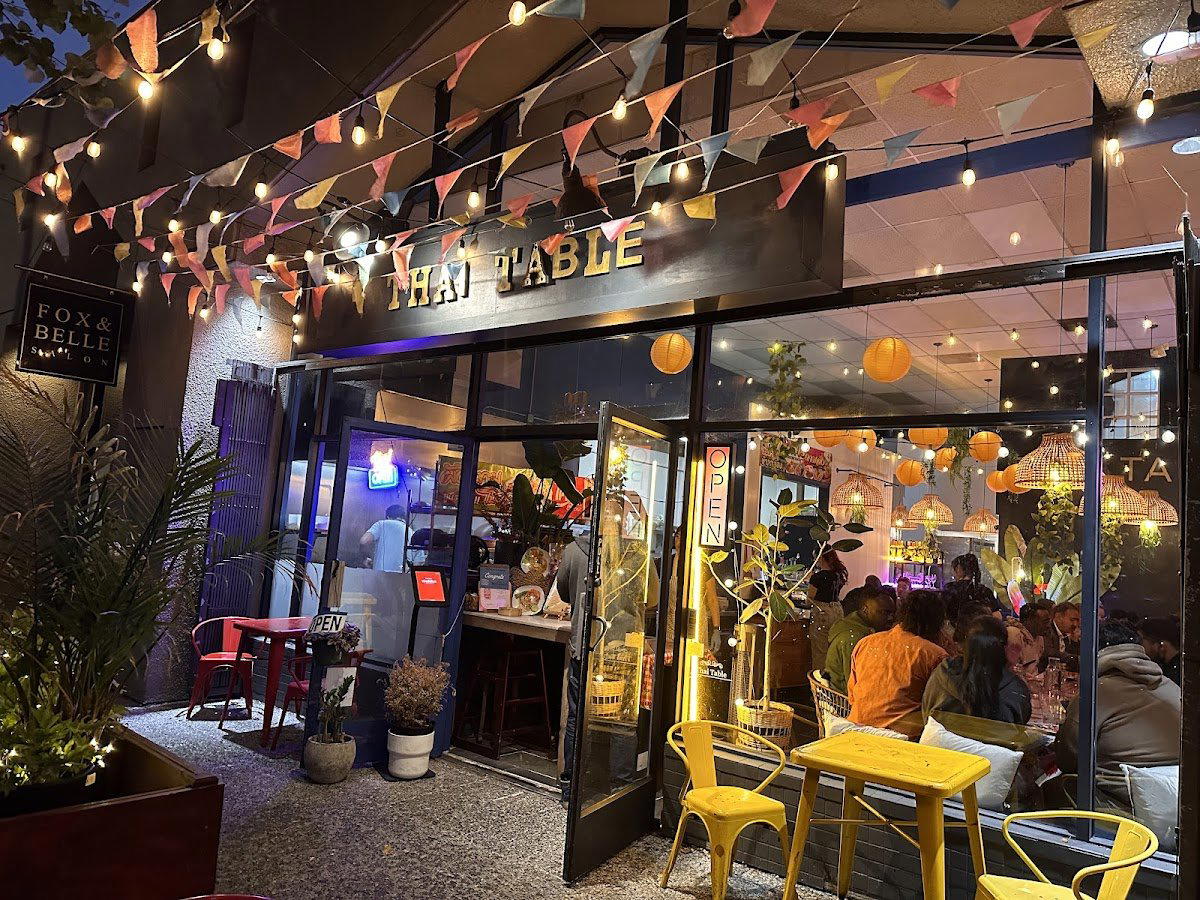
University Avenue and the Thai Kitchen Tradition in Berkeley
University Avenue in Berkeley has long functioned as one of the Bay Area's more interesting corridors for immigrant-origin cooking, where Vietnamese, Thai, Indian, and Bangladeshi kitchens have operated side by side for decades with relatively little fanfare. The Thai restaurants along this stretch don't cluster for tourism — they exist because Berkeley's student population, longtime residents, and food-curious professionals have consistently supported a particular style of Thai cooking that leans toward the regional and the unfussy. Thai Table, at 913 University Ave, sits inside that tradition rather than apart from it.
What distinguishes Thai cooking in the Bay Area from its counterparts in, say, Los Angeles or Houston is partly a matter of supply chain and partly a matter of expectation. The Bay Area's proximity to Central Valley farms and its deeply embedded culture of sourcing — a culture that Alice Waters helped codify at Chez Panisse roughly a mile from here, has pushed even informal neighborhood restaurants toward fresher, more ingredient-specific approaches than you'd find in markets where volume and price are the primary drivers. Thai herbs like lemongrass, galangal, and kaffir lime leaf, once imported dried or frozen, are increasingly available fresh through regional Asian produce distributors and specialty growers in the Sacramento Delta. A Thai kitchen in Berkeley in 2024 has access to ingredients that would have required significant effort to source even fifteen years ago.
Sourcing and the Bay Area Advantage
The ingredient sourcing story in Bay Area Thai cooking is worth understanding before you arrive. California's Central Valley produces more than half of the country's fruits and vegetables, and the network of Asian specialty farms that has developed around Sacramento and Stockton means that Thai basil, young coconuts, fresh turmeric, and banana blossoms now move through regional supply chains with regularity. This matters at the plate level: fresh galangal behaves differently from dried galangal in a tom kha, and Thai basil added at the end of a stir-fry rather than wilted into a sauce has a brightness that changes the entire character of the dish.
Berkeley's food culture has also shaped diner expectations in ways that reward kitchens paying attention to these distinctions. A customer base that reads ingredient lists and asks questions about sourcing creates indirect pressure on kitchens to be thoughtful, even at price points that wouldn't typically support that conversation. This is the broader context in which Thai Table operates on University Avenue, and it's a context that has historically been good for ingredient-forward cooking of all kinds.
For comparison, the Thai dining conversation in Berkeley also includes Anchalee, which operates in the same neighborhood with its own approach to the regional Thai canon. The two restaurants represent Berkeley's tendency to support multiple serious interpretations of a cuisine rather than consolidating around a single dominant address.
The University Avenue Setting
Arriving on University Avenue, the atmosphere is distinctly neighborhood rather than destination. This is not a strip built for out-of-town visitors; it's a working commercial corridor that happens to contain a high density of kitchens worth eating in. The energy at dinner is local, Berkeley residents on foot, cyclists locking up outside, the occasional Cal student navigating between the campus neighborhood and the western end of the avenue near San Pablo. The physical environment is low-key in the way that serious neighborhood restaurants often are: the attention is on the table rather than the room.
This is a different register from the more theatrical dining experiences you'd find at Comal on Shattuck, or the polished room at Agrodolce Osteria. It's also a different register from the bubble tea format at Happy Lemon a few blocks away. Thai Table occupies the middle ground where the food is the point and the setting is functional and comfortable rather than designed to impress.
Thai Cooking's Regional Spectrum
Thai cuisine in the United States has historically been flattened into a handful of familiar dishes, pad thai, green curry, tom yum, that represent only a narrow slice of a deeply regional culinary tradition. The north of Thailand (Chiang Mai and surrounding provinces) produces khao soi, a coconut curry noodle soup with Burmese and Yunnan influences, and larb, a minced meat salad with toasted rice powder and herbs. The northeast (Isan) is the source of som tum, papaya salad in its most pungent form, and sticky rice as a staple rather than an occasional side. Southern Thai cooking is sharper, more turmeric-forward, and heavier on seafood. Each region has its own chile logic, its own balance between fish sauce and lime, its own texture preferences.
The Thai kitchens in Berkeley that have built sustained followings over the past two decades have tended to do so by leaning into this regional depth rather than collapsing it into a single generic menu. The city's eating culture, which has also produced sustained interest in regional Mexican at addresses like Comal, rewards that kind of specificity. Diners here are generally willing to follow a kitchen into territory that isn't already familiar, which creates conditions for more interesting food.
Planning a Visit
Thai Table is at 913 University Avenue, accessible by the AC Transit 51B line from downtown Berkeley BART or by a roughly ten-minute walk from downtown. University Avenue parking is metered and generally available in the evenings on side streets. Given that specific hours and booking details are not publicly confirmed at time of writing, it is worth checking current operating hours directly before visiting. For a broader picture of what Berkeley's food scene covers across neighborhoods and price points, the full Berkeley restaurants guide provides context that extends well beyond University Avenue.
If you're building a broader Bay Area itinerary that includes drinking alongside eating, the craft cocktail tier is well represented at ABV in San Francisco, which operates in a different register entirely but is worth knowing about for evenings when the focus shifts from food to drink. For reference points farther afield, Kumiko in Chicago, Bar Leather Apron in Honolulu, Jewel of the South in New Orleans, Julep in Houston, Superbueno in New York City, and The Parlour in Frankfurt on the Main all represent the kind of ingredient-attentive, technically considered approach that serious drinkers track across cities.
Continue exploring
More in Berkeley
Bars in Berkeley
Browse all →
Restaurants in Berkeley
Browse all →
Hotels in Berkeley
Browse all →

At a Glance
- Casual Hangout
- Group Outing
- Lounge Seating
- Outdoor Terrace
- Classic Cocktails
Current opening hours
- Monday
- 12–9:30 PM
- Tuesday
- 12–9:30 PM
- Wednesday
- 12–9:30 PM
- Thursday
- 12–9:30 PM
- Friday
- 12–9:30 PM
- Saturday
- 12–9:30 PM
- Sunday
- 12–9:30 PM
Hours can change for holidays and private events. Last verified .
Casual restaurant atmosphere with indoor and outdoor seating; music starts intense but calms down.
Know Before You Go
- Getting there
- 913 University Ave, Berkeley, CA 94710