TAITO Sushi Orlando Food Truck
TAITO Sushi Orlando Food Truck operates from East Michigan Street in Orlando's Lake Terrace neighbourhood, bringing Japanese-style sushi to a mobile format that has become a fixture in the city's street food circuit. The truck format keeps things direct and unpretentious, with sushi offered outside the white-tablecloth context that dominates most Florida Japanese dining. For Orlando visitors and locals alike, it represents an accessible entry point into the city's evolving food truck scene.
Pearl is the En Primeur Club membership app — saves, bookings, and concierge access live there. Same editors, same standards.
- Address
- 2207 E Michigan St, Orlando, FL 32806
- Phone
- +1 352 272 2840
- Website
- linktr.ee
- Directions
- Get directions
 Saves & bookings on Pearl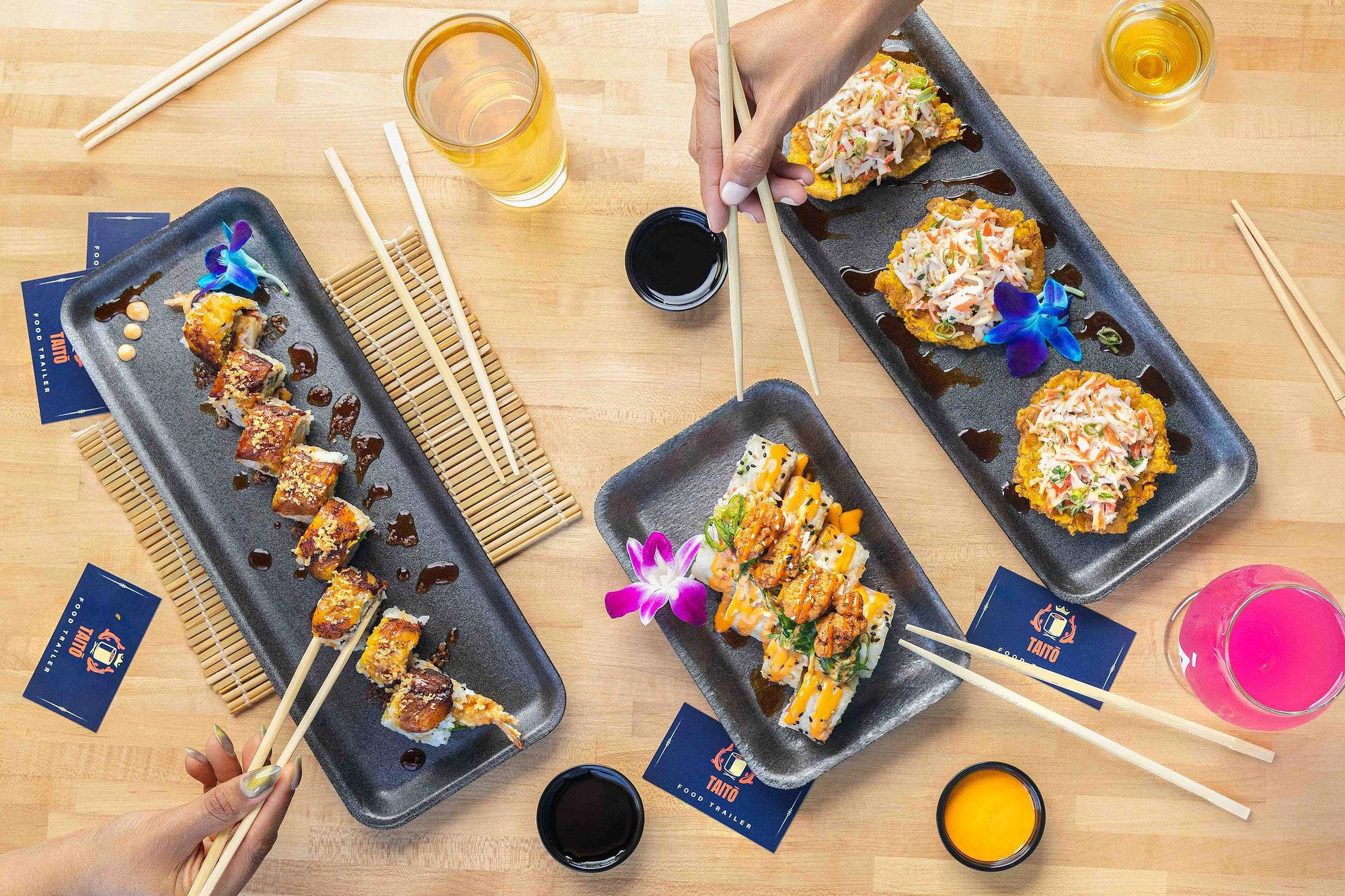
Street-Level Sushi in Orlando's East Side
Orlando's food truck circuit has matured considerably over the past decade, moving from festival novelty to a consistent dining tier that sits between fast-casual chains and sit-down restaurants. On East Michigan Street in Lake Terrace, that shift is visible in the kind of operator that has set up here: TAITO Sushi Orlando Food Truck occupies a stretch of road that has quietly accumulated a small cluster of mobile and independent food operators, drawing a neighbourhood crowd that skews local rather than tourist. For context on where this fits in Orlando's broader dining picture, see our full Lake Terrace restaurants guide.
The truck format imposes its own discipline on sushi. Without the ritual architecture of a traditional counter, the interaction becomes faster and less ceremonial, which suits a certain kind of diner and a certain kind of meal. Across American cities, the food truck sushi format has found its footing precisely because it strips away the formality without necessarily stripping away quality. Whether TAITO executes that balance well depends on visit-by-visit conditions that the mobile format makes variable by design.
The Food Truck Sushi Format: What It Signals
Food truck sushi in American cities generally operates in one of two modes: high-volume maki rolls aimed at a lunch crowd, or a more focused approach that adapts traditional forms to the constraints of a mobile kitchen. The distinction matters because it tells you what to expect at the window. Trucks leaning toward the former are pricing against sandwich shops and burrito chains. Those attempting the latter are pricing against fast-casual Japanese and positioning quality as their differentiator.
At 2207 E Michigan St, the East Michigan Street address places TAITO in a part of Orlando that functions as a working neighbourhood rather than a dining destination, which tends to favour operators who rely on repeat local business over passing tourist traffic. That dynamic shapes the menu logic: the regulars who return weekly are not looking for a grand occasion, they are looking for something consistent, reasonably priced, and worth the trip across town. Mobile sushi operations that survive in non-tourist zones generally do so by meeting exactly that standard.
Across the US, cities with mature food truck scenes, including Houston with its diverse mobile operators, Chicago's street food infrastructure, and San Francisco's established truck culture, have shown that longevity in the format depends less on novelty and more on operational reliability. Bars with strong beverage programs in those same cities, such as Julep in Houston, Kumiko in Chicago, and ABV in San Francisco, have demonstrated that sustained local credibility comes from consistency over spectacle, a lesson that applies equally to a cocktail program and a sushi truck.
Lake Terrace and the East Orlando Dining Context
Lake Terrace sits east of downtown Orlando, away from the International Drive tourist corridor and the upscale dining of Thornton Park or the Mills 50 district. That positioning is both a constraint and a clarification: operators here are not competing with hotel restaurants or destination fine dining. They are serving a neighbourhood that has its own rhythms and its own expectations.
The East Michigan Street corridor has seen gradual investment from independent operators over the past several years, a pattern that mirrors what happened in similar mid-city corridors in Miami, Washington D.C. and New York before those areas became recognised dining zones. Miami's Bar Kaiju and D.C.'s Allegory both built early reputations in neighbourhoods that were not yet on the standard tourist circuit, which gave them time to establish local credibility before broader recognition arrived. The same dynamic plays out, at a different scale, when a food truck chooses a working neighbourhood over a food hall or festival circuit.
What to Expect at the Window
The mobile sushi format across the US varies widely in execution. At its most direct, it means pre-rolled maki available by the piece or combo, often with a small selection of nigiri when the format allows. The constraints of a food truck kitchen, limited refrigeration, no sushi bar counter, service from a window rather than a chef's hands to your plate, shape the menu as much as any culinary decision does. Those constraints are worth understanding before you arrive, because they set the appropriate frame of reference.
For comparison, some of the more technically rigorous bar and dining operations in the US, from Bar Leather Apron in Honolulu to Jewel of the South in New Orleans and Bitter and Twisted in Phoenix, achieve their reputations through format discipline: knowing exactly what they are doing and executing it with precision. The food truck equivalent of that discipline is a tight, manageable menu that the operator can deliver consistently from a vehicle. Scope creep, which plagues many mobile operations, is the fastest route to inconsistency.
Planning Your Visit
Because specific hours, booking methods, and pricing are not confirmed in available records, the practical advice here is direct: food trucks in this part of Orlando tend to operate on schedules that shift seasonally and respond to event bookings, so checking for current location and hours through local food truck tracking platforms or social media before making a trip is standard practice for mobile dining in the city. The 2207 E Michigan Street address is the registered base, but mobile operators are by definition not fixed to a single spot on every day of operation. Arriving mid-week during a lunch or early dinner window typically offers shorter queues than weekend peak times, a pattern consistent across Orlando's food truck circuit.
For those building out a broader Orlando itinerary that includes bar programs with serious technique alongside casual street food, operations like Canon in Seattle, Superbueno in New York City, and The Parlour in Frankfurt illustrate how much range exists between a window-service truck and a full cocktail program, and how different the decision framework is for each.
Continue exploring
More in Lake Terrace
Bars in Lake Terrace
Browse all →
Restaurants in Lake Terrace
Browse all →
At a Glance
- Casual Hangout
- Standalone
- Standing Room
Current opening hours
- Monday
- 11:30 AM–9 PM
- Tuesday
- 11:30 AM–9 PM
- Wednesday
- 11:30 AM–9 PM
- Thursday
- 11:30 AM–9 PM
- Friday
- 11:30 AM–10 PM
- Saturday
- 11:30 AM–10 PM
- Sunday
- 11:30 AM–9 PM
Hours can change for holidays and private events. Last verified .
Casual outdoor food truck atmosphere.
Know Before You Go
- Getting there
- 2207 E Michigan St, Orlando, FL 32806