Stay Gold occupies a shophouse on Amoy Street, one of Singapore's most concentrated stretches of bar and restaurant culture. The bar sits within a neighbourhood that has become a reference point for the city's cocktail scene, where independent operators trade on craft and specificity rather than scale. For visitors tracking Singapore's drinking culture at close range, Amoy Street is where that conversation is loudest.
 Discover on Pearl
Pearl is the En Primeur Club membership app — saves, bookings, and concierge access live there. Same editors, same standards.
- Address
- 69 Amoy St, Singapore 069888
- Phone
- +6588767364
- Website
- staygoldflamingo.com
Amoy Street After Dark
There is a particular quality to Amoy Street in the early evening, when the last of the office crowd has thinned and the conservation shophouses shift register entirely. The facades stay the same, two-storey terrace buildings in faded ochre and white, the upper floors quiet, but the ground level comes alive with a different kind of foot traffic. Regulars who know exactly where they are going move with purpose. Visitors slow down and read the signage. Stay Gold operates in this environment, occupying a slot on one of Singapore's most closely watched bar streets, where the density of serious operators makes even a short walk an education in what the city's cocktail scene has become.
Amoy Street sits within the Tanjong Pagar conservation district, a fifteen-minute walk from the Central Business District and a neighbourhood that has spent the better part of a decade attracting bars and restaurants with specific points of view. The street rewards the kind of visitor who simply turns left or right based on what they see through a window. Stay Gold fits that pattern of discovery.
Singapore's Cocktail Scene in Context
Singapore's bar culture has moved through several distinct phases over the past fifteen years. The speakeasy era, unmarked doors, password entry, theatrical concealment, gave way to a more transparent and technically sophisticated generation of programs. Today, the bars drawing consistent attention tend to lead with ingredient sourcing, low-intervention techniques, and a willingness to let the drink carry the conversation rather than the staging around it. That shift is visible across the city's most-referenced addresses.
28 HongKong Street established much of the grammar for Singapore's cocktail credibility when it opened on the street that now bears its name as shorthand for a certain kind of serious bar operation. Analogue has pushed the sustainability conversation further than almost any other bar in the city, building its program around zero-waste principles and plant-based ingredients in a way that has influenced how other operators think about their supply chains. Anti:Dote at Fairmont sits at the hotel end of the spectrum, delivering technical consistency at volume. Atlas, in the Parkview Square lobby, occupies a completely different register, a gin collection of more than 1,300 bottles and an Art Deco room that functions as one of the city's more theatrical drinking environments.
Stay Gold enters this scene at street level, literally and figuratively. The Amoy Street location places it among operators who have chosen neighbourhood specificity over hotel infrastructure, and the conservation shophouse format, compact footprint, defined capacity, aligns it with bars where the program has to do the heavy lifting.
The Sustainability Argument on Amoy Street
Across Singapore's more thoughtful bar programs, sustainability has moved from marketing language to operational reality. Analogue made it a founding principle. A growing number of Amoy Street operators have followed, quietly reducing waste, sourcing closer, and rethinking what goes into a drain at the end of service. The question for any bar in this neighbourhood is whether environmental consciousness is structural, built into sourcing decisions, mise en place, and menu design, or cosmetic.
The bars that have made the strongest case for the former tend to share certain characteristics: they work with smaller menus that allow for tighter ingredient control, they favour local and regional producers where the provenance can be verified, and they treat the back bar as an extension of the same logic. Waste reduction in a cocktail bar is not a simple proposition, citrus alone generates significant volume, but the operations that take it seriously have developed workarounds that often produce better drinks as a byproduct. Clarified juices, fat-washed spirits, fermented syrups made from kitchen trim: these techniques emerged partly from waste-reduction logic and have become markers of a certain calibre of program.
For a visitor arriving at Stay Gold from elsewhere in the world, the Amoy Street bar scene offers a useful comparison set. Kumiko in Chicago has made Japanese-inflected precision and seasonal sourcing a defining characteristic of its program. Bar Leather Apron in Honolulu operates in a similar register of quiet technical seriousness, away from the island's more obvious tourist infrastructure. Jewel of the South in New Orleans grounds its program in historical cocktail research rather than novelty. Each of these bars has found a specific lane and stayed in it, which is the same discipline the better Amoy Street operations demonstrate.
Placing Stay Gold in the Peer Set
At the neighbourhood level, the Tanjong Pagar and Amoy Street cluster is Singapore's most consistent stretch for independent bar culture. The operators here have generally rejected the hotel bar model in favour of formats where the owner or lead bartender is present, the menu changes with intention rather than on a marketing cycle, and the room size keeps service at a scale where quality is controllable. That is the context Stay Gold occupies.
Bars in comparable cities that have chosen the same path, small footprint, neighbourhood location, program-first positioning, include Superbueno in New York City, which has built a following around Latin American spirits and flavours in a part of the city not known for cocktail destinations, and The Parlour in Frankfurt, which operates with a similar discipline in a European market where that kind of specificity is rarer. Julep in Houston and 1806 in Melbourne represent the same instinct in their respective cities: bars defined by what they know rather than what they can scale.
Planning a Visit
Stay Gold is at 69 Amoy Street, Singapore 069888. The address puts it within easy reach of Tanjong Pagar MRT, and the surrounding block on a given evening offers enough adjacent options, restaurants, other bars, late-night coffee, to make it the anchor of a longer night rather than a single stop. Amoy Street bars tend to fill from around 7pm on weekdays and earlier on Fridays, when the CBD crowd arrives before dispersing into the neighbourhood. Arriving by 6:30pm gives you the room before it reaches operating density. Stay Gold is recommended for reservations.
Cuisine and Credentials
| Venue | Awards |
|---|---|
| Stay GoldThis venue — the venue you are viewing | |
| Native | World's 50 Best |
| 28 HongKong Street | World's 50 Best |
| Analogue | World's 50 Best |
| Anti:Dote | World's 50 Best |
| Atlas | World's 50 Best |
Continue exploring
More in Singapore
Bars in Singapore
Browse all →
Restaurants in Singapore
Browse all →
At a Glance
- Trendy
- Lively
- Modern
- Energetic
- Date Night
- After Work
- Late Night
- Casual Hangout
- Design Destination
- Seated Bar
- Lounge Seating
- Classic Cocktails
- Craft Cocktails
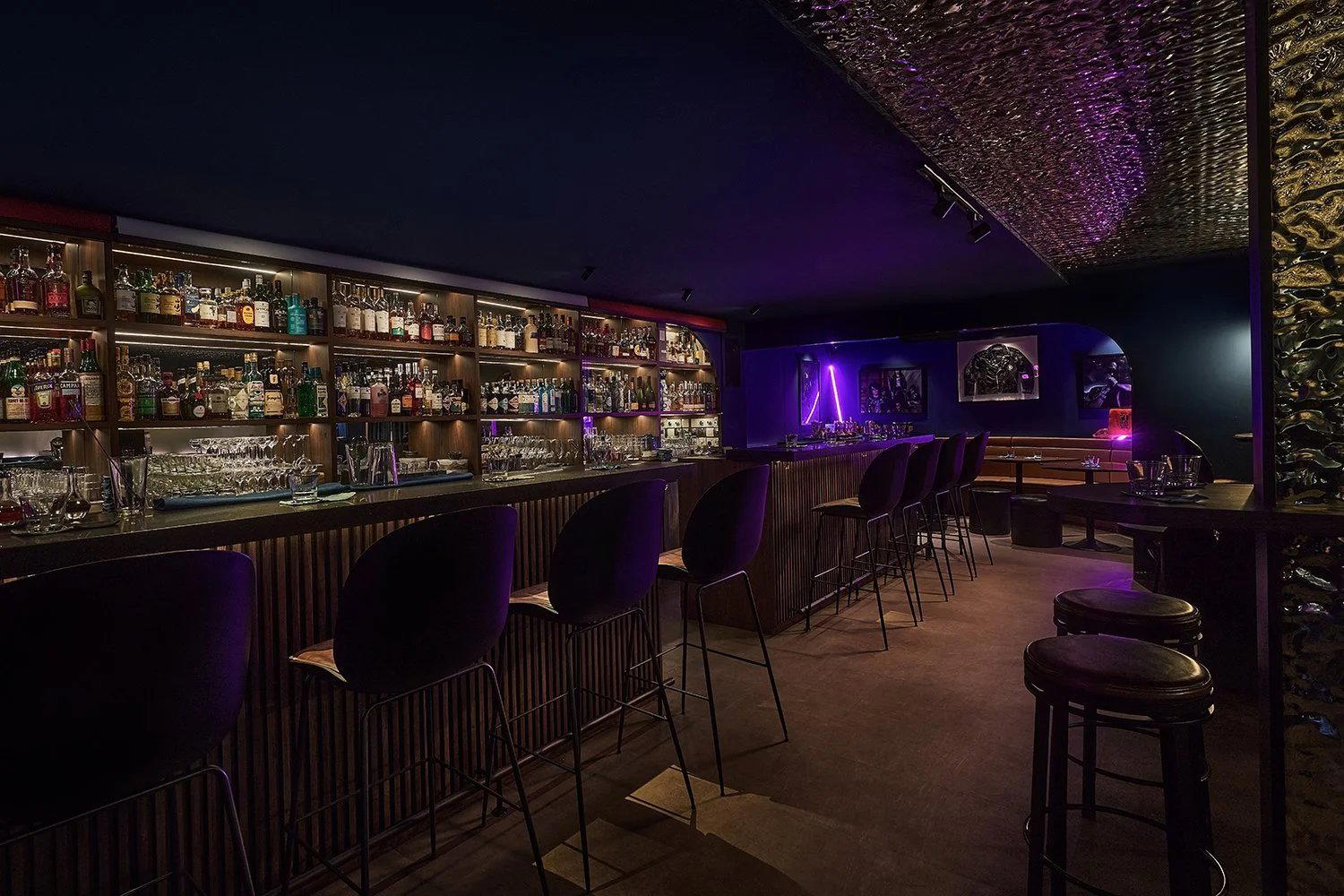
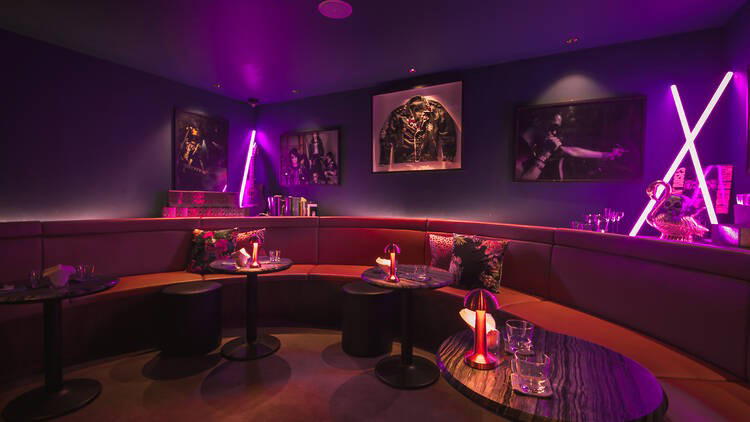
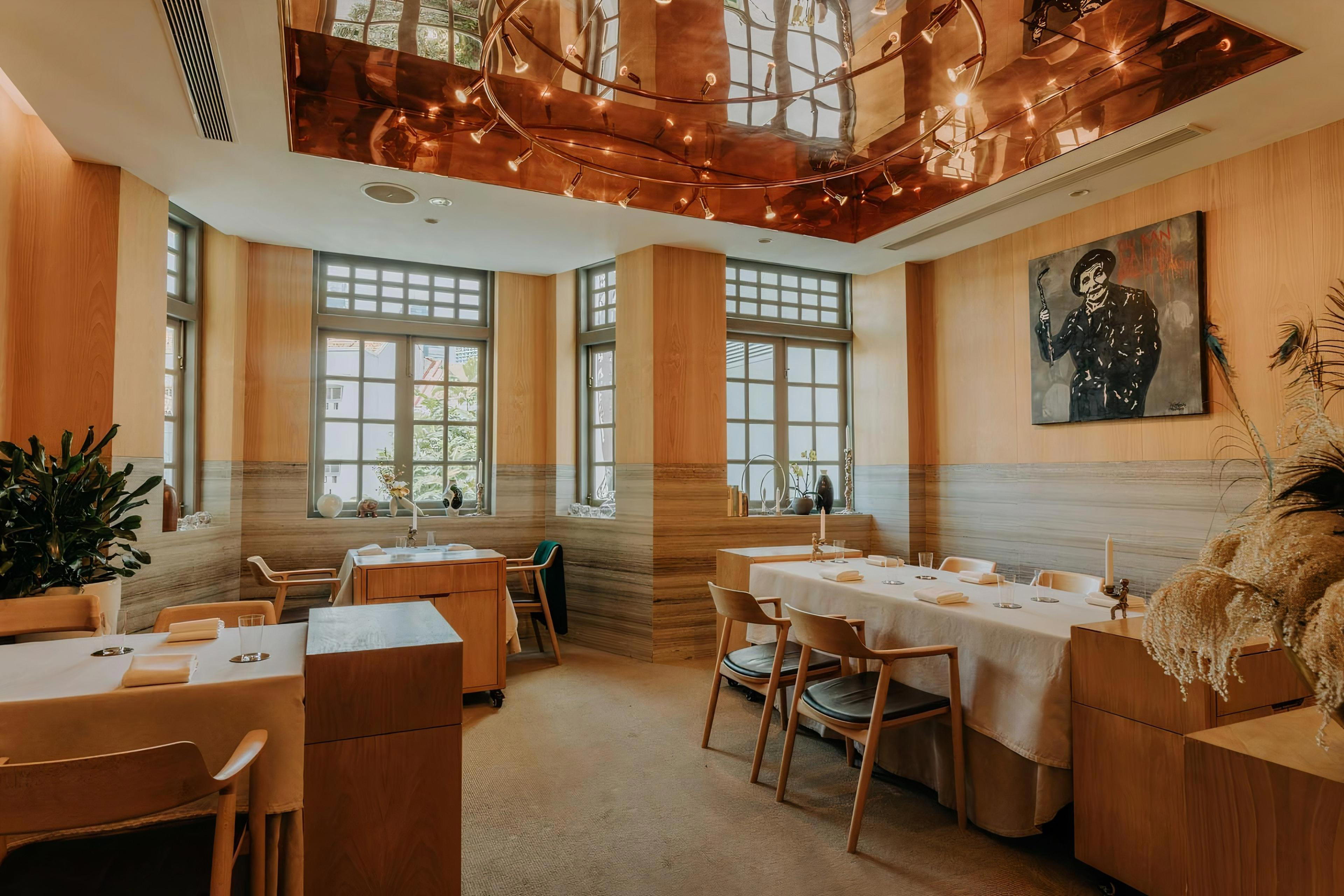
Neon purple lighting reflects off rippled stainless steel ceilings, creating a dreamlike atmosphere with rock music, guitar hero portraits, and a vibrant, genre-bending energy.