SEOUL BBQ & SUSHI
Seoul BBQ & Sushi sits on Phoenix's North Black Canyon Highway, combining Korean barbecue and Japanese sushi formats under one roof. The kitchen covers two distinct grilling and raw-fish traditions, making it a practical stop for tables that want both. It occupies a mid-corridor stretch of Phoenix where Korean and Japanese concepts increasingly share the same dining block.
Pearl is the En Primeur Club membership app — saves, bookings, and concierge access live there. Same editors, same standards.
- Address
- 11025 N Black Cyn Hwy, Phoenix, AZ 85029
- Phone
- +1 602 441 0900
- Website
- seoulphx.com
- Directions
- Get directions
 Saves & bookings on Pearl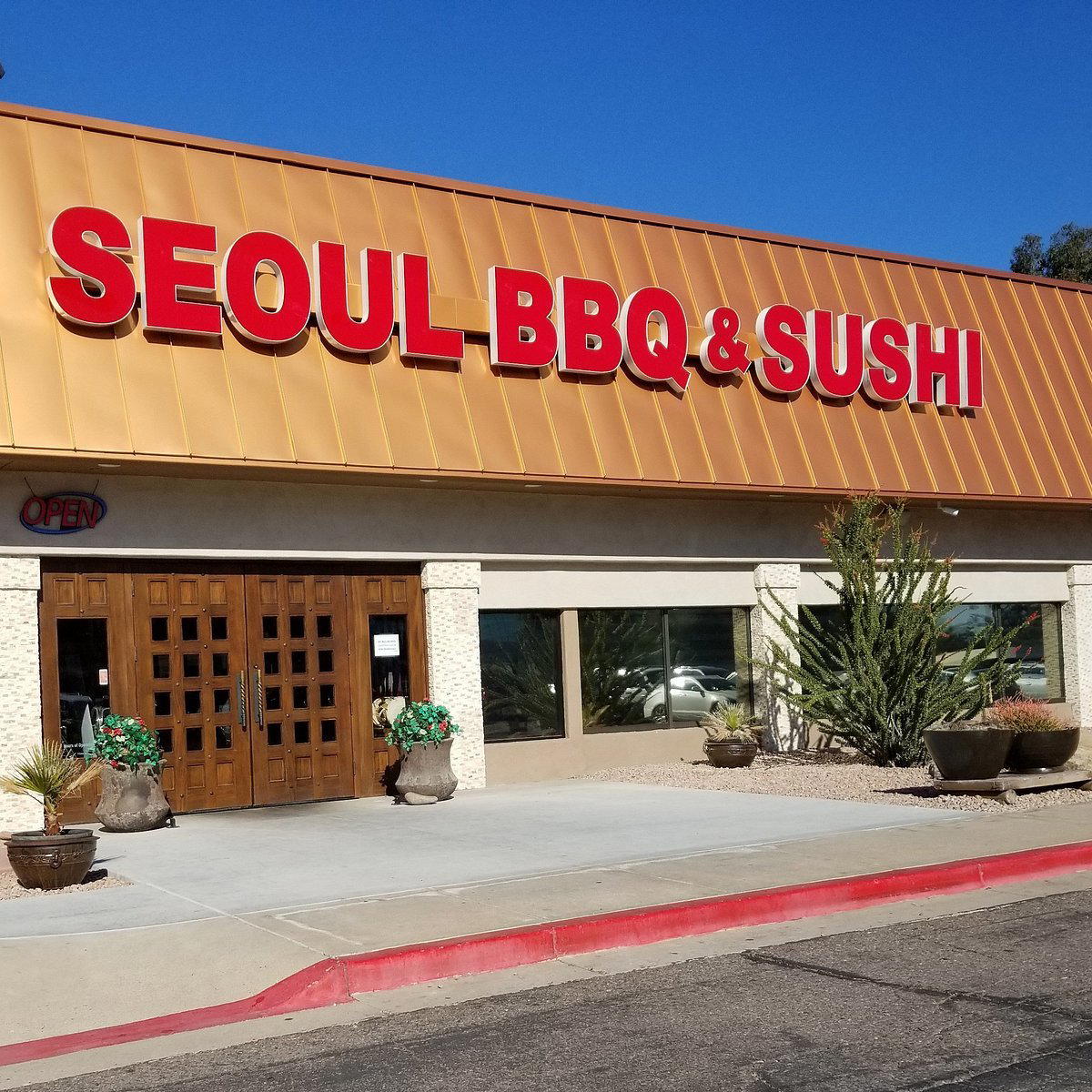
Where Two Grilling Cultures Share a Table
North Black Canyon Highway runs through a part of Phoenix that doesn't prioritize spectacle. The corridor is utilitarian, lined with strip malls and service businesses, and the restaurants along it tend to earn their following through consistency rather than design ambition. That context matters when you walk into Seoul BBQ & Sushi, because the room doesn't try to compete on atmosphere alone. What it offers instead is a format that has become increasingly common in Sun Belt cities: the Korean barbecue and Japanese sushi combination, under one roof, at a price point accessible enough to sustain regular use by neighborhood regulars rather than occasion-only visitors.
The combination of Korean barbecue and Japanese sushi isn't a Phoenix invention. The format emerged in Southern California's Koreatown and spread through cities with dense Korean-American communities before landing in places like Phoenix, Houston, and Las Vegas, where the footprint of each individual cuisine was large enough to support a hybrid. By pairing the two, operators can cover tables that split between grill-forward and raw-fish preferences without requiring guests to choose a single cuisine direction for the evening.
The Bar Food Logic: What Grilled Meat and Raw Fish Need to Drink
Korean barbecue and sushi create opposite demands on a beverage program. Grilled beef, pork belly, and galbi carry charred fat and smoke, which call for cold, effervescent, or starchy drinks that cut through the residue: cold lager, soju on ice, or a dry sparkling wine. Sushi and sashimi require something lighter and more precise, where the drink doesn't overpower the clean iodine and rice-vinegar notes of well-prepared fish: cold sake, dry white wine, or a simple highball.
A beverage program that covers both traditions well has to operate in two modes simultaneously. Korean barbecue venues in cities like Los Angeles and Chicago typically anchor their drink lists in soju and domestic Korean beer, while the sushi half of a combined format pulls toward sake and Japanese whisky highballs. Phoenix's cocktail scene has developed a segment of technically serious programs at venues like Bitter & Twisted, Century Grand, Highball, and Platform 18. The pairing logic at a Korean-Japanese hybrid sits in a different register, one where simplicity and temperature serve the food better than complex layered cocktails.
Venues that solve this pairing tension effectively tend to keep the drinks list short and cold. Kumiko in Chicago and Bar Leather Apron in Honolulu represent the refined end of Japanese-influenced drink programming, where every element of a drink is chosen to support the food it accompanies. At a neighborhood-level Korean-Japanese hybrid in Phoenix, the standard isn't that calibrated, but the underlying logic is the same: the drink's job is to reset the palate, not add another layer of complexity to it.
Korean Barbecue in the Phoenix Context
Phoenix's Korean dining scene is smaller and more geographically spread than in Los Angeles or the Dallas-Fort Worth corridor, where Korean commercial strips generate enough density to support highly specialized venues. In Phoenix, Korean restaurants have tended to cluster in the central and northwest corridors, with a mix of formats ranging from standalone barbecue houses to combination venues that blend Korean and Japanese elements. The combination format is a rational response to a market where neither cuisine alone generates the foot traffic that can sustain a single-concept operation at strip-mall scale.
Korean barbecue as a format carries a particular social logic that distinguishes it from most other grill traditions. The table itself becomes a cooking station, with diners managing timing and doneness alongside conversation. That participatory element changes the rhythm of a meal and shifts the pacing from service-led to guest-led.
Across American cities with active Korean barbecue scenes, the price tier at which most neighborhood-level venues operate sits below the premium all-you-can-eat format popularized by chains and below the high-end standalone houses that charge per cut. Seoul BBQ & Sushi on North Black Canyon Highway occupies the practical middle of that spectrum, making it a plausible regular destination rather than a special-occasion venue.
Sushi as the Second Half of the Equation
In cities outside the coastal Japanese-American dining corridors, sushi has bifurcated sharply between high-end omakase formats and accessible combination-restaurant sushi. The omakase end in Phoenix is represented by a small number of counters that book ahead and price per head at a premium. The accessible end is represented by venues like Seoul BBQ & Sushi, where sushi operates as one half of a dual-format menu rather than the sole focus. That positioning isn't a limitation; it's a different kind of utility. Guests who want a few rolls alongside a barbecue spread don't need the sourcing rigor of a counter omakase; they need competent execution at a price that doesn't require a separate meal budget allocation.
The comparison with program-focused cocktail and food operations elsewhere is instructive. Jewel of the South in New Orleans, Julep in Houston, Superbueno in New York City, and ABV in San Francisco each pair their drink programs tightly to a defined food identity. The Parlour in Frankfurt represents the same discipline in a European context. The operational challenge for a dual-cuisine venue is that the food identity is by definition split, which makes tight drink-to-food pairing harder to execute consistently. The solution most successful hybrid venues find is a drinks list that covers the basics of both traditions without trying to optimize for either.
Planning a Visit
Seoul BBQ & Sushi is located at 11025 N Black Canyon Highway in Phoenix. The venue sits in the northwest part of the city, away from the downtown and Scottsdale concentrations where most of Phoenix's destination dining is clustered. This venue is most relevant as a neighborhood-level option rather than a destination that warrants a cross-city drive. Hours are Monday through Thursday 4 to 10 PM, Friday and Saturday 11 AM to 11 PM, and Sunday 11 AM to 10 PM.
Compact Comparison
Comparable venues nearby, for context on price, style, and recognition.
| Venue | Cuisine | Price | Notes |
|---|---|---|---|
| SEOUL BBQ & SUSHIThis venue — the venue you are viewing | North Mountain, pub | $$ | Not listed |
| Sushi Friend | Sunnyslope, Bar | $$ | Not listed |
| PROVISION | Not listed | $$ | Midtown Phoenix, cocktail_bar |
| Fatso's Pizza | Not listed | $$ | Shadow Mountain, sports_bar |
| Testal Mexican Kitchen | Roosevelt Row, Bar | $$ | Not listed |
| Forno 301 | Roosevelt Row, Bar | $$ | Not listed |

At a Glance
- Lively
- Cozy
- Group Outing
- Date Night
- Standalone
- Booth Seating
- Private Rooms
- Sake
Current opening hours
- Monday
- 4–10 PM
- Tuesday
- 4–10 PM
- Wednesday
- 4–10 PM
- Thursday
- 4–10 PM
- Friday
- 11 AM–11 PM
- Saturday
- 11 AM–11 PM
- Sunday
- 11 AM–10 PM
Hours can change for holidays and private events. Last verified .
Warm and welcoming environment with professional service.