Sachsenheim Hall
Sachsenheim Hall on Denison Avenue occupies a specific and increasingly rare niche in Cleveland's West Side: a German-heritage event and gathering hall that has served the neighbourhood's ethnic German community for generations. For visitors attuned to civic architecture and working-class cultural institutions, the hall reads as a document of the city's immigrant history as much as a functioning venue.

Pearl is the En Primeur Club membership app — saves, bookings, and concierge access live there. Same editors, same standards.
- Address
- 7001 Denison Ave, Cleveland, OH 44102
- Phone
- (216) 651-0888
- Hours
- Mon ClosedTue–Wed 4–11 PMThu 11 AM–11 PMFri 4–11 PMSat 11 AM–11 PMSun 12–8 PM
- Website
- sachsenheimhall.com
- Directions
- Get directions
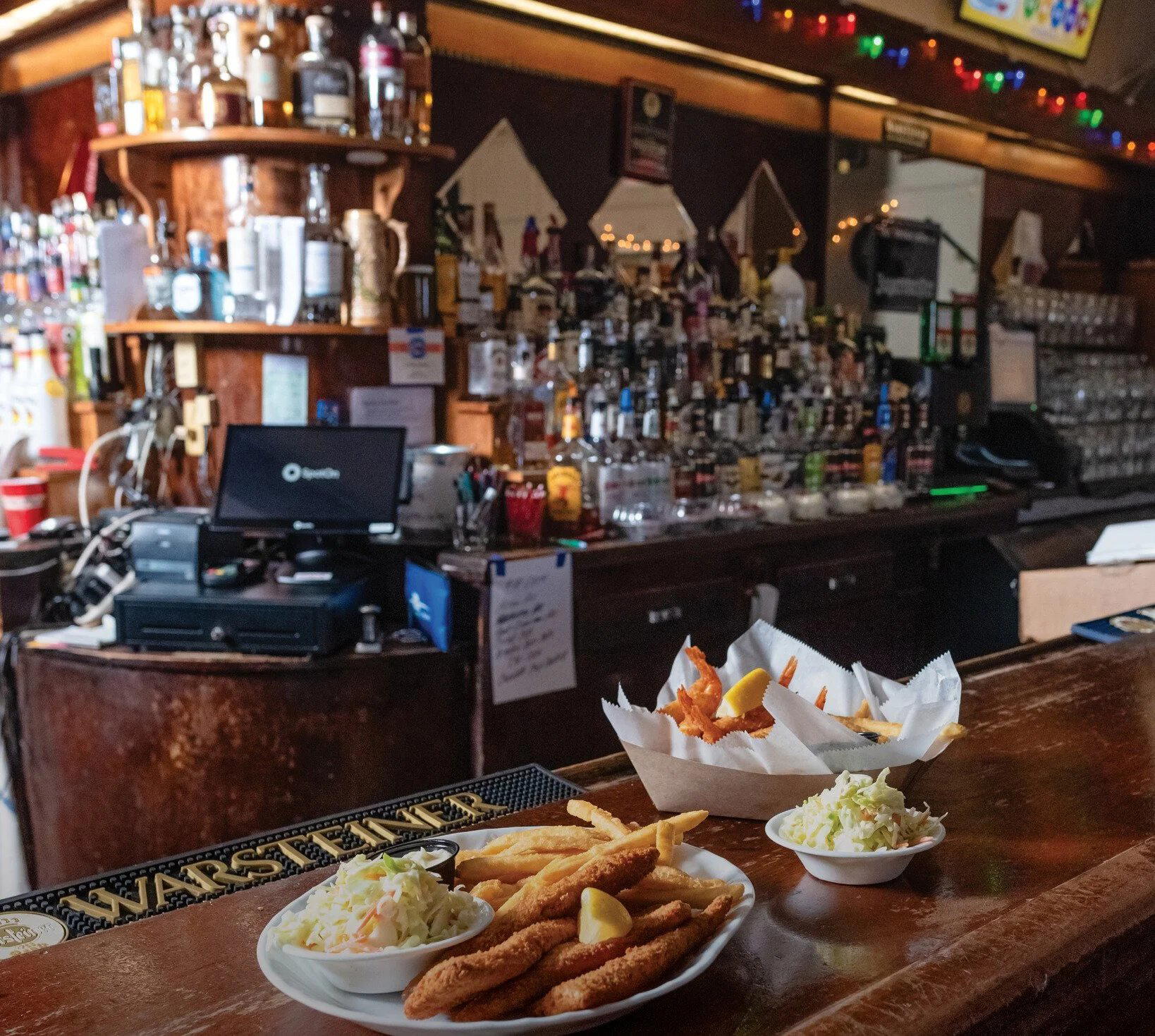
A West Side Hall and What It Says About Cleveland's Immigrant Fabric
Cleveland's West Side has long been a patchwork of overlapping ethnic communities, each leaving a physical imprint on the built environment. The stretch of Denison Avenue running through the old Brooklyn Centre and nearby corridors still carries traces of Central European settlement that reshaped the city in the late nineteenth and early twentieth centuries. Sachsenheim Hall, at 7001 Denison Ave, is one of the more durable architectural remnants of that period, a German-heritage gathering hall that has functioned as a civic anchor for a community that, in many American cities, has receded from visibility.
To approach Sachsenheim from Denison is to move through a neighbourhood that rewards attention. The residential scale of the surrounding streets, the mix of church architecture, and the modest commercial frontages all tell a story of settlement and persistence. The hall itself fits that register: substantial without being monumental, functional in its exterior presentation, legible as a place designed for community assembly rather than spectacle.
The Tradition These Halls Carry
German-American ethnic halls were once a fixture of industrial cities across the Midwest. Chicago, Cincinnati, Milwaukee, and Cleveland all developed dense networks of Turnverein halls, Gesangverein meeting rooms, and multi-purpose gathering spaces that served as social infrastructure for immigrant communities. These were the places where German-language newspapers were read aloud, where new arrivals found housing referrals, where community bonds were reinforced through shared celebration and mutual aid. Most of that network has since collapsed: sold off, repurposed, or demolished as communities dispersed and assimilated.
What survives in cities like Cleveland tends to survive through institutional inertia, community loyalty, or both. Sachsenheim Hall's continued presence on Denison Avenue places it in a small cohort of operating German-American cultural venues that have outlasted the broader attrition of that institutional form. That context matters when assessing what the hall offers today: it is not a curated heritage experience, but a functioning community space whose value is partly historical and partly practical.
For comparison, Cleveland's bar and gathering scene spans a wide range of formats. On the more programmed, craft-cocktail end of the spectrum, venues like Acqua di Dea and Blue Sky Brews represent the city's appetite for technically driven drinking experiences. Beachland Ballroom and Tavern offers a different model: a venue where live music programming defines the experience as much as the bar itself. Sachsenheim occupies a separate register from all of these, shaped by ethnic heritage and community function rather than by hospitality industry conventions.
Collaboration Between Space, Programme, and Community
The editorial angle that makes sense for a hall like Sachsenheim is less about a kitchen team or a bar programme than about the relationship between the physical space, the events it hosts, and the community organisations that animate it. In venues of this type, the equivalent of a front-of-house team is often a network of volunteers and organisers whose collective knowledge of the space, the clientele, and the calendar constitutes an institutional memory that no single hired manager could replicate.
German-American cultural halls that have survived into the twenty-first century typically do so by hosting a combination of community events, private rentals, and occasional public programming. The hall's value proposition to organisers is usually a combination of capacity, cost structure, and the weight of association: there is something specific about hosting a German-heritage event in a hall built for that purpose that a generic event space cannot replicate. That intangible quality is not sentimental; it is a real differentiator for the organisations and families who choose these spaces deliberately.
Nationally, bars and gathering spaces that manage a comparable depth of identity tend to carry significant recognition. Kumiko in Chicago and Jewel of the South in New Orleans both operate from a clear sense of cultural lineage, whether Japanese whisky traditions or New Orleans cocktail heritage. Julep in Houston and Bar Leather Apron in Honolulu similarly draw identity from regional and historical source material. Sachsenheim's version of that same grounding is less polished but arguably more direct: the institution predates the current interest in heritage programming rather than being shaped by it.
What the Absence of Data Tells You
That data profile is consistent with a community-operated institution whose public-facing information infrastructure has not kept pace with what hospitality-oriented platforms now expect. It does not indicate closure or inactivity; halls of this type routinely operate without a maintained website or a standardised booking system, relying instead on direct community contact and word-of-mouth programming cycles.
Visitors drawn to the address should verify current operating status and any scheduled events directly before arriving. For those interested in what the hall represents within Cleveland's West Side community geography, the building at 7001 Denison Ave is a legitimate point of orientation even if the programme on any given visit is not predictable. Brewnuts is a short distance away for those building a West Side itinerary that layers community character across multiple stops.
Venues operating at comparable distances from standard hospitality databases, whether ABV in San Francisco, Superbueno in New York City, or The Parlour in Frankfurt, all demonstrate that institutional character and critical standing can coexist without a streamlined digital presence. The difference is that those venues are staffed and programmed by hospitality professionals who have chosen to prioritise product over profile. Sachsenheim's equivalent is community longevity: the hall is here because the people it serves have kept it here.
For a fuller picture of where Sachsenheim sits within Cleveland's wider eating and drinking scene, the EP Club Cleveland guide maps the city's venues across neighbourhoods and categories, providing the context to plan a visit that makes sense of the West Side's particular character.
Planning a Visit
The address is 7001 Denison Ave, Cleveland, OH 44102, in the Brooklyn Centre corridor on the West Side. The neighbourhood is accessible by car; street parking on Denison and surrounding residential streets is the standard approach. Those building a broader West Side itinerary will find Sachsenheim most legible as part of a half-day visit that takes in the area's ethnic and architectural character, rather than as a standalone destination.
Fast Comparison
| Venue | Price |
|---|---|
| Sachsenheim HallThis venue — the venue you are viewing | $10–20 |
| Hofbräuhaus Cleveland | $20–30 |
| Etna | $30–50 |
| Ha Ahn Restaurant | $10–20 |
| Velvet Tango Room | $30–50 |
| La Dolce Vita | $30–50 |
Continue exploring
More in Cleveland
Bars in Cleveland
Browse all →

Restaurants in Cleveland
Browse all →

Details
- Lively
- Rustic
- Historic
- Cozy
- Group Outing
- Casual Hangout
- Historic Building
- Live Music
- Seated Bar
- Booth Seating
- Craft Beer
Current opening hours
- Monday
- Closed
- Tuesday
- 4–11 PM
- Wednesday
- 4–11 PM
- Thursday
- 11 AM–11 PM
- Friday
- 4–11 PM
- Saturday
- 11 AM–11 PM
- Sunday
- 12–8 PM
Hours can change for holidays and private events. Last verified .
Nostalgic and historic with a divey, no-frills atmosphere filled with hearty comfort food aromas and lively crowds.