Old Town Ale House
A North Side institution on West North Avenue, Old Town Ale House has held its place in Chicago's bar culture through decades of neighborhood change and cocktail-trend cycles. Its position at the edge of Old Town places it in a different register than the city's technical cocktail programs, operating closer to the American tavern tradition than the craft bar circuit.
Pearl is the En Primeur Club membership app — saves, bookings, and concierge access live there. Same editors, same standards.
- Address
- 219 W North Ave, Chicago, IL 60610
- Phone
- +1 312 944 7020
- Website
- theoldtownalehouse.com
- Directions
- Get directions
 Saves & bookings on Pearl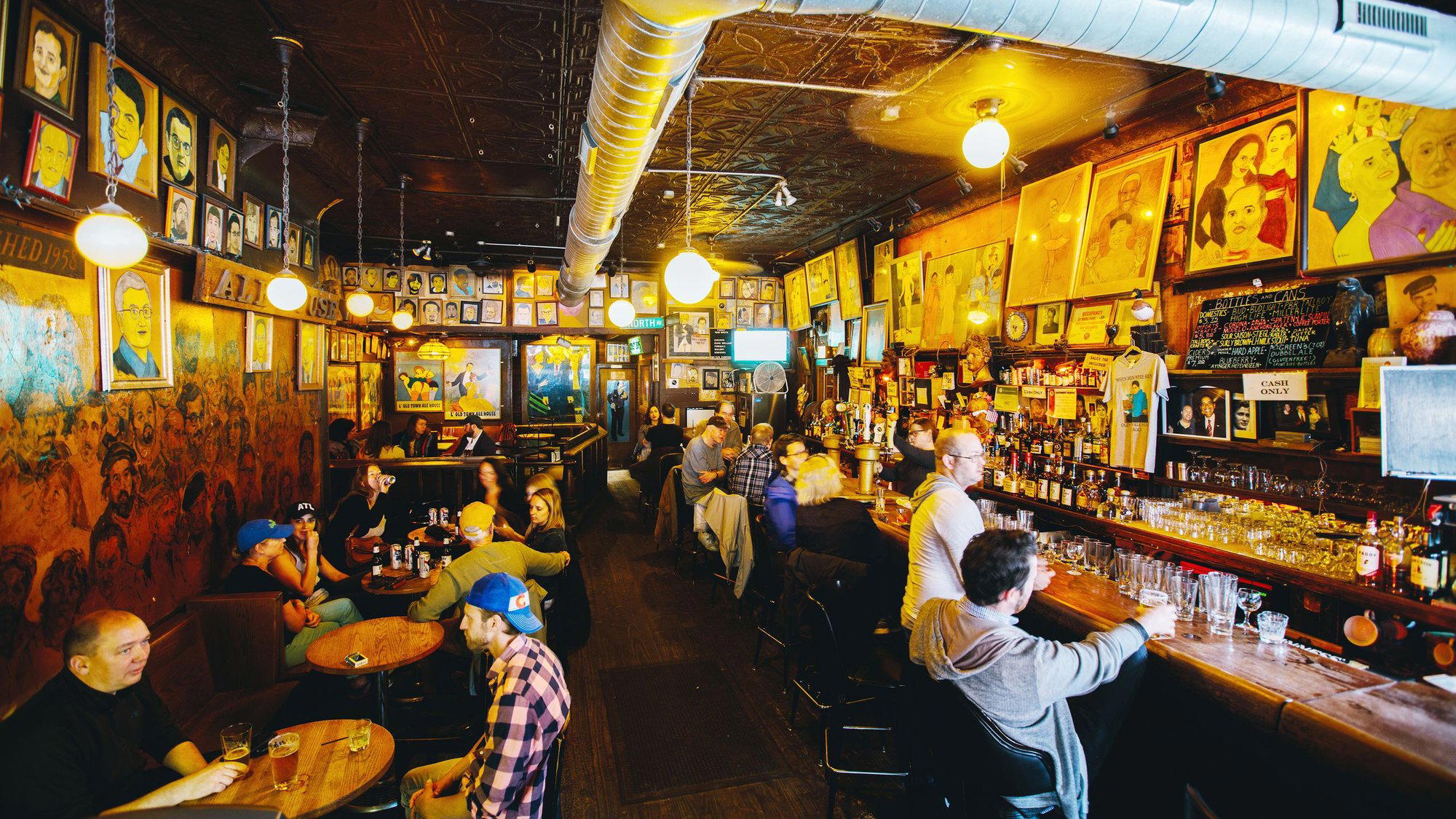
Where Old Town's Tavern Tradition Holds the Line
West North Avenue at the edge of Old Town is one of those Chicago corridors that has absorbed several cycles of neighborhood reinvention without fully surrendering its character. The block carries the physical memory of the city's mid-century bar culture, where dive-adjacent taverns and neighborhood drinking rooms operated on loyalty rather than concept. Old Town Ale House, at 219 W North Ave, sits inside that tradition in a way that newer craft bars in the city largely cannot replicate, regardless of how well they execute their programs. The patina here is not designed. It accumulates.
Approaching the building, you get the immediate visual grammar of the classic American tavern: a street-level facade, signage that does not require explanation, and an interior that reads as continuous with itself rather than curated around a design thesis. Chicago has two dominant bar modes right now. One is the technical craft program, represented by the likes of Kumiko in the West Loop and Leading Intentions elsewhere on the North Side, where menu architecture signals ambition and the drink is the primary medium for a point of view. The other is the neighborhood institution, where the architecture of the offer is simpler and the value is social continuity over sensory engineering. Old Town Ale House belongs to the second category, and that is a meaningful editorial distinction, not a consolation.
What the Menu Architecture Says
In bars where the menu is the argument, its structure tells you what the operator values. At a place like Bisous or comparable Chicago cocktail programs, the menu is organized to lead the drinker through a concept, with each section articulating a technique, an ingredient philosophy, or a flavor register. At a classic American tavern, the menu architecture is flat by design. Beer, spirits, and simple mixed drinks exist in parallel, without hierarchy or editorial commentary. The implicit argument is that the drinker already knows what they want, and the bar's job is to serve it reliably and at volume.
That flatness is not laziness. It reflects a different theory of what a bar is for. The tavern format assumes that the social life of the room, the regulars at the bar, the conversation, the tolerance for extended visits, is the primary product. The drink is the vehicle, not the destination. This is the dominant mode of American bar culture as it existed before the craft cocktail revival that accelerated in the 2000s, and it persists in a relatively small number of places that were never converted or reopened under new ownership with a new concept. Old Town Ale House is one of those places, which positions it as a document of a particular moment in Chicago's drinking culture as much as an active participant in its current iteration.
For comparison, consider how the craft bar scene in other American cities has handled the same tension. Jewel of the South in New Orleans and Julep in Houston both operate with strong regional identity, but their menus are deliberately structured to make an argument about Southern drinking traditions. ABV in San Francisco and Allegory in Washington, D.C. represent the more conceptually dense end of the American craft bar. Superbueno in New York City operates with a specific Latin-inflected identity. What these venues share is a legible editorial position communicated through their offer. The tavern format of Old Town Ale House makes a different argument: that no editorial position is itself a position, and that neutral ground for the neighborhood drinker is a service worth preserving.
Old Town as Context
The neighborhood matters here more than it does at destination bars. Old Town has a complicated position in Chicago's cultural geography. It was a bohemian corridor in the 1960s and 1970s, home to the Second City comedy theater and a set of institutions that drew creative and counter-cultural residents. That identity was partially absorbed into gentrification pressure over subsequent decades, and the neighborhood today occupies a middle register: established, relatively affluent, but without the aggressive high-design character of the West Loop or the River North entertainment corridor. Bars that have survived here across multiple decades did so by serving the resident population rather than drawing destination traffic, which shapes the atmosphere in ways that newer openings in the city cannot replicate from scratch.
The comparison set for Old Town Ale House is therefore not Kumiko or Lemon, both of which operate in a different register and draw a different primary audience. It is the broader category of American bars that have persisted through neighborhood change and industry evolution without pivoting to a craft identity. Internationally, this category has parallels in the pub tradition of the United Kingdom and Ireland, or in the working-bar culture of cities like Vienna and Prague, but the Chicago tavern form is distinct in its specific combination of straightforwardness, tolerance for long occupancy, and relative indifference to curation. The Parlour in Frankfurt on the Main and Bar Leather Apron in Honolulu both demonstrate that bar longevity correlates with clarity of identity, but the specific form that clarity takes varies significantly by city and culture.
Planning a Visit
Old Town Ale House is located at 219 W North Ave, accessible from the Brown and Purple Line CTA stop at Sedgwick, roughly a five-minute walk south. The bar sits a short distance from the Second City theater on North Wells Street, which makes it a natural stop before or after a show. The venue does not operate on a reservation model, which is consistent with the tavern format. For readers accustomed to booking windows at Chicago's craft cocktail programs, which can run several weeks out, the walk-in format here is worth noting as a practical difference. See our full Chicago restaurants guide for broader coverage of the city's bar and dining options across formats and price points.
Cuisine Context
| Venue | Cuisine |
|---|---|
| Old Town Ale HouseThis venue — the venue you are viewing | This venue |
| Kumiko | World's 50 Best |
| Bisous | World's 50 Best |
| The Aviary | World's 50 Best |
| Three Dots & a Dash | World's 50 Best |
| Best Intentions | World's 50 Best |
Continue exploring
More in Chicago

Restaurants in Chicago
Browse all →
At a Glance
- Classic
- Cozy
- Rustic
- Bohemian
- Well Known
- After Work
- Late Night
- Casual Hangout
- Historic Building
- Seated Bar
- Booth Seating
- Classic Cocktails
- Craft Beer
Current opening hours
- Monday
- 3 PM–4 AM
- Tuesday
- 3 PM–4 AM
- Wednesday
- 3 PM–4 AM
- Thursday
- 3 PM–4 AM
- Friday
- 3 PM–4 AM
- Saturday
- 3 PM–5 AM
- Sunday
- 3 PM–4 AM
Hours can change for holidays and private events. Last verified .
Dimly lit saloon with sepia-stained wooden walls cluttered with eclectic portraits and political satire, evoking a bohemian, time-worn atmosphere.
Know Before You Go
- Getting there
- 219 W North Ave, Chicago, IL 60610