Google: 4.1 · 691 reviews
Margot
Margot occupies a suite address on Washington Boulevard in Culver City, where the bar food programme runs parallel to — and in deliberate conversation with — the drinks list. The format places it inside a West Side tier that prizes specificity over spectacle, and the 8820 Washington Blvd location makes it a workable anchor for an evening that moves through the neighbourhood's growing roster of serious drinking rooms.
 Discover on Pearl
Pearl is the En Primeur Club membership app — saves, bookings, and concierge access live there. Same editors, same standards.
Culver City's Drinking Room Moment
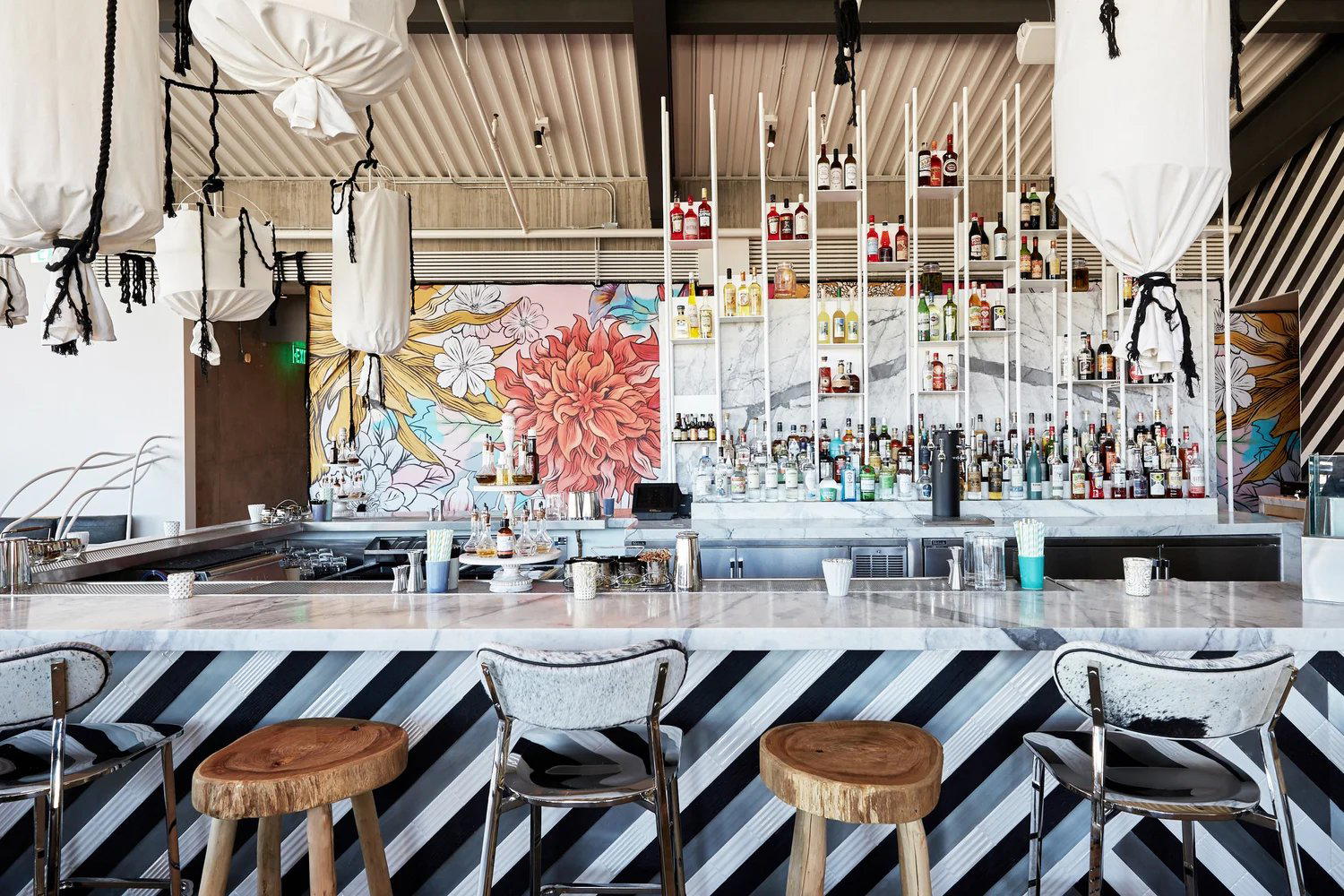
Washington Boulevard has been recalibrating its identity for the better part of a decade. What was once a through-road flanked by production studios and mid-century diners has acquired a denser layer of purposeful hospitality — bars with thought-out spirits programmes, restaurants that hold their own against Westside competition from Venice to Los Feliz. Margot, at 8820 Washington Boulevard, Suite 301, sits inside that shift: a third-floor address that already signals something different before you arrive at the room itself. Culver City's bar scene does not announce itself the way Silver Lake or downtown does, and that quietness is part of the value proposition. The venues that work here tend to work because of what they do, not because of where they are.
The Bar Food Argument
In American bar culture, the relationship between the food programme and the drinks list has undergone significant revision over the past fifteen years. The model that treated food as afterthought — bar snacks to absorb alcohol, nothing more , has given way, in serious rooms, to something more deliberate: programmes where the kitchen and bar communicate, where acidity in a dish is calibrated against the proof of a spirit, where fermented or smoked elements on the plate extend the aromatic register of what's in the glass. This is the operating principle behind bars like Kumiko in Chicago and Jewel of the South in New Orleans, where the food offering is treated as a structural element of the experience rather than a commercial add-on.
Margot positions itself within that conversation on the West Coast. The suite format , a deliberate remove from street level , already separates the space from the drop-in bar model. What that physical decision implies about the food and drink pairing ethos is consistent with the broader category of rooms that require some intention to enter: you are not walking past and deciding on impulse. Bars in this register typically invest in a food programme that rewards the commitment. Compare the approach at ABV in San Francisco, where the kitchen is treated as a genuine department rather than a service function, and the logic becomes clear: the third-floor address is not an inconvenience, it is a filter.
Placing Margot in the Culver City Peer Set
Culver City's bar scene is small enough that each serious room occupies a distinct position. Alibi Room operates in the neighbourhood dive-with-craft-beer register. Bar Bohemien draws on a more European sensibility. Dear John's is a mid-century supper club revival, and Backstage Bar and Grill serves the production-industry crowd with a reliably broad programme. Margot's suite positioning separates it from all of these by format and implied intention. A bar that occupies a third-floor suite on a commercial block is making a statement about its target diner: someone who plans, who researches, who arrives expecting the food and drink to work together rather than exist in parallel.
That positioning tracks with a wider West Coast pattern. Serious drinking rooms in California cities have increasingly moved toward food programmes that justify the visit independently of the drinks. At Bar Leather Apron in Honolulu, the food component carries enough weight that guests book for it explicitly. The same logic applies to the better rooms in the Los Angeles orbit: the question is not whether there is food, but whether the food and the drinks list were conceived in the same register.
The Pairing Logic
When a bar and kitchen operate as a unified programme rather than separate departments, the practical result for the guest is a menu where choices compound rather than cancel each other. A dish with pronounced umami or char extends the aromatic range of an aged spirit; something bright and acidic cuts through the sweetness of a lower-proof cocktail; fermented elements , pickled vegetables, miso-touched sauces, koji-cured proteins , create bridges between what is in the glass and what is on the plate. This is the structural argument behind bars like Julep in Houston and Superbueno in New York City, where the food and drink menus are edited with the same set of flavour principles in mind.
For the Culver City visitor deciding where to spend an evening, that pairing discipline matters because it changes how you sequence the night. A room where food and drink are genuinely coordinated tends to reward a slower, more lateral approach: order across the menu rather than linearly, let the kitchen inform what goes in the glass rather than treating the two lists as independent decisions. Whether Margot delivers on that promise at the level of a Parlour in Frankfurt is a question of execution , but the address and format both signal the intention.
Getting There and Planning the Visit
The Suite 301 address at 8820 Washington Boulevard means the entrance is not immediately obvious from the street, which is consistent with the room's positioning as a destination rather than a passing stop. Culver City is accessible by Metro E Line (Expo), with the Culver City station a short walk from the Washington Boulevard corridor, making the area workable without a car for visitors coming from downtown or Santa Monica. For the broader context of what the neighbourhood offers across restaurants and bars, the full Culver City guide maps the relevant venues by category and geography, which is useful for building an itinerary around a visit to Margot rather than treating it as a standalone stop.
The practical recommendation for this type of room is to arrive early in the evening rather than late: bars that run a serious food programme alongside the drinks list tend to perform better in the first half of service, when the kitchen is at full tempo and the pacing between courses and drinks can be managed. Late arrivals at food-forward bars frequently encounter a truncated menu and a kitchen winding down, which defeats the point of the format.
Nearby-ish Comparables
A quick look at comparable venues, using the data we have on file.
| Venue | Cuisine | Price | Notes |
|---|---|---|---|
| Margot | This venue | ||
| Hatchet Hall | |||
| Alibi Room | |||
| Bar Bohemien | |||
| Dear John's | |||
| Maple Block Meat Co. |
Continue exploring
More in Culver City
Bars in Culver City
Browse all →
Restaurants in Culver City
Browse all →
Hotels in Culver City
Browse all →
Wineries in Culver City
Browse all →
At a Glance
- Romantic
- Trendy
- Elegant
- Sophisticated
- Date Night
- Group Outing
- Rooftop
- Lounge Seating
- Outdoor Terrace
- Craft Cocktails
- Street Scene
Boho chic rooftop with lush atrium, fire pits, and a photogenic, elegant atmosphere that feels like summer year-round.