Life Alive Organic Cafe Back Bay
On Boylston Street in Back Bay, Life Alive Organic Cafe occupies a tier of Boston dining defined by ingredient provenance rather than technique spectacle. The kitchen works from an organic, plant-forward framework at a price point accessible enough to draw regulars rather than occasion diners. It sits in a neighbourhood better known for expense-account steakhouses and classic Boston seafood, which makes its sourcing priorities all the more deliberate.
Pearl is the En Primeur Club membership app — saves, bookings, and concierge access live there. Same editors, same standards.
- Address
- 431 Boylston St, Boston, MA 02116
- Phone
- +1 857 239 8239
- Website
- lifealive.com
- Directions
- Get directions
 Saves & bookings on Pearl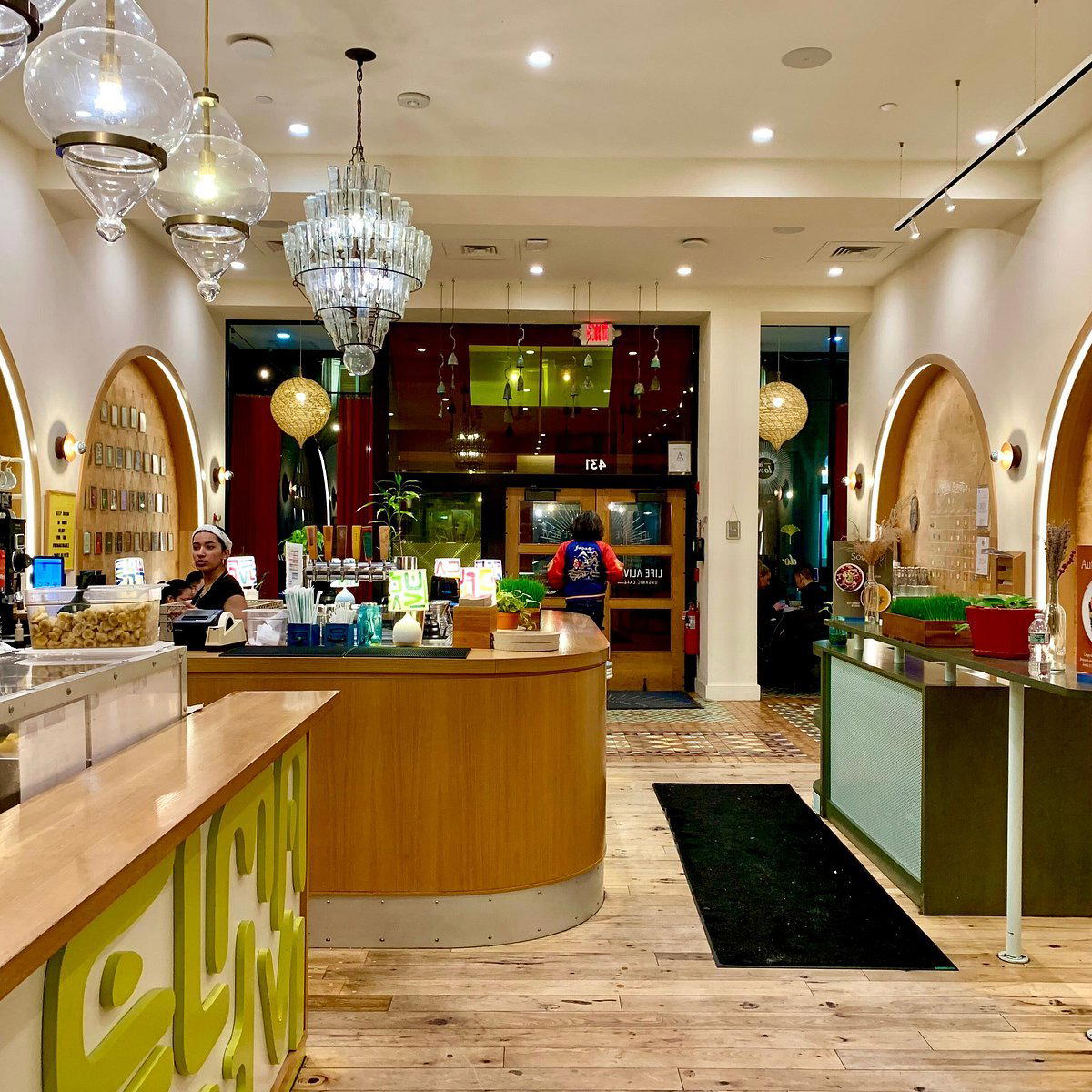
Where Boylston Street Meets Plant-Forward Sourcing
Back Bay runs on a particular rhythm: expense-account dinners at places like Abe & Louie's, cocktail programs at venues such as Equal Measure, and a dining culture that still leans heavily toward classic New England seafood and cuts of beef. Against that backdrop, Life Alive Organic Cafe Back Bay on 431 Boylston St reads less like a trend play and more like a deliberate counter-position. The foot traffic on this stretch of Back Bay is dense, and the choice to hold an ingredient-first, produce-driven format here rather than in a quieter Cambridge side street or Jamaica Plain pocket says something about where Boston's appetite for this kind of food has arrived.
Life Alive Organic Cafe is part of a small Boston-rooted group with locations across the city and into the wider Massachusetts market. That multi-location footprint points to a sourcing model with enough scale to support consistent organic supply. The Back Bay address brings that model to a neighbourhood where the default is conventional restaurant supply chains, and the contrast is instructive.
The Logic of Organic in a Steakhouse District
American cities have developed two distinct tracks for plant-forward eating. The first is the chef-driven fine-dining track, where vegetables appear as the technical centerpiece of a tasting menu at significant price points. The second is the accessible-everyday track, where organic sourcing and whole-food preparation are offered at a price point that allows for repeat visits rather than special occasions. Life Alive operates firmly on the second track. In a neighbourhood where a single entrée at a conventional restaurant frequently exceeds thirty dollars, a format built for daily or weekly use by regulars rather than for milestone dinners occupies a different competitive position.
That positioning has broader significance for how Boston's dining geography works. Neighbourhoods like Back Bay and the South End attract high concentrations of health-conscious professionals and students from the nearby Berklee and Boston University campuses, populations that have driven demand for exactly this kind of sourcing-forward, plant-based format. The cafe's presence on Boylston answers that demand at street level, in the flow of the workday rather than in the context of an evening reservation.
Ingredient Sourcing as Editorial Framework
The dominant trend in premium food culture over the past decade has been a shift from technique as the primary signal of quality toward provenance as the primary signal. Michelin-starred restaurants began foregrounding supplier names on menus; wine culture shifted toward farming method and soil transparency; and the café sector followed, with organic certification moving from niche differentiator to baseline expectation among a significant segment of urban diners.
Life Alive's sourcing framework sits inside that broader shift. The commitment to organic ingredients across a menu that runs to bowls, wraps, juices, and hot drinks reflects a position that was genuinely countercultural a decade ago in Boston and is now increasingly mainstream. The question is whether a multi-location operation can hold sourcing integrity at scale. The Back Bay location, operating inside a higher-cost real estate environment than most of its comparable set, faces that tension directly.
For comparison, the kind of ingredient-sourcing discipline that defines Life Alive's positioning is visible across a range of American food and drinks categories. Kumiko in Chicago applies a similar philosophy to its drinks program, sourcing Japanese ingredients with a precision that frames provenance as the primary quality signal. ABV in San Francisco takes a comparable approach to its bar snack program, treating ingredient sourcing as central to the editorial identity of the operation. The pattern is consistent: venues that lead with sourcing rather than technique tend to attract a loyal, repeat-visit customer base rather than a destination-dining audience.
Back Bay as Context
The area around 431 Boylston encompasses the kind of mixed-use density that sustains a cafe format well. The Public Garden is a short walk west; Newbury Street runs parallel one block north; Copley Square and its transit connections sit nearby. This is not a destination-dining precinct in the sense that the Seaport or the Fenway food corridor have become. It is instead a neighborhood of convenience and habit, where a venue succeeds by serving the people who live, work, and move through it repeatedly rather than by drawing visitors from across the city for a single occasion.
That context shapes what the cafe offers and how it should be used. Boston diners who approach it as they might approach Asta or Baleia, as a considered evening reservation, will find themselves in the wrong frame. This is a daytime and early-evening operation built for frequency. The editorial analogy is closer to the role a well-sourced neighbourhood wine bar plays in European cities: it is not the place you go once; it is the place you return to because the baseline quality stays consistent and the sourcing philosophy gives you a reason to trust what you are eating.
Planning a Visit
The Back Bay location at 431 Boylston St is accessible via the Green Line at Copley Station, a two-minute walk. Given the neighbourhood's lunch and post-work traffic patterns, midday and early-evening visits on weekdays tend to attract the heaviest flow from nearby office workers and students. The format does not require a reservation, which aligns with its everyday-use positioning rather than an occasion-dining model.
Visitors arriving from outside Boston who want to benchmark the city's drinks culture might also reference comparators in other American cities: Jewel of the South in New Orleans, Julep in Houston, Bar Leather Apron in Honolulu, and Superbueno in New York City each represent the sourcing-first approach applied to drinks rather than food. The Parlour in Frankfurt on the Main offers a European reference point for the same ingredient-led positioning.
- Banana Oat Cold Brew
- Hot Caramel Sea Salt Latte
- Iced Caramel Sea Salt Latte
- Maple Vanilla Cloud Cold Brew
- Strawberry Dream Matcha
- Banana Bread Matcha
- Orange Creamsicle Matcha
Comparison Snapshot
Comparable venues nearby, for context on price, style, and recognition.
| Venue | Cuisine | Price | Notes |
|---|---|---|---|
| Life Alive Organic Cafe Back BayThis venue — the venue you are viewing | Bar | $$ | Not listed |
| Sam Adams Downtown Boston Taproom | beer_bar | $$ | Downtown |
| Jadu Cafe and Wine Bar | wine_bar | $$ | Pondside |
| Beyond Proof | cocktail_bar | $$ | Jamaica Plain |
| Bully Boy Distillers | cocktail_bar | $$ | Roxbury |
| Buttermilk & Bourbon - Back Bay | cocktail_bar | $$ | Back Bay |
Continue exploring
More in Boston
Bars in Boston
Browse all →
Restaurants in Boston
Browse all →
Hotels in Boston
Browse all →
Wineries in Boston
Browse all →
At a Glance
- Modern
- Trendy
- Cozy
- Casual Hangout
- After Work
- Group Outing
- Design Destination
- Standalone
- Seated Bar
- Counter Only
- Zero Proof
Current opening hours
- Monday
- 7 AM–9 PM
- Tuesday
- 7 AM–9 PM
- Wednesday
- 7 AM–9 PM
- Thursday
- 7 AM–9 PM
- Friday
- 7 AM–9 PM
- Saturday
- 7 AM–9 PM
- Sunday
- 7 AM–9 PM
Hours can change for holidays and private events. Last verified .
Bright and energetic with colorful design elements, soaring ceilings, and a welcoming atmosphere that emphasizes wellness and nourishment.