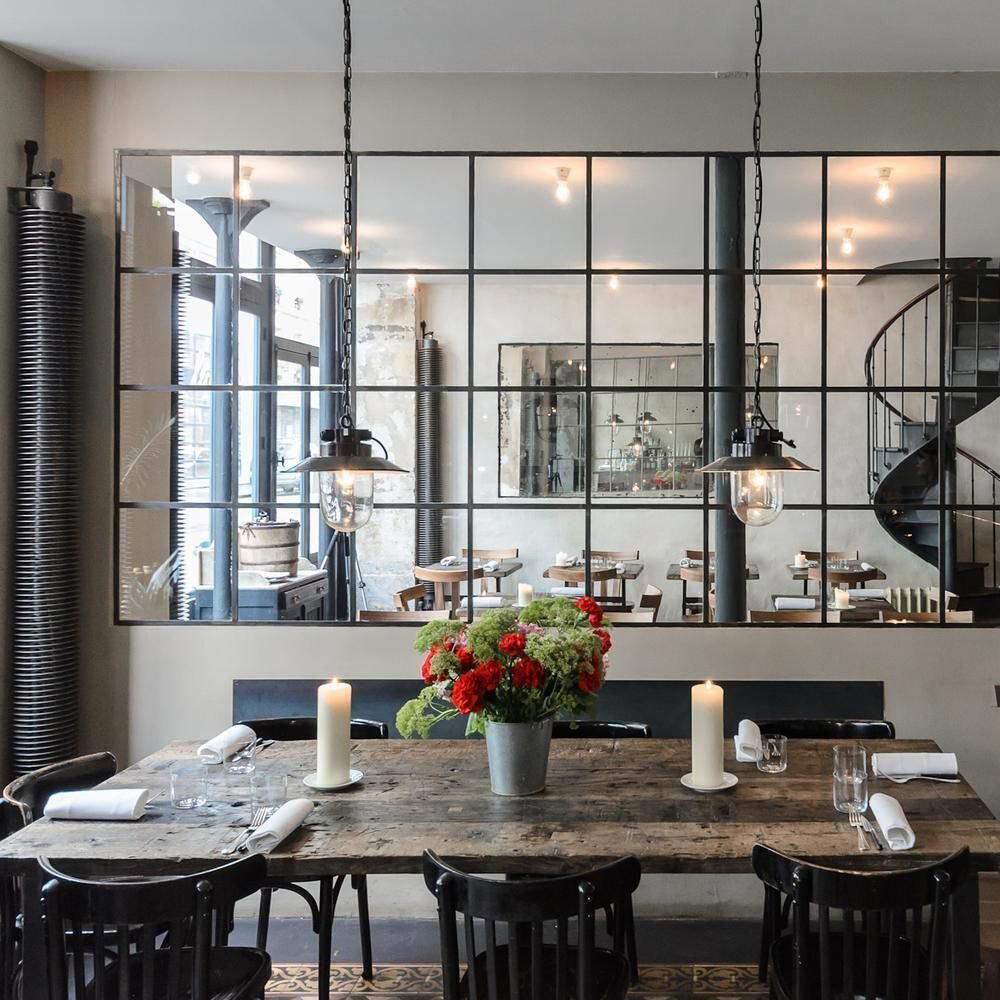
A market stall turned neighbourhood institution on the Rue de Bretagne, Les Enfants du Marché trades in the kind of produce-driven, low-waste cooking that defines the better end of Paris's marché dining scene. Shoulder to shoulder at a zinc counter or rough-hewn table, the format rewards those who eat with the season rather than against it. Book ahead or arrive early — the Marais faithful fill it fast.
 Discover on Pearl
Pearl is the En Primeur Club membership app — saves, bookings, and concierge access live there. Same editors, same standards.
- Address
- 39 Rue de Bretagne, 75003 Paris, France
- Phone
- +33 1 40 24 01 43
- Website
- lesenfantsdumarche.fr
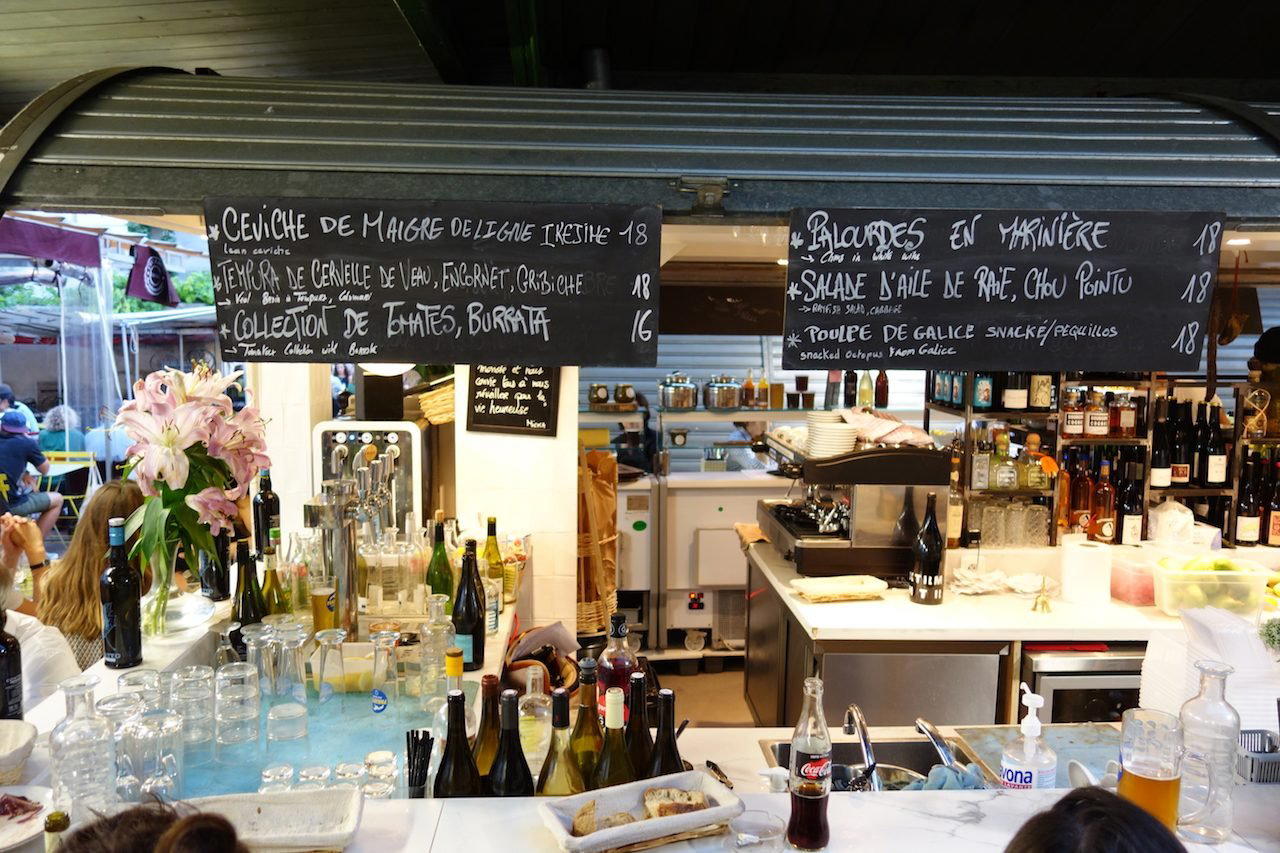
The Marché des Enfants Rouges and What It Produces
Paris's covered markets have always operated as a kind of editorial filter on the city's food supply: what arrives at the stall reflects what the season actually offers, not what a centralised purchasing team decided to order six months ago. The Marché des Enfants Rouges on Rue de Bretagne — the oldest covered market in Paris, trading since 1615 — still functions that way. The vendors inside set the rhythm, and the restaurants adjacent to them follow. Les Enfants du Marché is the most direct expression of that relationship: a counter-format spot on the street outside the market's southern entrance, buying from producers whose stalls are close enough that a cook could carry ingredients across without breaking stride.
That proximity is not incidental. It is the structural principle that separates this category of Parisian eating from the broad sweep of bistros and brasseries that claim market provenance but source through intermediaries. When supply is genuinely local and daily, waste drops, purchasing power shifts toward seasonal surplus, and the menu follows a logic dictated by what arrived that morning rather than what a printed card promised.
A Counter Culture Rooted in Restraint
The physical format at Les Enfants du Marché reflects the sourcing model. A tight counter operation with limited covers forces a short, rotating menu, which is, in sustainability terms, exactly the right constraint. Shorter menus mean smaller mise en place, less spoilage, and a tighter relationship between what is ordered and what is cooked. Paris has moved steadily in this direction since roughly 2012, when a wave of chef-owner bistros began publishing daily-changing blackboards and rejecting the classical French tendency to offer everything to everyone simultaneously. Les Enfants du Marché sits within that broader shift, though its version is anchored by geography in a way that many of its peers are not.
Eating at a counter in the third arrondissement, with the covered market a few metres behind you, places you inside a food tradition that predates the farm-to-table rhetorical framework by several centuries. This was simply how Paris ate before refrigeration and supply-chain consolidation changed the calculus. What reads now as an ethical commitment is also, at this address, a historical continuity.
How the Marais Dining Scene Positions This Format
The third and fourth arrondissements have developed a particular concentration of wine-forward, produce-led spots that price below the first-division bistros of the sixth and seventh while operating with equal seriousness about sourcing. Les Enfants du Marché belongs to that cohort. Its peer set includes counter operations across the Marais and Oberkampf where the wine list skews natural and low-intervention, the menu changes frequently, and the seating arrangement is deliberately informal, communal, close, and conducive to the kind of conversation that a tableclothed room discourages.
For context on how Paris's broader cocktail and bar culture sits alongside this eating tradition, the city's more considered drinking programmes, venues like Candelaria in the Marais or Danico near the Opéra, operate on similar principles: tight format, deliberate sourcing, and menus that do not try to be everything. The more theatrical end of Paris drinking, represented by Buddha Bar or the innovation-focused work at Bar Nouveau, targets a different appetite entirely. Les Enfants du Marché's customer and the Buddha Bar's customer are not the same person.
If you are moving between French cities and want comparable produce-and-season formats, La Maison M. in Lyon operates in a similar register, and Lyon's broader market culture, centred on Les Halles Paul Bocuse, offers useful comparative context. Further afield, Coté Vin in Toulouse and Bar Casa Bordeaux in Bordeaux each reflect regional interpretations of the wine-and-seasonal-eating model. For those travelling east, Au Brasseur in Strasbourg grounds itself differently, in Alsatian brewing tradition rather than Parisian marché culture, but shares the local-supply logic. Outside France, Papa Doble in Montpellier, Le Café de la Fontaine in La Turbie, and Bar Leather Apron in Honolulu each approach the question of place-anchored drinking from entirely different regional starting points.
Timing, Season, and When to Go
The Marché des Enfants Rouges operates Tuesday through Sunday, with Saturday morning representing peak market activity, and, as a result, peak adjacent restaurant demand. Arriving at Les Enfants du Marché mid-week at lunch rather than Saturday at noon will change the experience materially: slower pace, more interaction with the kitchen, and a menu that may reflect earlier-week surplus produce rather than the premium cuts reserved for weekend traffic.
Spring and early autumn are the seasons where this format performs at its most coherent. The first asparagus from the Loire and Landes in April and May, and then the return of game, root vegetables, and aged cheese selections through September and October, give the daily-changing model its strongest argument. Summer can be leaner in Paris generally, as many producers take August breaks, though the market's long trading history means it maintains supply chains that outlast the August shutdown more reliably than many comparable spots.
The Sustainability Framework, Without the Rhetoric
Paris's dining scene has adopted sustainability language at a pace that often outruns practice. The more instructive version, and the one this address exemplifies, is structural rather than rhetorical. A restaurant that physically cannot carry stock across multiple days because its menu changes daily and its sourcing is walk-distance local is not making a sustainability claim. It is operating within a constraint that happens to produce sustainable outcomes as a side effect of its format.
Waste reduction in this model comes from menu brevity: fewer ingredients, smaller batches, less that cannot be used by close of service. Ethical sourcing is not a certification programme here, it is a function of which stalls the kitchen has direct relationships with inside a market that has operated on the same block since the seventeenth century. The Marché des Enfants Rouges itself includes producers from across Île-de-France alongside specialists in cheese, charcuterie, and organic vegetables. That diversity of supply gives adjacent kitchens genuine flexibility to cook around availability rather than forcing availability to match a fixed menu.
Know Before You Go
Address: 39 Rue de Bretagne, 75003 Paris, France
Market access: Adjacent to the Marché des Enfants Rouges, the oldest covered market in Paris (open Tuesday to Sunday)
Format: Counter seating, tight covers, daily-changing menu aligned with market availability
Leading timing: Mid-week lunch for a quieter pace; Saturday for peak market atmosphere but expect competition for seats
Seasons to prioritise: April to May (spring produce) and September to October (game, roots, aged cheese)
Planning context: See our full Paris restaurants guide for neighbourhood-level context across the third arrondissement and beyond
Continue exploring
More in Paris
Bars in Paris
Browse all →
Restaurants in Paris
Browse all →
Hotels in Paris
Browse all →



At a Glance
- Lively
- Trendy
- Cozy
- Intimate
- Casual Hangout
- Date Night
- After Work
- Historic Building
- Seated Bar
- Communal Tables
- Counter Only
- Natural Wine
- Street Scene
Bustling market atmosphere with high stools around a lively counter, evoking fine dining in a casual, vibrant setting amid market buzz.