Google: 4.5 · 4,329 reviews
Kuma's Corner
Kuma's Corner on West Belmont has built a reputation that extends well beyond Chicago's bar-restaurant circuit — a heavy-metal-themed burger and bar operation that occupies a distinct tier in the city's comfort-food conversation. The room is loud, the pours are generous, and the kitchen takes its craft seriously. Walk-in culture and a no-reservations format make it a test of patience, but regulars treat the wait as part of the ritual.
 Discover on Pearl
Pearl is the En Primeur Club membership app — saves, bookings, and concierge access live there. Same editors, same standards.
- Address
- 2900 W Belmont Ave, Chicago, IL 60618
- Phone
- +1 773 604 8769
- Website
- kumascorner.com
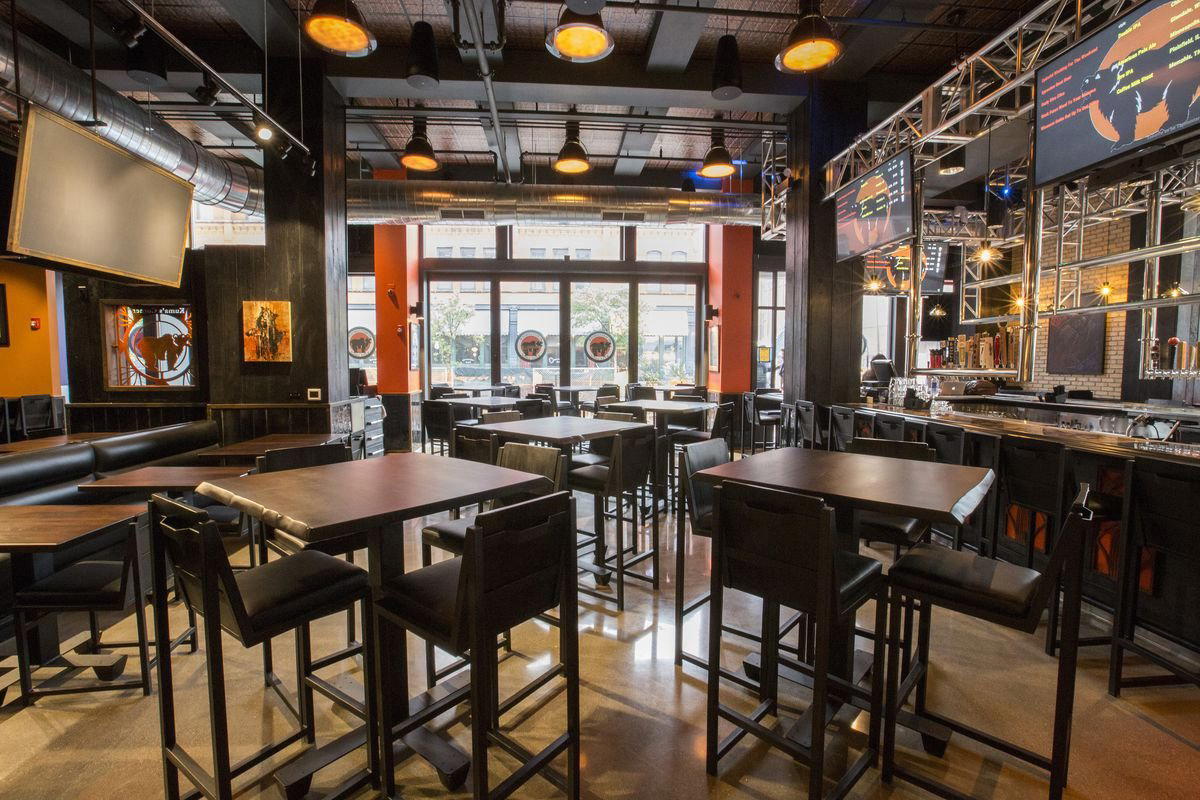
The Room Before the Food
Arriving at 2900 W Belmont Ave puts you squarely in the Avondale-Roscoe Village corridor, a stretch of Chicago's Northwest Side where dive bars, taco counters, and record shops share blocks without much ceremony. Kuma's Corner fits this register precisely: the exterior gives little away, the interior is deliberately dark, and the soundtrack announces the aesthetic before your eyes adjust. Heavy metal at volume is not an affectation here — it is the organizing principle. The bar runs long, the tables are tight, and the noise level during peak hours makes this the kind of place where you lean in to be heard. That friction is intentional. This is a room built for commitment, not for a quick in-and-out.
Where Craft Beer and Burgers Intersect in Chicago
Chicago's bar-food conversation has matured considerably over the past decade. The city that once divided cleanly between white-tablecloth dining and dive-bar wings now has a denser middle tier — operations that take the kitchen seriously without reaching for fine-dining signals. Kuma's Corner sits firmly in that tier, and helped define it. The burger, cooked to weight on a flat-leading and served with combinations that read more like a curated list than a casual menu, became a reference point for what a bar kitchen could achieve when it stopped treating food as an afterthought.
The craft beer program follows the same logic. Rather than a token tap list, the bar stocks a rotation that reflects genuine curation, local Illinois brewers alongside national names that have earned shelf space on merit. This positions Kuma's in a peer set that includes serious beer bars across the Midwest, where the drink in your hand is expected to match the food in front of you, not just accompany it. For comparison, the craft-forward hospitality approach visible at bars like Kumiko in the West Loop or Leading Intentions in Pilsen applies similar discipline in different format languages, Kuma's applies it through the lens of heavy metal and half-pound patties.
The Person Behind the Bar
The bartender's role at Kuma's Corner is more load-bearing than it might first appear. In a room this loud and this packed, the original location drew queues that stretched onto the sidewalk during its peak years, the bar staff function as the operation's connective tissue. They manage pacing across a room that operates without a formal reservations system, field questions about a beer list that turns over with genuine frequency, and hold the line between controlled chaos and actual chaos. That is a specific kind of hospitality intelligence, distinct from the measured craft-cocktail pacing at a place like Bisous or the quiet authority that defines service at Lemon.
Nationally, the archetype of the high-volume bar specialist, someone who can read a crowded room, rotate a tap list, and maintain quality throughput under sustained pressure, is well-documented. You see it at ABV in San Francisco, where the beer and cocktail program runs at scale without losing specificity, and at Jewel of the South in New Orleans, where hospitality tradition structures a technically demanding program. Kuma's operates in a different register, heavier, louder, more physically demanding, but the underlying craft requirement is comparable. Knowing your list, reading your room, and keeping the floor moving when the queue outside is forty people deep: these are not casual skills.
Chicago's Comfort-Food Conversation
The burger has occupied a contested space in American bar culture for years. At the high end, the smash-burger revival and the single-origin beef movement pulled the format toward minimalism and provenance. At the other end, the over-built double-decker with novelty toppings competed for Instagram real estate. Kuma's Corner landed on a third path early, named burgers with metal-band references and ingredient combinations that were genuinely thought through, served in a format that refused to take itself too seriously while taking the cooking seriously. That positioning proved durable in a way that trend-chasing menus typically do not.
Chicago has enough reference points to contextualize this. The city's comfort-food tradition runs deep, from Italian beef counters on the South and West Sides to the Logan Square taco shops that became destination dining. Kuma's plugs into a specific North Side thread, working-class neighborhood bar, kitchen with ambition, aesthetic that excludes nobody willing to tolerate the volume. The result is a room with genuine regulars, a reputation that spread through word of mouth before media amplified it, and a format that other cities have since tried to replicate with mixed results. For a broader read on where Kuma's sits within Chicago's bar and restaurant circuit, our full Chicago restaurants guide maps the relevant peer sets across neighborhoods.
Comparisons Beyond Chicago
The high-volume, craft-committed bar format that Kuma's exemplifies is not uniquely a Chicago phenomenon. Julep in Houston applies similar conviction to a Southern whiskey format. Superbueno in New York City brings the same energy to a Latin-American bar program. Allegory in Washington, D.C. channels it through a narrative-driven cocktail menu. Internationally, Bar Leather Apron in Honolulu and The Parlour in Frankfurt on the Main demonstrate how the craft-bar ethos translates across very different drinking cultures. What connects these operations is a refusal to treat the bar as a secondary concern, the program is the point, whether the program is whiskey, cocktails, or a rotating tap list paired with a burger that has earned its own reputation.
Planning Your Visit
Kuma's Corner does not take reservations at the original West Belmont location, which means arrival time matters. The room fills by early evening on weekends, and the wait can run long enough to reconsider if you are on a tight schedule. The neighborhood is accessible by the CTA Blue Line with a short walk, or by rideshare directly to the door. The address at 2900 W Belmont Ave puts you in a walkable block with enough adjacent options to make a short wait outside manageable. Dress code is informal in every sense, the room's aesthetic is not aspirational in any conventional way, and that is precisely the point. Come ready for noise, a beer list worth reading carefully, and a burger that has been talked about in Chicago for long enough that the hype, at this point, is simply the record.

At a Glance
- Energetic
- Iconic
- Industrial
- Lively
- Casual Hangout
- Group Outing
- After Work
- Standalone
- Beer Garden
- Seated Bar
- Booth Seating
- Counter Only
- Craft Beer
- Whiskey
- Craft Cocktails
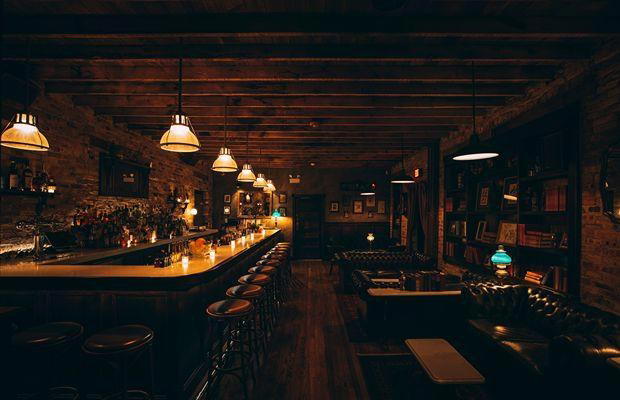
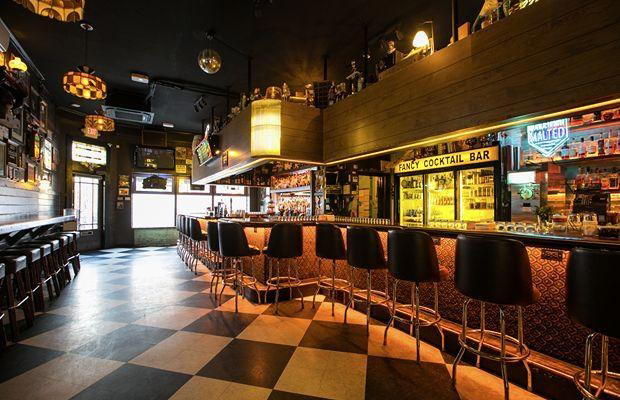
Edgy yet welcoming atmosphere with piped-in heavy metal music played loudly; classic Chicago three-flat with orange brick and beige accents in a neighborhood setting.