Kajun's Karaoke Bar
On St. Claude Avenue in the Bywater, Kajun's Karaoke Bar is one of New Orleans' few genuinely neighbourhood-rooted karaoke spots, where the crowd is local, the drinks are unpretentious, and the microphone passes freely. It operates well outside the French Quarter circuit, offering a low-key counterpoint to the city's more theatrical nightlife formats — cash-bar simplicity in a city that otherwise performs for the tourist gaze.
Pearl is the En Primeur Club membership app — saves, bookings, and concierge access live there. Same editors, same standards.
- Address
- 2256 St Claude Ave, New Orleans, LA 70117
- Phone
- +1 504 909 6642
- Website
- kajunskaraokebar.com
- Directions
- Get directions
 Saves & bookings on Pearl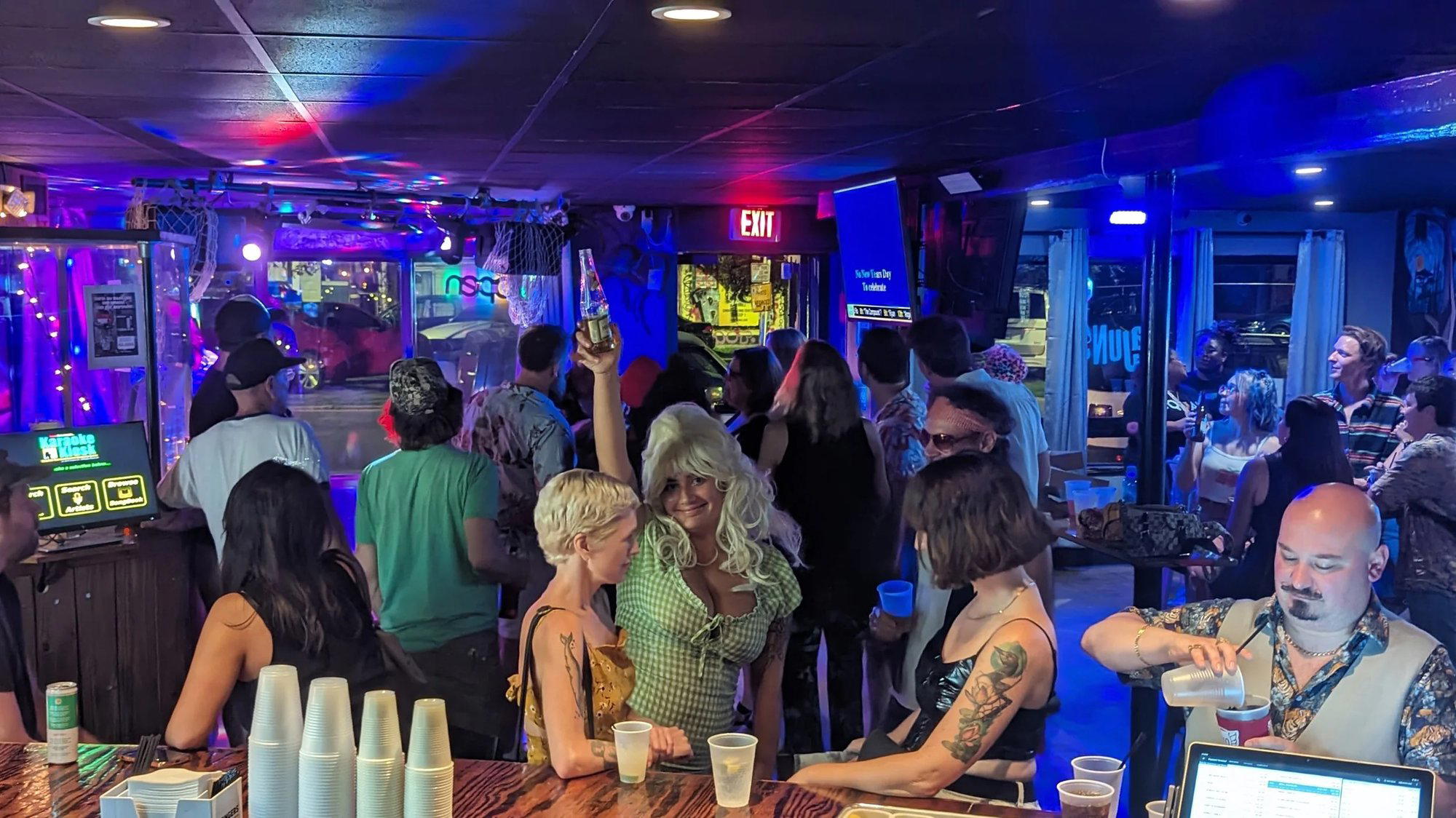
St. Claude After Dark: The Bywater's Neighbourhood Karaoke Scene
New Orleans nightlife tends to sort itself into two registers: the elaborately produced and the genuinely local. Bourbon Street occupies one end of that axis; the stretch of St. Claude Avenue running through the Bywater occupies the other. This is a corridor where bars exist primarily for people who live nearby, where the programming is low-budget by design, and where the social contract is participation rather than spectatorship. Kajun's Karaoke Bar, at 2256 St. Claude Ave, operates squarely within that tradition — a cash-bar neighbourhood spot where karaoke is the format but the actual product is the room.
The Bywater has shifted considerably over the past decade. Once a working-class Creole neighbourhood that artists and musicians moved into for cheap rent, it now sits in a more complicated position: rents have risen, newer hospitality businesses have arrived, but the strip of St. Claude still supports a tier of bar that the French Quarter long ago priced out. Kajun's belongs to that tier — the kind of place that draws its audience from within walking distance rather than from hotel concierge recommendations.
Karaoke as a Local Format
In American cities, karaoke has split into two distinct formats. One is the private-room model, imported from Japan and Korea and now found in most major cities, where groups rent a soundproofed booth and perform exclusively to each other. The other is the open-bar format: a single stage or microphone, a public song queue, and the social dynamics of strangers performing in front of strangers. Kajun's operates in the latter tradition, which is the version that requires actual community to function well. Without regulars who know each other and a crowd willing to engage, open karaoke becomes awkward performance anxiety. With them, it becomes something closer to communal theatre.
New Orleans has a particular advantage here. The city's relationship with public performance and collective participation runs deeper than in most American cities, second lines, jazz funerals, and Mardi Gras Indians all operate on the premise that the line between performer and audience is negotiable. That cultural backdrop makes open-format karaoke a more natural fit on the streets of the Bywater than it might be in a comparable neighbourhood in, say, Dallas or Portland. The format doesn't need to overcome local skepticism; it connects to something already present in the city's social fabric.
Bars of this type typically keep the drink program simple and the prices accessible, which is part of the contract with the neighbourhood. The focus is not on craft cocktail programs or curated spirits lists, for that kind of technical bar work in New Orleans, venues like Jewel of the South, Cure, or Beachbum Berry's Latitude 29 operate in a different tier entirely. Kajun's competitive set is not cocktail bars; it's the ecosystem of neighbourhood joints that keep a city's social infrastructure running between the headline venues. Across the country, that same neighbourhood-bar function shows up in very different forms: the technical-forward programs at ABV in San Francisco or Allegory in Washington, D.C. serve a different purpose in their respective cities, as does the genre-bending work at Superbueno in New York City or Kumiko in Chicago. The point is that a city's bar culture is always a stack of tiers, and Kajun's occupies a tier that has nothing to do with technique and everything to do with access and belonging.
The St. Claude Corridor in Context
St. Claude Avenue functions as a kind of extended spine for the Bywater and the adjacent St. Roch and St. Claude neighbourhoods. It is not a destination strip in the way that Frenchmen Street is, where touring musicians and visitors who want to feel they've found authentic New Orleans music converge every night. St. Claude is quieter and more residential in character, which means the bars on it serve a genuinely local function rather than a curated-authentic one. That distinction matters for anyone calibrating their expectations. A venue like Kajun's is not presenting neighbourhood life for outside consumption, it is neighbourhood life, which makes it a different kind of visit for someone arriving from outside.
The Bywater also connects to a broader pattern of post-Katrina neighbourhood evolution in New Orleans. Areas that absorbed significant newcomer populations in the years after 2005 now contain a mix of long-standing institutions and newer arrivals, with bars and small venues often sitting at the intersection of those communities. St. Claude is representative of that tension, where a spot like Kajun's carries social weight that goes beyond its square footage or its song catalogue.
For visitors who want to understand how New Orleans nightlife functions beyond the French Quarter circuit, this part of the city is worth the short trip. 2 Phat Vegans operates in the same general orbit as an example of how local operators have built loyal, community-rooted followings on St. Claude without targeting tourist traffic. The principle is the same: the audience is the neighbourhood, and the neighbourhood defines the room.
Planning a Visit
Kajun's sits at 2256 St. Claude Ave in the Bywater, accessible by the St. Claude streetcar or a short rideshare from the French Quarter. No website or advance booking infrastructure is publicly listed, which is consistent with the bar's neighbourhood format, this is a walk-in venue where showing up is the only booking method required. For international reference points, the open-mic karaoke format is a fixture of bar culture across cities from Frankfurt to Honolulu, but the New Orleans version carries the specific social warmth of a city where collective performance is embedded in daily life rather than scheduled as an event. Julep in Houston offers a useful comparison for how Southern cities develop bar formats with strong local identity, different in style and price tier, but similar in the way neighbourhood character shapes the room. For a broader orientation to what New Orleans offers across its dining and drinking categories, the full New Orleans guide covers the city's major venues and neighbourhoods in detail.
Peers You’d Cross-Shop
| Venue | Cuisine |
|---|---|
| Kajun's Karaoke BarThis venue — the venue you are viewing | This venue |
Continue exploring
More in New Orleans
Bars in New Orleans
Browse all →
Restaurants in New Orleans
Browse all →
At a Glance
- Lively
- Energetic
- Bohemian
- Well Known
- Group Outing
- Casual Hangout
- Celebration
- After Work
- Late Night
- Live Music
- Standalone
- Standing Room
- Seated Bar
- Lounge Seating
- Craft Beer
- Craft Cocktails
- Zero Proof
Current opening hours
- Monday
- 4 PM–2 AM
- Tuesday
- 4 PM–2 AM
- Wednesday
- 4 PM–2 AM
- Thursday
- 4 PM–2 AM
- Friday
- 4 PM–3 AM
- Saturday
- 12 PM–3 AM
- Sunday
- 12 PM–2 AM
Hours can change for holidays and private events. Last verified .
Know Before You Go
- Getting there
- 2256 St Claude Ave, New Orleans, LA 70117