Il Baretto
Il Baretto on Blandford Street sits in the quieter residential edge of Marylebone, where the neighbourhood's shift from functional high street to considered dining destination has gathered pace over the past decade. The bar operates in a tier of London Italian venues that prize an unhurried, neighbourhood-first register over the louder ambitions of the West End. It earns its place through consistency rather than spectacle.
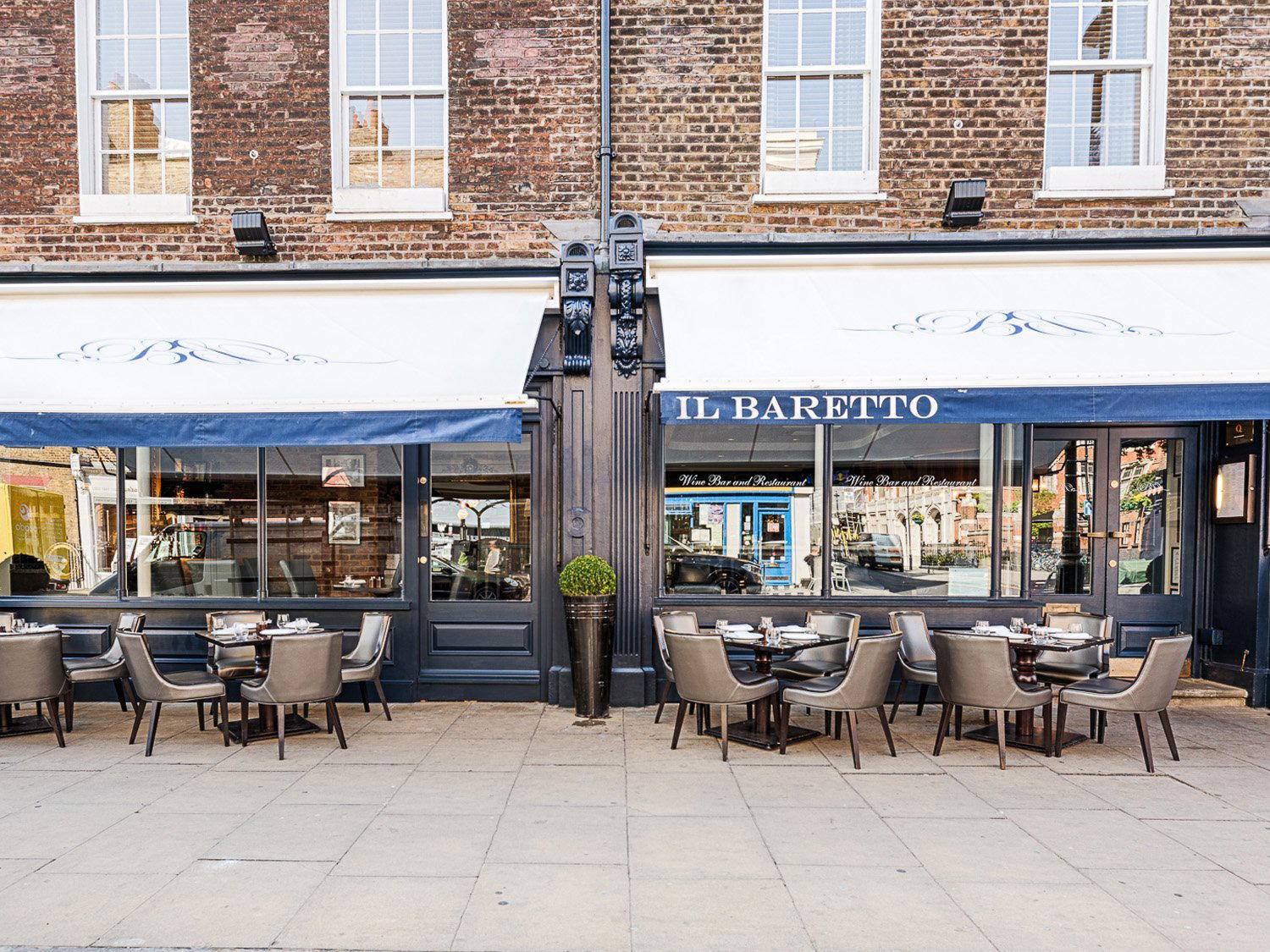
Blandford Street, running off the southern end of Marylebone High Street, has a particular quality that most of central London's bar and restaurant strips lack: it feels like it belongs to the people who actually live nearby. The shops are quieter, the foot traffic thinner, and the venues that survive here tend to do so on repeat custom rather than tourist overflow. Il Baretto, at number 43, has read that room correctly for long enough to become part of the street's character rather than a tenant of it.
Marylebone's Slow Shift and Where Il Baretto Sits in It
Marylebone's dining identity has moved steadily upward over the past fifteen years. What was once a neighbourhood defined by old-school Italian trattorias and dependable neighbourhood bistros has gradually absorbed a generation of more considered openings, without entirely losing the residential, unflashy quality that makes it different from Mayfair a few streets south. The tension between those two registers, the convivial and the aspirational, is what gives Marylebone its character. Il Baretto occupies the convivial end of that spectrum with some deliberateness.
Italian bars of this type occupy a specific niche in London: they function as something between a neighbourhood aperitivo spot and a full dining destination, and the ones that do it well resist pressure to become either purely one or the other. That balance is harder to hold than it looks, particularly in an area where rents have climbed and the pressure to maximise covers has pushed many comparable venues toward the more formal dining end. That Il Baretto has maintained a bar-first identity on Blandford Street, rather than being absorbed into the neighbourhood's more restaurant-heavy direction, is itself an editorial note worth making.
The Feel of the Room
The physical environment on Blandford Street sets expectations before you reach the door. The street's scale is domestic rather than commercial, and venues here tend toward interiors that reflect that: lower ceilings, closer tables, a register that does not require you to project your voice to be heard across the room. Italian bar design in London has evolved through several phases, from the red-sauce familiarity of older trattorias, through the sleek minimalism that followed the early 2000s aperitivo trend, toward something that borrows more carefully from the northern Italian bar tradition: dark wood, considered lighting, a counter that is genuinely central to the operation rather than decorative. Il Baretto's Blandford Street address fits that latter direction.
The comparison set matters here. London's Italian bar tier now ranges from the tightly programmed cocktail precision of venues like Amaro to the more theatrical end of the spectrum. Il Baretto operates closer to the former in sensibility, though with a neighbourhood warmth that distinguishes it from the more technically focused operations. For London bars that have refined their format around a similarly focused identity, 69 Colebrooke Row in Islington remains the reference point for what a committed, non-theatrical bar programme can sustain over time.
How the Format Has Evolved
Evolution of Italian bar culture in London over the past decade provides the frame through which Il Baretto's current direction makes most sense. A decade ago, the aperitivo format was still something London absorbed from Milan and Venice with a degree of novelty. Spritz menus, cured meats, small plates served at the bar: these were positioning signals as much as hospitality choices. The venues that leaned hardest into novelty have either pivoted or closed. The ones that treated the format as a long-term register rather than a trend have generally aged better.
Il Baretto's address on a quieter Marylebone side street is itself a product of that evolution. The high-visibility locations that suited launch-phase Italian bar concepts have become harder to justify on price-to-atmosphere terms. A Blandford Street address, with its lower profile and higher proportion of repeat local custom, suits a venue that has moved past needing to announce itself and is instead focused on retaining the clientele it has built. That shift from acquisition to retention is what distinguishes the more durable neighbourhood venues from those still chasing footfall.
Across the UK, bars that have found a similarly settled identity in their respective cities include Schofield's in Manchester and Bramble in Edinburgh, both of which have moved through an initial recognition phase into something more embedded in the fabric of their neighbourhoods. The Merchant Hotel in Belfast and the Horseshoe Bar in Glasgow represent the longer-established end of that same arc. Il Baretto belongs to that pattern in London terms, albeit with the specific Italian bar register rather than the cocktail-forward formats of those comparisons.
Drinking in Context
London's bar scene has fragmented considerably in the years since the first wave of cocktail bar recognition in the early 2010s. A Bar with Shapes for a Name and Academy sit at the technical programme end of London's current bar conversation. Nightjar and Callooh Callay, both comparison venues in Il Baretto's peer set, have held their positions through format discipline and sustained recognition. What these venues share is a clarity of identity that has allowed them to survive market shifts that have closed less defined operations.
The Italian aperitivo format occupies a slightly different position in that conversation: it is less reliant on cocktail-specific credentials and more dependent on atmosphere and food pairing. That makes venues like Il Baretto harder to benchmark against the Spirited Awards circuit, but also less vulnerable to the shifts in cocktail trend that have periodically disrupted the more technically focused end of the market. For reference outside London, L'Atelier Du Vin in Brighton and Bar Leather Apron in Honolulu illustrate how wine-anchored bar formats hold up across very different markets when the format is handled with enough seriousness.
Planning a Visit
Blandford Street is a short walk from Baker Street and Bond Street stations, placing Il Baretto conveniently between Marylebone's residential core and the commercial edge of the West End. The neighbourhood's evening rhythm tends toward an earlier dinner hour than Soho or Mayfair, which makes the 6 to 8pm window particularly well suited for aperitivo-style visits before or instead of a full dinner. For those building an evening around the area, the density of considered dining options on Marylebone High Street and its surrounding streets means Il Baretto fits naturally as a starting or ending point rather than a sole destination. The EP Club full London restaurants guide covers the broader Marylebone context for those mapping a longer itinerary. Booking ahead for evening visits is advisable, particularly later in the week, given the venue's repeat-local clientele and the limited scale typical of Blandford Street addresses. Mojo Leeds offers a useful contrast for those curious how a bar-first identity plays out in a very different UK city context.
Cuisine and Awards Snapshot
A small peer set for context; details vary by what’s recorded in our database.
| Venue | Awards |
|---|---|
| Il BarettoThis venue — the venue you are viewing | |
| Bar Termini | World's 50 Best |
| Callooh Callay | World's 50 Best |
| Happiness Forgets | World's 50 Best |
| Nightjar | World's 50 Best |
| Quo Vadis | World's 50 Best |
Continue exploring
More in London
Bars in London
Browse all →
Restaurants in London
Browse all →
Hotels in London
Browse all →
At a Glance
- Lively
- Cozy
- Classic
- Date Night
- After Work
- Casual Hangout
- Standalone
- Seated Bar
- Lounge Seating
- Classic Cocktails
- Conventional Wine
Lively atmosphere with smart wine bar on ground floor and cavernous basement dining room.