Hatsu Omakase
An omakase counter on East 4th Street in Manhattan's East Village, Hatsu Omakase operates within the chef-directed counter tradition that New York has absorbed from Japanese dining culture into a distinctly local form. The format is fixed-sequence and intimate, placing it in the neighbourhood-rooted tier of downtown Manhattan counter dining rather than the formal midtown circuit.
Pearl is the En Primeur Club membership app — saves, bookings, and concierge access live there. Same editors, same standards.
- Address
- 133 E 4th St, New York, NY 10003
- Phone
- +1 631 868 8600
- Website
- instagram.com
- Directions
- Get directions
 Saves & bookings on Pearl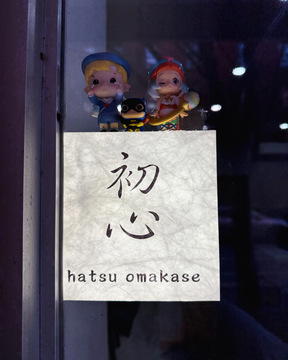
East Village Omakase and the Counter-Dining Tradition in New York
On East 4th Street in the East Village, the address 133 E 4th St sits in a neighbourhood that has long hosted some of New York's most interesting eating at every price point. The street-level approach here is deliberate: no marquee signage, no window displays angled toward foot traffic. This is the physical grammar of the omakase format, a dining structure that operates on trust rather than spectacle, and one that New York has absorbed from Japanese counter culture into a recognisably local institution.
Hatsu Omakase operates inside that tradition. The omakase format, which translates roughly to "leave it to the chef," originated in Japan as a framework for the relationship between itamae and diner rather than as a marketing concept. The chef composes; the guest receives. In New York, that format has been reinterpreted across a wide range of price points and ambitions, from entry-level hand-roll bars to twelve-seat Michelin-starred counters where reservations open months ahead.
How the East Village Fits Into New York's Omakase Geography
Manhattan's omakase addresses cluster in two broad zones. Midtown and the Upper East Side hold many of the city's most formal counters, drawing on proximity to corporate dining budgets and a clientele accustomed to landmark-restaurant pricing. Downtown, particularly in the East Village, NoHo, and the Lower East Side, has produced a second tier: tighter spaces, sharper editorial identities, and menus that tend to take more creative risk against a backdrop of lower overhead expectations.
The East Village, specifically, carries decades of culinary experimentation as a matter of neighbourhood character. The area absorbed the post-war Japanese-American communities of the nearby East Side, and its restaurant culture has long included Japanese cooking at multiple registers, from casual ramen to serious sushi. Placing an omakase counter here is a choice that locates a restaurant within that longer history, not just within the current moment of counter-dining enthusiasm.
For context on the broader downtown drinking and dining scene that surrounds venues like Hatsu Omakase, our full New York City restaurants guide maps the neighbourhood patterns across Manhattan and the outer boroughs.
The Cultural Architecture of Omakase
Understanding what omakase actually asks of a diner matters before booking. This is not a format built around menu selection, allergy substitution at will, or a two-hour window that can flex. The counter runs on a fixed sequence, at the chef's pace, and the guest's role is receptive rather than directive. In Japan, that relationship is understood from childhood as part of eating culture. In New York, it requires a small translation: the willingness to cede control of the meal's shape is the entry fee.
What the format delivers in exchange is coherence. A well-executed omakase tells a single story across twelve to twenty courses, with temperature, texture, and flavour arcs that a à la carte menu structurally cannot produce. The rice temperature, the order of fish from leaner to richer cuts, the moment when a soup course breaks the progression of nigiri — these are compositional decisions that function more like music than like a conventional restaurant meal.
New York's counter-dining culture has absorbed this logic while adding local pressures: the city's brevity, its appetite for novelty, and the competitive dynamics of a market where critics and algorithm-driven discovery both shape reservation demand simultaneously.
Drinks in the Omakase Context
The question of what to drink at an omakase counter is worth addressing directly, because it shapes the experience more than many diners expect. Traditional Japanese pairings run toward junmai daiginjo sake, which has the structural lightness to work alongside delicate fish without overpowering it. Sparkling wines, particularly blanc de blancs Champagne and high-acid pét-nat styles, have become a New York counter staple for the same reason: effervescence and acidity cut through fat without dominating the fish's flavour.
Some downtown counters have introduced Japanese whisky pairings for the warmer, fattier cuts in a sequence, drawing on the same flavour logic that made Scotch an occasional pairing for aged seafood in Scotland and Japan alike. For those who prefer to drink well elsewhere before or after, the East Village surrounds are well-served. Angel's Share, one of the neighbourhood's longest-running serious cocktail addresses, sits nearby and has operated a Japanese-inflected programme for decades. Amor y Amargo, a few blocks north, runs one of New York's most focused amaro and bitters programmes, which pairs logically with the umami register of a post-omakase palate.
For those travelling specifically to explore the broader world of Japanese-influenced bar culture in American cities, Kumiko in Chicago builds its entire programme around Japanese spirits and flavour logic. Bar Leather Apron in Honolulu applies similar rigour in a Pacific context. Domestically, Attaboy NYC and Superbueno represent different points on the downtown New York bar spectrum, from guest-responsive craft cocktails to Latin-inflected mezcal and rum programmes.
Further afield, bars that share a commitment to considered, low-ostentation programming include Jewel of the South in New Orleans, Julep in Houston, ABV in San Francisco, Allegory in Washington, D.C., and The Parlour in Frankfurt on the Main for those who carry the same sensibility into European travel.
Planning a Visit
Hatsu Omakase is located at 133 E 4th Street in the East Village, Manhattan. The nearest subway access is via the F and M lines at 2nd Avenue, a short walk east. Omakase counters in New York at this address tier typically require advance booking, and given the format's fixed-capacity nature, same-week or walk-in availability is uncommon. Checking reservation availability directly through the venue's booking channels well in advance is the standard approach for downtown omakase at this level. Dress code expectations at counter-format restaurants in this neighbourhood tend toward smart casual rather than formal, though the intimacy of the counter format rewards a degree of considered presentation.
Continue exploring
More in New York City
Bars in New York City
Browse all →
Restaurants in New York City
Browse all →
Hotels in New York City
Browse all →





At a Glance
- Cozy
- Intimate
- Trendy
- Date Night
- Special Occasion
- Counter Only
- Sake
Current opening hours
- Monday
- 5:30–10 PM
- Tuesday
- 5:30–10 PM
- Wednesday
- 5:30–10 PM
- Thursday
- 5:30–10 PM
- Friday
- 5–11 PM
- Saturday
- 5–11 PM
- Sunday
- 5:30–10 PM
Hours can change for holidays and private events. Last verified .
Cozy space adorned with cute anime miniatures and plushies, creating an intimate and charming atmosphere.
Know Before You Go
- Getting there
- 133 E 4th St, New York, NY 10003